
Greenhouse Basil in Canada | Sowing, Care & Harvests
Bloomcabin Canada • Practical greenhouse growing
Greenhouse basil from seed to harvest
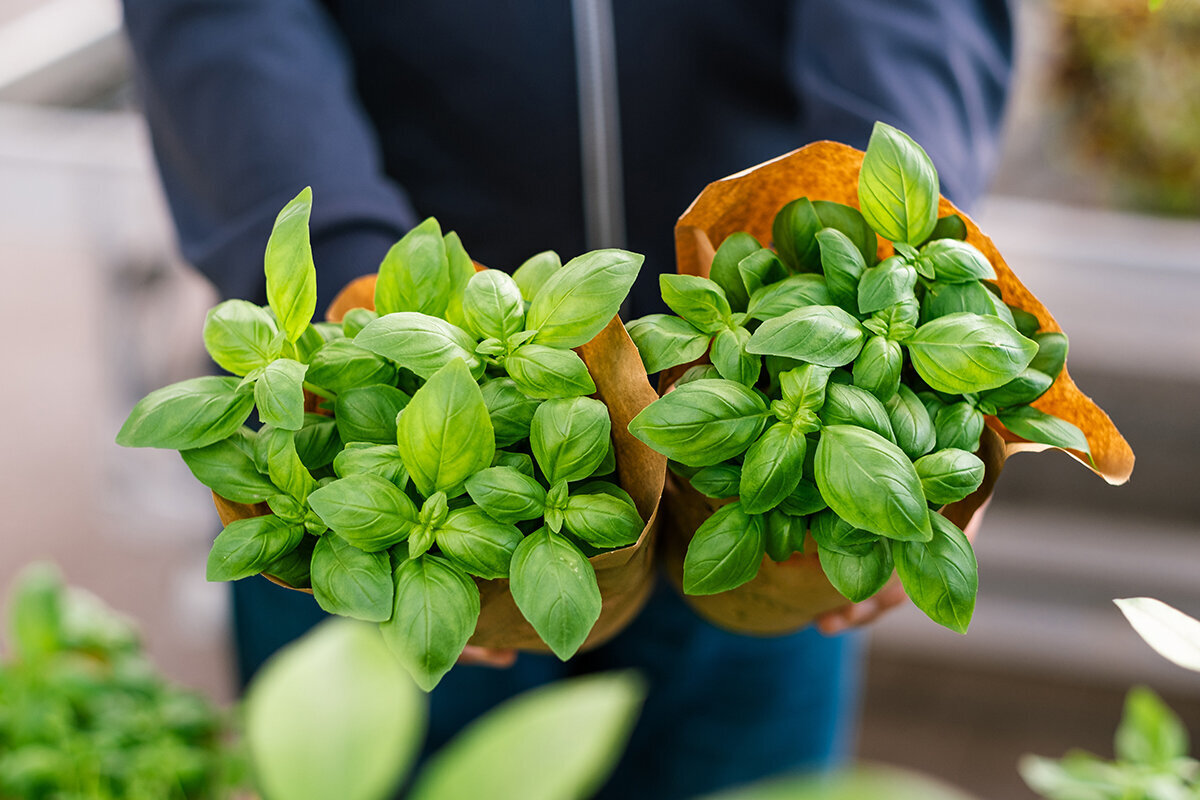
Basil can produce armfuls of fragrant shoots from a small greenhouse footprint. The best crops come from coordination rather than extreme heat: bright light, fresh air, consistent root moisture and timely cutting all matter.
Basil is approachable for beginners, but its leaves and stems reveal problems with temperature, light, watering and humidity very quickly.
Reliable warmth and strong light suit this warm-climate herb. Greenhouse shelter can protect seedlings, lengthen the growing window and put irrigation under the gardener’s control. That same shelter becomes a liability if moisture and stagnant air remain trapped around the foliage.
Canadian greenhouse conditions vary widely, so the main advantage is control rather than warmth alone. A cool, dim spring may slow the crop, while intense summer sun can make ventilation and shading the more urgent jobs. Local weather, exposure and greenhouse design should guide daily decisions.
At Bloomcabin, we use five priorities as a practical checklist: keep the root zone warm, provide ample light, avoid wet foliage, maintain air movement and harvest often. Together, they can keep a modest planting productive for many weeks.
What greenhouse basil needs
Light: at least 6 hours of direct sun
Temperature: usually about 21–32 °C
Growing medium: nutrient-rich and well drained
Moisture: even, never waterlogged
Main risk: downy mildew and wet foliage
01
01 — Making the most of shelter
What a greenhouse changes for basil
Frost is not the only cold-weather concern for basil. A prolonged cool spell can stop new growth, discolour foliage and leave stems or leaves soft. Outdoors, a burst of early-summer warmth can be followed by cold rain that quickly erases the gains; cover reduces the severity of those swings.
Shelter makes the crop easier to manage. Seedlings avoid driving rain and cold winds, irrigation can be directed to the roots, foliage stays cleaner, and harvesting can continue across a longer part of spring and fall. That steadier environment is valuable for a herb cut repeatedly.
Succession sowing is also easier under cover. Start a small batch every three to four weeks instead of relying on a single spring sowing. New plants can then replace older specimens as they become woody or devote too much energy to flowers.
When selecting or arranging a greenhouse, prioritize what basil will use every day: abundant light, convenient water, vents that open widely and a suitable place for seedlings. Complicated equipment is less important than getting those basics right.
02 — Building a varied crop
Choosing basil for greenhouse conditions
Genovese and other large-leaved sweet basils remain dependable choices for pesto, tomatoes and Mediterranean dishes. Upright Thai basil often has purple stems and an anise-like note, lemon basil adds a citrus character, and compact Greek forms fit neatly into containers.
Flavour is only part of the selection decision. Downy mildew can make a crop unusable in a short time, particularly where plants remain dense or are kept for a long season. Check seed descriptions for varieties identified as resistant to the disease.
A mixed planting is useful: grow a sturdy Genovese type for the main harvest, add Thai or lemon basil for a different flavour, and keep a compact form in pots. Comparing them side by side also shows which varieties handle your greenhouse environment most successfully.
Seed saved from hybrids may produce plants unlike the parent crop. When uniform growth and a stated resistance trait are important, return regularly to a reliable source of tested seed.
03 — Raising young basil
Sowing basil for the greenhouse
Fill clean trays, cell packs or small pots with a fine, open growing medium. Press the seed gently onto the surface or cover it only lightly. During germination, keep the mix consistently moist without leaving it saturated or standing in water.
Move emerged seedlings into strong light promptly. If illumination is weak, stems stretch and the spaces between leaf pairs lengthen. Choose the brightest practical position, but monitor closed glazing on hot spring days so tender seedlings do not overheat.
Transplant once several true leaves have formed and each seedling is sturdy enough to handle. Keep the original planting depth, water the new container thoroughly and let all excess water escape.
Do not let plant count dictate final spacing. Closely packed foliage dries slowly and holds humid air around the crop. Giving each plant a little more room usually produces healthier basil in a home greenhouse.
Keep a younger batch developing behind the plants currently being harvested. These follow-up sowings provide replacements when mature basil flowers, becomes woody or shows disease.
04 — Managing the greenhouse climate
Temperature and light: two essentials to track
Warm conditions drive the strongest growth. Treat 21–32 °C as a practical working range rather than an absolute limit, because healthy basil can handle brief variation. Sustained cold is the larger concern, and chilling injury becomes much more likely below about 10 °C.
Give basil direct sunshine for no less than six hours each day. Bright early-summer conditions often meet that need easily, whereas early spring and late fall can be limiting at northern or shaded sites.
Canadian weather can move from chilly nights and damp stretches to strong summer heat. In cloudy locations the crop may wait for better spring light; under intense July sun, opening the greenhouse and controlling heat can become the priority.
Sunlight can push the greenhouse far above the outdoor temperature in a short time. Open doors and roof vents before heat accumulates. Automatic openers are helpful safeguards, not substitutes for checking the whole space, and temporary shade may be warranted during extreme heat.
Aim for stability, not the highest thermometer reading. Retain useful warmth early in the day, release excess heat by midday and give foliage enough air to dry before night.
05 — Looking after the roots
Growing media, pots and nutrition
The root zone must hold moisture while retaining air. Mature compost can improve a greenhouse bed, while containers are better filled with a loose, good-quality potting mix than with heavy garden soil. Basil generally performs well at roughly pH 6–7.
Choose pots with enough volume for both roots and water reserves. Supermarket basil is often crowded into a small container that dries very quickly under glass. Dividing the cluster or repotting it gives the roots more room and makes irrigation easier to control.
Because leaves are the crop, basil responds well to steady but moderate nutrition. Excess nitrogen encourages soft growth, so match a balanced feeding plan to the growing medium instead of applying frequent, concentrated liquid feeds.
Consider periodic soil tests for beds that remain in greenhouse production for several years. Without rainfall passing through the soil, fertilizer salts and nutrients may accumulate.
06 — Supplying water without inviting disease
Deciding when greenhouse basil needs water
Avoid watering by a fixed two-day calendar. A container might need attention twice on a hot July day but remain moist for several days in April. Check the root zone itself and aim for an even supply of moisture with air still present in the medium.
Watering early gives roots access to moisture through the day and allows accidental splashes on the leaves to dry. A drip line or careful application at soil level keeps more water off the foliage and reduces waste.
If humidity rises after irrigation, increase ventilation. Puddles, saturated floors and crowded foliage all prolong damp conditions, which favour downy mildew on basil.
Surface colour alone can be misleading. A large container may look dry on top while remaining wet around the roots. Check with a finger, judge the pot’s weight or use a simple moisture meter before adding water.
The core watering principle
Maintain consistent moisture around the roots while keeping the foliage as dry as reasonably possible. That balance supports growth and reduces disease pressure at the same time.
07 — Creating shape with each cut
Pruning basil into a productive plant
Picking only the biggest leaves near the base provides food for the kitchen but does little to shape the plant. For a bushier crop, remove an entire shoot tip just above a healthy leaf pair.
A bud sits in each leaf axil. After a cut above the pair, one leading shoot can be replaced by two side shoots. Repeating this pattern through the season turns a tall single stem into a wider harvesting framework.
Start pinching while plants are young and responsive. Continue harvesting as they mature, but retain enough healthy foliage to capture light and power quick regrowth.
Pinch out flower buds when leaves are the priority. Flowering plants remain usable and their blooms can serve insects, but more energy goes into seed production and the foliage often becomes firmer and stronger tasting.
08 — Sharing greenhouse space
Growing basil alongside tomatoes
Tomatoes and basil can share a warm, bright greenhouse with regular irrigation. Basil fits around bed margins or in containers below the taller crop, using space that tomato stems do not occupy.
Manage light and airflow rather than relying on claims that the pairing changes tomato flavour. A dense tomato canopy can leave basil shaded and humid, producing stretched, soft growth that is more vulnerable to disease.
Set basil on the brighter side of the row and preserve an air path between the crops. Thin tomato foliage only as appropriate for the plant, since sudden heavy exposure can leave fruit vulnerable to sunscald.
Direct water to the root zones of both crops. Container-grown basil can receive its own feed; where the plants share a bed, do not base every nutrient decision solely on the heavier demands of tomatoes.
09 — Identify the cause before acting
Troubleshooting greenhouse basil
Yellow foliage
Yellow leaves can point to excess water, an unbalanced nutrient supply, chilling or disease. Because downy mildew may first appear as pale yellow patches, turn the leaves over and inspect their undersides.
Downy mildew
This is one of the most damaging basil diseases. Its preferred conditions include wet leaves, humid air and tightly spaced plants. Reduce risk with resistant varieties, more space, irrigation at the roots and dependable ventilation.
Wilting in a wet growing medium
Wilting does not always mean that more water is needed. Saturated media exclude the oxygen roots require, so examine drainage and root health before irrigating again.
Stretched, slender growth
Insufficient light, crowding and missed pruning can all produce leggy basil. Improve light exposure and pinch above a leaf pair early to encourage a shorter, more branched plant.
Aphids, whiteflies and spider mites
Inspect growing tips and leaf undersides often, including on any plant before it enters the greenhouse. A small population is much easier to remove mechanically or manage with an appropriate biological approach than a widespread infestation.
10 — Carrying the crop into colder months
Winter greenhouse basil in Canada
An unheated structure will not support dependable winter basil across much of Canada. Strong growth in December and January usually calls for additional heat, and low-light locations will generally need grow lights as well.
Do not judge winter conditions by a sunny afternoon. Once the sun goes down, an unheated greenhouse can lose warmth quickly and move close to the outdoor temperature. Record the overnight minimum where the basil actually sits.
Winter light can be as restrictive as temperature. Short days and a low sun angle may produce slow, soft growth even when the air is warm enough. In that situation, extra fertilizer does not replace missing light.
For many home growers, it is more practical to treat basil as a long seasonal crop: start early in spring, keep cutting into fall and sow again in late winter. Year-round production is most reasonable where heat and lighting are already in place.
11 — Harvesting to encourage regrowth
Making each basil harvest count
Start cutting when several strong shoots have developed. Remove each tip immediately above a leaf pair so the buds below the cut can become the next set of harvestable branches.
Moderate cuts made often are kinder to the plant than an occasional severe harvest. Preserve plenty of leaf area, since an almost bare plant needs much longer to rebuild.
Choose a cooler part of the day when possible and handle the crop gently; bruised basil loses quality quickly. Its flavour is strongest when used fresh, while extra leaves can be frozen or made into pesto.
Replace plants that remain woody, return immediately to flowering or no longer produce good shoots. A vigorous younger succession can outperform repeated attempts to revive an aging plant.
12 — Planning the growing year
A flexible Canadian greenhouse basil calendar
Late winter to early spring: sow the first batch somewhere warm with very bright light. Most unheated greenhouses remain too cold for young basil at this stage.
Spring: move sturdy plants into the greenhouse only when nights there remain reliably warm, then start pinching the growing tips early.
Early summer: establish a regular harvesting routine, make another sowing and open more ventilation as solar gain increases.
High summer: prevent heat and humidity from building up, irrigate the root zone and inspect foliage frequently for pests or disease.
Late summer to early fall: keep productive shoots cut, prepare replacement plants and discard specimens that are diseased or heavily woody.
Fall to winter: assess whether supplemental heat and lighting make sense for your setup. If not, clear and clean the growing area before restarting in late winter.
Questions from greenhouse growers
Greenhouse basil questions and answers
What temperature is ideal for greenhouse basil?
Use about 21–32 °C as a practical range. Protect plants from prolonged cold and begin venting before strong sunshine overheats the greenhouse.
How much sun does basil need?
Plan on six hours or more of direct sun each day. Supplemental lighting may be necessary through dark winter periods.
Is a pot or a bed better?
Both are suitable. A bed buffers temperature and moisture changes, while containers are easier to move but can dry much faster.
Why are my basil leaves turning yellow?
Check for waterlogged roots, nutrient imbalance, chilling and downy mildew. Examine both leaf surfaces before deciding that fertilizer is the answer.
How do I prevent flowers?
Pinch out buds as they appear and harvest whole shoot tips regularly. Each well-placed cut promotes branching and extends the supply of tender leaves.
Can basil grow with tomatoes?
Yes. The crops both appreciate warmth, provided the tomato canopy does not deprive basil of direct light and circulating air.
Is an unheated greenhouse enough in winter?
Usually only for a short interval. Sustained winter growth generally depends on added heat and, when daylight is limited, grow lighting.
A Bloomcabin takeaway
Use basil as an early-warning crop
Few greenhouse crops report changing conditions as quickly as basil. Stretched stems reveal weak light, soft or stressed growth can expose watering problems, and rising disease pressure warns that ventilation needs attention.
The observation skills learned here also help with tomatoes, peppers, cucumbers and other greenhouse crops. Productive growing depends less on a rigid timetable than on reading the air, foliage and root zone each day.
Good planning makes those observations easier: provide strong light, vents that work effectively, convenient irrigation and enough room for plants at several stages. With those elements in place, basil can deliver a steady succession of aromatic shoots.
Find a Bloomcabin greenhouse for your growing plansFurther reading and source material
- Bayerische Landesanstalt für Weinbau und Gartenbau — basil and light
- Mein schöner Garten — basil in an herb garden
- Rutgers U.S. Basil Consortium – Growing Basil
- Cornell – Managing Basil Downy Mildew in the Greenhouse
- University of Minnesota Extension – Growing Basil
Canada’s greenhouse conditions differ by region, elevation, structure and season. Treat these recommendations as a starting framework, then adjust heating, airflow, shade and irrigation to the conditions at your site.
