
Greenhouse Coriander: Choosing Cilantro Leaves or Spice Seed
Bloomcabin growing notes · Canada
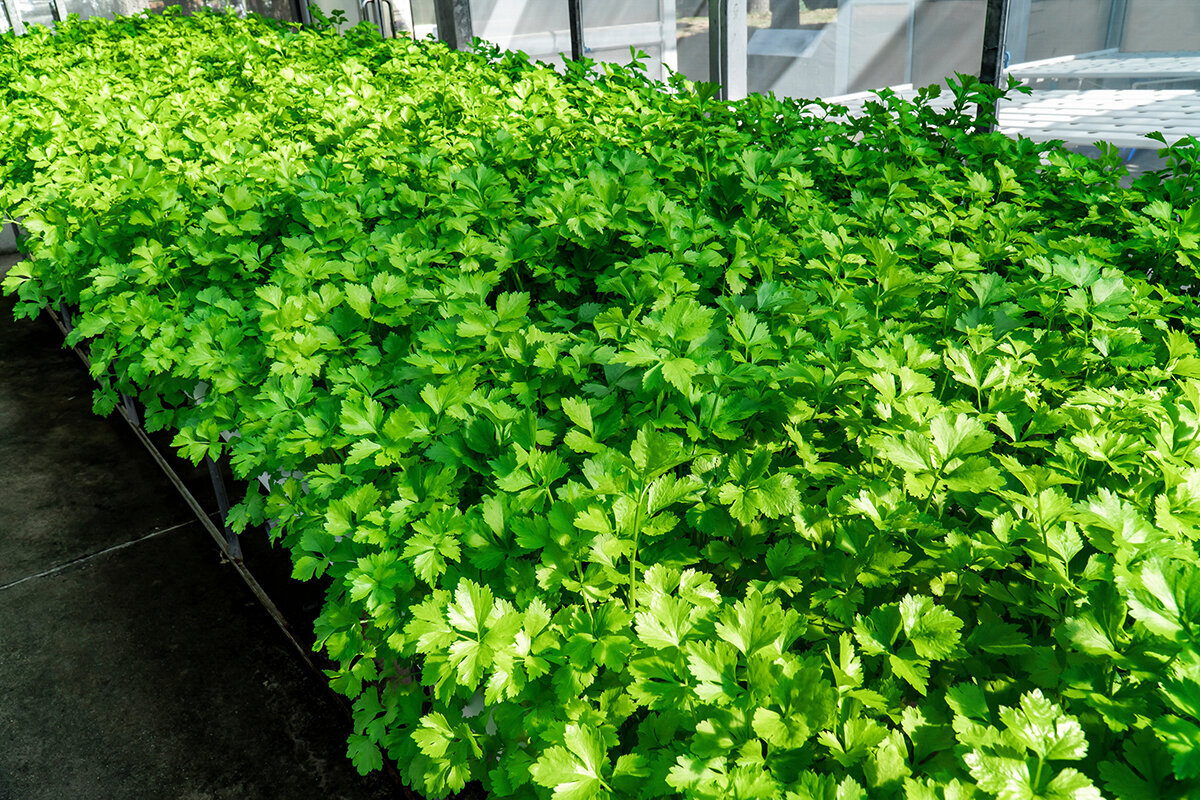
Greenhouse coriander / cilantro leaves or spice seed
This fast annual supports 2 distinct outcomes. Keep the roots cool and gather young growth as cilantro, or allow selected plants to flower and dry so their fruits become fragrant coriander spice.
The leafy harvest
Cilantro provides the early, tender crop.
Cilantro is Coriandrum sativum and is valued for tender, dissected foliage and slim stems. Under cover, the routine is simple: sow a modest area in place, let compact rosettes form and snip only the amount needed soon. Its best flavour is enjoyed fresh rather than after cooking or lengthy storage.
- Goal: fresh leaves available over several cuttings.
- Best approach: use close spacing and start small batches in succession.
- Climate priority: keep roots from overheating and prevent still, humid pockets.
- Crop rhythm: a short crop measured in weeks rather than the whole season.
Harvesting the spice
Seed coriander takes longer and develops a warm spice character.
The spice is produced when cilantro plants are left to extend, open pale flower clusters and mature their spherical fruits. As the foliage becomes finer, the crop shifts away from leaf production. Give chosen plants enough room, catch fruits before they scatter and finish the stems under dry conditions.
- Goal: fully mature seed with a strong aroma.
- Best approach: generous plant spacing and freely circulating air.
- Climate priority: moderate warmth once the fruits begin developing.
- Crop rhythm: the plant’s full annual cycle through ripening.
For leaves
Harvest while tender.→
For seed
Allow stems to mature.Separate the crops at the outset. Cilantro rows tolerate close planting and several cuts, whereas plants destined for spice need sunlight, room to branch and time without disturbance. Asking every specimen to perform both jobs usually compromises each harvest. Assign different sections of the bed, bench or trough to each purpose. Even 2 labelled strips work: resow the leaf strip in modest amounts and stop cutting the strongest plants in the seed strip when their stems begin rising.
Before the first leaves
Match the sowing plan to the crop.
Sowing in place is generally dependable because coriander develops a taproot that is easily disrupted. Choose viable seed and an open, structurally stable herb or vegetable mix that drains freely. A compact row in a prepared greenhouse bed is equally suitable. If modules are necessary, move the seedlings early and preserve each root ball intact.
01
Choose seed for the intended harvest
For leaf harvests, varieties labelled “slow bolt” or suited to cilantro production are useful. They can lengthen the leafy period but do not remove the plant’s natural response to heat, long days and dry stress. For seed, variety matters less than a dependable seed source and enough room for sturdy, branching plants. In either case, choose fresh tested seed with a clearly identified variety.
02
Prepare a shallow drill with a settled base
Place the round fruits about 1 to 2 cm below the surface. Add an even covering, settle it gently and irrigate through a finely perforated watering head to avoid moving the seed into piles. Short crosswise rows suit a narrow greenhouse bed because each can be labelled, watered, harvested and removed independently. A moderately fertile, free-draining soil is sufficient; fresh manure and heavily enriched mixes are unnecessary.
03
Thin leaf and seed crops differently
Cilantro rows may begin quite close together; if neighbouring seedlings press against one another, thin them to approximately 5 cm apart. Plants reserved for spice benefit from about 20 to 25 cm of space. Light can then reach the lower growth while branched flower stalks develop without crowding. If the bed layout permits, roughly 35 to 40 cm between rows provides convenient access for care and picking.
04
Wait patiently without waterlogging
Emergence commonly needs 2 to 3 weeks and can take longer in a cool medium. Maintain gentle, consistent moisture near the surface without soaking it. In unusually dry greenhouse air, a transparent cover can conserve moisture briefly; take it off as soon as shoots appear to prevent a humid, motionless pocket. Mark each row with its date and intended use—leaves or seed—so later sowings remain easy to track.
The greenhouse paradox
Supply brightness while keeping trapped warmth in check.
Cover shields the crop from cold nights, wind and forceful rain, yet solar gain can also hurry coriander toward flowering. Leaf production works best in bright but moderate conditions. Keep daytime temperatures steady, exchange the air reliably and prevent repeated heat buildup around the roots. Read a thermometer beside the foliage instead of judging conditions from the doorway. Begin venting as morning warmth accumulates, before the crop shows stress.
Light
Choose a well-lit part of the greenhouse. When summer sun is intense, soften exposure on the sunward side instead of placing the crop in deep shade. Mild morning light is useful, while a permanently dim corner encourages elongated, pale and fragile stems.
Temperature
Leaf crops respond well to moderate days followed by cooler nights. Rising heat quickly narrows the cutting period. Protect the root area from heat accumulation and avoid abrupt swings; proactive venting is more useful than reacting after stress appears.
Air movement
On warm mornings, open the door and roof vents soon enough to establish mild cross-flow. If an enclosed corner remains motionless, a compact air mover may assist. Gentle circulation helps foliage shed moisture and reduces uneven temperatures around the crop.
Water
Apply water directly to the medium, preferably early enough for any splashed foliage to dry by evening. Persistently damp surfaces, warmth and poor circulation produce soft growth and make leaf or seedling disorders more likely.
From leaf to flower
Recognizing the harvest window in 5 visual cues
01Compact rosette
Begin cutting
Begin cutting
02Rising centre
Take the main cut
Take the main cut
03Feathery leaves
Pick a purpose
Pick a purpose
04Umbels forming
Stop or continue
Stop or continue
05Fruits setting
Finish dry
Finish dry
Use each stage as a prompt. Broad leaves arranged in a compact basal cluster indicate prime cilantro quality. When the middle starts extending, take a substantial harvest while preserving the active growing centre. Finely divided upper foliage signals that energy is shifting into taller stems and bloom. At the appearance of branching stalks and flower clusters, either pinch the earliest buds for a brief extension or commit the marked plants to spice production. Their green fruits eventually pass through yellow, straw and pale brown, after which leaf cutting is finished. Flowering can reflect several influences at once: day length, heat, thirsty roots, uneven irrigation, crowding, transplant disturbance and ordinary maturity. Increase ventilation sooner, temper severe afternoon exposure, irrigate before wilting and cut promptly. Have a replacement batch underway before the current crop declines.
Keep the next row coming
Think in overlapping batches, not one planting date.
A single heavy sowing supplies more leaves than needed for a short time. Smaller amounts started every 2 to 3 weeks create continuity: tender new foliage, mature rosettes, an emerging replacement and a deliberately untouched section progressing toward flowers and spice.
Example seasonal patternMarAprMayJunJulAug
Batch A · leafsowing and young leaves
Batch B · leaffull leafy harvest
Batch C · leafsowing and young leaves
Batch D · leaffull leafy harvest
Plants saved for seedflowering, maturation, drying
New-leaf and replacement period Main cilantro cutting period Plants intentionally carried to seed
Treat this chart as a planning example rather than a guarantee. Canadian start times vary with daylight, overnight cold and greenhouse heat. Early development may lag after dim winters in coastal, northern and elevated areas, while warmer interiors can lose tender foliage quickly once heat collects under cover. Begin only when light is adequate and the medium can support steady emergence. In the hottest part of summer, increase air exchange and add mild shading, or suspend leaf sowings until conditions ease. Winter production generally remains slow without supplemental lighting.
Leaf harvest
Make each cut with regrowth in mind.
The turquoise guides indicate useful cutting positions. Preserve the growing centre identified by the red guide if another flush is expected.
3 harvesting methods
- Selective cutting: Remove the larger outside stalks and give the inner foliage time to expand. This works well when the kitchen needs only a few handfuls.
- Light row cutting: Trim a closely planted, youthful row while staying above its active centre, and retain a low base with healthy foliage. The technique is efficient, but only vigorous plants with adequate water and nutrition recover well.
- Never cut the crown: Cutting flush with the soil completes the harvest. Use that method to clear a spent planting, not when another flush is wanted.
Preserve the flavour: Gather dry foliage during a cool morning or another mild period. Delay washing until shortly before use when practical. For brief storage, stand the stems loosely in a small amount of water and keep them cool. Chop and freeze any excess in portions; air-dried leaves lose much of their lively citrus character.
Good placement reduces daily effort. Keep the cilantro near an accessible bench edge or the doorway so harvesting, irrigation and resowing are easy. For ideas on arranging growing area, circulation and a practical herb section, see the Classic Aluminium Greenhouse.
Finishing the spice crop with warmth and dry air
Set aside selected plants for bloom and allow time for ripening.
After assigning plants to seed production, discontinue routine foliage harvest from them. Their open, flat flower clusters are followed by green spherical fruits. They may remain under cover provided they do not cast heavy shade over younger rows and air can move around them. Hoverflies and other useful insects can enter through open doors and vents to visit the blossoms. Vent well after irrigation so leaves and developing fruits lose surface moisture promptly. If tall stems require support, secure them carefully without repeatedly shaking the fragile clusters.
01Green
02Changing colour
03Partly dry
04Finish under cover
05Clean and store
- Green: The soft fruits are still filling and have not developed their dry, warm spice aroma. Leave them to ripen on the plant.
- Changing colour: Watch umbels change from green through yellow-beige and straw to light brown. Because flowering occurs in sequence, ripening is uneven too. Check the crop regularly.
- Partly dry: Once much of the crop has reached straw to pale-brown tones, remove entire stems during a dry part of the morning, before significant shedding begins.
- Finish under cover: Place cut stems head-down inside a clean paper sack or another air-permeable cover. Choose a warm, dry location with steady air exchange; any loosened fruits will be collected inside.
- Clean and store: Gently rub the crisp, thoroughly dried clusters, separate the chaff and seal the whole fruits in a close-fitting jar protected from direct light and warmth.
Do not leave the crop until every cluster is deep brown. Under warm cover, early fruits may scatter before the later ones have matured. Harvest once most clusters are visibly changing, then complete the process in a protected, airy setting. Grind only the quantity needed for cooking so the citrusy, woody warmth remains noticeable in storage.
Troubleshoot without overcorrecting
Match each symptom with a likely cause and a measured fix.
Flowering begins when plants are only 12–15 cm tall
Likely cause: a hot root zone, sudden temperature spikes, drought stress, major watering swings or harvest delayed too long.
Response: Vent sooner, reduce the harshest afternoon exposure and irrigate before wilting starts. Begin another modest batch at once. Pinching an early flowering stalk may extend cutting briefly, but a new sowing offers a surer next harvest than trying to return a bolting plant to leafy growth.
Foliage is pale, frail and elongated
Likely cause: inadequate light, excessive crowding or continually saturated medium that deprives the roots of good growing conditions.
Response: Relocate pots to stronger light, remove excess seedlings and wait until the medium’s surface has begun to lose moisture before irrigating again. Correct light, circulation and watering before applying a modest feed. Heavy feeding can produce quick but tender growth with diluted flavour.
Lower foliage yellows and the centre loses vigour
Likely cause: waterlogged soil, poorly aerated roots or a mature planting naturally redirecting energy into flowers.
Response: Inspect drainage openings, saucers and the texture of soil in the bed. Where conditions remain wet, lengthen the interval between waterings. Remove plants that have passed useful leaf production instead of demanding another cut; resowing provides a stronger start for the next crop.
Aphids cluster around tender shoots
Likely cause: sheltered conditions and lush, soft tissue that allow a small unnoticed population to increase rapidly.
Response: Examine young shoots and the backs of leaves 2 times a week. Separate or discard severely affected plants, rinse minor colonies off carefully and increase circulation. Yellow sticky cards can reveal flying insects, but physical crop inspection remains necessary. If treatment is needed, select only a product registered in Canada for that specific use on edible herbs, and apply it exactly as the approved label directs. Search Health Canada’s product and label registries, then confirm any provincial or municipal limits that apply at the greenhouse location.
Young plants topple where the stem meets the medium
Likely cause: damping-off favoured by excessive irrigation, reused medium, unclean equipment, crowded seedlings or persistently warm and humid air with little movement.
Response: Remove failed seedlings, wash the containers and restart in clean, unused growing medium. Reduce sowing density and direct irrigation to the soil instead of repeatedly soaking the foliage. Before closing up for the evening, clear lingering surface moisture and exchange humid air.
Timing across Canada
Greenhouse protection softens weather but cannot erase regional conditions.
Canadian coriander schedules differ substantially by location. Cover offers some control, yet the crop still responds best to bright light and moderate temperatures. Use local daylight, overnight cold, wind exposure and summer heat—not the calendar alone—to set the pace.
Coasts, northern areas and other cool locations
Following long, cold and dim periods, direct sowing under cover may start later than it does in mild districts. The benefit can be a longer leafy phase in late spring. Make use of bright mornings, retain warmth immediately after frosty nights and vent once the structure begins heating. Shield seedlings from cold winds without leaving their roots chilled and wet. Dependable winter cutting generally requires both added warmth and plant lighting.
Interior districts and elevated sites
Early sowings can prosper under cover when brightness, moisture and air exchange are balanced. After a frosty night, let the greenhouse warm gradually rather than forcing a sudden tropical environment. Between June and August, an unheated structure can exceed outdoor afternoon temperatures. Keep cilantro close to effective vents, provide mild shade as needed and sow modest quantities. Another productive leaf period often arrives after peak summer heat.
Mild southern districts and sheltered sites
Begin early and anticipate quicker flowering as heat accumulates. Use ample ventilation, temper intense sun-facing exposures and concentrate leaf production in early spring, spring and late summer. During the hottest weeks, a pause may be more productive than continuously replacing bolting rows. Plants reserved for seed can instead use the protected, airy warmth to mature dry fruits. Maintain even soil moisture while keeping the ripening clusters as dry as practical.
To create a compact herb area where floor space is limited, consider the Aluminium Mini Lean-to Greenhouse. Give its taproot a deep container rather than a shallow tray, and prioritize ventilation whenever warmth collects. For longer rows planted in stages, the Classic Aluminium Greenhouse offers a bright space that can be arranged into clear crop sections.
Answers for greenhouse herb growers
Greenhouse coriander FAQ
Is year-round greenhouse coriander realistic?
In principle, yes, if the space remains frost-free and suitable plant lighting is provided. Canadian winters often supply too little natural light for vigorous, uninterrupted foliage. Growth becomes very slow in an unheated structure during cold weather, while excess summer warmth can trigger rapid flowering. Use the greenhouse mainly to advance spring crops, maintain spring and fall successions and shelter maturing seed. Plan recurring sowings instead of relying on a permanent specimen.
What is the usual germination time?
In suitable conditions, emergence generally takes about 2 to 3 weeks, with cooler media extending the wait. Maintain consistent light moisture without saturation, and avoid disturbing the row to search for sprouts. Variable depth or alternating dry and wet periods can produce patchy emergence.
Does coriander fruit need to be separated before planting?
Each round fruit usually contains 2 seed-bearing halves, which may be parted gently, but separation is optional for home cultivation. Seed freshness, consistent depth, careful irrigation and an open medium have greater influence. Do not crush the fruit into fragments because injured halves may fail to emerge.
What container depth suits coriander?
Select a pot or trough with unobstructed drainage and at least about 20 cm of usable depth for taproot development. A broad trough is often easier to manage than several small pots because it accommodates short, labelled rows that can be resown on different dates. Keep saucers free of standing water and choose a structurally stable medium that drains well.
Can greenhouse coriander share space with tomatoes?
Yes, if cilantro retains its own cooler microclimate. In summer, the tomato section can receive intense light and collect considerable heat, which hastens flowering. Position the herbs toward a cooler, well-aired margin without exposing them to a desiccating draft. Maintain young successive plantings, irrigate consistently and prevent mature tomato foliage from casting complete shade.
How do I recognize ripe coriander seed?
Begin harvesting after most flower clusters shift from green to straw, beige or pale brown and the fruits have become firm. Remove the stems before the earliest ripe fruits scatter when handled. Complete drying inside a paper sack or another cover that allows moisture to escape.
Sources and further reading
Practical foundations for this guide
More from Bloomcabin: automatic greenhouse window openers · Bloomcabin aluminium greenhouse FAQ · Bloomcabin greenhouses and conservatories
- DLR Rheinland-Pfalz — growing notes for leaf coriander: German cultivation and variety guidance, with particular attention to leaf production and bolting risk.
- Oregon State University Extension — cultivating cilantro and coriander: guidance on using the plant for leaves and seed, sowing, and its response to warmth.
- Utah State University Extension — garden cilantro and coriander: practical information on sowing depth, spacing, watering, flowering and drying seed.
- NC State Extension — Coriandrum sativum plant profile: botanical cultivation profile covering site, growth habit and uses of coriander.
- University of Wisconsin–Madison Extension — the cilantro and coriander crop: an overview of the life cycle, leaf harvest, bolting, flowering and uses for ripe fruits.
- Royal Horticultural Society — growing coriander successfully: practical advice on sowing, care, repeat harvests and seasonal growing.
Adjust the guidance for the variety, greenhouse design, available daylight and conditions at your own site. For a compact protected area that accommodates deep herb pots, explore the Aluminium Mini Lean-to Greenhouse.
Leaf harvest
Prioritize fresh foliage.
Keep one compact row for cutting and start its successor before production reaches its high point. Bring the first harvest into the kitchen promptly instead of postponing it until flowering starts.
Seed harvest
Save the spice crop.
Set aside several vigorous plants, provide room for taller stems and let the clusters mature in gently moving air. Seal the thoroughly dried fruits in a jar so home-grown coriander is available for winter meals.
