
Greenhouse Figs: Practical Growing and Safe Harvesting
Bloomcabin field guide for Canadian gardeners
Greenhouse Figs: Practical Growing and Safe Harvesting
Success with a greenhouse fig comes from shaping the space around the tree: supply ample light and warmth, contain its roots and branches, and keep the crop easy to reach.
01 / Start with deliberate limits
Glass alone will not control a fig tree. Thoughtful root and canopy management will.
What the shelter adds
Protected growing space can extend the useful warm season, keep cold rain off the crop and offer drier conditions for picking. Because Canadian autumn timing differs widely by region, that shelter may give later fruit valuable extra time to soften and develop flavour.
A vigorous fig can cast deep shade across a small greenhouse surprisingly quickly. Give it the status of a permanent orchard tree with an assigned footprint rather than treating it like an oversized houseplant. Decide where the roots will stop, how the main branches will stay below the ridge, how irrigation will be checked and where you will stand while picking without repeatedly touching sap-bearing foliage.
A ventilated Classic Aluminium Greenhouse can support that layout with abundant daylight, usable roof vents and enough planned space for the eventual canopy—not merely the nursery-sized tree.
02 / Match fruit type to the local season
Plan for 1 dependable crop; view 2 crops as a welcome bonus.
Choose a named common fig for fresh eating, choosing one whose ripening period fits your location. These figs ordinarily produce edible fruit without pollination, but that behaviour does not apply to every type. Smyrna figs and related forms have different biological requirements, making them unreliable for a simple home-greenhouse setup.
Previous-season wood{
Breba crop
Breba fruit develops on growth retained from the preceding year. It can mature early, which is valuable where cool autumn weather arrives quickly. The trade-off is exposure: deep cold, late frost or severe pruning while dormant may eliminate much of that early crop before active spring growth.
In colder Canadian settings, the shelter is most useful when it preserves the permanent branch structure and encourages an earlier start in spring. For a short summer, a locally tested early cultivar is a sounder choice than an impressive but very late main crop.
Current-season shoots{
Main crop
Fruit in the main crop appears on new growth. Protected warmth encourages those shoots, but generous nitrogen, excessive moisture and unused overhead room can favour foliage over ripening. Seek moderate, well-lit growth that has enough time to mature its figs before shorter days and cooler conditions take over.
Brown Turkey, Ronde de Bordeaux and Madeleine des Deux Saisons are frequently listed as possibilities for cooler conditions. Treat them as candidates rather than promises. A reputable nursery familiar with your region can help confirm the fig type and likely ripening window; plant maturity, summer conditions, available light and pruning will also influence results.
Inspect each shoot before reaching for the pruners. Smooth wood produced last year may hold breba buds, while the new growth after budbreak carries the main-crop potential. A large cut can therefore remove a particular harvest window, not just unwanted height.
03 / Assign the tree its space
Decide where the roots end before they spread beyond reach.
Restricting roots is a management tool, not a trick for starving a tree into fruiting. By keeping vigorous growth proportional to the enclosure, it also makes irrigation, nutrition, repotting and later renovation easier to plan and repeat.
A substantial stable pot or a purpose-built chamber bounded at the sides will suit most domestic greenhouses. Planting directly into open soil is reasonable only where both the building and the long-term pruning commitment are generous. Once the roots colonize surrounding ground, maintaining a compact household-scale crown becomes much harder.
Below ground: 3 ways to contain the roots
Large container
Restricted planting chamber
Open soil
Large container
Portable, inspectable and completely bounded. Choose a structurally stable, peat-free medium containing a mineral component, provide generous drain openings and use a pot that moderates rapid summer moisture changes. Schedule repotting and replace depleted medium when required.
Restricted planting chamber
Durable side panels or an appropriate root barrier can create a chamber with more soil and thermal mass while still setting a firm edge. A depth and width of about 60 cm offer a useful starting point for planning. Reliable drainage, convenient watering and the ability to renew the root zone remain essential.
Open soil
This choice produces the strongest growth. Reserve it for deep soil that drains freely, ample volume beneath the roof and a continuing pruning strategy that keeps permanent branches low, open and within reach.
04 / Locate the mature tree, not the sapling
Reserve enough room for its final working size.
Use the brightest practical side while keeping doors, roof vents, controls and the centre path clear. The sunny long wall of a freestanding greenhouse often accommodates a low fan or open bush well. Leaving roughly 30 cm beside the glazing provides cleaning access and airflow and reduces continual contact between foliage and hot glass.
Measure floor-to-eaves and floor-to-ridge dimensions before choosing the tree. Its managed height should remain below the lowest structural element, with comfortable hand access around the crown. A range of about 1.8 to 2.2 m is often workable; fruit that always demands a ladder defeats the purpose of an accessible greenhouse crop.
When mapping the space, review the Classic Aluminium Greenhouse and the Classic Aluminium Greenhouse. Plan floor space, overhead volume, entrances, vents, shelving and irrigation as a coordinated layout rather than unrelated options.
05 / Forming and pruning the tree
Maintain a steady permanent structure and renew the fruiting shoots around it.
Begin training while the tree is young. A short trunk supporting 3 to 5 well-distributed scaffold limbs, or a fan on a suitable rear wall, keeps the crop visible and lets light enter. Direct extension growth away from the main aisle, and remove unwanted competitors and basal shoots before they require large cuts.
A practical branch layout beneath glass
Use this shape as a spatial guide rather than a botanical rule. The desired result is a low crown with accessible main limbs, fruiting growth spread through the available light and enough foliage to prevent sudden exposure of fruit and bark.
- Permanent scaffold branches Maintain these limbs at a low height, with strength and clear separation. If an old framework needs replacing, renew it in stages instead of resetting the entire tree during a single season.
- 1-year-old shoot This growth may hold breba fruit. Examine it before dormant-season pruning because a severe cut can erase the early harvest.
- Current summer shoot This shoot contributes to the later main crop. Shorten it in summer only when excessive length shades fruit, blocks airflow or reaches an area that cannot be serviced safely.
- A sound place to reduce growth Make the reduction at a healthy side branch or bud directed into useful space. Do not leave long stubs. Deal first with dead or frost-injured wood, rubbing branches and shoots growing toward the centre.
Reserve structural corrections for late winter or early spring, then use restraint during summer. Preserve adequate healthy wood from the preceding season when breba fruit is important. If the enclosure is crowded, repair the main framework instead of repeatedly pinching every tip, which can produce a thicket of weak shoots. Do not undertake heavy pruning after the middle of the season.
06 / Moisture, nutrition and measured growth
Aim for consistency, not abundance.
Spring
As buds open, restore irrigation in stages. Wet the root area adequately, then wait until the surface has begun to dry before the next application. Increase volume gradually and keep early feeding modest, especially when extension growth is already strong.
Summer
Containers may need close attention during hot weather under glass. A controlled drip supply or slow measured application is preferable to occasional flooding. Start ventilation before heat becomes stagnant and drives unnecessary moisture loss.
Late summer and autumn
Maintain fairly even moisture as the crop enlarges and softens. Avoid high-nitrogen feeding that pushes lush growth late in the year. The priority is mature fruit and firm, hardened shoots rather than tender new foliage entering winter.
Winter dormancy
Once leaves have dropped and active growth has ceased, reduce irrigation sharply. Do not let the root ball remain powder-dry for an extended period, but remember that a cool dormant tree consumes little. Saturated cold roots pose the greater danger.
Reliable vent control is especially valuable when nobody is present during peak daytime heat. Include the Classic Aluminium Greenhouse in the layout assessment, ensuring that hot air has a clear exit before damaging temperatures collect around the foliage.
07 / When young fruit falls
Investigate stress before assuming pollination failure.
Common figs typically grown in home gardens can make edible fruit without hand pollination or a fig wasp. Confirm the plant's type at purchase; doing so eliminates an entire category of unnecessary troubleshooting later.
When a confirmed common fig sheds small fruit, review growing conditions and timing. Possible factors include a suddenly dry root zone, inadequate light, too much crop on a young plant, sharp temperature changes, recent repotting, pests or fruit initiated too late. Shelter extends warmth but cannot supply missing autumn daylight or change a cultivar's inherited maturation period.
Do not strip off every small fig automatically. Remove clearly damaged fruit, keep moisture and growth balanced, distribute light through the crown and favour a cultivar whose calendar suits the region.
08 / Managing summer heat
Useful warmth can quickly become harmful heat.
A sunny enclosed greenhouse may heat beyond what the tree can use. Start opening roof vents and doors early, arranging airflow so cooler air enters low and warmer air leaves above. Introduce shade only if foliage is scorching or irrigation cannot meet root demand. Air movement helps disperse damp still pockets inside dense growth, but fans cannot substitute for adequate vent openings.
Prevent branches from resting against the glazing. Selectively remove a small number of inward shoots instead of taking off broad areas of leaf. Those leaves manufacture energy for ripening and protect bark from intense exposure. During damp weather, clear fallen leaves and figs promptly to reduce opportunities for flies, mould and sour decay.
09 / Reading the crop
Texture and the way a fig hangs reveal more than skin colour.
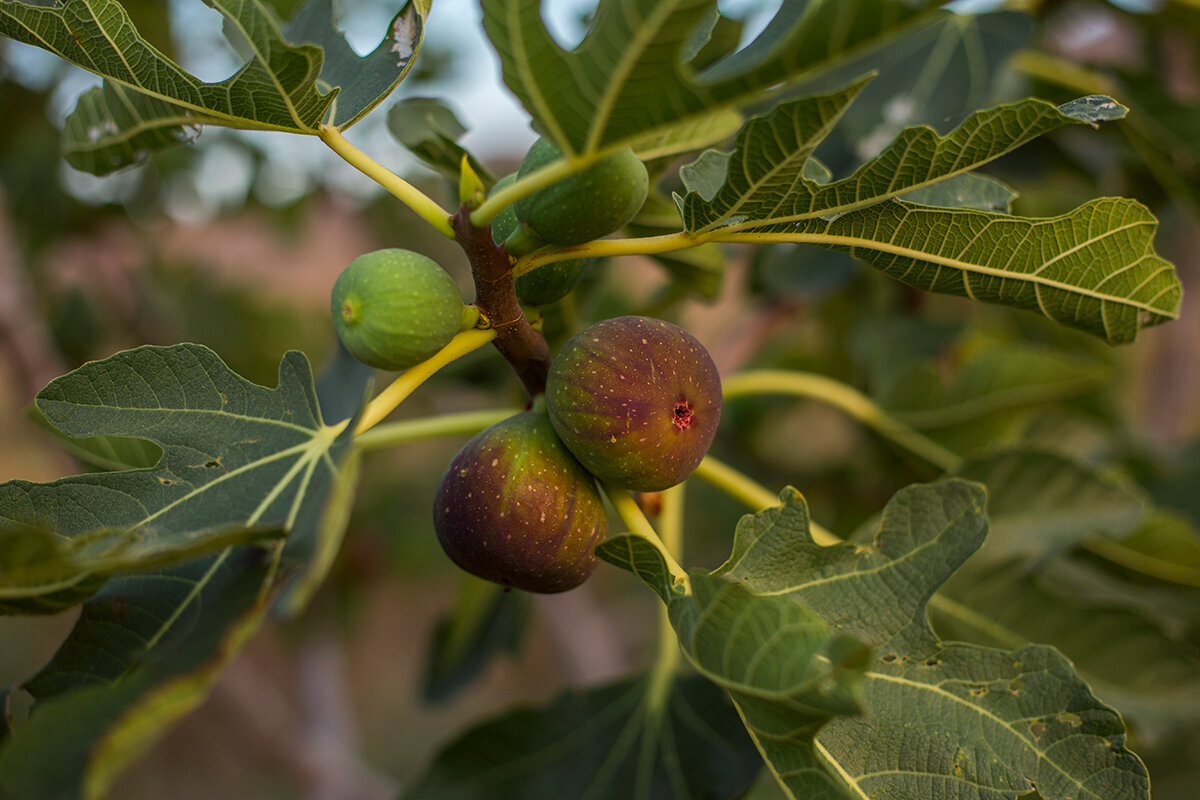
Cultivars finish in many colours: some ripe figs remain green, while others become yellow-green, brown or deep violet. Look for the combined signs of greater fullness, softening skin, a yielding neck, a downward bend and less milky sap at the stem. Because figs gain little after removal, return for several selective harvests rather than picking the tree at once.
1 / Upright
Wait
The fruit remains firm, its neck is tight and its position is upright. Leave it attached.
2 / Swelling
Watch
Increasing fullness and a slight give indicate progress. Keep irrigation even while it finishes.
3 / Drooping
Pick
A flexible neck bends downward and the body feels soft. Support the fruit gently and separate it cleanly at the stalk.
4 / Split
Check immediately
A clean minor crack may occur at full ripeness without spoiling the fig. Discard any fruit that leaks, develops mould, smells fermented or shows obvious insect damage.
Take care around fig sap
Use gloves and long sleeves for pruning and larger harvest sessions. The white sap released by stems, shoots and leaves can irritate eyes and skin. Whenever practical, work upward from below so it does not run along the arms, rinse splashes promptly and clean tools after cutting suspicious or diseased growth. Morning picking keeps delicate fruit cooler and easier to handle.
10 / Winter rest
Dormancy is a normal part of the cycle.
Figs are deciduous, so bare branches do not signal failure. Leaf fall begins a useful period for inspection and maintenance: clear old fruit and dead foliage, then examine branches and buds. Delay structural pruning until the harshest frost has passed, when injury and retained fruit buds can be assessed more accurately.
Where winters are cold, roots in pots, young trees and tender shoot ends are especially vulnerable. Put the container on insulation, move it toward a sheltered inside wall and wrap the pot when conditions require it. Avoid sealing the entire plant in an airtight covering, and do not stimulate soft pre-winter growth with strong fertilizer.
Before exceptionally cold nights, shut doors and vents and add breathable fleece if necessary. Reopen the greenhouse for ventilation during frost-free periods because winter sunshine can still raise the temperature sharply. Inspect saucers and drainage openings too. While the crown is dormant, reconsider root capacity, final height and picking access for the coming season.
11 / Diagnosing recurring problems
Identify the pattern first, then make one purposeful correction.
Fruit drop
Review cultivar timing, sudden drought, saturated roots, recent disturbance, insufficient light and fruit that began too late. Address the clearest source of stress before changing anything else; a large emergency dose of fertilizer commonly worsens the imbalance.
Splitting
Moisture management and weather usually interact. Improve drainage, avoid sharp transitions between dry and saturated soil, ventilate after damp nights and remove ripe figs without delay.
Spider mites
Inspect for pale stippling, fine strands of web and tired foliage in warm, dry areas with little air movement. Check young growth and leaf undersides often, separate badly affected neighbouring plants where practical and correct ventilation and culture before escalating treatment.
Scale insects
Examine 1- and 2-year-old wood closely during dormancy. Attached shell-like pests and sticky honeydew call for attention. Cut out heavily infested material, keep the canopy open and select only a control registered in Canada for the crop and growing location, using it exactly as the label directs.
Rotting or sour fruit
Promptly remove figs that are split, leaking, insect-damaged or smell fermented. Shorten the interval between harvests, increase airflow and clear every fallen fruit from below the tree.
Weak ripening
Open a crowded crown carefully, lower self-shading branches through well-placed reductions and cut back nitrogen. Recheck the cultivar's expected timing as well. In a brief summer, protected breba fruit may succeed more consistently than a late main harvest.
If a plant-protection product is needed, identify the problem first and improve hygiene and growing conditions. Use only a product registered in Canada for that crop and setting, and follow its Canadian label. Health Canada's product and label databases are the federal starting point; also verify any provincial or municipal limits that apply at the destination. Regular inspection is more useful in an enclosed greenhouse than untargeted spraying.
12 / A year of greenhouse fig care
Let plant development and weather set the pace.
Regional climate, the year's frost pattern, the greenhouse and the cultivar all affect timing. Read the calendar below as an ordered checklist rather than fixed nationwide dates. An unheated enclosure remains responsive to local weather.
| Period | Observe | Act |
|---|---|---|
| January–February | Dormant structure, retained fruit buds, pot condition and evidence of cold injury. | Maintain only slight moisture, protect young tips and container roots during severe cold, ventilate in mild weather and plan cuts before making them. |
| March–April | Opening buds, surviving breba growth, dead shoot ends and the direction of emerging branches. | Restore water gradually, take out confirmed damage, adjust the scaffold structure, repot where necessary and keep fertilizer restrained. |
| May–June | Rising internal temperatures, fruit initiation, extension length, crowding and early signs of pests. | Begin ventilation early, irrigate consistently, position selected growth, lightly pinch obstructive extensions and inspect beneath leaves. |
| July–August | Fruit enlargement, the order of ripening, changing water demand and developing cracks. | Pick repeatedly, remove fallen fruit, avoid moisture swings, retain airflow around the crop and discourage tender late-season growth. |
| September–October | The main crop winding down, late hard figs, changing foliage and cooler nights. | Continue selective picking, discard spoiled fruit and large figs with no realistic time to finish, reduce feeding and taper irrigation as growth slows. |
| November–December | Bare branches, drainage problems and the space the crown will require next year. | Ready the frost materials, prevent damp stagnant conditions and reassess height, vents, root containment and the route used for harvesting. |
13 / FAQ
Practical questions about figs under cover.
May a fig stay in the greenhouse throughout the year?
Yes, provided the tree receives sufficient light and ventilation and has a controlled root area plus room for maintenance and picking. An unheated greenhouse lengthens the growing period but does not guarantee freedom from frost. In colder locations, young growth and especially roots held in containers need targeted protection that still allows airflow.
Do greenhouse figs need pollination?
A named common fig intended for home cultivation can normally form edible fruit without pollination. Other fig groups have specialized requirements and do not suit an uncomplicated greenhouse. Unless a different system is clearly understood and available, choose a confirmed common cultivar.
How large should a container for a fig be?
Select a stable, generously drained pot that supports a healthy root system while keeping the crown manageable. Increase pot size progressively for a young plant. Reliable summer irrigation, access for inspection, replacement of tired medium and comfortable reach into the mature tree matter more than prescribing one fixed volume.
Should a fig be pruned hard every winter?
No. Begin by removing dead, injured, rubbing or badly positioned material, then lower the crown through suitable side branches where necessary. Severe dormant pruning may sacrifice breba-bearing growth and trigger a surge of shoots that crowds the enclosure again.
Why are there many leaves but no ripe figs?
Likely causes include excessive nitrogen, more root space than the enclosure can support, shade created by the crown itself, inconsistent irrigation, inadequate late-season warmth or a cultivar whose fruit matures too slowly for the location. Simplify the framework, identify the dominant problem and correct it before changing several factors at once.
Which greenhouse features matter most for a fig?
Prioritize practical roof height, sufficient floor space, unobstructed picking access, convenient doors, adjustable ventilation and a stable foundation. The Classic Aluminium Greenhouse offers a starting point for comparing size and equipment. Make the completed enclosure work for the eventual tree rather than only for a small first-year plant.
14 / References and next steps
Use specialist guidance to refine the plan.
Results vary greatly with site and climate. The German, British and US horticultural references below provide additional detail on winter protection, contained roots, pruning, fig types, irrigation and plant health. Their regional examples should be interpreted for the conditions at your own Canadian location.
More from Bloomcabin: Planning premium aluminium greenhouses for gardens in Canada · Premium aluminium greenhouses and conservatories · Bloomcabin blog
- Bavarian State Institute for Viticulture and Horticulture:Preparing container plants for winter
- Royal Horticultural Society, practical guide:How to grow figs
- Royal Horticultural Society, pruning guide:How to prune a fig
- University of California Agriculture and Natural Resources:Figs — fruit types, pollination, breba and main harvests
- UC Statewide IPM Program, growing guidance:Cultural Tips for Growing Fig
- UC Statewide IPM Program, troubleshooting:Fig Drop or No Fruit
- UC Statewide IPM Program, overview:Fig — plant health, pests and cultivation
Design the greenhouse for the full-grown fig
Give the tree useful limits and room to work.
Choose the enclosure by considering controlled roots, reachable branches, effective ventilation and an unobstructed picking route together. Good spatial planning replaces an annual struggle with excessive shoots with a manageable cycle of observation, care and ripe fruit.
Classic Aluminium Greenhouse