
Greenhouse Grapevines: Training, Climate and Harvest
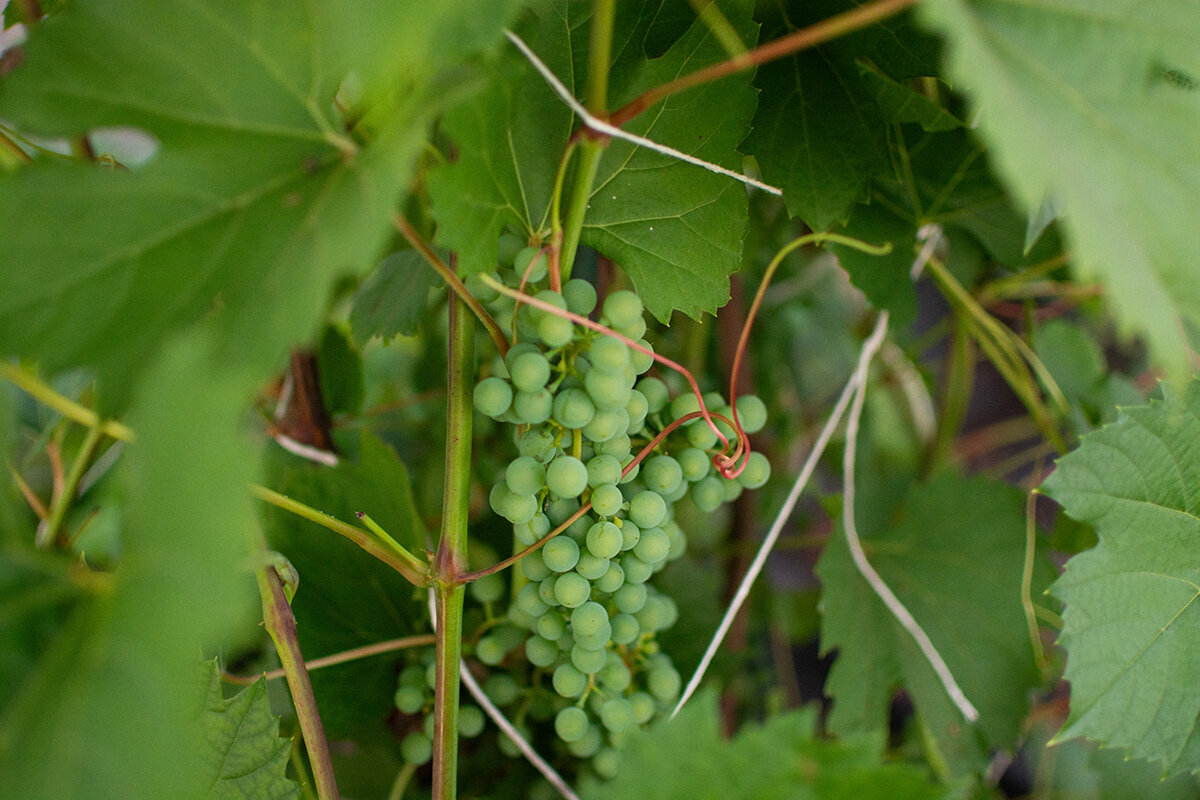
Permanent crop · Canopy planning · Fruit under glass
Training Grapevines Under Glass
A greenhouse grapevine is built over years, not planted for a single season. Deep roots support a permanent woody framework, while new fruiting growth and an open canopy are renewed each year.
What the greenhouse changes
Design the vine first; think about fruit second.
A protected structure lets the gardener manage rainfall exposure, warmth, access and shoot placement more closely. The work does not disappear, but each task becomes easier to direct and the crop can become more consistent.
Outside, prolonged wet weather may leave foliage and fruit damp, while a cool summer or weak autumn sun can slow ripening. Glass shelters the bunches from direct rain and provides a warmer start, but temperature and humidity may climb rapidly. A roof packed with foliage is therefore not a sign of success by itself. Healthy vines need air passing through them, clearly arranged shoots and a yearly choice about the wood to keep.
Give the vine a permanent place along the greenhouse edge rather than treating it as another container beside the tomatoes. Reserve deep rooting space, a clear path upward and an aisle that still functions when the canopy is full. Review the proportions of the Classic Aluminium Greenhouse before choosing the final planting position, so the trunk and training wires are part of the original layout.
Decisions before planting
Match flavour and vigour to the training method.
Most home growers will be interested in aromatic table grapes, but berry colour and seedlessness are only part of the choice. A cultivar also determines ripening season, growth strength, leaf resilience, bunch form and pruning needs. The Bavarian State Institute for Viticulture and Horticulture describes ‘Birstaler Muskat’ and ‘Muscat bleu’ among robust options for home gardens. Seedless ‘Venus’ grows very strongly and needs extra room.
For eating fresh
How to assess a table grape
Prioritize flavour, manageable growth and healthy foliage. In an unheated structure, an early or mid-early cultivar is a sensible place to begin in cooler parts of Canada, provided its local cold hardiness is also suitable.
- If the vine is grafted, select a rootstock appropriate for the site and the intended garden culture.
- Choose a cultivar with regional experience behind it rather than selecting on novelty alone.
- Reserve enough volume for broad leaves and energetic lateral growth.
Choosing a pruning framework
Spurs or replacement canes?
The grapes are carried on green shoots made in the current season, but those shoots arise from buds on wood formed the year before. Some cultivars bear dependably on short spurs retained along permanent cordons. Others suit longer fruiting canes that are replaced each year. Let cultivar behaviour and available room determine the method.
A cordon with spur pruning can make the vine easy to read inside a greenhouse. Guyot training with renewed fruiting canes is another option when the cultivar, wire arrangement and gardener’s pruning skills are compatible. Build supports for the chosen method before the vine fills the space.
Where to plant and how far apart
Secure the root zone first
Prepare deep, loosened soil that drains reliably. A planting hole about 30 to 40 cm deep can be used, and the graft union on a grafted vine should remain about 5 cm above the soil. Keep concentrated compost and mineral fertilizer away from the delicate roots at planting.
- Where more than one vine is planted, 1.50 to 2.00 m between plants is a useful working guideline.
- Deliver water to the soil around the roots rather than wetting the leaves.
- Leave the trunk and bunch area easy to reach for inspection and pruning.
Protection is valuable in cool or rainy regions, but a greenhouse does not eliminate the vine’s need for winter dormancy. Check the cultivar’s cold hardiness against local frost conditions. During the first year, maintain even moisture without saturating the ground; an established deep root system will later tolerate short dry spells more readily.
Training framework · Install it before growth starts
Build supports that can remain in service for many years.
Use tensioned, corrosion-resistant wire with firm end anchors and strong cross-members. Do not ask glazing, window hardware or lightweight shelving to carry the load. An established plant combines woody arms, dense leaves and numerous bunches, while tying and pruning add sideways pull. Parallel wires beneath the roof help separate shoots and preserve channels for air.
Side elevation · vine framework
Main trunkUpright structural axis
Lasting armsPermanent cordons
Crop-bearing woodCanes and seasonal shoots
Develop the trunk over the early years. With spur pruning, the cordons remain as the long-term framework. With cane pruning, selected wood from the previous season is replaced regularly. The new green shoots bear the foliage and crop.
Identifying vine wood in winter
Determine the wood’s age before making a cut.
One principle explains much of grape pruning: next year’s fruiting shoots emerge from buds carried on the previous year’s wood. During winter, retain the intended structural framework, select suitable one-year wood and clear away confusing surplus growth. The result should balance light penetration, cropping and future renewal.
I
Long-term wood
II
Cane from last season
III
New green shoot
IV
Wood to remove
Long-term wood: The trunk and any cordon arms provide the lasting skeleton. Keep this wood sound and deliberately positioned instead of allowing old, unproductive branches to accumulate.
Cane from last season: This smooth, recently matured wood holds the buds for spring. Depending on the system, it may remain as a fruiting cane or be shortened to provide spurs.
New green shoot: Retained buds open in spring and produce shoots with leaves, tendrils and flower clusters. Some of that growth may become useful wood for the following year.
Wood to remove: Dormant pruning takes out most unwanted growth made during the previous season. A vine may look unusually open afterwards without having been cut too hard.
Never copy a standard bud count without confirming both the cultivar and its training method. Cane renewal and spur pruning distribute fruiting buds differently. In either case, retain enough productive buds and leaf area to mature the crop while leaving dry, accessible gaps throughout the canopy.
From bud break to early summer
Organize the shoots before managing the crop.
Bud break quickly changes the interior of the greenhouse. Decide which shoots belong in the canopy while they are still small rather than waiting for the bunches to appear. Rub out weak, doubled, inward-facing or badly placed growth. Tie the selected shoots with soft material before their tendrils fasten everything together.
Stage 01Choose shoots
Stage 02Flowers open
Stage 03Berries set
Stage 04Reduce the crop
Stage 05Berries enlarge
Choosing shoots: Remove unwanted growth promptly so the remaining structural and fruiting shoots receive light, space and the vine’s resources.
At flowering: Limit drought stress, abrupt temperature changes and severe leaf removal. Grapevines are usually self-fertile, while regular ventilation helps maintain steady conditions around the flowers.
After fruit set: The developing berries reveal how heavily the plant is loaded. Take surplus or awkwardly placed bunches off a young vine before they divert resources from its framework.
When thinning: On a vigorous vine carrying too much fruit, reduce the load selectively. A smaller number of well-spaced bunches is preferable to maximum quantity in a crowded canopy.
During berry growth: Keep tying new growth and organize the laterals. Maintain visibility around the fruit without removing all protective foliage.
Flowering and fruit set in context
Routine hand pollination is generally unnecessary. Concentrate instead on a steady greenhouse environment: start ventilating before heat accumulates, avoid excessive humidity and prevent the canopy from closing. Where fruit set remains weak for several years, reconsider the cultivar, temperature peaks, moisture stress, pruning and overall vigour. Excess nitrogen can also favour leaves over fruit.
Greenhouse conditions · Keep the bunch area orderly
Air circulation must be designed into the canopy.
A leafy vine can make the structure inviting, but overlapping leaves, touching bunches and humid air trapped at roof level create problems. Where possible, use roof vents together with a door or side opening. This lets warm air leave high in the structure while cooler air enters below. Arrange the shoots so they do not block that exchange and can dry promptly after condensation or watering.
Plan view · vine bay
Access aisle
Unobstructed working width
Unobstructed working width
Leaf canopy
Separated shoot layer
Separated shoot layer
Bunch area
Grapes hanging clear
Grapes hanging clear
Soak the root zone rather than sprinkling lightly. Young vines need dependable moisture while new roots develop. Older plants are often watered less frequently, although dry protected soil and swelling fruit still need monitoring. Water at soil level, preferably in the morning, and avoid rigid schedules or wet foliage. Judge the need from moisture deeper in the root zone, current weather, crop load and the plant’s response. Prevent both waterlogging and sharp swings between very dry and very wet soil.
Recognizing ripeness
Let flavour determine the picking date.
Continue to keep space around the bunches as the berries soften and develop colour, but do not expose formerly shaded fruit to intense heat all at once. Ripeness varies by cultivar, so assess sweetness, acidity, flesh texture, fragrance and characteristic flavour as well as appearance. Sample berries from several places on a bunch. Use clean shears and handle the cut bunch by its stem where possible.
Functional leaves still matter after the fruit has been removed because they restore reserves in this perennial plant. The end of picking is not the end of vine care. Natural leaf drop and winter dormancy mark the transition to cleaning and pruning.
While berries remain greenMaintain steady soil moisture, especially for cultivars susceptible to splitting, and avoid abrupt movement from dry to saturated ground.
Softening · veraisonWatch the fruit closely. If laterals have closed the bunch area, remove or reposition them gradually while leaving enough leaf cover to reduce sunburn risk.
Evaluate flavourSample several parts of the bunch on more than one day. Fruit near the shoulder may seem ready while berries lower down still need time.
Pick and keep coolClear damaged berries and fallen fruit without delay. Store the harvested bunches somewhere cool and dry, leaving washing until they are needed.
Troubleshooting the vine
Investigate conditions before adding fertilizer.
Start with the canopy layout
An impressive mass of leaves can become the central problem.
When foliage is abundant but fruit ripens poorly, splits or decays, extra water or feeding can look like the solution. First examine the physical arrangement. Can every bunch be seen and reached? Are shoots layered together? Is condensation still present after the sun rises? Does the bunch area stay damp after irrigation? Compare the number of bunches with the light, roots and functioning leaves available to mature them.
- Fruit colours slowly: Possible causes acting together include shade, an excessive crop and a cultivar that matures too late for the local conditions.
- Berries split: Consider irregular moisture, sudden uptake of water, disease and tightly packed bunches.
- Mites and other small pests: Examine the undersides of leaves early and remove badly affected material. Before treating, consult the current Canadian label for a product that covers both grapevines and the identified pest, and check any provincial or municipal restrictions.
- Growth remains weak: Assess drainage, rooting volume, nutrient availability, light and whether the young plant is carrying more fruit than it can support.
Seasonal checklist · Let local conditions set the dates
Use the vine’s development, your region and the cultivar—not a rigid calendar—to schedule the work.
| Vine stage | Work to complete | Points to inspect | What not to overdo |
|---|---|---|---|
| Dormant period | Prune according to the selected spur or cane method, taking out dead, crossed and unnecessary wood. | Inspect the trunk, wire tension, ties, old fruit remnants and any contact with windows or roofing. | Do not preserve surplus buds solely because the finished vine appears sparse. |
| Before spring growth | Confirm the main trunk’s position and monitor the first signs of buds opening. | Review drainage, late-frost exposure, bud development and emerging pest activity. | Use water cautiously while the root zone remains cold and dries slowly. |
| As spring advances | Remove misplaced shoots, secure selected growth and increase daytime air exchange. | Check flower progress, shoot crowding and how rapidly daytime heat accumulates. | Prevent tendrils from fastening the roof growth into an inaccessible mass. |
| Active summer growth | Control laterals and crop load while managing ventilation and moisture around the roots. | Look for condensation, shaded fruit, foliage disease, mites and changes in berry development. | Avoid stimulating unnecessary leafy growth with nitrogen-rich fertilizer. |
| Picking period · autumn | Choose fruit by flavour, remove fallen berries and retain healthy post-harvest leaves. | Check for splitting, decay, uneven maturity and declining canopy health. | Do not strip useful foliage as soon as the final bunch is cut. |
The layout must also accommodate water access, paths, beds, benches and maintenance. One structure to consider is the Classic Aluminium Greenhouse. A long-lived vine is easier to manage when all other interior uses are arranged around its trunk, wires and accessible bunch area.
FAQ
Practical questions about permanent vines
Observation is more valuable than following dates mechanically. Use these answers as a starting point, then adjust cultivar choice, pruning and plant protection to the site and current regional guidance.
Will one vine fit in a compact greenhouse?
Yes, provided it has an edge position, a deliberate training plan and consistent pruning. Devote the available space to one manageable cultivar, install its wires first and keep a walkway open for inspection, cutting and picking. A compact structure leaves little room for neglected growth.
What number of vines is practical?
A single properly trained plant can occupy much of the roof in an ordinary home greenhouse and is enough for learning the pruning method. Add a second only when there is sufficient wire length, separate root space and a clear plan for two accessible bunch zones. Use 1.50 to 2.00 m between plants as a working guideline.
Is manual pollination necessary indoors?
Usually it is not. Most grapevines are self-fertile, and routine air exchange supports steady flowering conditions. Focus on preventing extreme heat, moisture stress and stagnant humidity. If poor fruit set continues over several years, reassess cultivar suitability, pruning, vigour and the greenhouse environment.
Can the grapevine remain in a container?
A very large permanent container is possible when planting into the ground cannot be done. Deeply prepared greenhouse soil generally provides a larger and more forgiving rooting volume. A container demands closer control of water and nutrients, and its roots experience winter temperature changes more directly.
Why is there plenty of foliage but little worthwhile fruit?
The vine may have too many retained buds, excessive nitrogen, poor light around the bunches, an overcrowded canopy or a crop that is too heavy for its age. The cultivar may also be paired with the wrong pruning system. Correct winter pruning, early shoot selection and ventilation before adding fertilizer or attempting major changes.
Technical sources and additional reading
References for cultivar, training and canopy decisions
The sources below support the planting, cultivar, training, pruning, canopy and disease-prevention information used here. Because recommendations do not transfer unchanged between regions, verify cultivar performance locally and consult current Canadian labels and regional guidance before selecting any plant-protection treatment.
Related Bloomcabin pages: automatic window openers for greenhouses · Classic aluminium greenhouse · questions about Bloomcabin aluminium greenhouses
- Bavarian State Institute for Viticulture and Horticulture —Table Grapes at the House and in the Garden
- Bavarian State Institute for Viticulture and Horticulture —Grape Cultivars for Home and Allotment Gardens
- Bavarian State Institute for Viticulture and Horticulture —Powdery Mildew on Home Grapevines and Table Grapes
- Bavarian State Institute for Viticulture and Horticulture —Downy Mildew on Home Grapevines
- Royal Horticultural Society —How to Prune and Train Grapevines
- Royal Horticultural Society —Cultivating Grapes Under Glass
- Bavarian State Institute for Viticulture and Horticulture —Planting and Cultivating Table Grapes
A harvest begins with the floor plan
Reserve the structure for the vine you intend to keep.
Before planting, account for the trunk, lasting framework, overhead wires, open bunch area and winter access for the person doing the pruning. Compare the Classic Aluminium Greenhouse and plan with the Classic Aluminium Greenhouse as a productive interior that remains accessible as the vine matures.
Classic Aluminium Greenhouse