
Greenhouse or Cold Frame: Two Ways to Extend Your Growing Season
Bloomcabin Garden Guide / Extending the Season
Greenhouse or Cold Frame: Two Ways to Extend Your Growing Season
These two shelters begin with sunlight but use it on different scales. A cold frame gathers warmth around the bed; a greenhouse surrounds both crops and gardener with a usable interior. Choose according to the kind of protected gardening you expect to do, not simply the size of the structure.
Cold frameWarmth around the bed
GreenhouseRoom to grow and work
The decision to makeHow much protected season do you need?
01 / Define the job
Decide how much environmental control your crops require.
Either structure may add useful growing time, but neither cancels the forecast. Sunlight supplies daytime heat, walls or covers reduce wind, and plants experience a gentler boundary between open garden and shelter. The scale of the enclosure determines how quickly temperatures change, which crops fit, how watering works and how often someone must adjust ventilation.
Picture a cold frame as a glazed lid serving one small piece of the garden. It is normally unheated, remains near soil level and works well for cool-weather crops, seedling acclimatization and temporary shelter. By contrast, you walk into a greenhouse. The extra height and air space accommodate benches, trays, tall plants, tools and an orderly work area.
A gardener trying spring lettuce, radishes or spinach—or easing indoor seedlings outdoors—can accomplish a great deal with a cold frame. Raising numerous starts, caring for tomatoes and cucumbers over many weeks, or gardening under cover during unsettled weather points toward the larger workspace of a greenhouse.
Greenhouse / space at full height
A transparent enclosure with enough headroom for plants, movement and climate management.
A garden greenhouse encloses a walk-in area behind transparent glazing and a door, generally with openings in the roof for ventilation. Some remain unheated; others receive occasional heat or use active environmental controls. What distinguishes the greenhouse is its practical volume. Heat can rise, the gardener can move around, and shelving, benches, irrigation and tall crops can be arranged as one system.
Cold frame / protection close to the ground
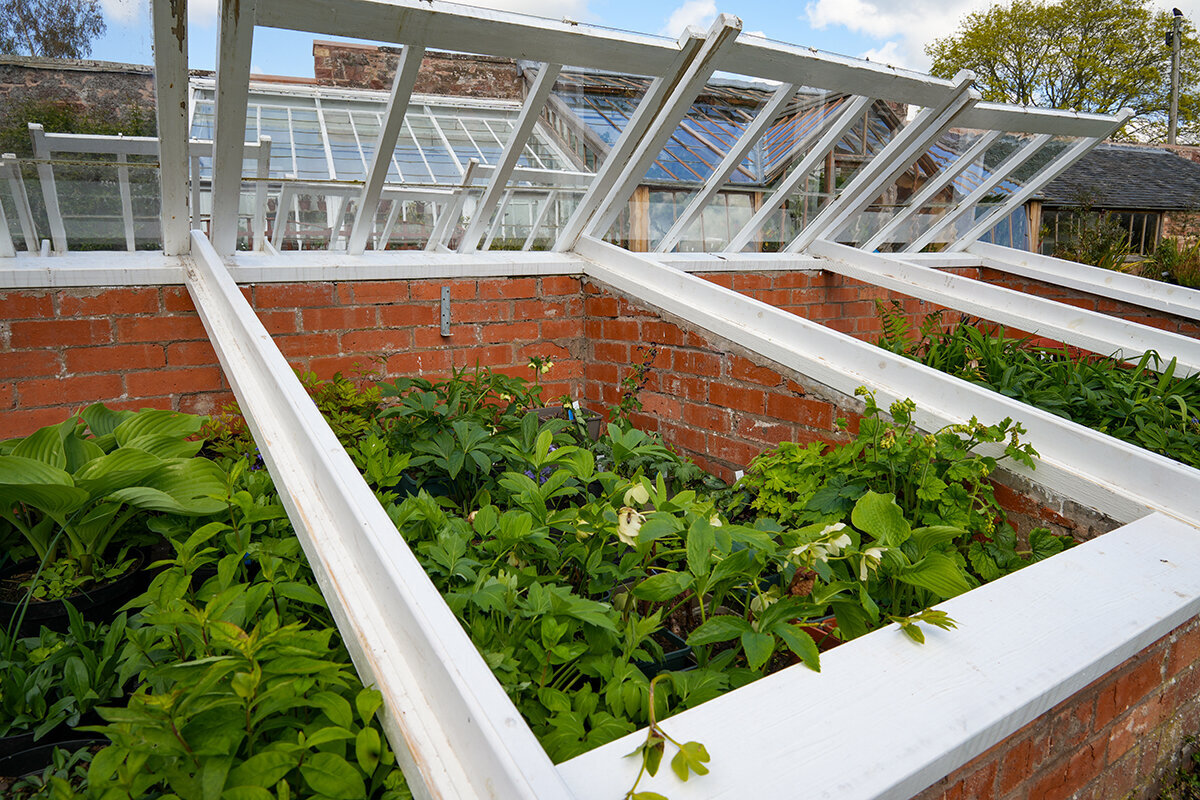
A low box topped by a transparent cover that normally lifts open.
Cold frames may rest on soil, cover an existing bed or sit over a raised bed. Timber, masonry, metal or durable sheet material can form the sides, with a clear lid above. Most rely on sunshine rather than heat and are aired by hand or an automatic opener. Their shallow form keeps captured warmth near the growing medium and seedlings. For additional background, see the LWG guide to small greenhouses . It discusses placement, bases, ventilation and workable access around the structure.
Names used by retailers are not always consistent. A frame supplied with heat may be known as a hotbed, whereas a low tunnel covers a row or a broader strip of soil. The access method offers a practical distinction for home gardens: lift a cover and tend the plants from outside, and you are using a cold-frame arrangement; enter through a door to garden within the enclosure, and it is a greenhouse.
A closed cover is not a guarantee against frost. Sunlight, warmth stored in the soil, insulation, wind, ventilation and the severity of the night all influence an unheated frame or greenhouse. Tender crops may still need further protection, and neither enclosure should be assumed to provide dependable frost-free winter conditions.
02 / Conditions inside a cold frame
LOW
Captured heat remains close to the growing medium.
Because the frame sits over the bed, its climate responds directly to the ground beneath it. Daylight warms plants, containers, soil and the enclosed air, while the sides reduce wind movement. There is little air to buffer change: ventilation may be necessary on a crisp but sunny day, yet much of the accumulated warmth can disappear during a clear night.
Jobs that suit a cold frame
This compact shelter is most useful when given specific tasks. It can advance hardy leafy crops, carry salads farther into autumn, block chilling wind around selected plants or introduce indoor-raised seedlings gradually to outdoor sun and temperature swings. Crops may be rooted in the bed or kept in pots and trays. On warm, sunny days, lift the cover before excess heat develops. For related advice, see the LWG guidance on mini greenhouses and raised-bed covers . The publication describes small growing shelters and explains how a raised-bed cover can improve working posture.
- Suitable crops Leaf lettuce, spinach, arugula, Asian greens, radishes, early kohlrabi, hardy herbs, young brassicas and seed trays being acclimatized outdoors.
- Routine checks Review the forecast, vent before the enclosure overheats, feel or measure moisture in the growing medium, and lower the cover ahead of the evening chill.
- Limits of the form Available height and comfortable reach are both restricted. Plants requiring support, regular harvesting or prolonged upright growth can quickly become impractical in such a low enclosure.
- Fit within the garden With restrained edging and materials, a cold frame can become part of a vegetable plot or raised bed rather than appearing as a separate garden building.
03 / Conditions inside a greenhouse
Extra volume benefits the gardener as well as the plants.
Height has a practical role. It leaves space between foliage and the roof and allows warm air to move upward towards the vents. It also makes a coordinated growing area possible: benches can hold seed trays, shelves can store supplies, a path can run through the structure, climbing crops can be supported, and the door provides access for pots, soil and harvested produce.
The added space still requires active care. Broad transparent surfaces absorb considerable solar energy in bright weather and shed heat after dark. Shading, irrigation, cleanliness, ventilation and seasonal reorganization all become regular tasks. Direct sunshine can produce excessive interior heat even while outdoor air remains cold, making timely ventilation important whenever the greenhouse is in use. For further horticultural context, read the LWG advice on raising seedlings successfully . It provides a practical perspective on the light and temperature requirements of sensitive species.
Its chief advantage for an enthusiastic home gardener is versatility. With thoughtful placement, a greenhouse can support propagation, carry sensitive plants through unstable spring weather, house summer tomatoes and cucumbers when well ventilated, and keep herbs or leafy crops going later in autumn. Bloomcabin’s Classic Aluminium Greenhouse provides this workspace in a durable aluminium structure, with a choice of dimensions, ventilation arrangements and glazing for the planned use.
04 / Understanding heat without guarantees
Sun warms both structures, but the heat moves differently in each.
Avoid choosing on the basis of a promised temperature gain. A better comparison follows the movement of sunlight, air, ground heat and moisture, together with the effect of ventilation. Cloud, wind and darkness can alter that temporary climate surprisingly quickly.
Cold frame
Sun-warmed zone at soil level
Greenhouse
Usable enclosed air above the beds
Sunlight arrivesGround retains heatCover releases heat
Sunlight arrivesWarm air moves upwardUpper vents release it
Heat in a cold frame
The compact clear cover admits light that warms the bed, crops and enclosed air. Since the heated zone is shallow, much of its benefit is concentrated around the plants. Propping up the lid can discharge heat immediately, although this simple control needs attention and may change conditions abruptly. Cooling after sunset is also rapid. Soil, stone or water-filled containers can moderate the swing, but cannot prevent harmful cold in every situation.
Heat in a greenhouse
A broad transparent shell admits light to the plants, containers, benches, floor and air. The warmest air often occupies the upper part of the structure, while the interior volume permits circulation and more generous crop spacing. Doors, roof openings, cross-ventilation and shade provide ways to respond. Nevertheless, the day’s accumulated heat ebbs overnight. Shelter from an unheated greenhouse does not ensure an adequate temperature for every plant or every Canadian climate.
Take readings where the crops are Set a dependable thermometer among the plants rather than judging conditions from the sensation of walking inside. Excessive heat, a cold night, high humidity or dry growing medium can cause damage before a brief visit makes the pattern obvious. The Bavarian Garden Academy further advises that ventilation may matter more than heating and reports that temperatures above 25 °C can reduce growth and yield. For more seasonal context, consult the guide to the garden year, cold frames and ventilation . This German technical resource relates seasonal vegetable work to active management of the protected climate.
05 / Match the shelter to the crop cycle
Begin with the plants and the length of time they will remain under cover.
Low crops and brief transition periods make efficient use of a cold frame. A greenhouse becomes worthwhile when the plan involves greater height, more plants, staggered sowing or extended cultivation. Open garden beds remain important in either case; the shelter simply broadens when those beds can be used.
- — Cold-frame role: Shelter for lettuces, radishes, spinach, arugula, sturdy young plants and trays making a gradual transition from indoors to the garden.
- — Another cold-frame role: Helping nearly mature autumn greens reach harvest, rather than trying to produce vigorous fresh growth through the lowest-light part of winter.
- — Greenhouse role: Room for several propagation trays, with space to prick out, label, water, repot and hold plants temporarily at a convenient height.
- — Another greenhouse role: Housing supported tomatoes, cucumbers, eggplants and substantial container plants when their particular needs for light, warmth, moisture and moving air can be met.
- — Useful in either: A sheltered stage where young plants become accustomed to direct sun, wind and fluctuating spring weather before they go into open ground.
- — Not supplied by either structure alone: Appropriate cultivars, planting times chosen for the site, and continued observation of crop health. For a German plant-health example, see the North Rhine-Westphalia Chamber of Agriculture’s plant-protection guidance . Its discussion of whitefly illustrates the connection between crop health, airflow and shading.
06 / Access determines the routine
Each design asks the gardener to move in a different way.
Using a cold frame involves kneeling or bending over its edge, raising the cover and reaching across the bed. That close contact can be pleasant for a small planting and quick visits, but mobility, back comfort, safe handling and frequent tray work deserve consideration. Transparent lids can be heavy, awkward in gusts and hot after sustained sunshine.
Greenhouse tasks are normally performed upright. Benches lessen bending, a middle walkway helps when moving cans or boxes, and high vents can exhaust hot air without uncovering the crops. The trade-off is a longer task list: adjust doors and vents, monitor water, deploy shade, wash glazing, support plants and inspect an enclosed collection for disease or pests.
↘AccessStep inside or tend the bed from beyond its edge.
↑Working reachAcross a bed or along a bench.
⌒Air controlA lifted cover or openings in the roof.
≋IrrigationWater the whole system or inspect a compact area.
□UpkeepMaintain an interior workspace or an individual bed.
What this means in practice: Greenhouse circulation can be arranged for upright work, carrying supplies, putting them down and turning while holding a box. A cold frame instead needs a width you can reach from the side, a stable prop for its cover and unobstructed opening space. Positioning one over a raised bed can increase the working height. For anyone who finds repeated lifting or kneeling difficult, access may outweigh the difference in purchase cost.
07 / Site, exposure, anchoring and service life
Make the layout respond to sunlight, movement and the weather at the property.
A frame can border the vegetable garden or complete a raised-bed arrangement. Give it sun during the periods when protection is useful, stable level support, drainage and safe clearance for the lid. Watch how buildings, mature trees and tall hedges cast shade during the lower-angle light of spring and autumn. Confirm that wind will not make the cover unsafe and that every part of the bed remains within reach.
Choosing a greenhouse site warrants more observation. Include the swing of the door, paths, a water source, roof runoff, nearby trees and wheelbarrow manoeuvring space as well as the footprint. Track sun and prevailing wind rather than relying on one visit. An exposed coast, a sheltered city lot, a snow-prone inland garden and a mountain property present different design questions. A permanent structure needs a suitable foundation, secure anchoring and assembly in accordance with its manufacturer’s instructions.
For a lasting premium structure, select the model and anchoring system with the actual property in mind. Resolve installation directions and approval questions before committing to the site. The Classic Aluminium Greenhouse offers a starting point for comparing dimensions, configurations and the space each option occupies in a garden.
08 / Follow the local season
Think in changing tasks, not in year-round tomato promises.
Protected-growing schedules shift with latitude, elevation, coastal influence, urban surroundings and the individual property. Across Canada, the same task may occur at very different times. Use this progression as an order of work rather than a dated calendar, adjusting it for frost, available daylight, cultivar and current weather.
End of winterPrepare and shelter
Opening of springAcclimatize and air
Later springTransplant and support
SummerProvide shade and moisture
Autumn into early winterFinish harvests and add protection
Near winter’s end, greenhouse propagation is possible when light, temperature and ventilation are adequate. Hardy leaves or cold-tolerant young plants may use a frame during favourable spells. As spring begins, expose seedlings to outdoor conditions by stages and open the cover generously in sunshine. Meanwhile, greenhouse benches can support pricking out and repotting while providing shelter during unstable nights.
During summer, removing or leaving open the cold-frame lid can turn the enclosure into an ordinary bed or temporary nursery. Greenhouse crops then need close attention to air movement, shade and consistent moisture. In autumn, the low cover can help finish salads and hardy leafy vegetables during chilly nights. The larger shelter may extend selected herbs and vegetables, hold appropriate containers and receive new trays. One effective pattern is to start under cover, grow in the open and protect late crops again at bed level.
09 / Budget for time as well as money
Maintenance is part of the commitment.
A cold frame is often a manageable project with modest material needs, restrained visual impact and limited routine maintenance. Attention is its less visible cost, especially when the weather changes abruptly. In a run of bright spring days, good results depend on someone airing the frame in the morning and closing it before the night cools.
A greenhouse needs more advance planning and greater initial expenditure, but it can gather many garden activities under one roof. Equipment and long-term servicing consequently matter more. Gutters, clean glazing, automatic openers, shelves, shade, drip watering and any proposed heating or circulation equipment should all correspond to the way the space will actually be used.
- Maintaining a cold frame Examine hinges, props, seals and transparent panels; clear snow and leaves safely; keep the opening mechanism free; refresh the growing medium; and promptly discard diseased material.
- Maintaining a greenhouse Wash the glazing and drainage components, inspect seals and mechanisms, service irrigation and ventilation, watch for condensation, and clean work surfaces between successive crops.
- Be realistic about energy Without heating, this remains a seasonal shelter rather than a heated winter growing house. Before adding warmth, work out the crops to be grown, expected energy demand and ongoing operating expense.
- Adding capacity later Additional cold frames can serve other beds as requirements increase. Greenhouses tend to grow inward instead, gaining benches, shelves, drip lines, shading and increasingly organized propagation routines over time.
10 / Arriving at a choice
Let the way you garden determine the answer.
Treat the comparison as a way to identify fit, not to award first place. A cold frame performs a compact, specialized job and should not be judged as an inadequate greenhouse. Nor is the greenhouse inherently the superior option. Its permanent transparent volume makes sense when upright work, crop diversity, longer cultivation and frequent use will genuinely benefit from it.
| Question to weigh | A cold frame is likely to fit when … | A greenhouse is likely to fit when … |
|---|---|---|
| Purpose for growing | The plan centres on salads, radishes, hardy young plants and a compact place for acclimatization. | The plan includes numerous starts, tall crops, container plants or several kinds of crop at the same time. |
| Room on the property | There is space for one bed-sized enclosure, but no desire for another structure that people enter. | There is room for the enclosure, circulation and work, with helpful sunlight during spring and autumn. |
| Movement and posture | Short visits involving bending, kneeling and safely handling the cover are comfortable. | Upright work, carrying boxes and tending benches from convenient positions are priorities. |
| Environmental attention | A lid, thermometer and moisture observations provide enough control for the small planting area. | You are prepared to monitor air exchange, irrigation, humidity, shade and spacing throughout a larger enclosure. |
| Degree of permanence | A low garden feature that can be altered or moved with relative ease is preferable. | The aim is a durable focal structure supporting cultivation over many seasons. |
| Plans for growth | Another box could be placed beside a different bed when more protected space is needed. | You expect your range of garden activities to broaden and want a dedicated place in which to arrange them. |
Pick the cold frame
For concentrated, bed-level shelter.
It answers a need for a compact protected patch connected directly to the soil, especially for salads, young plants and the changeover between seasons.
Pick the greenhouse
For a growing room you will enjoy using.
It provides upright access, organized propagation, capacity for taller plants and a permanent structure that can keep pace with more ambitious gardening. Consider the Classic Aluminium Greenhouse as a premium foundation for this enduring walk-in workspace.
Use the two together
When separate jobs call for separate shelters.
Let the greenhouse handle propagation, upright summer crops and indoor organization. The cold frame beside the vegetable plot can then acclimatize seedlings, carry cool-weather leaves and provide focused protection during seasonal change.
11 / Questions gardeners often ask
Brief answers that can shape an entire season.
Is a cold frame simply a miniature greenhouse?
The terms are sometimes used loosely because both enclose plants behind transparent material and collect sunshine. Their working arrangements are quite different. You tend a shallow cold frame by lifting its cover from outside; you enter a greenhouse, whose greater height and interior air space support taller crops and a broader range of tasks.
Can plants survive frost in a cold frame?
The enclosure can reduce exposure to wind, precipitation and brief cold for tolerant plants, but freezing conditions remain possible. Results vary with the species, how well the lid closes, daytime sun, wind, soil moisture, the overnight minimum and any added covering. Even in cool weather, bright sunshine may require ventilation to prevent overheating.
Can an unheated greenhouse add growing time?
Yes. It can organize propagation, shelter crops and make spring and autumn transitions more usable. Its climate still responds to outdoor weather and daylight. Keeping tender plants productive in winter may involve heat, additional lighting, careful airflow and a clear understanding of recurring costs.
Where should a new cold-frame gardener begin?
Try acclimatizing a manageable group of seedlings. Hardy lettuces or young brassicas are practical candidates; use a thermometer and learn when the lid needs opening. After observing the frame through sunshine, wind and clear nights, consider adding early or late salad crops.
Which factors matter when selecting a greenhouse?
First examine the property and decide which crops the structure will serve. Then allocate working space for paths, benches, irrigation and ventilation. Floor area tells only part of the story: door clearance, upper vents, glazing, anchoring, drainage, local wind and snow, and the frequency of your visits all influence long-term usefulness. The range of aluminium greenhouses demonstrates how this walk-in approach can move from compact garden footprints to larger formats.
References and further reading
Resources for better-informed planning.
The horticultural references below are German sources used for information on ventilation, propagation, crop care and plant health; their recommendations still need adjustment for the property and its weather. For construction questions in Canada, identify the province or territory and municipality and consult the responsible authority. Federal model codes do not take effect uniformly across the country without local adoption.
Continue with Bloomcabin: Greenhouses and conservatories · Bloomcabin Blog · Classic Aluminium Greenhouse
- Bavarian State Institute for Viticulture and Horticulture — Small Greenhouses
- LWG — Urban Gardening: Mini Greenhouse and Raised-Bed Cover
- LWG — Raising Seedlings at Home or Buying Them
- LWG — Vegetables Through the Garden Year: Seasonal Work and Cold Frames
- North Rhine-Westphalia Chamber of Agriculture — Whitefly in Small Greenhouses
- National Research Council Canada — national model codes and local applicability
compact aluminium mini greenhousescompact aluminium mini greenhouses
Classic Aluminium GreenhouseClassic Aluminium Greenhouse
Bloomcabin / plan around the way you grow
Decide what kind of season-extending space belongs in your garden.
Before planning the next sheltered growing area, compare its dimensions, site demands, configuration and usefulness for the crops you truly intend to cultivate.
