
Greenhouse Rotation Planning: Care for the Soil Between Crops
Soil log / greenhouse record 32
Greenhouse Rotation Planning: Care for the Soil Between Crops
Each spring, a greenhouse bed carries evidence from earlier crops: old root channels, depleted nutrients, plant debris, watering patterns, salt deposits, pest or disease pressure, and the results of past amendments.
Rotation begins by examining that history before deciding what to grow next. The practice is especially valuable under cover, where tomatoes, peppers, cucumbers and salad crops may return to the same bright patch year after year.
Practical overview
Read the bed before planting again.
- The jobs rotation can handle—and the ones it cannot
- Recognizing botanical relatives
- Balancing roots, leftovers and fertility demands
- Sketching a 4-year rotation sequence
- Making the plan fit 2 or 3 beds
- Using containers, grow bags and combination layouts
- Short green-manure periods, compost and renewal
- Tests, salt accumulation, clean-up and crop-free intervals
The history held in a bed
A harvest changes what the next crop inherits.
Tomatoes and peppers belong to the nightshade family, so replacing one with the other does little to interrupt risks shared by close relatives. Cucumbers, melons and zucchini form another family, while cabbage, arugula, radishes and mustard are brassicas. Start the plan with these relationships because related plants often favour similar conditions and can share vulnerabilities.
Rotation involves much more than listing botanical families. Long-season fruiting crops draw heavily on water and nutrients and leave substantial stems and roots. Lettuce may occupy only the upper part of the bed for a brief period. Even legumes that work with root-nodule bacteria do not supply all the nitrogen needed by the crop that follows. Their contribution varies with species, growth, root mass, retained residues, soil biology, available time and later bed management.
Manage each bed as a compact ecosystem. Reduce repeated host pressure by changing crops, and vary both rooting patterns and fertility demands. Test before adding fertilizer, clear unhealthy material, and deliberately schedule living roots, a brief rest or fresh growing medium where space is limited. These choices maintain productivity without assuming the soil can absorb endless use.
Plant-family register
Track botanical kinship rather than relying on a new crop name.
Use these families as a planning aid, not as proof that every member behaves alike. A confirmed diagnosis, advice suited to the region, resistance information for the chosen variety and the bed’s own records should outweigh a generic rotation chart.
01Nightshades
02Cucurbits
03Brassicas
04Legumes
05Leaf crops
Nightshades. Tomatoes, peppers, chillies, eggplants and potatoes share a family. Following peppers with tomatoes therefore does not create a meaningful botanical break. If tomatoes have occupied the bed repeatedly or a disease has been confirmed, select an unrelated group or grow the fruiting crop in containers with controlled medium.
Cucurbits. Trellised cucumbers, melons and zucchini can yield well under cover, but their dense growth needs steady watering and produces considerable plant residue. Following them with lettuce, beans, alliums or another appropriate non-host changes the rooting pattern, length of occupancy and care routine.
Brassicas. Cabbage, Asian greens, arugula, radishes, mustard and rapeseed are all brassicas and should be recorded as one extended family. Mustard does not provide a neutral green-manure interval when the history includes heavy brassica use or a relevant disease.
Legumes. Beans, peas, clover and vetch broaden the rotation and may fix nitrogen through bacteria in their root nodules. The amount available later is variable, so legumes never replace soil testing or a crop-specific fertility decision.
Salads and short crops. Head lettuce, lamb’s lettuce, spinach, chard, carrots and alliums can fill useful gaps around longer crops. They still need sound seed, suitable spacing, even moisture, drainage and clean growing conditions. Their main advantage is the ability to fit into short or narrow openings in the schedule.
Botanical family is only an initial check. Root depth, nutrient use, pest and disease history, and occupancy ranging from a few weeks to 7 months all require separate decisions.
The rotation map
Use a travelling sequence instead of forcing a wheel.
A row-by-row plan suits a greenhouse because each permanent bed occupies a specific place. Assign one line to every zone, then advance the crop groups annually. Where light and timing allow, include a brief lettuce or green-manure crop. Record what was actually grown, along with fertilizer, compost, symptoms and yield, rather than preserving only the original intention.
Bed
Year 1
Year 2
Year 3
Year 4
N
F
L
B
R
S
R
F
L
B
E
B
R
F
L
W
L
B
R
F
F – long fruiting-crop phase. Tomatoes or peppers represent main crops with a long season and substantial nutrient requirements. Before planting, assess the assigned bed, verify that water reaches it evenly and reconsider earlier fertilizer applications rather than carrying them forward automatically.
L – legume phase. Beans followed by an autumn crop alter the occupied root space, canopy and length of the growing period. Clear questionable residues promptly. Any nitrogen fixed by the legumes is a potential contribution to assess, not a complete fertility plan.
B – leafy-crop phase. Lettuce, spinach, carrots or appropriate brassicas can occupy a flexible part of the season. If brassica disease is known, select an unrelated non-host rather than following this sample sequence mechanically.
R – recovery phase. Depending on the season, light and available interval, this phase could contain phacelia, an appropriate grass mixture, a short succession of lettuces, alliums or another carefully chosen non-host.
Treat the sequence as an illustration rather than a required order. Across Canada, available light and the useful growing window vary by region, so substitute suitable crops without changing the intended family break. After a confirmed disease, choose the green manure and sowing time with particular care.
Soil profile
0–5 cmResidues
5–25 cmRoots
25–45 cmTransition
BelowDrainage
Changing where roots work
Observation matters as much as feeding.
Shallow lettuce roots, the mid-depth root system of beans and deeper fruiting-crop roots use a bed in different ways. They do not divide the soil into tidy layers, and a new crop cannot undo every effect of its predecessor. Still, varied root structures can change water uptake and biological activity, whereas repeating one crop tends to concentrate similar demands in the same part of the bed.
Surface check: Note dried compost, spilled fertilizer, algae, pale salt crusts, compacted mulch and plant remains that need clearing. These visible signs are helpful observations, but none provides a diagnosis on its own.
Root-zone check: Inspect old roots and planting holes, then compare moisture along the irrigation route. Repeated fruiting crops may focus water use and nutrient demand within one confined strip for several seasons.
Lower-profile check: Slow water movement, compacted trenches, the underlying soil type or a hard layer can affect everything planted above. Changing crops will not correct a drainage problem that has gone unnoticed.
Examine the beds once a crop has been removed. Check whether old roots are decomposing, whether water penetrates evenly and whether dry soil remains beyond the irrigated area. A record of these details turns a planting calendar into practical soil management.
A note for covered beds: Because rainfall does not routinely leach soil inside a greenhouse, heavily used beds merit recurring checks of pH, major nutrients and, when appropriate, salt levels. Compost adds useful organic matter, but large yearly applications can raise nutrient and salt concentrations, particularly when the source material is already rich in fertilizer.
Working within limited space
If an ideal rotation will not fit, build meaningful intervals another way.
Plan A / permanent beds
2 beds in the ground
Move the principal fruiting crop from one bed to the other, and use the cooler parts of the year deliberately. Where local conditions allow, a bed might carry tomatoes from May into autumn while the other holds cucumbers, beans or peppers consistent with its family and disease history. Lamb’s lettuce, spinach, alliums or a suitable green manure can give the soil a different occupant during cooler windows.
- Maintain a written record for at least 3–4 years.
- Base amendments for each bed on its own test results.
- Clean stakes, clips, trellis materials and irrigation components so equipment does not carry a crop’s disease history into the next zone.
Plan B / portable growing
Containers and grow bags
A container provides a more distinct reset because its growing medium can be managed or replaced separately. Place tomatoes, peppers or cucumbers in vessels large enough for the crop, leaving permanent beds for lettuce, beans, herbs or a green manure. New medium is not a substitute for sanitation: saucers, benches, tools, supports and drip lines also need cleaning.
Before reusing medium, assess its structure, remaining roots and visible salt deposits. Suspected disease or severe deterioration may justify isolating, treating or replacing it. Record where used soil came from so it does not quietly transfer problems between crop groups or seasons.
Plan C / combined layout
Let each part of the floor plan serve a purpose.
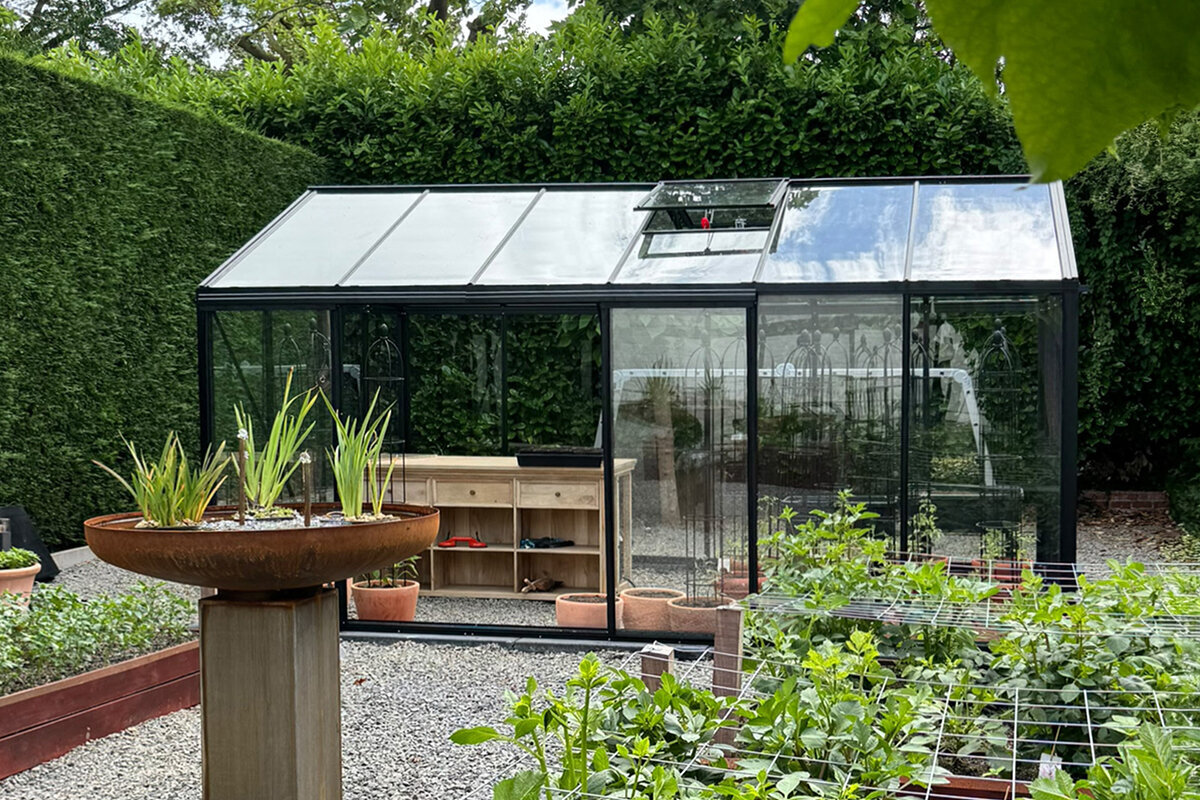
A propagation bench, large containers and an in-ground bed can share the space without making it feel cluttered. The Classic Aluminium Greenhouse lets you organize permanent beds, paths and movable crops as a coordinated system. That flexibility helps keep frequently repeated fruiting crops separate from long-term bed soil.
To coordinate daylight, operable roof vents and distinct growing areas from the start, consider the Classic Aluminium Greenhouse.
Interrupt routes of carryover
Rotation is more effective when clean-up is part of the schedule.
Some problems remain in crop debris; others move on tools, containers, supports, water or soil. Persistence differs with the organism, host, climate, material and management, so a universal waiting period would be unreliable. If wilt, root rot or unexplained collapse returns, seek a precise diagnosis from an appropriate regional plant-health adviser before choosing the next crop.
For a long-term layout with clearly separated growing areas, the Classic Aluminium Greenhouse is a practical starting point, especially when a long tomato crop will share the greenhouse with movable containers, work paths and separate beds.
Harvest
Remove
Between
Clean
Planting
Pause
After harvest
Clear finished plants, fallen fruit and visibly diseased tissue without delay. Infected material should not be used as mulch. Whether it can enter a properly managed compost system, should go to municipal green-waste collection or needs another disposal route depends on the diagnosis and guidance for the area.
Between crops
Brush soil from hand tools, then clean clips, stakes, benches, trays and trellis materials. Fix leaking irrigation. After watering, ventilate the greenhouse and limit splashing or prolonged leaf wetness where the crop permits, since both can favour disease.
Before planting
Choose an unrelated family when practical and plant only vigorous, healthy transplants. Resistant or grafted plants can help in selected situations, but they do not replace diagnosis, sanitation, drainage or a genuine interval away from the host crop.
A plan that fits real greenhouses
3 greenhouse sizes, 3 workable approaches.
Use these sequences as frameworks rather than instructions. A fruiting nightshade may be a tomato, pepper or eggplant, but another nightshade in the following year is not a botanical rotation. Leave room for regional differences in Canadian growing conditions, personal crop choices and any problem that has been observed or diagnosed.
Before any new crop: Put 3 points in the soil log: the previous crop, any problem observed and the family planned next. Recording them now is more dependable than trying to reconstruct a busy growing season later.
| Layout | Possible crop order | Why it helps |
|---|---|---|
| 1 permanent bed plus containers | Bed: lettuces and radishes → beans or herbs → an appropriate green manure. Containers: tomatoes or peppers in renewed or closely managed medium. | Keeping the recurring nightshade crop in containers reduces repeated use of the permanent soil. Wash the containers, saucers, supports and tools before the next season. |
| 2 permanent beds | Bed A: fruiting nightshade → lettuce or legume → cucurbit. Bed B uses the same stages on a delayed schedule, with a less demanding autumn or winter interval. | Make the crops before and after the main planting count as real breaks. Do not follow peppers with tomatoes or melons with cucumbers in the same bed. |
| 3 or 4 growing zones | Fruiting crops → leafy and root crops → legumes → cucurbits or a recovery phase. Each year, move every group by 1 zone and note any intermediate crop. | This layout provides the most flexibility for separating families, changing root patterns and tailoring soil care. Sample the beds individually if their cropping histories are different. |
When planning a new growing area, begin with a structure that can be divided clearly. The Classic Aluminium Greenhouse and the Classic Aluminium Greenhouse offer room to coordinate seasonal changes, paths, containers and permanent beds before planting begins.
Compost, green manures and soil results
Let measurements guide recovery instead of simply adding more.
Compost contributes organic matter and may improve structure and moisture retention, but extra compost is not a dependable fertility plan under cover. With no regular rainfall to leach the soil, salts and particular nutrients can accumulate. Take representative samples from beds with different histories. Useful results include pH, phosphorus, potassium and magnesium; intensive systems may also benefit from professional assessment of salts, nitrogen status and irrigation water.
Use the report to decide whether the bed needs mature compost, a targeted fertilizer, a pause in feeding or another correction. Mix appropriate amendments into the soil according to crop and soil needs instead of repeatedly creating dry surface layers. Elevated salt readings are not corrected by more compost. Test-based advice can help separate the effects of fertilizer, source materials, irrigation water and inadequate drainage.
A green manure helps only when it supports the intended family sequence. Grasses add roots and may take up available nutrients, legumes may fix nitrogen, and mixtures can combine functions. Mustard, rapeseed and other brassicas are poor choices when brassica disease or repeated brassica cropping is part of the history. End the green manure before it produces seed unchecked. Even a short spell of living roots can be useful, but sowing, watering and termination need the same deliberate planning as the tomato crop.
Questions greenhouse growers ask
Practical answers about greenhouse rotation
When can tomatoes return to a bed?
No single interval suits every greenhouse. With adequate space, exclude the same botanical family from that bed for several seasons. A diagnosed disease may call for a longer, carefully chosen non-host period, while containers make a cleaner change of medium possible. Base the decision on the family, the confirmed problem, previous management and advice appropriate to the region rather than on a fixed calendar alone.
Does alternating tomatoes and peppers count as rotation?
No. Tomatoes, peppers, chillies and eggplants are all nightshades, and they may share soil-borne problems and similar nutrient demands. If a small greenhouse must accommodate both, grow one in a large container or grow bag with managed medium and reserve the permanent bed for an unrelated family.
Can beans supply all the fertility for the next crop?
No. Root-nodule bacteria allow beans and peas to fix nitrogen, but the amount reaching a later crop varies with growth, nodulation, roots, retained residues, soil life and timing. Legumes are valuable for diversity and soil biology; testing and observation should still determine what the next crop needs.
Should greenhouse soil be changed every year?
Usually not. Permanent beds benefit from varied crops, appropriate organic matter, sound drainage, sanitation and repeat testing. Container medium is a stronger candidate for replacement when its structure has deteriorated, salts are high, roots are dense or disease is suspected. Seek specialist advice before removing large amounts of soil from a permanent bed with a diagnosed soil-borne problem, since watering or drainage may also require correction.
How do I choose a green manure for a compact greenhouse?
Match the choice to the open growing period and to the families planned afterward. Phacelia or an appropriate mixture may fit; grasses add roots, while legumes may fix nitrogen. Mustard and rapeseed are not neutral breaks in a brassica-heavy sequence. Use a manageable interval and sow only when the crop will have enough time to grow and can be ended deliberately before the next planting.
References and next steps
Continue with more detailed guidance.
The German specialist references below provide further detail on rotation, compost, soil analysis, salt accumulation and crop sanitation. Their foreign attribution is retained; for a suspected disease, pair crop-specific diagnosis with recommendations appropriate to the Canadian region where the greenhouse is located.
Related Bloomcabin guides: Planning a greenhouse interior · Choosing an aluminium greenhouse for long-term use · Aluminium greenhouse questions and answers
- LWG Bavaria – Plan vegetable growing and crop rotation through the garden year
- North Rhine-Westphalia Chamber of Agriculture – Plan crop rotation correctly in the vegetable garden
- German Environment Agency – Sustainable gardening with compost and compost soil
- German Environment Agency – Nutrients and soil testing in the garden
- LWG Bavaria – Symptoms of damage on greenhouse vegetables
- North Rhine-Westphalia Chamber of Agriculture – Salinization of greenhouse soils
Prepare the record for next season
Make the next note before the present crop is cleared away.
Regular attention makes a greenhouse productive, but consistency should not mean repeating the same pressure. Keep accurate notes, vary how each bed is used and allow a credible period for recovery.
Classic Aluminium Greenhouse