
Growing Kale in a Greenhouse
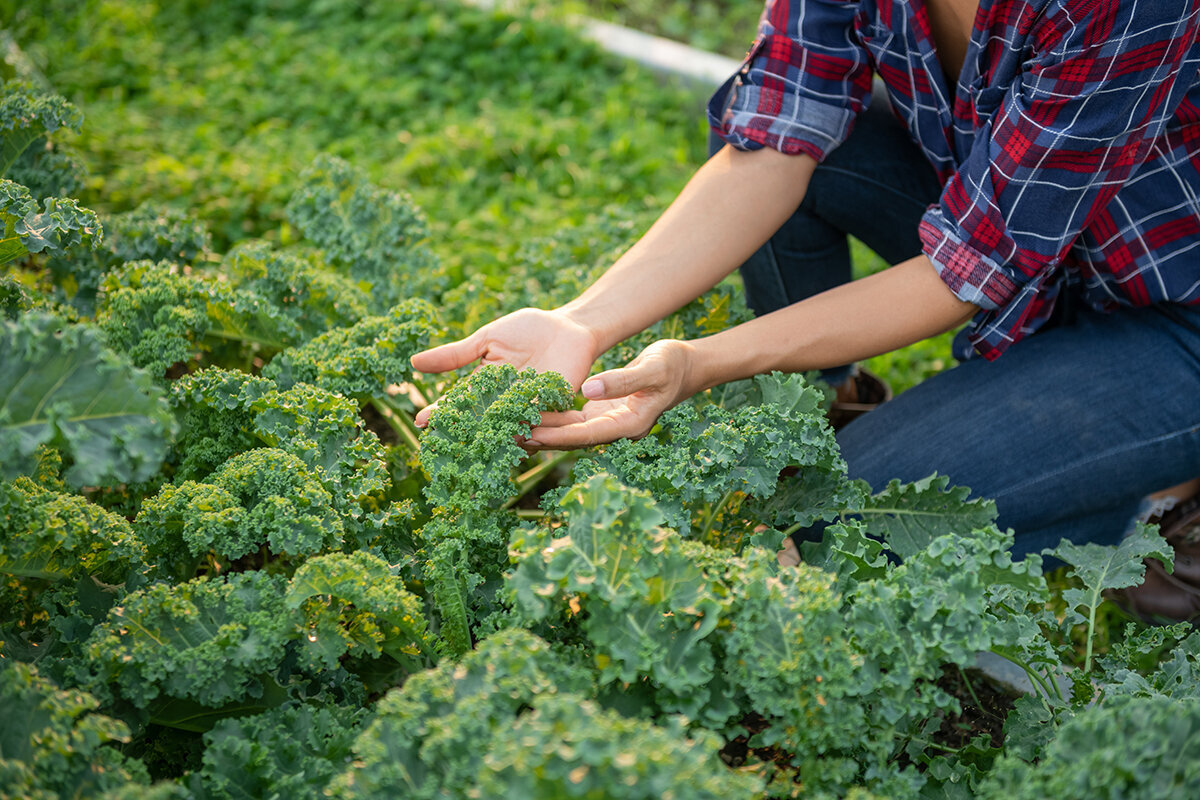
Bloomcabin greenhouse notebook / cool-weather crops
Growing Kale in a Greenhouse
A distinctive cool-weather vegetable that offers firm, sweet leaves, repeat picking and a productive use for greenhouse space after tomatoes, peppers and cucumbers.
Crop typeCool-weather brassica with a repeat-picking habit
Best greenhouse roleFresh leaves through fall, winter and early spring
Ideal conditionsBright light, cool air and consistent root moisture
Most important ruleKeep the central growing crown intact
Making winter light work
Kale asks for shelter rather than tropical heat. A cool greenhouse can reduce exposure to prolonged rain and wind, keep foliage cleaner and provide the air movement needed to dry tightly crinkled rosettes.
Let the leaves tell you what is happeningA firm rosette with an active centre suggests balanced growth. Soft stalks, yellow foliage or moisture trapped around the crown are signs to adjust conditions promptly.
Cover does not erase seasonal limits. Short daylight still slows development, and an unheated structure may freeze. What the greenhouse provides is better control over wind, wet foliage, irregular watering and abrupt shifts in temperature. Give kale a bright section of a small house and retain clear access to every plant. The Classic Aluminium Greenhouse adds useful height, roof vents and accessible paths for an orderly crop through the cooler part of the year.
Cold tolerance does not make kale immune to stress. Leaf quality is better when growth remains gradual instead of alternating between chilled, saturated roots and sudden solar heating. Do not try to force rapid growth in December. Aim for steady conditions in which foliage can mature, dry after humid nights and stay suitable for picking.
01 / Match the plant form to the space
Start with the room each type will occupy.
Flavour is only part of the choice. Mature height, density, harvesting style and ventilation all vary with plant form. Consider aisle width, eave clearance and the length of time the crop will remain in place.
Curly kale
Deeply curled foliage supplies plenty of picking area and a familiar cool-season look. Because the folds retain water, these plants need open spacing and prompt ventilation.
Best forRepeated picking from the outside of the plant
Under glassLeave open space around each rosette
Tuscan kale / lacinato kale
Long blue-green leaves grow in an upright column that takes relatively little bed width. This form is easy to examine and simple to pick from the edge of an aisle.
Best forSmall beds and narrow rows
Under glassPick young lower foliage at regular intervals
Red kale
Purple stalks and red-veined foliage add colour among other cool-weather crops. Tender young leaves are a common use, but the soft centre should be inspected often for aphids.
Best forYoung leaves and sowings made in stages
Under glassInspect the tender centre for aphids
Compact types
Low-growing selections suit narrow borders, raised beds and structures with limited eave height. Their contained rosettes can crop well without blocking the aisle with overlapping damp foliage.
Best forPots, raised beds and compact plans
Under glassChoose deep pots with unobstructed drainage
For large plants at maturity, begin with about 45 cm between plants in a row and 50 to 60 cm from one row to the next. Tighter planting is appropriate only when young leaves will be cut or surplus seedlings will later be removed. Prioritize room to inspect each stalk, irrigate the soil at its base and pick without rubbing against wet foliage.
Prepare a loose, humus-rich bed that drains freely rather than reusing compacted soil without improvement. Remove the previous crop and incorporate finished compost before planting. Kale generally favours soil near neutral or mildly alkaline, together with reliable moisture and nutrition. Where acidity is severe or clubroot has occurred, test the soil before adding lime or returning brassicas to the bed. Rotation and testing provide a sounder basis for amendments than applying fertilizer by guesswork.
02 / Build the crop in stages
Divide sowing into several rounds.
A single large batch may overwhelm the kitchen and then leave nothing ready. Using two or three smaller batches creates a sequence of seedlings, harvestable plants and older crowns that can be removed at the appropriate time.
First wave
Direct sow
Prepare a fine seedbed, moisten it evenly and apply only a light covering over the seed. Sowing in place avoids transplanting and is useful when the greenhouse border is already empty and clean.
Thin with the final crop in mind. Use crowded seedlings as young greens, but retain only vigorous, well-positioned plants for full rosettes.
Second wave
Transplant gently
While summer vegetables still occupy the final position, start kale in small pots, cell packs or a clean seed tray. Vigorous seedlings with several true leaves can move after roughly three to four weeks.
Place each seedling a little deeper than it grew in its container and water immediately. Temporary shade is enough if unusually strong late-summer sun follows transplanting.
Third wave
Make the next sowing two to three weeks later
Add a modest follow-up batch while temperature and daylight can still produce sturdy plants. This provides replacements and spreads picking through late summer and fall. During the lowest-light part of winter, pausing is preferable to producing weak, soft seedlings.
Label each batch with its variety, position and sowing date. Notes from your own structure will soon be more useful than a broad calendar because greenhouse microclimates differ.
There is no single sowing window for every Canadian region. Available daylight, local winter conditions and greenhouse performance should determine the schedule. Shield late-summer trays from overheated glazing, and expect very late batches to yield young foliage rather than always forming full winter plants. The Aluminium Mini Lean-to Greenhouse can serve as protected transition space while the main border remains occupied.
During germination, maintain uniform moisture without soaking the medium. After emergence, strong light and mild air movement help seedlings stay short and sturdy. Check the tray itself during late summer: direct afternoon sun can dry a pot even when the surrounding air seems comfortable. If the plan calls for one plant per pot, keep the strongest seedling. Spindly plants rarely recover fully once fall light becomes limited.
03 / Manage the greenhouse climate
Cool foliage, dry centres and evenly supplied roots.
Kale quality depends more on stable cool-weather management than on pushing fast growth. Encourage measured leaf formation and avoid cycles of lush growth followed by heat, drought or saturated soil.
Sowing
Day length
Heat pressure
Harvest
Sowing opportunities, daylight, heat risk and picking time shift together.
Consider all four signals as one pattern. Declining daylight naturally reduces growth, so adjust harvest expectations instead of crowding plants or adding unnecessary water and fertilizer. When light strengthens toward spring, solar heat may require earlier venting. Staggered batches place plants at different stages, allowing established rosettes to crop while younger ones develop.
Well-spaced rosettes
Open routes for air
Overlapping rosettes
Moisture caught among leaves
Generous spacing lets air pass around the soil and into the lower foliage. It also leaves room to irrigate near the stem, remove ageing leaves and inspect the crown after a humid night.
Where plants overlap, dampness persists and insects are harder to find. The extra plant count may therefore reduce usable yield through damaged leaves, slow drying and awkward access.
Winter ventilation deserves the same attention as summer ventilation. Plants and damp soil continually add humidity to the enclosed space, and a brief planned air exchange removes it. Roof vents help because warm moist air moves upward. Still inspect the middle of each plant: curled foliage can remain damp even when the glazing looks dry. The ventilation built into a Classic Aluminium Greenhouse makes this moisture-control routine easier within a practical, durable growing space.
Base watering decisions on moisture below the surface. In cool conditions, examine the soil about 5 to 8 cm down; a dry-looking top does not prove that the root layer needs water. Pots lose water sooner than an in-ground border, yet kale uses much less in weak winter light than during bright spring growth. Irrigate early enough for splashes to dry before nightfall, empty water from saucers and ensure heavy soil can release surplus moisture.
04 / Preserve the growing crown
Pick around the edge and leave tomorrow’s growth intact.
For a long harvest, remove mature leaves individually from the outside while leaving the tight central cluster undamaged.
Mature outer foliage / developing inner foliage / protected crown
Outer ring Begin with the oldest leaves that have reached full size. Fold each one down gently or make a clean cut through its stalk.
Active inner ring Keep expanding foliage attached because it supplies the following round of picking.
Protected centre Do not damage the tight central point. Injury there may halt growth, cause uneven branching or end further production.
Wrong cut Taking the complete top provides a large amount once, but removes the plant’s ability to keep supplying leaves.
Allow leaves to reach a worthwhile size, then distribute the picking among several rosettes instead of stripping one. Work upward from the oldest foliage near the base. Use clean scissors for thick stalks; tender ones can be eased downward carefully. Retain at least half of the leafy rosette each time, and leave substantially more while winter growth is slow.
“Leave the heart for later; the plant is already building your next picking there.”
A dense baby-leaf stand may be cut above soil level for one or two quick harvests. On mature individual plants, taking outside leaves is the better approach because it preserves the upright form and active crown for many weeks. Seedlings removed during thinning can also be used as tender greens.
Late morning is a useful picking time once dew and condensation are gone but before the structure warms. Carry leaves loosely rather than compressing them. Remove large central ribs before cooking if desired. Mature foliage is suited to soups, stews and braised dishes, while the more tender leaves can be eaten raw, lightly steamed or added to a cool-weather salad.
05 / Interpret signs of stress
Find the underlying condition before choosing a response.
Greenhouse problems rarely result from a single influence. Crowding, lingering dampness and afternoon heat may combine to weaken a crop. Examine the soil, crown and both sides of the foliage before applying any treatment.
What you see
Small feeding holes in young foliage
Possible reason
Caterpillars or another brassica-feeding pest may enter while doors and vents remain open during late summer.
What to do
Look beneath leaves frequently, hand-pick caterpillars and use crop netting around young plants when necessary. Remove all brassica remains after the crop finishes.
What you see
Sticky, distorted foliage near the crown
Possible reason
Small aphid groups may be hidden inside the soft centre by closely folded leaves.
What to do
Gently separate the rosette and examine the newest leaves. Early in the day, wash off or hand-remove small groups, discard badly affected foliage and give neighbouring plants more room.
What you see
Yellowed tissue or dark lesions
Possible reason
Rot or another leaf disorder may be favoured by wet foliage, restricted ventilation and contaminated crop remains.
What to do
Take out all affected foliage, clean cutting tools, keep irrigation at soil level and do not follow another brassica immediately with kale in the same border.
What you see
Limp, bitter or unusually tough foliage
Possible reason
Likely contributors include heat, dry roots, uneven nutrition or the plant’s transition toward flowering as daylight increases.
What to do
Vent sooner and restore consistent soil moisture. Add a modest amount of fertilizer only when older foliage is pale. Once the main stalk starts extending, collect sound leaves and begin a replacement batch.
Routine cleanliness prevents many problems. Clear yellow outside leaves, remove soil from tools and never leave cut stalks on a bench or border. Where possible, allow a three- to four-year interval after kohlrabi, broccoli, pak choi, arugula, radishes, mustard and other brassicas, especially if clubroot has appeared. Inspect the tender crown every time you check the crop. For a space designed around access and ventilation, a Classic Aluminium Greenhouse allows aisles, spacing and air movement to be considered from the outset.
Identify the problem before taking direct action. In a home greenhouse, frequent inspection, hand removal, sanitation, netting and better ventilation are sensible first measures. Avoid broad-spectrum products where possible. If disease is severe but its cause is uncertain, keep the material out of the compost and clean the border after removal. Neither extra irrigation nor extra fertilizer will eliminate insects or mend a damaged crown.
06 / Plan for regional conditions
Three Canadian greenhouse patterns.
A national planting date cannot account for local weather, glazing, exposure or venting capacity. Use these patterns as a starting point, then rely on a thermometer at crop height, soil checks and observations from your own structure.
Humid coastal and maritime settings
Persistent humidity may be more troublesome than low temperature. Establish substantial rosettes before daylight reaches its winter minimum, maintain open leaf bases and exchange air whenever weather permits. Midwinter plants may simply hold their foliage. Pick lightly until longer days support renewed growth.
Cold continental, prairie and interior settings
Severe frost and sharp changes between daytime and night require attentive management. Keep row cover available and place it over the crop during the coldest periods. Vent after cold nights when outdoor conditions permit so condensation does not remain trapped beneath the glazing.
Relatively mild southern settings
Bright winter sun may become the main management challenge. A frozen structure at daybreak can be excessively warm by noon. Vent in good time, use exterior shade if required and remove ageing plants once spring heat and longer days begin to reduce quality.
The shared principle is shelter without tropical heat. Wide daily temperature swings may help keep growth compact, while a crown that stays wet invites trouble. Each week, note whether the leaf bases dry, how quickly indoor temperature drops after sunset and whether picking is followed by fresh growth. These observations are more useful than an inflexible irrigation or feeding timetable.
A small footprint can still be productive and orderly: line an aisle with dark Tuscan kale, place compact selections in raised beds and use quick-growing herbs between young plants. During propagation and seasonal changeover, an Aluminium Mini Lean-to Greenhouse provides a sheltered holding area. Arrange the transfer to warm-weather crops before rising light and temperature make the change urgent.
07 / Answers for greenhouse growers
Kale under cover: common questions
Use these answers to turn an experimental planting into a reliable crop for the cooler months.
Will kale grow in a greenhouse without heat?
Yes. The structure reduces exposure to rain and wind and moderates abrupt temperature changes. Growth slows markedly when days are short or severe frost persists, so regard the greenhouse as protection and a way to extend the season—not as a promise of uninterrupted winter production. Row cover placed over the plants adds protection during frosty periods.
How can I tell when the greenhouse is too warm?
Repeated heat buildup matters more than a brief warm interval. If sunny weather regularly makes the structure hot, begin opening its door and roof vents sooner. Exterior shade may assist in late summer, but fresh-air movement is still necessary. Prolonged warmth may produce soft or tough foliage and hasten flowering.
When does greenhouse kale need water?
Judge the soil rather than the day of the week. During cool weather, inspect moisture 5 to 8 cm beneath the surface. Keep the root layer consistently supplied without saturating it. Pots require closer attention than in-ground borders, and plants use much less water in dim winter conditions than in bright spring weather.
Is kale suitable for pots inside a greenhouse?
Yes. Compact selections are particularly useful in deep pots with dependable drainage. Fill them with a good humus-rich growing medium, irrigate consistently and apply fertilizer sparingly during active growth. Leave enough room between containers to prevent rosettes from overlapping, and empty any saucer that holds water.
What causes greenhouse kale to bolt?
Longer days, warmth and earlier stress can all move the plant toward flowering. When the main stalk starts rising clearly, collect the usable foliage promptly. Re-sowing generally gives a better result than attempting to return a flowering plant to its earlier rosette form.
Do yellow leaves near the base need removal?
Yes. Promptly clear foliage that is yellow, damaged, diseased or splashed with soil. This opens the lower plant to air, improves visibility around the stalk and removes damp hiding places for pests. A small number of naturally ageing leaves does not by itself indicate a serious problem.
Reference shelf
Sources and
additional reading
The following German specialist resources discuss home and commercial kale production, soil management and the climate of small greenhouses. Apply their horticultural information in light of your chosen variety, Canadian regional weather, soil and the actual ventilation available in your structure.
More from Bloomcabin: Bloomcabin Magazine: Custom Aluminium Greenhouse · Design with future seasons in mind · Review greenhouse equipment and layout
- Hortipendium: Kale in German home gardens
- Hortipendium: Commercial kale and Tuscan kale production
- Hortipendium: Soil and fertilizer guidance for kale
- Hortipendium: Principles for small greenhouses
- German Federal Centre for Nutrition: Kale as a winter vegetable
- Hortipendium: German home-garden kale notes
A greenhouse space for cool-weather food crops
Use limited winter light for a crop that can be picked repeatedly.
Beyond shielding kale from weather, a greenhouse gives you a place to monitor changing conditions, balance moisture with ventilation and bring fresh foliage to the kitchen while outdoor beds are resting.
Classic Aluminium Greenhouse