
Hot Tub Maintenance Costs: A Realistic Annual Budget
Canadian hot tub budgeting
Hot tub upkeep is not one predictable bill. Some spending repeats as water-care and cleaning products are used; filter replacements and repairs happen on different schedules, and a repair reserve may remain untouched. A realistic Canadian budget needs a clear 12-month period, the care requirements for the exact tub, and dated prices from suppliers who serve your location. This guide explains how to organize an itemized CAD estimate, distinguish expected purchases from money set aside, and keep maintenance separate from the tub purchase, installation and heating or electricity.
What belongs in a hot tub maintenance budget?
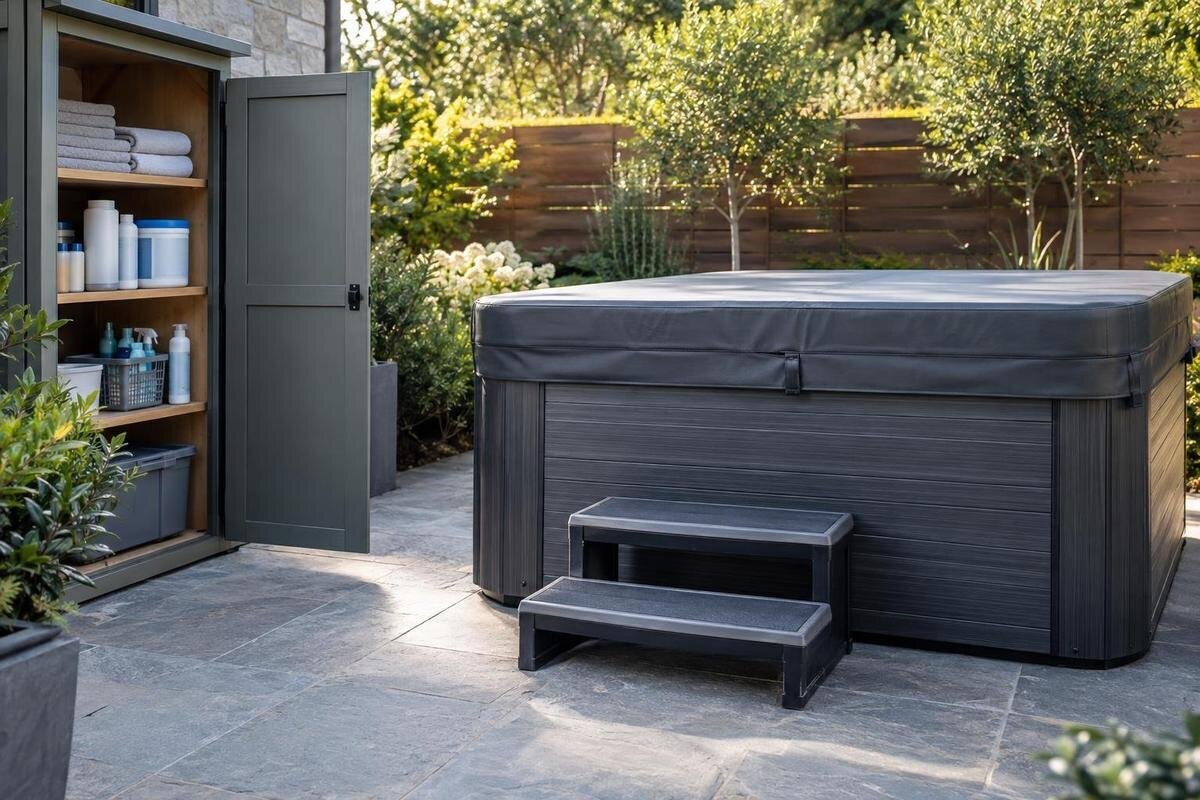
Define maintenance before adding dollars. Routine spending covers water-care products and cleaning consumables you actually use, plus any filter-care supplies called for by the manufacturer. Replacements such as a filter or repair part are occasional: one may be due in a given budget year and not the next, while a repair may not occur at all. Give the worksheet three labels—routine supplies, scheduled or periodic replacements, and repairs or paid service—so one invoice does not distort the recurring pattern. Keep cash paid during the year distinct from money set aside for a future replacement. If service is scheduled and quoted, identify it separately from an unexpected fault; the timing and evidence are different.
Count the first stock-up separately from later purchases. A starter product bundle, if explicitly included in a seller’s written offer, can change the initial outlay; it does not mean future refills are included. When budgeting for the Bloomcabin Hot Tub Cove 2 listing, identify which supplies come with the purchase and which you would need to buy during the first year. Comparing one offer’s starter items with another’s annual supply costs would be misleading. Keep the tub purchase, its delivery and the site work needed to install it outside maintenance; these are ownership start-up costs, not yearly upkeep.
Water-care supplies depend on the care system and use
Water-care supplies are a recurring category, but there is no universal shopping list for every tub or care system. Depending on the manufacturer’s requirements and the selected system, the basket may include sanitizer, water-testing supplies, balancing products or another named treatment. These are possible budget categories, not products every owner necessarily needs. If you are considering Bloomcabin Hot Tub Haven 6, ask for its care instructions and compatible-product guidance before pricing a kit. Check each kit’s contents against that guidance: a generic hot tub label does not establish suitability, the quantity required or how quickly you will use the products.
Estimate quantities over a defined 12-month period from the care plan, expected use pattern and local package sizes. Record the products actually used, how many packs you expect to buy, and whether the estimate represents whole-pack cash purchases or only the portion consumed. Use, water changes and source-water conditions can affect demand, so one household’s receipt is not a national benchmark. Keep testing supplies separate from treatment products if that helps show what drives spending. Do not turn a jug size, package claim or model number into a dosing estimate; use the written guidance for the exact setup. If a store sells a kit, break it into its contents so items you will not use are not counted as recurring needs.
Budget for compatible cleaning products
Cleaning products belong in a separate line from water treatment because they may be bought at different intervals. The right product depends on what the manufacturer permits for the tub’s surfaces and cover. Include only cleaners you expect to use, plus disposable cloths or similar consumables you actually buy. When estimating cleaning costs for Bloomcabin Hot Tub Fjord 8, confirm which products are compatible before adding them to the budget. Do not assume a household cleaner is suitable because it is already in the cupboard, or buy a cleaner solely because it appears in a general-purpose bundle. Leave an uncertain item provisional until you can confirm it.
Use the same cash-versus-consumption distinction as for water-care supplies. If a bottle or pack lasts longer than the budget year, its full price may hit the cash budget in the year you buy it, even though it is used over a longer period. Show the purchase year and average annual-use estimate separately when both views matter. Avoid counting fractional purchases in a cash forecast, and avoid charging the same full pack price to every year in an average comparison. Record the product, pack size, date and expected purchase timing. Durable brushes or tools belong in a one-time or replacement category rather than recurring consumables; include a replacement only when it is expected, not as an automatic annual line. Assign a product to one category consistently to avoid duplication.
Filter care and replacement costs
Filter costs have two parts: any care product or accessory required by the written instructions and the cost of a replacement filter when the exact model’s stated interval or condition calls for one. Do not guess the interval or compatible part from the tub’s name, image or apparent size. For Bloomcabin Hot Tub Aurora 10, request the exact filter part number, written replacement guidance and confirmation of compatibility before adding a price. Also verify how many filters are used and whether the recommended item can be sourced locally or shipped to your address; neither quantity nor availability is established by the catalogue identity. If an alternative is proposed, ask for documented compatibility rather than treating a similar-looking product as proof.
For a cash budget, enter the full purchase price in the year replacement is due. For a smoother comparison, calculate a separate annualized allowance: divide the compatible filter’s delivered purchase cost by the manufacturer-stated interval in years, or multiply the cost by 12 and divide by an interval stated in months. This is a planning allocation, not a claim that replacement happens every year. Put filter-care supplies in the years you expect to buy them. If the price, interval or compatibility is unconfirmed, label that line provisional rather than borrowing a cycle from another tub. Update the allowance when the guidance or supplier price changes; do not carry a stale estimate forward as though it were fixed.
Building a transparent annual estimate in CAD
An itemized Canadian price example needs dated retail prices and a defined buying location. Those inputs are not available here, so this worksheet leaves the amounts open rather than presenting an unsupported CAD total. Set these assumptions first: one 12-month period; product quantities based on the exact tub’s care guidance and your planned use; compatible cleaners you expect to purchase; and filter replacements due within that period. Do not assume a repair in the routine subtotal. These assumptions define what the estimate covers, rather than prescribing maintenance. Keep unresolved quantities or prices visibly marked so an incomplete subtotal is not mistaken for the full annual budget.
List water-care products and tests, cleaners, filter-care supplies and compatible filter replacements as separate lines. For every line, record the product and pack size, expected number of packs, CAD price, seller, quote date, tax charged at checkout and shipping attributable to that order. If you are comparing the Bloomcabin Hot Tub Cove 2 product page, use its confirmed care and filter requirements to fill in the quantity fields. Calculate each purchase line as pack quantity multiplied by pack price, then add applicable tax and shipping. Use a checkout total where it already includes those charges. For multi-item orders, record delivery once or allocate it consistently, not both.
Separate repair and service reserves from expenses
Parts, service calls and professional work cannot be turned into a fixed annual expense without local quotes and exact service terms. Keep a potential repair or visit separate from the predictable supply basket, and label confirmed scheduled work separately from an unknown breakdown. If you choose to build a reserve, set it according to the amount your household wants available for an unexpected invoice; label it as a personal contingency, not an average Canadian repair cost. Do not report an unspent reserve as maintenance money paid or as proof a repair is expected every year. A current written estimate is useful only when you know which parts, labour and fees it includes.
When requesting service pricing for the Bloomcabin Hot Tub Haven 6 listing, give the provider the exact model and ask whether it can carry out the work. Request separate amounts for assessment, labour, travel, parts, tax and shipping where applicable. Compare the complete quoted amount, not just an hourly rate, and note exclusions, the quote date and any expiry. Ask the seller which support or service, if any, is included in the purchase; do not assume an included visit. Record confirmed scheduled work as an expected expense. Keep a possible breakdown unpriced if no estimate is available, rather than assigning an unsupported repair figure.
Use local prices, tax and delivery charges
Location determines which price evidence is relevant. Retail prices, checkout taxes, delivery charges and pack options must be checked with the seller and destination you actually expect to use. Get a quote for your postal code, keep it in CAD, note the date and retain the checkout or written estimate; a shelf price without delivery may not be the delivered cost. When comparing an online offer with a local store, make sure the product and pack size match and treat shipping consistently. Do not apply a guessed Canada-wide tax rate or assume delivery is included just because the price is shown in Canadian dollars. Record taxes as charged in the transaction and keep the quoted price date with your worksheet.
Service availability also needs to match your location. For the Bloomcabin Hot Tub Fjord 8 product page, establish whether a provider serves your address and supports that exact model before relying on its rates. A price from another area may leave travel or the service arrangement unresolved. Note whether the quote assumes an on-site visit, whether parts are included, and which charges remain open. Keep the issue date beside the amount so an old quote is not confused with current pricing. A parts quote for a different model is not a substitute for a compatible-part price, even when the quoted item looks similar.
Keep installation and heating costs outside maintenance
Keep maintenance separate from the initial purchase and installation budget. The tub’s purchase price, delivery of the tub, site preparation, electrical or plumbing work and other project costs are not yearly maintenance. Heating fuel or electricity, where relevant to the setup, belongs in an operating-cost calculation instead. These outlays matter when deciding affordability, but combining them with cleaner, filter and repair estimates hides what is changing. If you want a full ownership forecast, give purchase and installation, operating energy, and maintenance their own subtotals; combine them only in a clearly labelled total. This prevents an annual energy bill from being mistaken for a maintenance estimate.
Use those same boundaries when comparing models. For the Bloomcabin Hot Tub Aurora 10 product page, show the maintenance estimate alongside the purchase, installation and energy budgets rather than folding those costs into upkeep. A lower combined first-year total would not, by itself, establish lower annual maintenance costs. Compare recurring supplies over the same period, identify replacements due in that year, and keep annualized allowances separate from cash purchases. Do not use the maintenance subtotal to rank energy use. Without like-for-like care requirements and local price data, leave model-level maintenance differences unresolved rather than treating a catalogue name or purchase price as evidence.
Questions to ask before choosing a hot tub
Ask for the current care guide and a written list of products compatible with the exact model. Clarify which items, if any, are included at purchase, their pack sizes and whether they are one-time starter supplies or repeat purchases. Ask for an estimate of annual product quantities only if the seller can explain the use pattern and care assumptions behind it; do not treat a vague allowance as a promise. Request the exact filter part number, written care and replacement guidance, and a current local replacement price. Save the documents with your worksheet so you can trace each amount to a source rather than relying on a sales conversation.
Also ask where replacement filters and other model-specific parts can be ordered, whether they ship to your address, and which service providers can work on that exact model. Request a written description of any maintenance visit or service explicitly included in the purchase and its limits, if applicable; do not assume a service contract, warranty or future labour is part of the deal. Compare answers using the same 12-month period and delivered-price basis. Check whether filter prices exclude tax or freight and whether service quotes exclude travel or parts. If an answer is unavailable, mark it unknown rather than treating the missing expense as zero.
Review the estimate each year
Present the budget in two views. The cash forecast should show recurring supplies, replacements due during the 12-month period and any quoted scheduled service. Beside it, show annualized replacement allowances and a separately labelled repair reserve for longer-term planning. Do not add an annualized allowance to the full replacement purchase in the same cash total, or count an unspent reserve as an expense. A filter purchase may fall entirely in one year even though its allowance spreads the cost over the stated interval. Low-, planned- and higher-cost scenarios are useful only when each changes a named input, such as a supplier quote, expected quantity or documented replacement timing. An arbitrary range is not a Canadian average.
After the first year, replace assumptions with receipts and actual package use, then refresh prices using current local quotes. Keep model-specific care information, compatible part numbers, quote dates, tax treatment and shipping notes together so the next estimate can be updated without starting over. If your use pattern or supplier changes, revise the affected lines instead of carrying forward a stale total. The purpose is not to predict every repair; it is to see which costs repeat, which replacements are occasional, and what money is only a contingency. An annual figure means something only beside the assumptions that produced it.
Frequently asked questions
How much does hot tub maintenance cost per year in Canada?
There is no reliable single total without the exact care requirements, expected product quantities, compatible filter prices, local delivery charges and any service costs. Build a 12-month estimate from dated CAD quotes for your area, and show routine purchases, replacement allowances and an unspent repair reserve separately.
What belongs in a routine maintenance budget?
Include the water-care and cleaning products you expect to buy, plus filter-care supplies required by the product’s instructions. Keep occasional replacement parts, paid service and repairs in separate lines so one unusual bill does not make routine spending look higher.
Should I budget for a new filter every year?
Not unless the exact model’s written guidance places a replacement in that year. Confirm the compatible part and replacement interval with the manufacturer or seller. You can show the full purchase in the year it is due and a separate annualized allowance for longer-term comparisons.
Does a repair reserve count as money spent on maintenance?
No. A reserve is money set aside for possible costs, not an expense unless you use it. Report actual repair or service bills separately, and label any unspent reserve as a contingency rather than a typical annual repair cost.
Are installation and electricity part of maintenance costs?
Keep purchase, delivery, site preparation and installation outside the annual maintenance subtotal. Heating fuel or electricity belongs in an operating-cost budget. If you want a broader ownership total, show those categories separately before combining them.
A useful annual maintenance budget shows what you expect to buy, which replacements are due and what you are simply setting aside. Base the CAD amounts on the exact tub’s care requirements and current delivered prices for your location. Keep purchase and installation costs, heating expenses and unspent reserves outside the maintenance expense total. That separation makes the estimate easier to compare before buying and easier to update once you have a year of receipts.
