
How Much Does It Cost to Run a Hot Tub in Canada?
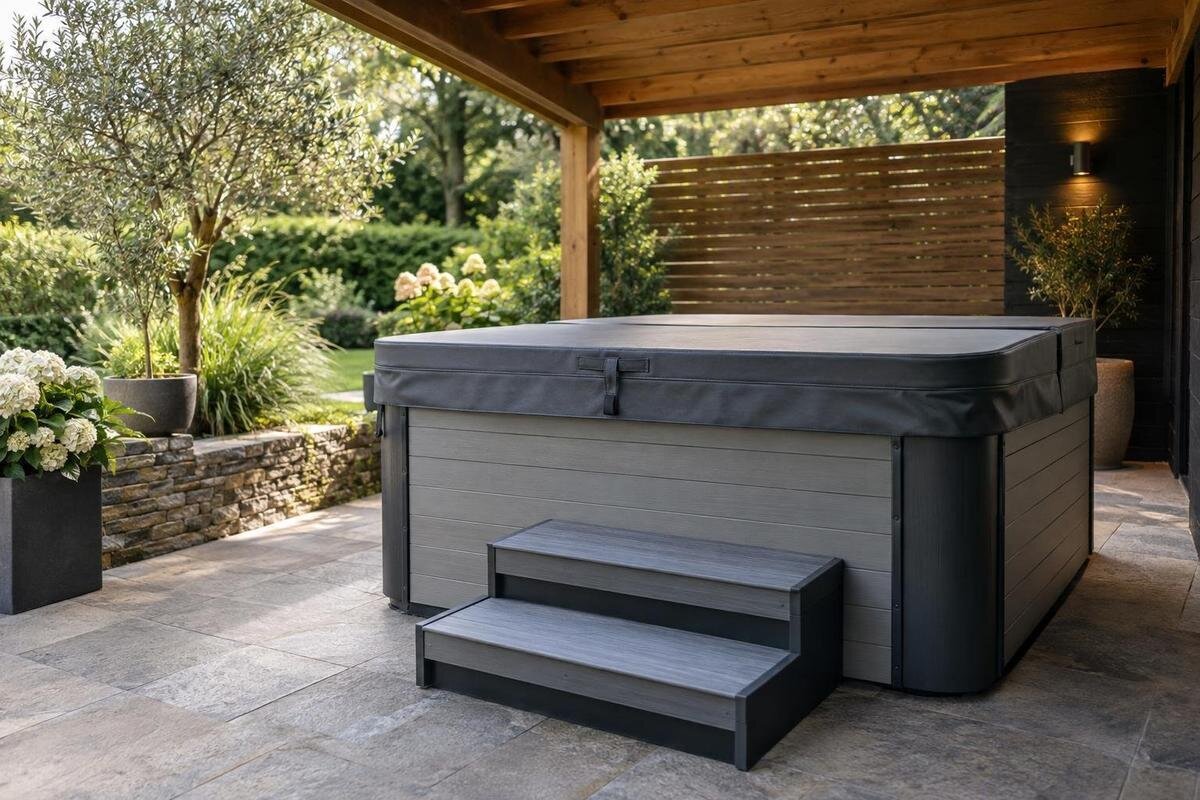
HOT TUB RUNNING COSTS
Hot tub running costs cannot be reduced to a reliable Canada-wide monthly figure because utility rates, weather, settings, use and water-care habits vary. Start with verified energy consumption for a stated period, price it using the rate that applies at your address, then add water and treatment supplies separately. A catalogue name alone provides no consumption data. Without dated local prices and comparable consumption figures, any dollar total would be guesswork. This guide shows a transparent calculation you can fill from a utility bill, product documentation and your own supply prices.
01
What counts as a hot tub running cost?
Running costs are the recurring expenses of using a hot tub: energy or fuel, replacement water and water-treatment supplies. For an electrically heated tub, record electricity consumption in kilowatt-hours (kWh); if the confirmed system uses another fuel, record its actual quantity and local unit price separately. Confirm the heating system before choosing a calculation so your budget accounts for the energy source the tub actually uses. Also decide whether you want the tub’s incremental cost or a share of total household spending: a utility bill may include other loads and account charges that would be present without the tub.
Keep one-time and occasional project expenses outside this total. The purchase, delivery, site preparation, installation and repair costs answer different budget questions; they are not monthly energy or water consumption. Count recurring water and treatment purchases here, and show them as separate lines so each assumption is visible. When requesting a running-cost estimate for Bloomcabin Hot Tub Cove 2, specify which recurring expenses you want included and the period the estimate should cover. If a supplier uses the phrase running cost, ask whether it means energy only or the full recurring total. A clear boundary makes estimates easier to compare.
Why energy use changes over the year
Energy use changes with outdoor conditions and routine. Colder weather, wind exposure, the chosen water temperature, time uncovered and frequency of use can all affect heat loss and the energy required to maintain operation. These inputs work together, so a figure measured under one set of conditions may not represent a different yard or usage pattern. Record whether the estimate describes a cold month, a milder season or a full year, rather than applying a single monthly number to every month. Also note how closely the routine in the estimate matches the way you expect to use the tub.
Water and treatment use vary with how the tub is used and replenished. Full refills, top-ups and the quantities of supplies actually used belong to the same stated period as the energy estimate. When asking about Bloomcabin Hot Tub Haven 6, describe your expected routine and ask what conditions underlie any consumption figure. Apply the same routine to each candidate: a cold-weather estimate for one model cannot be fairly compared with a mild-weather estimate for another. Keep the season, water setting, cover use and frequency of use aligned where the available data allows; flag any mismatch.
02
Get verified consumption data before pricing energy
Ask the manufacturer or seller for electricity use in kWh over a stated period, and get the conditions behind that figure: ambient conditions, water temperature, cover use, frequency of use and the components included. Confirm whether it covers the full operating system or only one component, including pumps and standby use where those are part of the system. Ask how the number was obtained, whether it is measured or modelled, and whether it represents a short test or a longer period. A precise-looking value with no explanation of how it was obtained is not a dependable budget input.
If documentation gives a power rating in kilowatts (kW) rather than energy in kWh, it has not stated monthly use. Multiplying kW by hours works only when the actual operating time and load are known; equipment that cycles can draw different amounts at different moments. For an electric system, a reading from a meter that isolates the tub over representative dates is stronger than guessing from a rating. If you have only a whole-house bill, treat the change as an estimate unless other household use is accounted for. Request consumption data for Bloomcabin Hot Tub Fjord 8 with enough detail to distinguish a full-system reading from a calculation based on a single component.
Apply the rate at your address
Use the rate for the address where the tub will be used, not a national average or a headline rate from another provider. Check your current utility schedule and bill, and note the plan, date, billing period and method used to calculate charges. The relevant amount for extra consumption is the variable cost that applies to another kWh under that plan. Delivery-related per-unit charges and applicable taxes may also affect the added cost, so state whether you have included them. A fixed monthly fee that would be billed anyway should not be treated as though it rises with tub use; if you allocate it for a broader household budget, show that separately.
If your plan has time-of-use periods, tiers or seasonal prices, apply the kWh to the matching rate. With tiered pricing, extra use may fall into a different block depending on the rest of the household’s consumption, so check how the plan handles it. If you do not know when the tub uses energy, an effective rate is only an estimate and should be based on a stated use pattern. Keep the units aligned: kWh multiplied by CAD per kWh gives a cost in CAD. Avoid adding taxes or variable fees twice if they are already included in the rate you use.
03
Add water and treatment supplies separately
Water is its own cost line. Find the confirmed fill volume in product documentation or from the seller, then check how water is billed locally. Where the bill prices water by cubic metre, convert litres to cubic metres by dividing by 1,000, then multiply that volume by the applicable charge per cubic metre. Add a wastewater or sewer usage charge only if your account applies one to that volume, and state whether taxes are included. If water is billed another way, use the actual incremental cost you can substantiate rather than assigning an unverified municipal price. Count full refills and top-ups separately when possible.
Estimate annual water use from recorded refills and top-ups, not a generic schedule. Keep the volume of each refill separate from smaller additions so you can see how the annual quantity was calculated. Price treatment supplies from the products and quantities you actually expect to use, using current local supplier prices or receipts. Include taxes and delivery only when they apply, and say whether those costs are counted. If a purchase covers several months, estimate the amount used during the period rather than assigning the entire stock-up cost to one month. Ask about the fill volume and care requirements for Bloomcabin Hot Tub Aurora 10 to establish the quantities your supply budget needs to cover.
Calculate monthly and annual costs
For a monthly calculation, let E_m be the measured or documented electricity use in month m, in kWh, and let R_m be the matching variable rate in CAD per kWh. Monthly energy cost is E_m multiplied by R_m. Let V_m be water used in cubic metres and W_m the applicable water charge in CAD per cubic metre; water cost is V_m multiplied by W_m. Add S_m, the actual or estimated treatment-supply cost in that month. The monthly total is those amounts plus any other recurring variable charges you have deliberately included. Keep each input and unit visible so the calculation can be reproduced.
For the annual total, add the twelve monthly totals rather than automatically multiplying a mild-month result by twelve. Use different monthly inputs if weather, rates or use vary; multiply a monthly value by twelve only when it reasonably represents every month. Record the location, currency as CAD, rate-check date, season, settings and expected routine, as well as which taxes and fees are included. For a model such as the Bloomcabin Hot Tub Cove 2 listed here, keep the consumption input beside its corresponding rate and period. This makes it easier to update a monthly calculation without accidentally changing the assumptions used for the rest of the year.
04
Compare models only with like-for-like figures
A model comparison is useful only when the energy figures have comparable boundaries. Check whether each number is measured or estimated, whether it covers the same operating components, and whether the period, outdoor conditions, water setting, cover and use assumptions are alike. Then apply the same local tariff and water and treatment assumptions. A difference caused by rate or weather is not evidence of a product-efficiency difference. If one figure is from a brief test and another represents a longer period, mark them as unlike rather than ranking the models.
Catalogue names identify which product is being discussed, not its capacity or consumption. The Bloomcabin Hot Tub Haven 6 product page can help identify the listing when you request documentation, but the number in the name is not a verified seat count, power rating, heater type or monthly kWh figure. The same rule applies to Cove 2, Fjord 8 and Aurora 10. If comparable consumption and price inputs are unavailable, leave the values unresolved and ask for the missing evidence. Do not rank costs from names, images or incomplete specifications.
Keep measurements and estimates distinct
Label each figure as measured, supplier-stated or estimated. For a measured result, record the meter or data source, dates, location, season, settings and observed routine. For a projection, identify whose consumption data it uses and the assumptions applied to your rate. A reading covering a few days is evidence for those days, not automatically an annual average. If a supplier provides a figure, preserve its stated conditions and note whether it covers the full system or only a component. Do not present a projection as an independent test result.
Build a seasonal picture from representative periods, such as colder and milder months if you use the tub year-round, and keep bills and water-care receipts for those periods. For each month, note the kWh, water volume and supply cost, along with the utility plan, rate date, settings and routine. If you estimate a missing month, label the method and keep it distinct from recorded data. When reviewing consumption figures supplied for the Bloomcabin Hot Tub Fjord 8 model, use this record to identify which periods resemble your expected use and which would require different assumptions.
05
Record the location, date and charges included
State the estimate’s location, such as the city and province or the exact utility service area, and the date you checked the prices. Record CAD, the period covered, the billing plan, season, settings and use pattern, plus applicable taxes and variable fees. Specify what is included in the electricity rate, whether water costs include wastewater charges, and whether supply costs include taxes or delivery. If a charge is left out, name it. These details make a total easier to audit and prevent two estimates from appearing comparable when each counts different expenses.
Give each estimate a clear breakdown rather than saving only the final dollar amount. For a seller’s estimate concerning the Bloomcabin Hot Tub Aurora 10 listing, record the original total and its stated inclusions before applying your own local prices. Show any adjustments separately, such as replacing the quoted electricity rate or adding treatment supplies omitted from an energy-only figure. This preserves the distinction between the seller’s estimate and your household budget. Where a local price remains unknown, identify the missing input and label the total as partial rather than leaving an unexplained blank or treating the missing expense as zero.
Decide whether the recurring cost fits your budget
Once the inputs are available, decide whether a monthly budget or an annual allowance is more useful for your household. A low, base and high range should come from measured seasonal variation, documented conditions and plausible rate scenarios for your address, not guessed national figures. An annual average can also hide a more expensive season, so check the monthly pattern if cash flow matters. If you lack data for a colder or busier period, mark the annual estimate as incomplete rather than labelling an unsupported assumption typical.
Use the completed estimate to set a recurring-cost limit that reflects your expected routine. Compare both the annual total and the more expensive months with that limit, rather than choosing solely on the lowest projected month. If the upper end of an evidence-based range would stretch your budget, do not assume the lowest result is the one you will get. Identify which uncertain input matters to that decision and whether the available information can narrow it. A useful comparison shows what you can reasonably budget for each model while keeping any remaining uncertainty visible; it is not a promise of a particular monthly bill.
Frequently asked questions
Can I use one Canada-wide average for my monthly budget?
Not reliably. Energy use, local utility rates, billing structures, weather and usage patterns vary, as do water and treatment-supply costs. Use consumption data that matches your expected routine and a rate checked for your service address. Without those inputs, a dollar total would be guesswork.
How do I estimate a month’s electricity cost?
Multiply the tub’s verified electricity use for that month, in kWh, by the applicable variable rate in CAD per kWh. Include relevant variable charges and taxes only if they are not already reflected in that rate. Add water and treatment supplies separately for a full recurring-cost estimate.
Does a heater’s kW rating tell me the monthly bill?
No. A kW rating describes power, not the energy consumed over a month. To estimate kWh, you also need the actual operating time and load. Ask for consumption data over a stated period, or use a measurement that isolates the tub and record its dates and conditions.
Should I include water and treatment supplies?
Yes, but list them separately from energy. Use a verified fill volume, your actual refill and top-up amounts, the applicable water charges and the treatment supplies you use. Price supplies using current local costs, and state whether taxes or delivery charges are included.
Can I compare running costs from model names alone?
No. A model name does not establish its heating system, energy use, fill volume or treatment needs. Ask for consumption figures with comparable measurement periods and conditions, then apply the same local rates and usage assumptions to each model. If the data is not comparable, leave the ranking unresolved.
A reliable Canadian running-cost estimate is a clear calculation: verified energy use multiplied by the applicable local rate, plus water and treatment supplies, with the period and included charges stated. Keep measurements separate from projections and add monthly figures to build an annual total. If comparable product-use data is unavailable, do not rank models by running cost. Once you have documented consumption and current local prices, the calculation becomes straightforward and its remaining uncertainties stay visible.
