
How Often Should You Change Hot Tub Water?
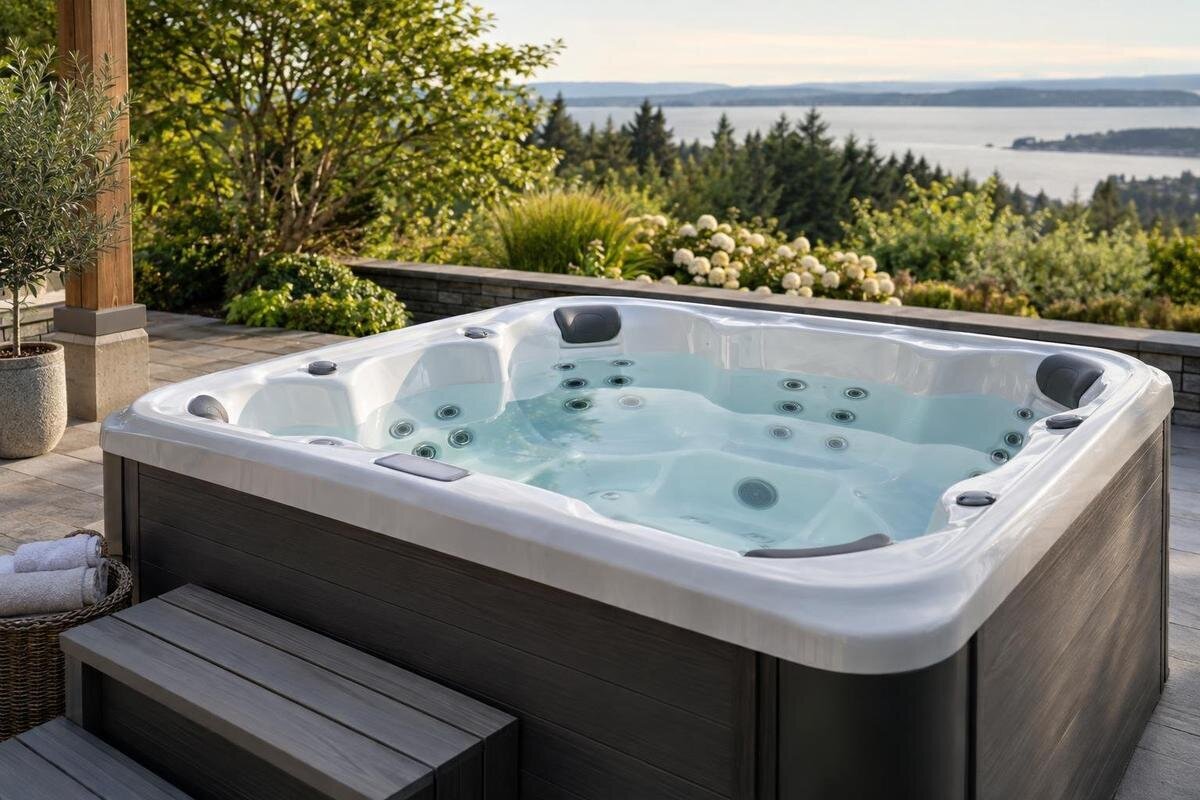
Hot tub care
Hot tub water does not have one calendar interval that applies to every owner. The reliable starting point is the current guidance for the exact model and water-care setup, including any replacement conditions the manufacturer documents. A full drain-and-refill is different from testing, treatment and top-ups. Keep those tasks separate, compare your actual use with the assumptions in the manual, and ask for model-specific advice rather than borrowing a schedule from another tub.
Is There a Standard Water-Change Interval?
An interval is useful only when the assumptions behind it fit your hot tub: the manufacturer’s directions, the water-care setup and the pattern of use. A number copied from another owner’s routine or a general online guide may rely on different conditions, so it cannot by itself tell you when your water needs replacement. The model name, a photograph or a catalogue description does not establish a drain schedule. The real question is not just how long the water has been in the tub, but which rule applies to this exact setup and what evidence that rule asks you to track. Treat a general interval as a reason to find the manual, not as a model-specific instruction.
Use current manufacturer guidance for the exact model and installed care arrangement to set a routine, and follow any documented condition that calls for an earlier change. The instructions may express timing as a calendar interval or tie it to stated conditions; use the method they actually provide rather than blending it with an online formula. If the manual is missing, unclear or does not match the current setup, ask the manufacturer or retailer for written guidance. Give them the exact model and describe the system and ordinary use. Save the response with the manual so you can see what the schedule was based on.
What Counts as a Full Water Change?
A full water change means completing the replacement procedure defined by the manufacturer, not simply adding fresh water to the existing supply. Manuals may distinguish between draining, exchanging water, refilling and any start-up steps, so use the terms for your exact model. Do not assume every tub has an identical procedure or that the same amount of water is removed in every case. Before setting a reminder, identify what the manual counts as a completed replacement and whether it gives separate directions for different kinds of water change. If the wording is unclear, ask rather than deciding that a partial addition resets the schedule.
Top-ups add water to the existing supply; testing checks what the manual directs you to check; treatment is another separate action. These may be part of routine care, but they do not count as a full change unless the manufacturer explicitly defines them that way. A completed drain-and-refill also does not mean you can skip the start-up or ongoing steps listed for the new water. When researching Bloomcabin Hot Tub Cove 2, ask how its instructions distinguish these tasks. In your records, label each entry clearly as a top-up, test, treatment or completed replacement, rather than using a general note such as “water care done.” If the instructions use the last replacement date to set the next one, this distinction lets you identify the correct starting date. Do not move that date forward simply because you added water or completed another care task.
How Use Patterns Affect Timing
Record the ordinary pattern of use, not just the busiest week: how many days the tub is used, how many bathers typically use it, and whether sessions or guest visits are occasional or frequent. If use changes from occasional to regular, or there is a sustained stretch of heavier use, the old schedule may no longer match the assumptions in the manual. These details do not produce a drain date on their own; they give you useful context when asking whether the manufacturer recommends an adjustment. Avoid a formula that converts bather count into weeks unless the exact instructions provide that method.
When checking your schedule, compare your actual routine with any use assumptions the manufacturer states. Include the water-care arrangement and any relevant changes, not just the number of bathers. If you are considering Bloomcabin Hot Tub Haven 6, describe the use you expect rather than asking only for an average replacement interval. Explain whether you anticipate occasional use, regular household use or frequent guest visits, then ask which documented guidance fits that pattern. If your plans vary, ask how to review the schedule when the pattern changes. Keep the answer tied to those assumptions so you can revisit it later. This is more useful than borrowing another owner’s calendar or assuming that one busy weekend automatically requires a full change. The aim is to understand how the applicable instructions account for use, not to turn your own estimate of bathing time into an unsupported drain date.
Water-Care Systems and Replacement Timing
The water-care arrangement is part of the information needed to plan a replacement. Instructions for one setup should not be carried over to another without confirmation, and marketing descriptions do not establish how often water needs changing. Follow directions for the exact tub and the care arrangement actually installed. If the manufacturer refers to separate instructions for a water-care component, obtain those too. Do not infer a particular system, treatment method or longer water life from a model name or an image; none of those details can be reliably read from a product identity alone.
Before switching equipment or changing the water-care approach, ask whether the change affects the replacement schedule and which instructions take priority. For Bloomcabin Hot Tub Fjord 8, request guidance for the proposed setup rather than assuming the product listing describes every care requirement. Explain what you intend to change and ask whether the existing replacement guidance still applies. If the answer refers to separate component instructions, clarify how those directions fit with the tub’s manual. Resolve any conflicting wording with the manufacturer instead of selecting whichever interval is more convenient. Keep the earlier and updated guidance together, with a note showing when the setup changed. That gives you a clear distinction between the schedule followed before the change and the one that applies afterwards, without treating a new piece of equipment or a different care method as automatic permission to keep water longer.
Which Signs Mean the Schedule Needs Reviewing?
Some manuals define a time interval, a particular measurement, a repeated result or another observable condition as a reason to replace water. Use only a trigger the manufacturer documents for the exact setup, and follow the prescribed way of checking it. A limit from a general chart or a different water-care system may not apply. If the instructions refer to a test result, record it using the method the manual specifies; do not substitute a rough visual estimate or a result obtained another way. This gives you a traceable reason to review the timing instead of relying on guesswork.
Appearance, odour or a single unusual result is not a universal deadline unless the manufacturer says it is. If readings or conditions repeatedly fall outside the stated guidance, or you cannot tell whether a documented trigger applies, contact support and ask whether a full change is due. For an enquiry about Bloomcabin Hot Tub Aurora 10, separate what you observed from what you think it means. Give the date of the last full replacement, the relevant recorded results and the instruction you are trying to interpret. Ask whether the response calls for replacement or another action under the care procedure; those are different answers. Do not use an internet threshold to diagnose the cause or choose a treatment. Keep the response with your record so the reason for changing the water—or continuing under the existing schedule—is clear rather than reconstructed from memory.
Where to Find the Model-Specific Schedule
Start with the current instructions for the exact model, rather than a generic hot-tub article or a retailer’s marketing summary. If you are using the Cove 2 product page to identify the tub, request the applicable care manual separately. Confirm that it covers both the model and the water-care equipment or method installed. Use the contents or index to find water replacement, draining, refilling and start-up information; the directions you need may not all appear under one heading. Read the replacement timing together with any stated conditions and exceptions, rather than saving an interval without its context. Note where the manual defines a completed change and whether it refers you to other instructions. Keeping the relevant sections together makes the schedule easier to interpret later, especially when a reminder comes due and you need to check why that date was chosen.
When you call or email, ask for a written answer or the manual section that applies to your model and setup. Clarify when the manufacturer recommends a full replacement under your intended use, what documented conditions affect that timing, and which instructions apply if the water-care system differs. If the reply discusses only testing or adding water, check whether it also answers your question about a full drain-and-refill. Save the answer and note when you received it. That makes a later review less dependent on memory or advice intended for another system.
Keep a Water-Change Record
A short, consistent log makes it easier to compare your routine with the manual’s assumptions. Record the date of each completed replacement, the model and water-care setup, and any change in how the tub is used. Add top-ups, system changes and any results you checked according to the manufacturer’s instructions. Note which manual or written advice you followed, especially if you received updated guidance. You do not need to record every detail of daily use; entries that you can maintain over time are more useful than an elaborate log that is quickly abandoned.
Use the record to explain changes in your routine and distinguish completed work from planned work. A calendar reminder shows when you intended to replace the water; the log should show when you actually completed the procedure. Record the reason for each full change, whether it was the scheduled date or a condition identified in the applicable guidance. If you receive clarification from support, add a short note and keep the response with the record rather than rewriting your earlier entries. Buyers reviewing the Haven 6 listing can use the same approach to organize the care information they receive before purchase. Keep model-specific answers separate from general browsing notes so advice about another tub does not become part of the future schedule. The log supports a clear account of what happened; it does not calculate a replacement date or replace required checks.
Planning a Drain-and-Refill
Once you have a documented schedule, put a reminder in your calendar and leave a practical window to follow the full replacement procedure. Use the manual’s directions to understand what needs to happen before, during and after the refill; do not assume another model follows the same sequence. A convenient date is a planning aid, not a reason to delay a manufacturer-documented trigger. Check whether the tub’s water-care setup or instructions have changed since the last replacement, and use the current information rather than relying on memory.
Ask the manufacturer or retailer what time, supplies and preparation the stated procedure requires, rather than estimating from a generic guide. When considering the Fjord 8 product listing, distinguish the time you need to spend doing the work from the full elapsed time before the tub is ready for use. Ask which parts of the documented procedure require your attention and what must be completed before use resumes. Do not infer water volume, drain rate or readiness from a number in a model name. Use the answers to choose a workable day, arrange any help you need and avoid promising that the tub will be available immediately after refilling. Confirm the practical details before reserving time for the work. If you cannot fit the required procedure into the planned window, seek model-specific advice rather than shortening steps or moving a documented replacement deadline for convenience.
Questions to Ask Before Buying a Hot Tub
Ask to see the current care manual for the exact model and water-care setup. For a tub you are considering through the Aurora 10 catalogue page, ask what full water-change interval the manufacturer documents, what use assumptions it relies on and which written conditions call for an earlier change. Ask how a full replacement differs from a top-up and what checks or treatments remain between changes. Use the same questions for every model on your shortlist so the answers are comparable. An interval without its assumptions is not enough to conclude that one tub involves less work than another. Keep any unanswered question marked as unresolved rather than filling the gap with information from a different model. Where a retailer gives a general answer, ask which part of the model-specific instructions supports it and whether it covers the setup you would actually buy.
Also compare the work involved, not just the stated interval. Ask what supplies the manual calls for, which steps take place between full changes, and whom to contact if a documented indicator is unclear. To estimate ongoing expenses, confirm any relevant water quantity and process first, then check your own local water and wastewater charges; do not rely on a made-up price. A clear answer should describe its assumptions and point to the appropriate instructions. If the seller cannot confirm a model-specific requirement, ask for the manufacturer’s documentation before deciding whether the workload suits you.
Confirm the Disposal Route Before Setting a Date
Before planning a replacement, check the tub’s instructions and current guidance from your municipality or water and wastewater provider about where the water may go. Do not assume that a nearby outlet, property area or drainage route is appropriate. The route for your situation cannot be established by a general hot-tub schedule, and this article cannot set one method for every Canadian home. If local guidance or the manual is unclear, ask the relevant provider before draining rather than trying to resolve the question midway through the work.
Include the confirmed route and access to it in your planning, along with the water supply and any materials required by the manufacturer’s procedure. These practical details can affect which day is workable, but they do not change the technical replacement interval in the manual. Keep the two decisions separate: use manufacturer guidance to determine when a change is due, and confirm local directions to plan where the water can go. If either piece of information is missing, get it before committing to a date.
Frequently asked questions
Can I follow a water-change interval I found online?
Only if it is confirmed to apply to your exact model and water-care setup. A general guide may rely on different assumptions about use or equipment, so use it as a prompt to check your manual, not as a replacement schedule.
Does topping up count as changing the water?
No. A top-up adds water to the existing supply; a full change follows the manufacturer’s replacement procedure. Keep the two actions separate in your records, unless the manual explicitly defines them otherwise.
Should I drain the tub if the water looks or smells unusual?
Appearance or odour alone does not set a universal replacement date. Check whether the manual lists that condition as a trigger, and contact the manufacturer or retailer if you cannot tell what action the instructions require.
What if I cannot find a water-change interval in the manual?
Ask the manufacturer or retailer for written guidance that names your exact model and water-care setup. Clarify whether the answer concerns a full drain-and-refill, and ask which documented conditions would change the timing.
What should I ask before buying a hot tub?
Request the current care manual and ask what replacement schedule and triggers apply, what assumptions the schedule uses, and what work is required between changes. Also ask how to confirm the local disposal route before planning a refill.
Set your water-change schedule using the instructions for your exact tub and water-care setup. Keep a simple record that distinguishes top-ups from completed replacements, and review it when your pattern of use changes. Plan the work around the applicable replacement interval or conditions, with the disposal route confirmed in advance. That gives you a schedule you can follow and a clear record of why each change was made.
