
How to Care for a Hot Tub’s Wooden Exterior
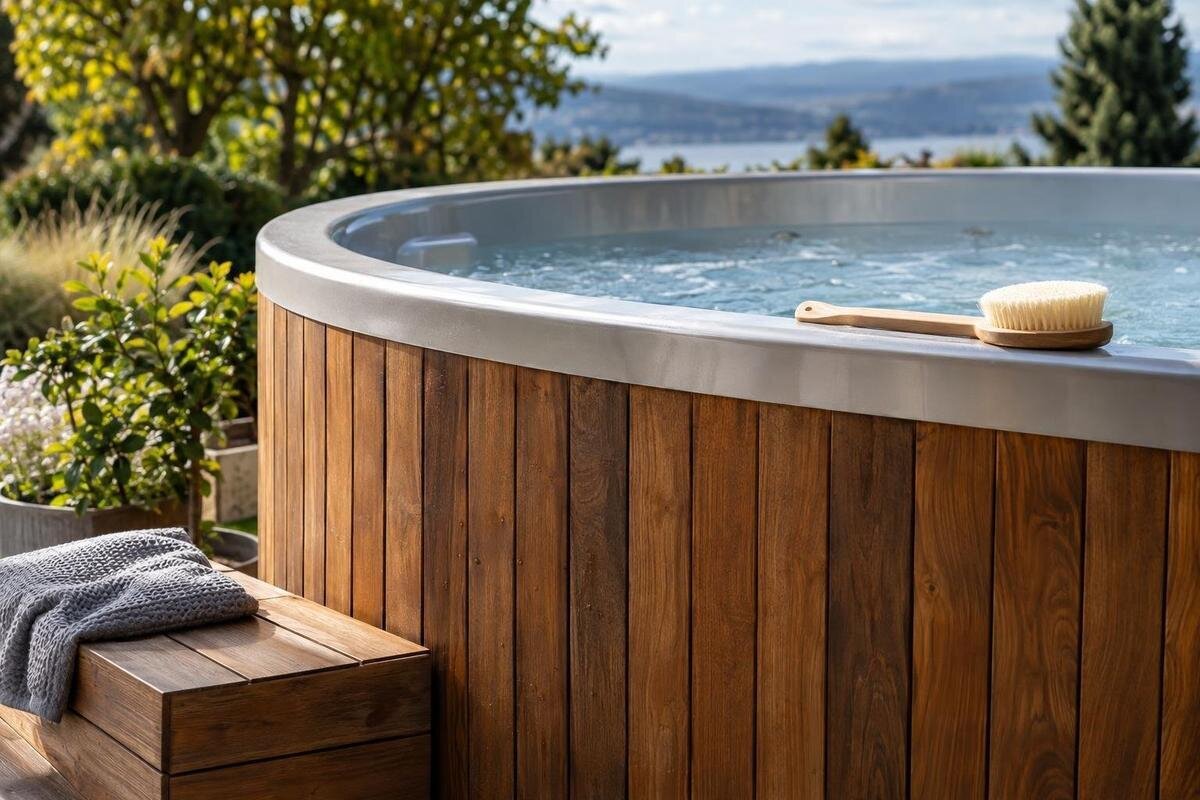
Hot tub exterior care
A hot tub exterior that looks like wood does not tell you enough about its material or coating. Start with the exact unit’s records, confirm whether the exterior is wood, inspect its condition and find out what finish is already there. Only then can you judge whether cleaning, treatment, refinishing or repair is appropriate.
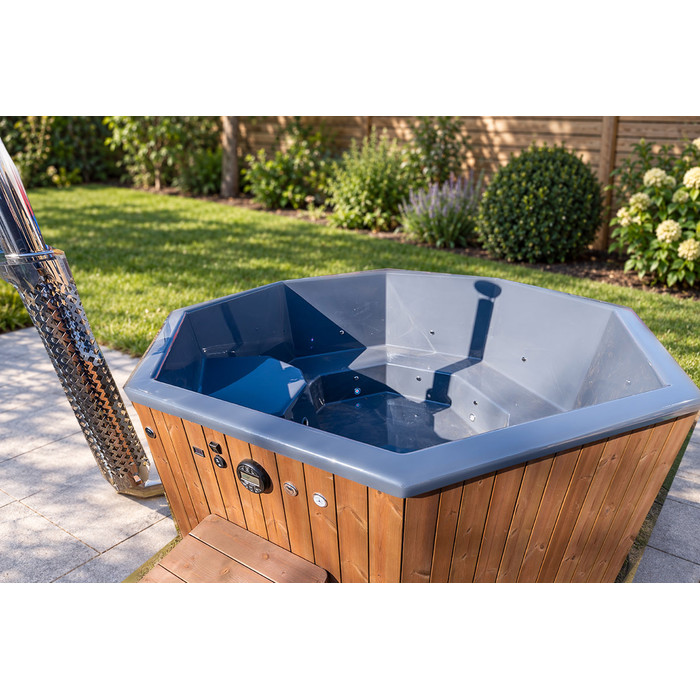
Confirm the model, wood and existing finish
Begin with the tub, not the product aisle. Check the purchase record, model label, owner’s manual and any service records; write down the full model name and the serial or production identifier if available. A family name alone may not identify the unit’s version, and a product photograph cannot establish which exterior material or coating is fitted to your tub. If your paperwork says Cove 2, the Cove 2 catalogue page can help cross-check the catalogue name; it does not establish that your tub has a wooden exterior or a particular finish. Keep the unit’s identifying information together when requesting care instructions.
Ask the manufacturer or seller to confirm whether the exterior is natural wood, a wood-look material or something else. If it is wood, ask which species and factory finish were used, and whether the unit has been treated since it left the manufacturer. Terms such as sealed, stained, oiled and painted can describe different systems; they are not interchangeable care instructions. For a used tub, look for receipts or previous-owner notes about cleaning and treatment, but do not identify a product by colour or appearance alone. If the material or coating history remains unknown, record that uncertainty and seek an identification before applying anything.
Inspect the exterior before choosing a treatment
Look over the exterior when it is accessible and the surface is dry enough to inspect clearly. Follow the owner’s manual for any access restrictions, and do not remove covers or service panels for a cosmetic check. Start with an overall view, then examine accessible edges, joins, corners and lower areas where debris or moisture may collect. Note uneven colour, residue, a raised or flaking coating, visible splits, swollen edges, loose trim or a patch that stays damp. Dated photographs taken from similar angles make it easier to notice changes later. This is a record of visible condition, not a diagnosis of what caused it.
Keep your inspection notes with the model details. If you own a Bloomcabin Hot Tub Haven 6, include that name and your unit’s identifying information when describing a concern. A grey, dark or uneven area does not automatically mean the wood needs treatment: weathering, dirt and coating changes can look similar. Pay attention to whether the appearance changes or damage spreads. If a section remains wet, feels soft, shifts, is visibly split or appears connected with a drip, stop cosmetic work and ask the manufacturer or a qualified hot tub service professional to assess it. Avoid poking, scraping or pulling at panels to investigate.
Cleaning, protective treatment or repair?
Cleaning is worth considering when the issue appears to be removable surface dirt or residue and the care instructions permit cleaning. It will not restore a faded colour, repair a split, reattach a failing coating or resolve a source of persistent dampness. Nor does a change in appearance automatically mean that the surface needs a protective product. Describe the visible problem first: for example, loose debris is different from a coating that is lifting. If you cannot tell whether a mark is dirt or a change to the finish, do not try a stronger cleaner just to find out; ask what inspection or test the manufacturer allows.
A cleaner is intended to remove certain soils; a protective treatment has a different purpose and may be unsuitable for an existing coating. Refinishing changes or renews a finish, while repair addresses damage to the material. These are separate decisions, even when a product is marketed as a one-step solution. For an owner of a Bloomcabin Hot Tub Fjord 8, the useful question is which of these tasks the unit’s condition actually calls for. Describe the problem when asking for advice, rather than requesting a particular treatment. Match the method to the actual exterior and finish instead of borrowing a routine from a deck or another tub.
Choose a cleaner that matches the material and finish
Before buying a hot tub wood cleaner, confirm that its label covers the material and existing finish you have identified. A broad description such as outdoor wood may not answer whether the product is suitable for a particular species, a coated surface or a previously treated panel. Ask the tub manufacturer for compatible products or written criteria if its care documents do not name a cleaner. Consider the whole area the cleaner might reach: the exterior may sit beside other finishes or components, so follow instructions for protecting those surfaces and managing any runoff. Do not assume that a product is appropriate simply because it is sold for outdoor use.
Read the label for its stated purpose, application method, dilution, tools, rinsing directions and any conditions that limit use. Confirm these against the tub manufacturer’s guidance before proceeding. If you are buying a cleaner for a Bloomcabin Hot Tub Aurora 10, give the supplier the confirmed exterior material and finish as well as the model name; the name alone does not establish compatibility. Do not assume that a household detergent, deck cleaner, abrasive pad or pressure washer is suitable. Use one only if the relevant instructions explicitly allow it. Avoid mixing products or applying one cleaner over another without directions that approve the combination.
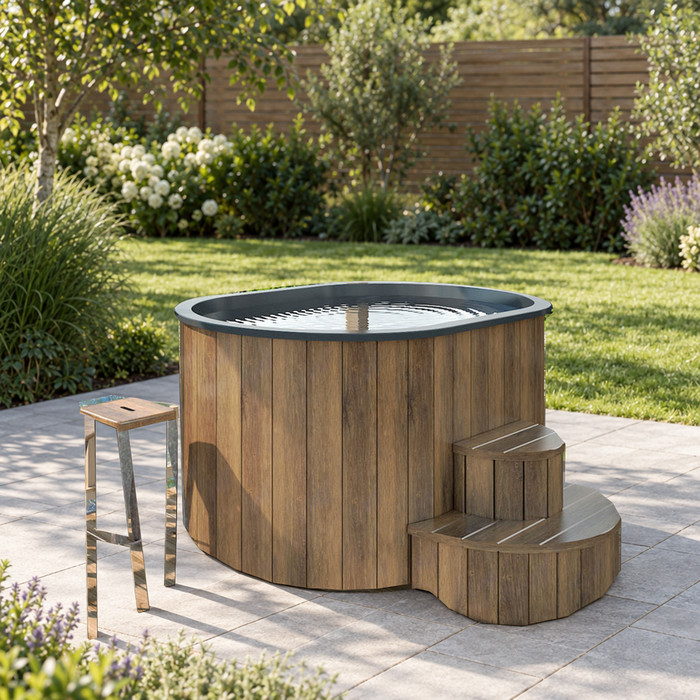
Check protective treatments against the current coating
A protective treatment must be compatible with both the underlying wood and whatever is already on it. Penetrating treatments and surface coatings behave differently, and a product intended for bare wood may not suit a painted, sealed or previously treated surface. Do not assume that an oil, stain, clear coat or water-repellent product can be layered over another finish because both mention outdoor wood. Ask the tub manufacturer what type of coating is present and whether it must be maintained, removed or left alone. Then check that the treatment manufacturer supports use on that exact type of surface and does not require preparation the tub maker prohibits.
Look beyond claims such as natural, clear or weather-resistant. Confirm whether the treatment changes colour or sheen, what it is intended to do, how often its maker recommends reassessment or reapplication, and whether it has restrictions for use near the tub’s other exterior materials. A small test area can reveal an appearance difference, but test only if the manufacturer and product label allow it, and follow their instructions for selecting and assessing the area. A test patch cannot replace a compatibility check. If you cannot establish what the current coating is, buying a treatment first may leave you with an incompatible product and a more difficult refinishing decision.
Follow the documented preparation and application steps
Before starting, compare the hot tub manufacturer’s instructions with the treatment or cleaner’s directions. Confirm the approved preparation sequence, including whether the surface should be cleaned, left intact, sanded or prepared in another way. Do not fill gaps in one set of instructions by assuming that a common deck-care method will work. If the product calls for steps that the tub manufacturer does not address—or that appear to conflict with its guidance—ask for clarification before treating the surface. Also confirm the permitted tools and any directions for shielding nearby finishes or collecting and disposing of residue.
Check the product’s stated weather and surface conditions, including any limits for temperature, moisture, humidity or incoming precipitation. Find the specified drying or curing time and any directions about when the surface may be exposed to weather or contact. There is no single wait time that applies to every product. When planning work on a Bloomcabin Hot Tub Cove 2, keep the instructions for your unit alongside the product label so you can compare the preparation steps and application limits. If local conditions fall outside the product’s stated application window, postpone the work rather than guessing at a suitable day.
Know when refinishing or repair needs professional advice
A worn-looking surface does not always need a new coat, and a new coat is not a repair. Peeling or cracking finish, exposed wood, a visible split, persistent dampness, soft areas or shifting parts all call for more than a colour-based decision. Do not cover a damaged area with a treatment in the hope that it will hold the surface together. Likewise, avoid stripping or sanding until the tub manufacturer confirms that the method is suitable for the material and finish. Aggressive preparation can change the surface and make it harder to identify the original problem.
For a repair or substantial refinishing, contact the manufacturer or a qualified hot tub service professional. For a unit such as the Haven 6 hot tub, provide the model name, serial or production identifier, photographs and any history of products used. Ask whether the concern is limited to the exterior finish or whether the underlying material also needs assessment; do not diagnose it from a picture alone. Before hiring someone, ask whether they can work from the care guidance for your exact unit and coating, rather than assuming that general deck or furniture experience is sufficient. Clarify whether the proposed work addresses the damage or only its appearance.
Plan inspections around your local Canadian conditions
There is no single wood-care calendar that suits every Canadian location or every hot tub finish. Conditions at the tub matter: local precipitation, shade, direct sun, humidity, windblown debris, snow cover and freeze-thaw periods can differ even within the same region. Use those conditions to decide when you can inspect the exterior safely and clearly, but do not turn an inspection into an automatic treatment date. A surface that looks different after a wet period may need closer observation or advice, not an immediate coat of product. Keep a brief record of what you notice and when, so that a gradual change is easier to distinguish from a one-off mark.
You might find it useful to inspect when the exterior becomes accessible after snow or seasonal debris clears, and again before a period when local weather may permit treatment. These are prompts to check condition, not a required schedule for every tub. Do not scrape or chip at the wood to expose a hidden patch; wait until it can be seen safely and follow the manufacturer’s guidance for clearing the area. If you own a Fjord 8 hot tub, use your unit’s care instructions to check any recommended inspection interval. Record inspections separately from treatments so your notes distinguish observations from work actually completed.
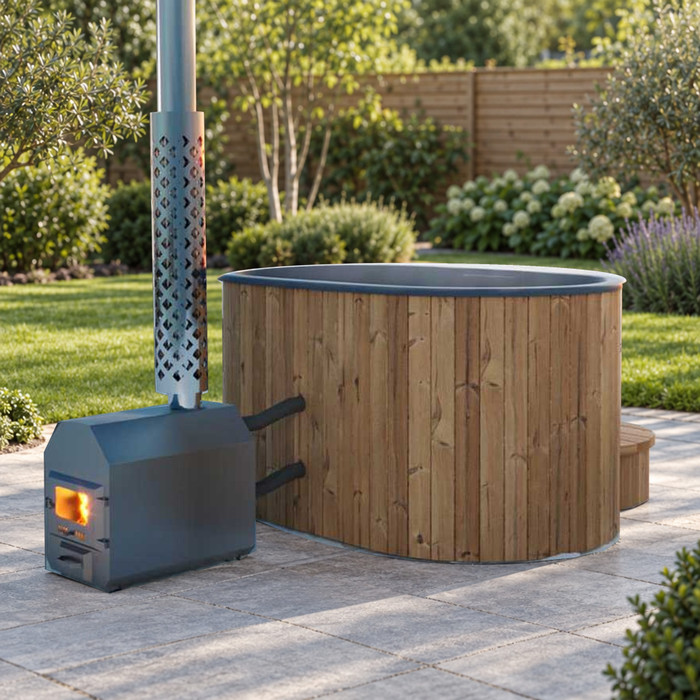
Budget for the full care process
The cheapest product on the shelf may not be the least costly choice if it is incompatible or requires extra preparation. Build a budget around the confirmed task: a suitable cleaner or treatment, any permitted application tools and protective materials, preparation supplies, and professional assessment or repair if the surface is damaged. The total can depend on the area that actually needs attention, the product’s labelled coverage, the number of applications its instructions specify and whether preparation is required. Do not estimate surface area or product quantity from a model number; use the information for your unit and the product directions.
When comparing options, check the current Canadian price and what is included rather than relying on an old quote or an assumed coverage rate. Ask whether the label’s coverage applies to your confirmed wood and finish, whether it assumes one application, and whether additional approved products are needed. Include delivery, applicable taxes and local availability when estimating the purchase total, without assuming any particular price or offer. If the coating is uncertain, budget first for identification or advice rather than buying several products to test. A compatible solution that follows the documented method is usually a better comparison than a low-cost product chosen without checking the finish.
Ask these questions before buying or applying a product
Before choosing a cleaner or treatment, ask the tub manufacturer: What is the exterior material and, if it is wood, what species is documented? What factory finish was applied, and can it be identified from this unit’s serial or production details? Is there a history of later treatments? Which products and preparation steps are approved for the current finish? If the maker cannot identify the finish from its records, ask what safe assessment it recommends instead of guessing from colour, grain or a photograph.
Then ask the product supplier whether its directions explicitly cover that material and finish, what preparation and application conditions apply, how long drying or curing takes, and what reapplication guidance is stated. Keep the answers and product label with your maintenance records. If you are considering an Aurora 10 hot tub, these questions can also help you understand its documented exterior-care requirements before buying, without assuming a material or finish from its appearance. For an existing tub, include any previous treatments in the enquiry. If important answers remain unclear or instructions conflict, hold off on buying or applying the product until the tub manufacturer clarifies the method.
Frequently asked questions
How can I tell whether the exterior is real wood?
Check the manual, purchase records or manufacturer information for your exact unit. A photo or wood-grain appearance is not enough to distinguish natural wood from a wood-look material, or to identify a wood species or finish.
Can I use a deck cleaner on a hot tub’s wooden exterior?
Only if the tub manufacturer and cleaner’s label both support its use on the confirmed material and existing finish. A product being labelled for outdoor wood does not, by itself, establish compatibility with your tub.
How often should I reapply a protective treatment?
There is no reliable interval for every model, finish and Canadian location. Follow the treatment manufacturer’s directions and the tub manufacturer’s care guidance, and use the condition of the confirmed finish—not a generic calendar—as context.
What should I do if the coating is peeling or the wood feels soft?
Pause before cleaning, sanding or recoating. Photograph the area and contact the hot tub manufacturer or a qualified service professional. A new coating may hide a problem without correcting its cause.
Can I apply a wood treatment in winter?
Check the product’s stated application conditions and the hot tub manufacturer’s seasonal guidance for your exact model. Local weather and site exposure vary across Canada, so do not assume a treatment can be applied at any time of year.
Good exterior care depends on matching the method to the actual material, existing finish and condition. A clean-looking surface is not automatically a reason to add a coating, and a failing finish is not necessarily a cleaning problem. When the documentation is incomplete, model-specific advice before you buy is often the simplest way to avoid an incompatible product or a more difficult repair.
