
How to Clean a Hot Tub Without Damaging Its Surfaces
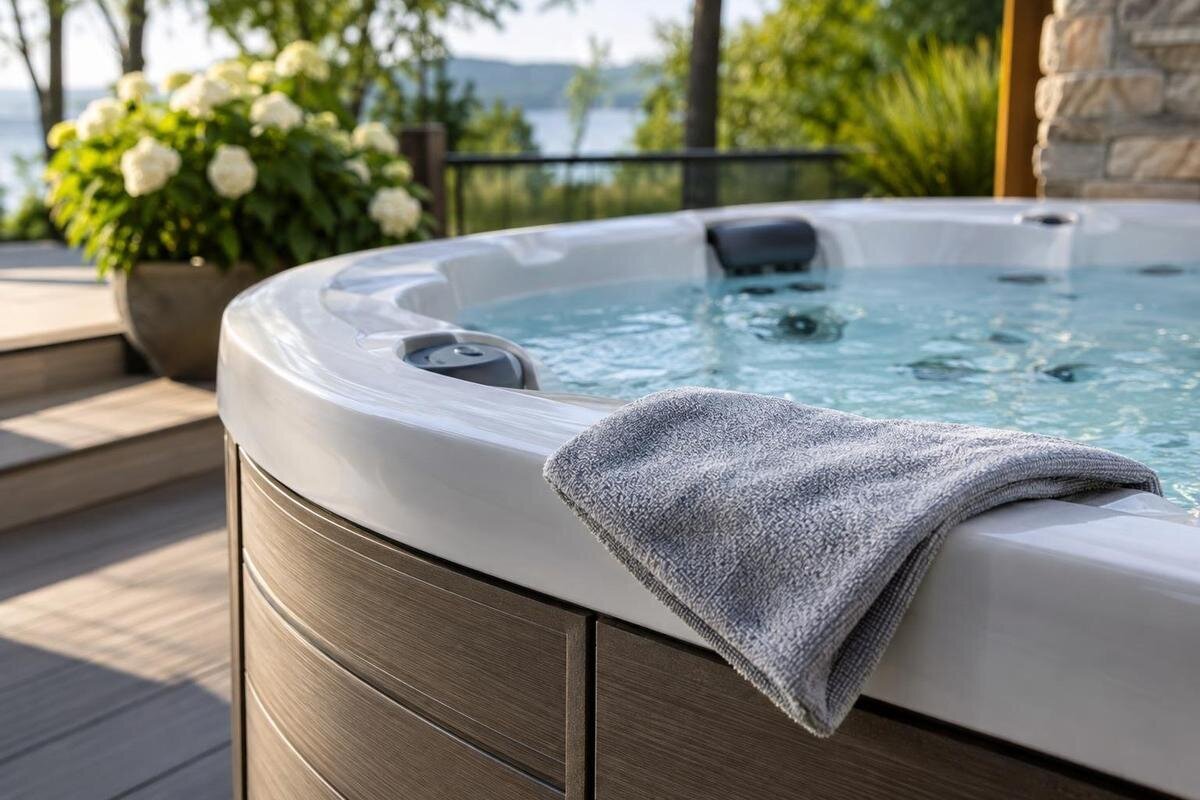
Hot tub surface care
Hot-tub surfaces can look similar while requiring different care, and a cleaner that seems gentle is not automatically compatible with every finish. Start by identifying the exact model and the specific part to be cleaned. Then compare the tub’s current care instructions with the cleaner label, including any stated application and rinsing steps. Do not choose a tool or household product by reputation alone. If the documentation does not clearly cover the surface and task—or a mark persists—pause and ask the manufacturer instead of escalating to a stronger method.

01
Identify each surface before choosing a cleaner
A hot tub may have several distinct surfaces: an interior shell, trim or edging, a control area, fittings, and a cover where those parts are present. They may not share a material or finish, even when adjacent parts look alike. Start by naming the exact place that needs attention, rather than shopping for a cleaner for the tub as a whole. A smear beside a control or fitting deserves a separate check from residue on the main interior surface. This distinction narrows what the care instructions need to cover and helps prevent a cleaner from being carried onto a surface it was not meant for.
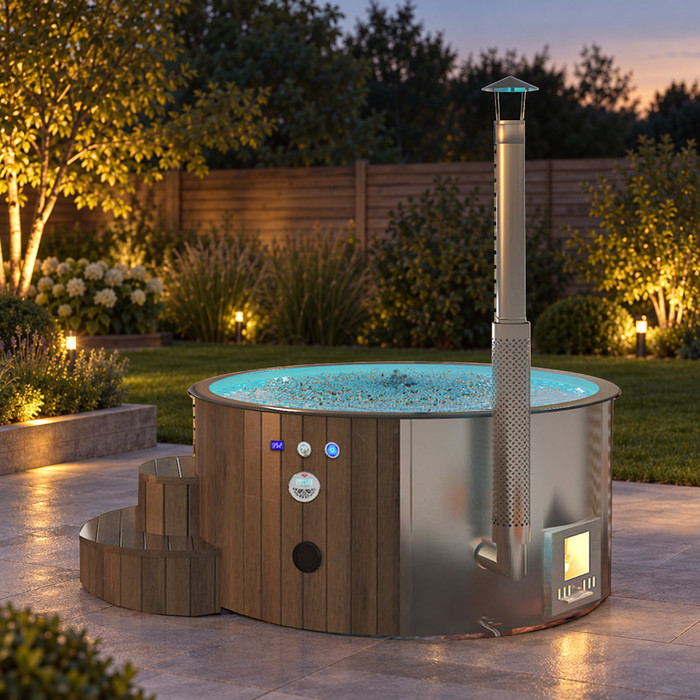
Identify the material and any finish from the current owner’s guide, manufacturer documentation or a labelled parts reference for the exact model. Appearance is not proof: colour, gloss and texture cannot reliably tell you what a surface is made of or how it is coated. If the documents use a part name you do not recognize, ask which visible area it refers to. For Bloomcabin Hot Tub Cove 2, use the model name to locate the right care information; the name and product photograph alone do not tell you which cleaner or tool is compatible. Record the model, surface and mark together.
Find care instructions for the exact model
Use the owner’s manual and current manufacturer documentation for the exact model, rather than a guide for a similar-looking tub. Confirm that the document applies to the model name or identifier you own; if you cannot match it, ask the manufacturer to confirm. Look for surface-cleaning directions, not just general water-care material. Useful details include permitted cleaner types, surfaces to avoid, approved tools, dilution, contact time, the order of application and the stated rinse. Note any document revision or date shown so you can tell whether a later instruction has superseded it. Do not fill a missing step with advice for another model.
If you own or are considering the Haven 6 hot tub, use the model name to request the applicable care instructions. Check that the document covers the particular part you intend to clean. If the guide explains the shell but says nothing about the control area or fittings, treat those as separate questions. Keep the relevant pages available while shopping, and compare the proposed product against the exact directions rather than relying on a verbal claim that it is suitable for hot tubs. If a retailer provides a care sheet, ask which model and manufacturer document it reflects.
02
Describe the mark before treating it
Before selecting a method, record what you see in neutral terms: loose particles, a film, residue after a known spill, discolouration, a ring near a seam, or a change in texture. Those descriptions are clues, not diagnoses. Appearance and location alone do not identify what caused a mark, and a dark spot is not proof that stronger cleaner is needed. Note where it is, how large it is, and whether it appeared after a known event. A clear photo in ordinary light can help you describe it to manufacturer support without scraping or chemically testing it first.
Removing loose dirt and treating a persistent mark are not necessarily the same task; the manual may authorize only a particular cleaning approach. Avoid rubbing harder just to learn whether a mark is dirt, and do not apply a cleaner as a diagnostic test. If you are considering the Fjord 8 hot tub, get surface-care guidance for that exact model before assuming a mark can be treated like one on another tub. Describe what you observe, then ask which documented method applies. A photograph can help explain the issue, but it cannot confirm the surface material or the mark’s cause.
Confirm that the cleaner suits the surface
Compatibility has two parts: the tub manufacturer must permit the cleaner for that specific surface, and the cleaner label must cover the intended use. A product promoted for bathrooms, plastics or spas may still be unsuitable for a particular finish. Likewise, a label saying hot-tub safe may refer to a water-treatment use, not wiping an exposed surface. Read the full directions and identify which surfaces the product names. If the label uses broad wording but the tub instructions list restrictions, follow the restrictions and ask before use. A general marketing phrase does not replace model-specific care advice.
Check more than the front label: look for directions about dilution, application method, contact time, rinsing, protective equipment, ventilation and surfaces to avoid. Do not combine products or improvise a dilution, and do not assume a household remedy is acceptable because it is familiar. When choosing a cleaner for the Aurora 10 hot tub, compare its full label with the current model-specific care guide, including any exclusions for nearby parts or finishes. If the label and guide appear to conflict, set the product aside and ask the manufacturer to clarify whether it is suitable and which directions apply.
03
Choose a tool the instructions allow
Treat a cleaning tool as part of the compatibility decision, not as an interchangeable accessory. A soft-looking pad can still have a textured face, seams, trapped grit or a worn edge; a stiff brush or scraper may mark a finish. Abrasive pads, scouring powders and melamine foam should not be assumed safe simply because they remove a mark quickly. Use them only if the tub’s instructions explicitly allow them for the surface in question. A microfibre cloth, sponge or brush is not automatically approved either; the exact guide and tool directions matter.
Check the instructions for the tool’s material, texture and intended surface, and use it in clean condition so grit from another task is not dragged across the tub. If the manual names a tool but you cannot identify an equivalent, ask before substituting. When shopping for cleaning tools for the Cove 2 hot tub, check its guide for allowed cloths or brushes rather than assuming that every item in a generic spa-cleaning kit is suitable. Keep separate, clean tools for different areas if the instructions call for them. A replacement tool is worth buying only when its intended surface and use are clear.
Prepare the area without spreading cleaner
Before opening a cleaner, read its complete label and the corresponding tub directions, including the cautions rather than only the application sentence. Check whether the label specifies gloves, ventilation, storage or disposal, and follow those directions. Keep the product in its original labelled container so the instructions remain available. Never mix cleaners, pour one into another bottle or add a second product because the first seems slow. If a method requires special preparation, it must be stated by the manufacturer and product label. Keep people and pets away as directed, and follow the label’s disposal advice or local waste guidance for unwanted product.
Plan how to keep the cleaner on the surface covered by both sets of instructions and away from nearby parts that are not included in the directions. A spray can travel beyond the patch you meant to clean, while wiping across a seam may transfer residue to another material. Use only a protective covering that will not itself scratch or leave residue, and do not cover controls or fittings in a way the instructions prohibit. When checking surface-care directions for Haven 6, ask whether the approved method applies to the exact area, not only to the main shell. If a label or manual leaves this unclear, do not begin until it is clarified.
04
Follow application and rinsing directions
Once the product and tool are confirmed, follow the stated sequence exactly. Use the amount or dilution given, apply it only by the named method, respect any stated contact time and complete the specified rinse or wipe. Do not extend the time, increase the concentration or scrub harder to chase a faster result. If the tub guide and cleaner label describe different procedures, do not combine the more convenient parts of each; pause and ask for clarification. Product instructions are specific to their formula, so advice for another cleaner is not a substitute.
Check whether the guidance specifies the condition the surface must be in before cleaning, and follow that requirement rather than guessing. Do not assume a surface cleaner may be poured into the water, left below the waterline or used on a wet surface; those uses need explicit support. When reviewing care instructions for Bloomcabin Hot Tub Fjord 8, distinguish directions for applying the cleaner from those for removing it. If either stage is missing or unclear, ask how to complete the method before starting. Avoid adding water-treatment products or changing the tub’s water-care routine as part of a surface-cleaning experiment.
Check the surface after cleaning
After the instructed rinse or wipe, assess the surface only in the condition the manufacturer specifies. If drying is required, follow that direction; if it is not mentioned, do not invent a drying step that changes how the product is used. Look for remaining residue, a change in gloss or colour, tackiness, roughness or another difference from the surrounding area. A before-and-after photo under similar lighting is more useful than judging a wet or foamy surface. If the finish appears altered, stop rather than polishing it or applying another cleaner.
If some soil remains but the surface looks unchanged, repeat only if both the tub instructions and cleaner label permit repetition and state how to do it. Otherwise, record the product and tool you used, how you followed the directions and what remains. Changing cleaners at once makes the result harder to interpret and can expose the finish to an unapproved combination. Rinsing does not make an incompatible cleaner suitable. One permitted method with a clear endpoint is safer than repeated attempts based on guesswork.

05
Stop when a mark will not come off
A mark that remains after a correctly documented method is a reason to stop and reassess, not to reach for a harsher product. Stop sooner if the surface changes in colour, sheen or texture, if material transfers to the cloth, or if a new cloudy or sticky patch appears. These signs cannot identify the cause by themselves, but they may indicate that continuing could worsen the finish. Do not switch to a stronger solvent, abrasive pad, scraper or internet remedy unless the manufacturer confirms it for that exact surface and mark.
When contacting manufacturer support, provide the exact model identification, the mark’s location and a photo, plus the cleaner’s name and the tool used. Describe the application and rinsing steps you followed without presenting a guess about the cause as fact. Ask whether the material and finish are known, whether another approved surface-cleaning method exists, and what to do if it fails. If support cannot identify the surface from available records, ask whether an authorized service professional should assess it before any further cleaning. A photo alone is not confirmation.
Buy a cleaner only after checking compatibility
Buy only after the model instructions and cleaner label agree on the surface and task. Before paying, confirm that the product is a surface cleaner rather than a water-treatment item, that its label names the material or use required, and that the stated application, contact time and rinse method fit the tub guidance. Check the tool separately; a compatible cleaner does not make every pad or brush safe. For Bloomcabin Hot Tub Aurora 10, use the model listing to identify which care document to request, not as evidence of a particular surface material or approved product.
If a listing says spa cleaner or hot-tub safe without clarifying whether it is intended for the surface you need to clean, ask the manufacturer or retailer to confirm the exact use. Have the cleaner’s full product name and label available, and ask about the specific part, tool, preparation and rinse directions. If no one can confirm compatibility, postpone buying rather than selecting a product by scent, strength or a broad claim. A clear match between model guidance and product directions is the useful buying criterion; the category name alone does not establish that a cleaner is suitable for every hot tub surface.
Frequently asked questions
Can I use an all-purpose household cleaner on my hot tub?
Only if the care instructions for your exact model and the cleaner’s label both permit that use on the surface you need to clean. A product described as suitable for bathrooms, plastics or spas is not automatically compatible with every tub finish. Check the intended surface and the application and rinsing directions before using it.
Is a soft sponge always safe?
No. A sponge may have an abrasive side, and grit caught in a soft cloth can scratch a finish. Check the tub instructions for an approved tool and inspect it before use. Do not substitute a scrub pad, melamine foam, brush or scraper unless the model-specific directions allow it.
Can I use vinegar, bleach or rubbing alcohol on a hot tub surface?
Use any of them only if the current tub instructions and product label permit that exact use. Familiar household ingredients are not automatically gentle on a particular finish, and permission to use a product for water treatment does not establish that it is suitable for surface cleaning. Never combine products or make a homemade mixture to test a mark. If instructions do not cover the substance and surface, ask first.
Should I test a cleaner on a hidden spot first?
A hidden spot is not automatically a safe test area: its finish or location may differ, and the test itself can leave a visible mark. Use a spot test only if the tub maker and product directions specify where and how. If they do not, contact the manufacturer rather than inventing a test method.
What should I do if a mark remains after cleaning?
Stop rather than switching to a stronger product or tool. Record the model, the mark’s location, the cleaner and tool used, and the steps you followed. Share those details and a clear photo with the manufacturer, and ask whether another surface-cleaning method is approved for that exact area.
Surface-safe cleaning is a compatibility question before it is a technique question. Record the model and the affected area, identify the surface from reliable documentation, and match both the cleaner and tool to the instructions. When no current model-specific guidance supports the intended use, waiting is safer than trial and error. A persistent mark or a change in finish calls for manufacturer guidance, not a stronger chemical or more abrasive tool.
