
How to Plan Water Supply and Drainage for a Backyard Hot Tub
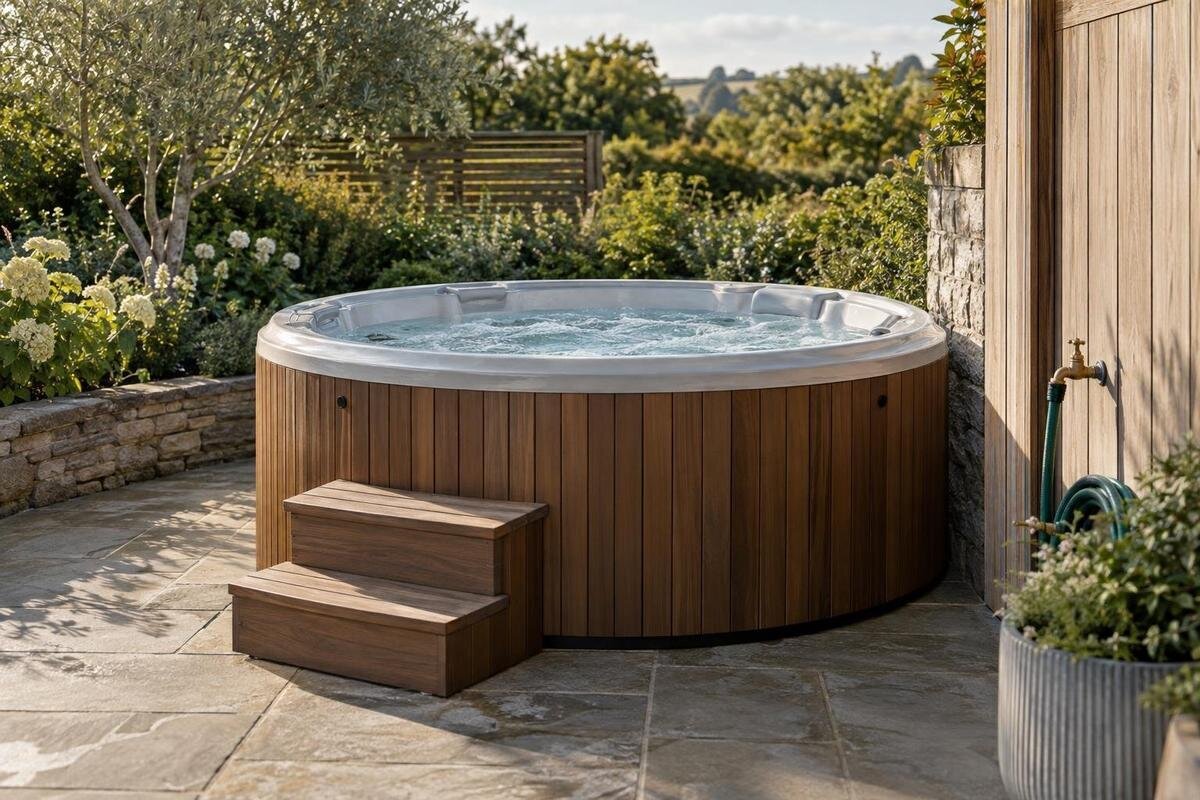
Backyard hot tub planning
Planning water access and drainage is part of choosing a backyard hot tub. You need a dependable way to fill it, a reachable drain connection and a destination for discharged water that is permitted and suitable for your property. A nearby tap or a patch of lawn does not answer those questions. Map both routes, then check the exact model’s instructions and local requirements before ordering; otherwise, a tub may fit the planned spot but prove awkward to fill or empty.
Identify a dependable water source
Begin with the actual water source, not an assumed garden tap. Identify which outdoor or indoor outlet could supply the tub, whether it will remain accessible when you plan to fill, and who controls it. Note any seasonal shutoff and whether the same outlet is shared with other household needs. On a shared property, confirm permission to use it and agree on access. If the supply is a private well or another limited system, ask a well or water-system professional whether the expected demand is appropriate. Do not infer a model’s water requirement from its name or appearance; the useful question is whether a dependable source is available when you expect to fill.
Make a short record of each possible source: its location, who can authorize its use, when it is available and any questions that need answering. If you are considering Bloomcabin Hot Tub Cove 2, add its documented water requirement to that record once the manufacturer supplies it. This lets you discuss the actual demand with the person responsible for the supply rather than relying on a general description of the tub. Where more than one outlet is available, compare access as well as proximity. An outlet that is close to the tub may still be inconvenient if it is behind a locked gate or unavailable when you need it.
Measure the full filling-hose route
Measure along the route the hose will actually follow instead of drawing a straight line from the tap to the tub. Include corners, the path around fixed objects and any distance needed to keep the hose clear of a doorway or regular walkway. Check whether you can lay it without pinching it under a door, creating a trip hazard or dragging it across a surface that could damage it. If an indoor outlet is the only option, account for bringing the hose through the house and keeping the route manageable. A convenient tap is not enough if reaching the fill point requires moving furniture or repeatedly obstructs a main passage.
Think through how you will set up and put away the hose, not just whether it reaches. You should be able to reach the source and observe the hose and fill point while following the model’s filling instructions. For Bloomcabin Hot Tub Haven 6, confirm the fill point before finalizing your measurements, and allow working slack rather than pulling the hose taut. Note where you would store the hose afterwards so it does not remain across a walkway. If you expect to fill during colder weather, ask how the outdoor outlet and hose should be managed in the conditions at your property rather than leaving a hose connected by default.
Confirm fill connections and backflow requirements
Before connecting anything, ask the manufacturer how the exact model is meant to be filled: which connection is used, whether a particular hose end or adapter is required, and whether the instructions identify any restrictions. Take those details to the water utility or local plumbing authority and ask whether backflow-prevention requirements apply to your proposed arrangement. The answer can depend on local rules and the setup; a general article cannot identify the correct equipment for your property. Have a qualified plumber assess the connection if needed, rather than selecting a device or altering the supply by trial and error.
Describe the proposed arrangement clearly when making that enquiry. Explain whether the hose will be attached only while filling or left connected between uses, identify the outlet and note where its shutoff is located. If you are considering Bloomcabin Hot Tub Fjord 8, provide the manufacturer’s filling instructions so the discussion concerns that model and your intended setup. Ask which parts of the arrangement need professional assessment and who is responsible for any changes to the supply connection. Keep these questions separate from hose length: a hose that reaches the tub does not, by itself, resolve the connection or backflow questions.
Keep the drain connection accessible
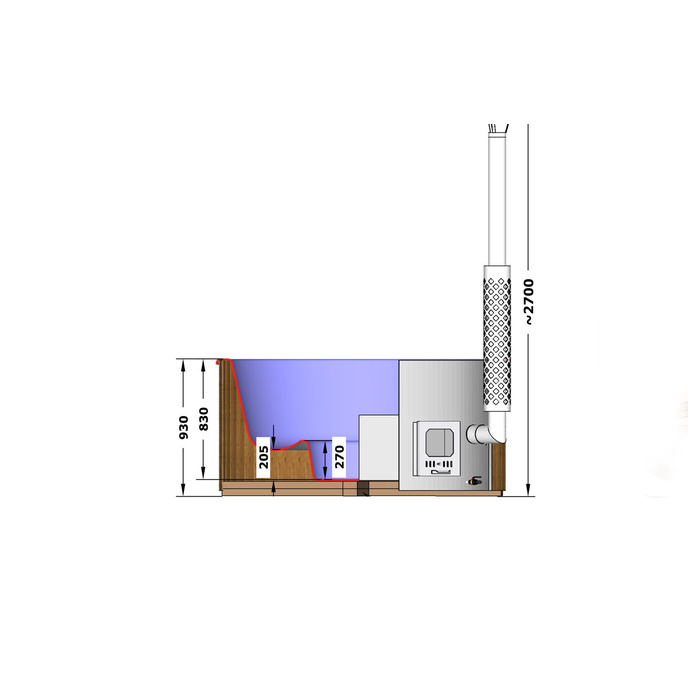
Find out where the selected tub’s drain connection is and what access it needs before deciding that a hose can be attached. Ask the manufacturer for current instructions that identify the drain point, required connector and draining method; none of those details can be safely inferred from a model name or image. Confirm that the connection will remain reachable once the tub is in its intended position, without having to move the tub or dismantle nearby fixed work. An installation diagram can help you check whether a fence, storage area or other obstruction would make the connection inconvenient to use.
Think through the physical task of attaching and removing the drain hose. You need to reach the connection and handle the specified fitting, not merely see the outlet through a gap. For Bloomcabin Hot Tub Aurora 10, ask the manufacturer to identify the drain connection on the model’s installation diagram and explain any access requirements. Compare that information with nearby fences, steps, storage and planned landscaping. Note any removable panel or other access step identified in the instructions, and make sure your layout does not block it. Confirm any connector or extension with the manufacturer instead of assuming that a generic fitting will fit or that a hose can remain attached.
Map the drain-hose route
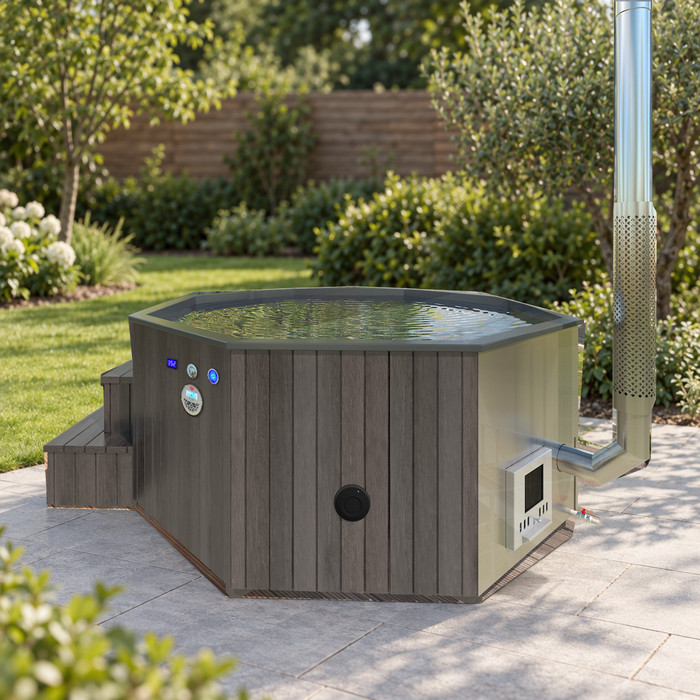
Once you know the manufacturer’s draining method, sketch the route from the drain connection to each proposed discharge destination. Measure along the path a hose would actually take, including turns around fixed objects, rather than measuring a straight line across the yard. Mark gates, steps, narrow passages and changes in level so you can discuss the complete route with the manufacturer or a plumber. Check whether a door or gate would need to remain open and whether the hose would cross a regular walkway. The aim is to identify a usable route for the duration of draining, not simply to find an endpoint within reach.
Assess each proposed route separately from the question of whether its destination is permitted. A route may be easy to lay out but lead to an unacceptable outlet; a permitted destination may be difficult to reach without obstructing access. When assessing the Cove 2 model, put its confirmed drain location on the sketch and compare the route with the manufacturer’s draining instructions. Do not assume that extra hose or a different fitting will resolve a mismatch. Record where you would need clarification about the route, an extension or a connection. If the preferred path is impractical, map an alternative before committing to nearby fixed work.
Confirm where discharged water may go
Treat drained water as wastewater whose acceptable route must be confirmed, not as ordinary rainwater. Municipal directions, utility rules and property-specific systems can differ, and the permitted destination may depend on the local system and the water’s contents. Contact the office or utility responsible for sewer and stormwater questions; if another authority is responsible, ask where to direct your enquiry. Explain whether you are planning a complete drain and which water-care products are used. When the answer will affect plumbing or site work, ask for the relevant direction in a form you can keep with your planning notes.
Do not use a convenient drain cover or nearby channel as proof of permission. Stormwater and sanitary wastewater routes serve different systems, and a surface inlet may not lead where you expect. Likewise, a sewer connection on the property is not automatically an acceptable outlet. If Haven 6 is on your shortlist, include its documented discharge volume and the proposed destination in your enquiry. Record which destination the authority identifies and any conditions attached to its use, rather than keeping only a general answer about hot tubs. Have a qualified plumber assess any proposed connection to a building drain or sewer before including that work in your purchase plan.
Plan for pooling and runoff
Even an allowed destination can be a poor route if water collects, erodes soil or flows somewhere unintended. Walk the proposed outlet path and note low points, shallow depressions, sloping ground and surfaces that direct water toward a house, garage, walkway, neighbouring lot or public area. Where practical, observe the area after rain and note how existing drainage features carry water. This is an initial check, not an engineering assessment: soil, grade and weather affect how water moves, and a dry-day inspection cannot guarantee that a route will cope. Ask a qualified drainage professional or local authority for site-specific guidance if the route is uncertain.
Consider how the route may behave when the ground is saturated, frozen or affected by seasonal thaw, and whether an outlet could leave standing water or a slippery surface. Do not reshape the ground or redirect runoff onto another property as a workaround. If your plan for the Fjord 8 depends on the yard absorbing the full discharge, use the manufacturer’s documented volume when asking whether that method is suitable. Point out nearby boundaries and any low areas you identified during the walk-through. Confirm both permission and site suitability; neither a neighbour’s arrangement nor the absence of pooling on a dry day settles those questions for your property.
Compare a temporary hose with permanent plumbing
A temporary hose may be simpler when the water source and discharge route are accessible, the manufacturer allows the arrangement, and you can manage the hose each time. It avoids committing to fixed pipework, but the hose still needs to be laid, monitored and stored, and the drain route must reach a confirmed destination without creating an obstruction. Permanent supply or drain plumbing may reduce repeated hose handling, yet it is not automatically needed, permitted or compatible. It can involve plumbing work that must be planned for the exact tub and property, with local requirements checked by a qualified professional.
Compare the options against the same checklist: model-specific connection details, water-supply protection, permitted discharge, access for inspection and responsibility for any work. If you are considering Aurora 10, ask a plumber to review its manufacturer instructions alongside your route sketch before quoting for permanent connections. Clarify what the proposed work includes, what would remain a manual task and which local approvals need to be addressed. Do not assume that plumbing is included with the tub or that a standard connection will suit it. Weigh the repeated effort of handling a temporary hose against the scope of fixed work, rather than choosing permanent plumbing solely to avoid laying out a hose.
Estimate water demand and related costs
Water use affects supply planning and, where applicable, the amount billed. Use current manufacturer documentation to find the exact model’s fill volume and procedure; a numeral in a product name is not a capacity figure. If your water is metered, ask the utility which water and wastewater charges apply to your account, then use the documented volume rather than an online estimate for a different tub. If you rely on a private well, ask the relevant well professional whether the planned draw is appropriate for that system. The purpose is to assess the supply and budget with real figures, not to promise a particular bill.
Keep the planned fill volume separate from any extra water used for rinsing or occasional spills; this is a water-use estimate, not a maintenance schedule. Do not base a disposal plan on an assumed volume: obtain the model’s information and ask the authority whether the amount affects the permitted route or conditions. If the figures are unavailable before purchase, request current documentation from the seller or manufacturer rather than making a precise comparison from a model name. Any cost estimate should state its volume and local rate assumptions, since generic prices may not match your utility or billing arrangement.
Match the plan to the exact model
Before ordering, assemble the answers for each shortlisted model in one place: filling procedure and connection, documented water volume, drain point, compatible hose or connector, draining method, and any manufacturer guidance about water-care products and disposal. Request current documentation from the manufacturer and check that it applies to the exact model; catalogue titles and images are not substitutes for technical instructions. Compare each answer with the actual water source, measured hose routes and proposed discharge destination on your property. If an instruction is unclear, ask the manufacturer to clarify it rather than borrowing details from a similar-looking tub.
Then resolve local questions with the relevant municipality, water utility, plumbing authority or wastewater professional, depending on the issue. Ask a qualified plumber or drainage professional to assess any permanent connection or uncertain runoff path; a general answer for another property may not apply to yours. Keep the responses together, note any work still required and include it in your purchase plan. You can then decide whether the preferred model works with a manageable temporary setup, needs professionally planned plumbing, or calls for a different water route. This decision is about water access and disposal, not an assumption that all tubs share the same connections.
Frequently asked questions
Can I fill a backyard hot tub with a garden hose?
Possibly, but confirm the exact model’s filling instructions, required connection and any hose or water-supply precautions first. Ask your water utility or local plumbing authority whether backflow-prevention requirements apply to your proposed setup. Also check that the hose can reach the fill point without being stretched across an unsafe or inconvenient route.
Can I drain the hot tub onto my lawn?
Do not assume a lawn is an acceptable destination. Check with the authority responsible for wastewater or stormwater in your area, and describe the water-care products used. Ground conditions, pooling and runoff onto neighbouring property also matter. Use a lawn only if the route is permitted and suitable for your property.
Can hot-tub water go into a storm drain or sanitary sewer?
Neither destination should be treated as the default. Stormwater and sanitary systems serve different purposes, and local directions can depend on the property and the discharged water. Ask the municipality or utility which destination, if any, is permitted at your address before routing a hose or installing a connection.
Do I need permanent plumbing for a backyard hot tub?
Not necessarily. A temporary hose may be workable if the manufacturer permits the arrangement and both the fill and drain routes are practical. Permanent plumbing may reduce repeated hose handling, but it must suit the exact model and comply with local requirements. Have a qualified plumber assess proposed fixed connections.
How long will it take to fill the hot tub?
The time depends on the model’s documented water volume and the flow available from your source. Ask the manufacturer for the exact fill information and compare it with your actual setup; a number in a model name is not a capacity specification. Avoid relying on estimates for a different tub.
A workable water plan connects three things: a source you can access, a drain point you can reach and a discharge route that is both permitted and suitable for the property. When those details match the exact model’s instructions, you can compare temporary hoses and permanent plumbing on practical grounds. If a connection, destination or local requirement is still uncertain, keep that question open rather than treating a convenient tap or drain as confirmation.
