
What Does It Cost to Heat a Wood-Fired Hot Tub in Canada?
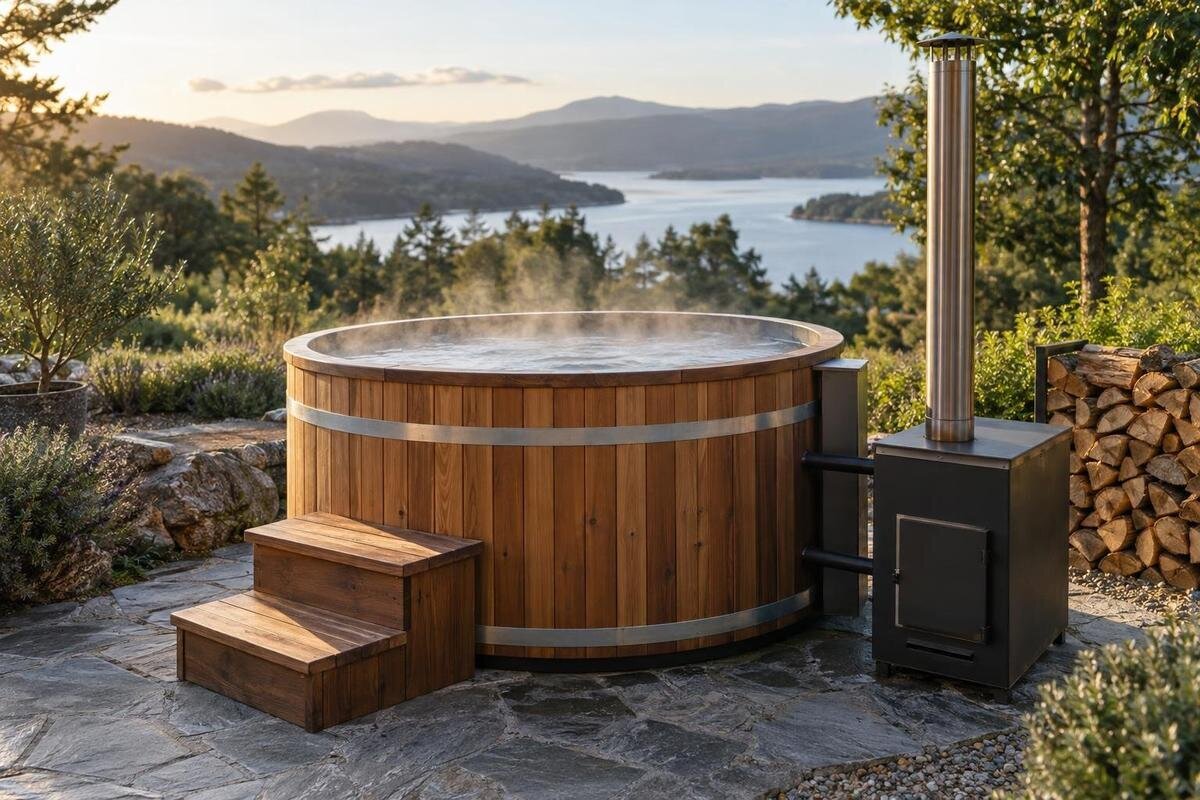
WOOD-FIRED HOT TUB COSTS
Estimating the fuel cost of a wood-fired hot tub starts with two local, model-specific inputs: the firewood quantity used for a clearly described heating scenario and the price for the same quantity from a supplier serving your area. The product information available for this guide identifies catalogue models only; it does not verify a wood-fired heater, fuel consumption or a current Canadian supplier quote. A dollar amount per session would therefore be guesswork. Use the method below to build a practical budget from a dated quote and fuel-use evidence you can verify.
What counts as one heating session?
Define a session before pricing it. A cold-start estimate begins with water at its actual starting condition and ends when it reaches the chosen operating temperature; session-maintenance fuel is any additional wood burned during the planned soak. A seller’s cold-start figure may exclude maintenance, while an hourly or session figure may use different assumptions. Treat them as separate inputs unless the supplier explains exactly what its number includes. Record the planned soak length too, because maintenance fuel depends on how long the water needs heat. Set the target from the manufacturer’s instructions and your own use plan, not from another model or a generic example.
Also identify the water state between uses. If the tub is drained and refilled with cooler water, a fresh initial-heating amount may be needed; if water remains warm, the next visit may need only a top-up before any wood burned during the soak. Do not charge a full cold start to every session unless that reflects how you will use the tub. Note the fill status, starting condition, chosen target, time between heating and use, session length and whether maintenance fuel is included. If heating happens well before a soak, count the initial heat-up once and account separately for any wood used to retain warmth while waiting.
Which factors affect firewood use?
Firewood use is not a fixed property of the label wood-fired. The amount of water being heated and the difference between its starting and chosen temperatures affect the heat required. Outdoor conditions and heat loss during warm-up or use matter too, including wind exposure, the cover or insulation arrangement and how long water sits between heating and soaking. The wood itself is not interchangeable by name alone: species, moisture, piece size and how it is measured can change how a quoted quantity behaves in a heater. These interacting conditions make an unqualified amount per session unsuitable as a universal Canadian estimate.
Ask for fuel-use evidence with clear boundaries: the amount burned for a cold start under stated conditions and, if available, the amount used to maintain warmth during a defined session. Request the unit, fuel type and condition, water amount, starting and target conditions, outdoor conditions and whether a cover was used. Ask whether the result was measured or estimated. When considering Bloomcabin Hot Tub Fjord 8, tie those questions to the exact model and heater configuration; the catalogue identity alone does not establish wood-fired compatibility or fuel use.
Finding current local firewood prices in Canada
Look for a current quote from a supplier serving the actual delivery area rather than borrowing a price from another community. Record the supplier, quote date, price in CAD, exact quantity and unit, whether pickup or delivery is quoted, any delivery charge or other mandatory fee, and whether tax is included or added. Check whether the quoted amount applies to your location and order size. No dated local supplier quote is established for this article, so publishing a current dollar-per-unit figure or a Canada-wide average would be misleading. A useful budget starts with a price you can actually obtain.
Compare offers only after confirming that they refer to a comparable type and condition of wood and a clearly stated quantity. A bag price, bundle price, loose-volume price, stacked-volume price or weight-based price is not automatically comparable to another. Ask what the seller’s unit means and how much fuel it includes; do not convert between measures using a generic rule. If you are gathering quotes for a possible Cove 2 purchase, record each supplier’s quantity and price beside the fuel-use unit you still need to confirm for that setup. For delivered wood, compare the total amount due at your address, not just the headline unit rate.
Calculating the fuel cost per session
Use one unit throughout the calculation. If a verified heating scenario consumes U units of firewood and the supplier’s all-in price is P Canadian dollars per same unit, the fuel cost for that part of heating is U × P. If a quote gives a total price C for Q matching units, calculate P as C divided by Q, then multiply by the quantity actually used. Include delivery and tax in C when those charges are part of the purchase you are budgeting for, and state clearly if either is excluded. This prices heating fuel only, not the tub, its delivery, site work, water care or other ownership costs.
Keep the session components visible: cold-start cost equals the cold-start quantity multiplied by the unit price; maintenance cost equals the session-maintenance quantity multiplied by the unit price. Add the two for a cold-start session, or substitute a verified top-up quantity when the water is already warm. On a worksheet for Bloomcabin Hot Tub Haven 6, leave each quantity blank until confirmed instead of inserting a value based on a model name. If fuel use and the sale price are expressed in different units, get a reliable conversion for the exact fuel measure before multiplying.
How different assumptions change the estimate
Use separate scenarios to show how inputs affect the answer, rather than presenting one unlabelled figure. For a cold fill, let q0 be the verified quantity used to heat from the recorded starting condition and qh the quantity burned during the planned soak. At a price p per matching unit, the estimate is (q0 + qh) × p. For a warm-water visit, use qtop for the amount needed to restore the chosen temperature, giving (qtop + qh) × p. Each quantity must use the same unit as p. These expressions are calculation templates, not claims about any model’s fuel consumption.
Change one input at a time when testing a budget. At a fixed unit price, twice the measured fuel quantity costs twice as much; at a fixed quantity, twice the price per unit doubles the fuel cost. A low, expected and high case can use actual supplier quotes and clearly defined heating conditions, but gaps should not be filled with invented prices or fuel amounts. If the Aurora 10 product page is on your shortlist, use the same worksheet and request model-specific inputs. Keep the assumptions beside each result so you can see whether a changed total comes from the wood price, fuel quantity or type of session.
What to verify before comparing models
Before applying a number to a product, confirm which heating equipment is supplied with or compatible with the exact hot tub. Ask for the heater’s make and model and for fuel-use information from the supplier or manufacturer. Find out what water amount, starting condition, chosen target, outdoor conditions and session length the figure assumes, and whether it covers initial heating, maintaining warmth or both. If those details are unavailable, mark consumption as unknown rather than assigning a figure from a similar-looking tub. A page naming a tub can identify the catalogue item, but identity is not evidence of its heating system or operating cost.
Keep the source and basis beside each input: who supplied it, when, the unit of measure and the conditions. For the Fjord 8 listing, the catalogue name can anchor your questions, but it cannot confirm that the tub is wood-fired or that a separate heater will work with it. Ask the seller to confirm the configuration before using any burn-rate information. Do not infer capacity, heater power, efficiency or heating time from a model number, and do not treat a figure for a different heater or water amount as an equivalent estimate.
Comparing models on a like-for-like basis
Once the equipment and fuel data are clear, compare values with the same boundaries. Match cold-start versus warm-start conditions, water amount, starting and target temperatures, outdoor conditions, cover assumptions, maintenance period and firewood measurement. A per-hour figure cannot be compared directly with a cold-start quantity, and a per-soak quantity is not meaningful if one estimate includes heat-up while the other excludes it. Keep fuel cost separate from purchase price and other running expenses so a lower-looking number does not conceal a different scope.
Use a comparison sheet with one row per shortlisted model and space for confirmed heater compatibility, evidence source, initial-heating quantity, maintenance quantity, measurement unit, quote date and delivered unit price. Mark missing information as unknown; do not rank a model on fuel cost when its evidence is incomplete. Use the Bloomcabin Hot Tub Cove 2 listing to identify its row, then enter the heating figures supplied for the exact configuration under consideration. Keep the original quantities and conditions visible alongside the calculated cost. That way, you can distinguish a difference in the quoted unit price from a difference in fuel consumption or in what the heating estimate includes.
Turning a per-session cost into a seasonal budget
To estimate a month or season, multiply each type of session by its own cost, then add the results. If Ncold planned visits start with cool water and Ntop visits start with water that is still warm, the total is Ncold × Ccold + Ntop × Ctop, using costs calculated from verified inputs. This avoids treating every visit as a cold start or every visit as a small top-up. Include any fuel used during the soak in each session’s cost. If your use changes with the weather, the time between sessions or the refilling pattern, keep separate counts for those cases instead of averaging them without evidence.
Keep the full firewood order in view. An all-in unit rate can include delivery and tax from the actual quote, while a delivery charge for a later order belongs in the seasonal total when it is incurred; do not charge the same fee once per soak. If the Haven 6 is on your shortlist, build its seasonal estimate from confirmed heating quantities and your own planned frequency, rather than assigning every model the same consumption. The resulting monthly or annual line is for wood-fired heating fuel alone, not a complete estimate of hot tub running or ownership costs.
Allowing for uncertainty in fuel use and price
Fuel-use data and local prices can both be uncertain. Keep the source beside each number and distinguish a measured result, a manufacturer estimate, a retailer estimate and your own planning assumption. For price uncertainty, obtain current quotes from suppliers that serve your area and record when each quote was given and any stated expiry. Do not treat an old quote as today’s cost. For use uncertainty, ask how the figure was obtained and which conditions differ from your own. If you know only the price, you can calculate a cost per unit, but not a verified cost per heating session.
A useful range changes only assumptions you can explain, such as different current supplier quotes or separate cold-start and warm-start cases. Show the low and high values with their basis; do not present them as a guarantee that actual spending will fall between them. Update the estimate when you plan an order and replace assumptions with quantities recorded during your own use. For a potential Bloomcabin Hot Tub Aurora 10 purchase, note which inputs are confirmed and which remain open. Date each revision and retain the earlier assumptions so you can see why the estimated fuel budget has changed.
Does the heating cost fit your budget?
Judge the result against a budget for firewood heating alone. Set an intended number of cold-start and warm-start sessions for the period, then total each category using its own fuel quantity and the all-in local price. Include any wood used to maintain warmth during each session in that session’s cost, rather than counting the visit again as a separate category. Keep the heating amount distinct from the hot tub purchase, delivery or installation, water-care supplies, maintenance and any other energy costs. These expenses belong in a separate, wider budget. This separation makes it easier to see whether fuel use itself is affordable instead of obscuring it in a combined ownership estimate.
If the cost fits within your planned allowance across the cases supported by actual quotes and fuel-use evidence, it can serve as a working fuel budget, not a guaranteed bill. If it does not fit, or the key consumption input is still unknown, pause the comparison and ask for the missing model and heater details. You can also revise the number of sessions you plan to include, but avoid assuming one tub burns less than another without comparable figures. Once you have used the tub, record fuel purchases and quantities so future estimates reflect your own experience.
Frequently asked questions
Is there a typical wood-fired hot tub heating cost for Canada?
A single figure would not be reliable for every location or setup. The local firewood price, the unit it is sold in, delivery and tax treatment, and the tub’s verified fuel use all affect the result. Use a current quote for your area and fuel-use information for the exact model and heating scenario.
Should I budget for a full heat-up every time?
Use the heating quantity that matches the water’s actual starting condition. If the water remains warm between visits, use a verified top-up quantity instead of a full cold-start amount, then add any wood used to maintain warmth during the session. After draining and refilling, use a cold-start estimate that matches the fresh water’s starting temperature.
Can I compare a bulk firewood price with fuel use measured by the bag?
Not directly. The price and the amount consumed need to use the same supplier-defined unit, or you need a reliable conversion for the exact fuel and measurement method. Do not assume that a bag, bundle, weight or stated volume represents an interchangeable quantity.
What should a seller’s fuel-use estimate explain?
Ask which exact heater and tub configuration it covers, the fuel type and measurement unit, and whether the figure is measured or estimated. It should also define the water amount, starting and target conditions, outdoor conditions and session length, and say whether it covers initial heating, maintaining the water temperature during use or both.
Should delivery and tax be included in the session cost?
For an out-of-pocket fuel budget, include charges that apply to the order and note whether tax is included or added on the quote. Spread a delivery charge across the quantity it delivers, or account for it once in the order total; do not charge the same fee again for every session.
A useful heating-cost estimate is local, tied to a defined session and based on fuel use confirmed for the exact setup. Keep the initial heat-up separate from any wood burned during the soak, match the consumed quantity to the supplier’s unit, and include only the charges that actually apply. With those inputs in hand, the arithmetic is straightforward—and the result is a budget you can explain rather than a Canada-wide guess.
