
What Makes a Well-Built Outdoor Hot Tub?
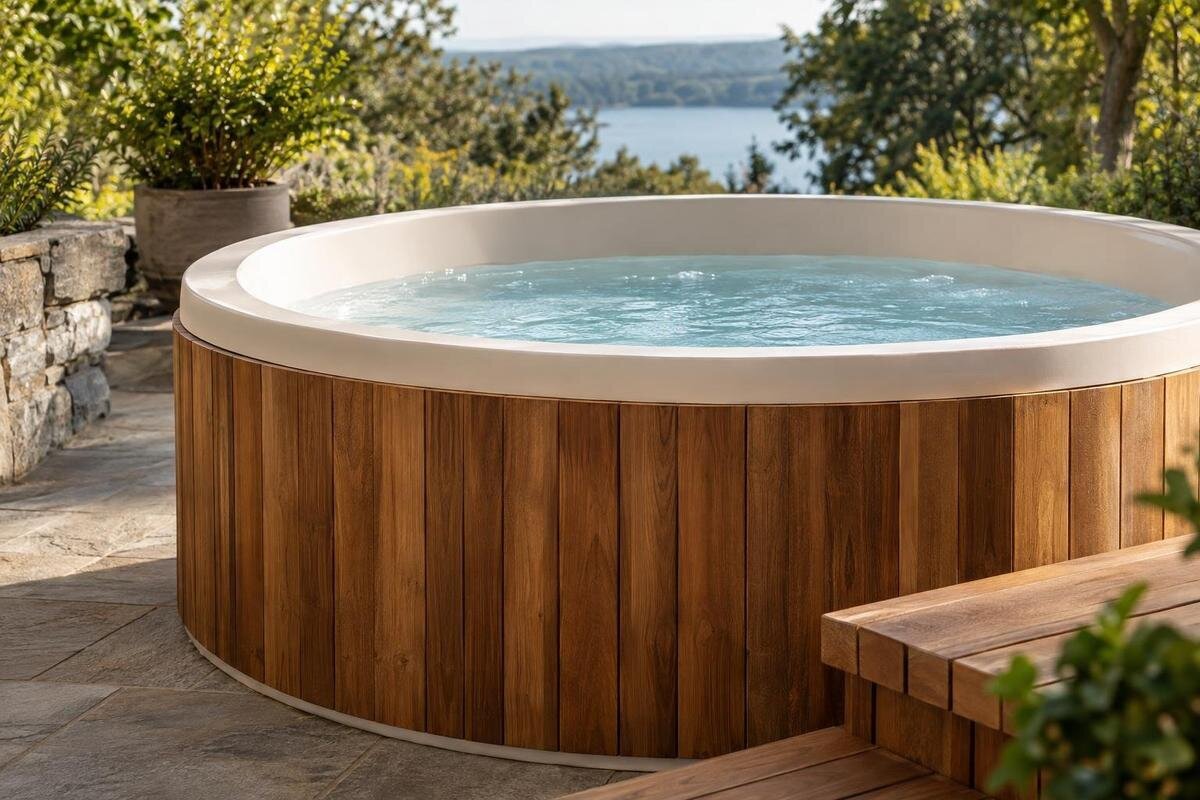
Outdoor hot tub construction
An outdoor hot tub can look solid while concealing how its shell is reinforced, what supports it, and whether its plumbing can be reached later. A reliable build-quality comparison depends on model-specific construction details and documents, not appearance or phrases such as “built to last.”
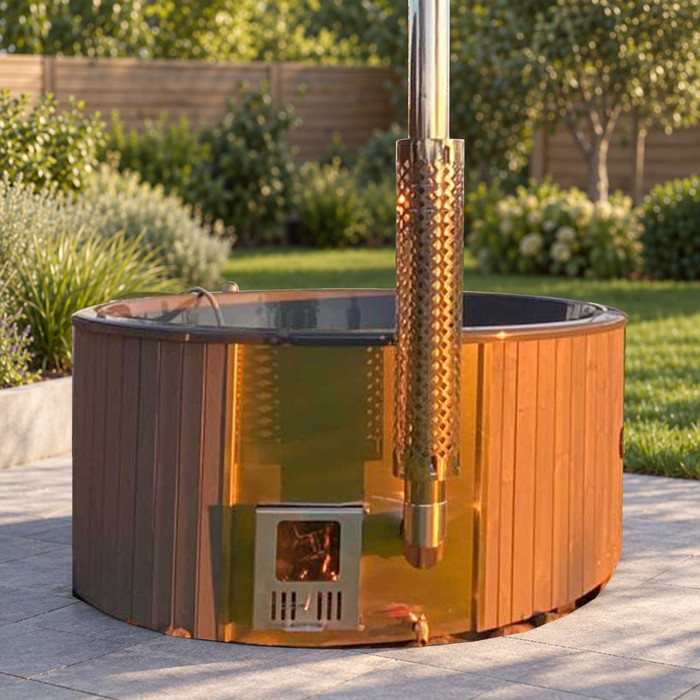
Begin with construction documents
Start by separating a construction fact from a sales description. Words such as durable, premium and all-weather do not explain what the shell or frame is made of, how parts are joined, or which conditions a claim covers. Request the current technical specification, owner’s manual, parts or construction diagram, and full written warranty for the exact model and version. Each document serves a different purpose: a specification should name components, a drawing should show how they relate, a manual should describe care and access, and warranty terms set out stated coverage. A brochure may introduce the product, but it can omit hidden layers or assembly details. Note the document date and model designation so a general or outdated description is not mistaken for evidence about the unit you are considering.
Check who made each statement and how narrowly it is defined. A named material, a described layer build-up, a stated test method and a defined test scope are more useful than an adjective, but each still needs an identifiable source. Find out whether a statement applies to the complete tub or one component, and whether options change the construction. A product-family sheet can be a starting point, but ask about any variation that changes materials, joints or access. When a detail is absent, record it as not stated; do not infer it from a photograph or product name. Use the Cove 2 product listing to identify the candidate, then record a construction detail only when the listing or its documentation actually states it. Keep copies of the documents so later comparisons use the same version of the evidence.
Check the shell material and how it is made
Ask what the shell is made from and whether the material name describes one layer or a layered construction. Request information on how the shell is formed and reinforced, if reinforcement is part of the design, and which areas the description covers. Terms such as acrylic or composite can refer to different constructions; the label alone does not explain the complete build-up or how the shell is supported. A useful document distinguishes the surface finish from the material beneath it and identifies any backing or reinforcement rather than grouping everything under one name. A generic material brochure can explain a material, but it does not establish that a particular model uses it. If a shell-thickness figure is provided, check which layer and measurement location it refers to.
Visual inspection can add context but cannot replace those details. If you can inspect a showroom example or sample, note whether the visible surface and edges look even, and whether there is obvious damage such as a chip or crack. Do not use a clean finish to infer hidden reinforcement or long-term life. A photograph may show colour and surface treatment, but not the shell’s underside, bonding or support. Record observations separately from documented construction facts, and ask how a visible mark should be assessed rather than guessing at its cause. When reviewing the Haven 6 product page, look for a stated shell description; if it is not there, request one instead of reading material claims into the image.
Look at the frame and the shell-to-frame connection
Give the supporting frame its own line in your notes. Find out which materials form the frame, how its members are connected, and whether coatings or other protection are specified for the intended exposure. If wood, metal or another material is named, use the maker’s care guidance rather than assuming the material alone determines durability. A statement such as reinforced base needs a definition: which parts are reinforced, with what, and how does that relate to the supporting frame? A parts drawing or clear assembly description is more useful than a broad claim, particularly when the same sales wording is used across several models. Confirm that the information applies to the exact version, not just the product family.
Find out how the shell, base, frame and outer panels connect. A cross-section or assembly diagram can show whether the visible cabinet supports the shell, covers a separate frame, or serves more than one purpose. The seller or manufacturer should explain what each structure does; exterior appearance alone will not settle it. Ask how fasteners and joints are specified and protected, and which parts can be inspected without dismantling other assemblies. If a technical drawing uses symbols or abbreviations, request a legend so the connections are clear. Avoid estimating structural capacity from a picture or calculating it from dimensions; rely on the maker’s engineering documentation for claims of that kind. For the Fjord 8 listing, use the model name only to identify which frame description to request.
Inspect exterior joints and finishes
The cabinet and exterior panels are separate from the water-containing shell. Check the stated panel material, surface finish, edge treatment, corners and method of fastening. Look for information on how separate sections meet and how openings or cut edges are finished. If a finish is applied rather than integral, ask for the care instructions and whether the seller describes touch-up or replacement; do not assume a particular coating is included. A description should distinguish cabinet and trim materials from shell materials, so a broad term such as weather-resistant is not mistaken for a complete construction specification. Ask how the finish is meant to be cleaned and whether the care instructions distinguish cosmetic marks from damage that needs attention.
Keep exterior seams, structural joints and plumbing connections distinct. A visible panel gap is not, by itself, evidence of a water leak or structural defect; it is a reason to ask what the seam closes, how the parts are attached and what finish is expected there. Ask which edges are sealed, if any, and what the manual says about checking or caring for them. If the product uses replaceable panels, find out whether the parts list identifies them individually. For terms such as weather-resistant, request the stated material, test conditions or care limitations instead of treating the phrase as a promise for every property. The Aurora 10 listing can identify the model, but only a construction description explains its exterior materials and joints.
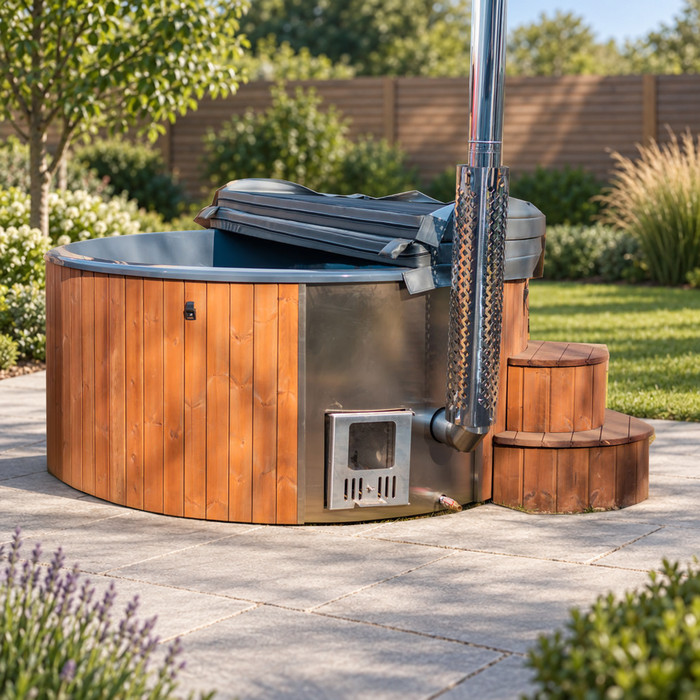
Ask how insulation and plumbing are specified
An insulation claim should identify what is insulated, with which material and where. Look for a model-specific description of coverage around the shell, cabinet, base and plumbing rather than relying on an overall phrase. Find out whether coverage is continuous, where it ends, and whether a quoted thickness refers to all areas or only a particular layer. Words such as full foam or perimeter insulation need a definition and, ideally, a drawing that shows the scope. Without a clear definition, a label cannot support a meaningful comparison. If performance is discussed, ask for the conditions and method behind the result; for a construction assessment, the immediate question is whether the material and coverage are clearly described.
Plumbing needs a similarly specific record. Request a schematic or parts list that identifies pipe and fitting materials, how the runs are supported, where connections sit, and which sections can be inspected. Find out whether assembled joints are checked during production and what that check covers; the word tested alone does not tell you what was examined. A useful manual distinguishes owner-observable points from work intended for a qualified service person. Where insulation is applied around pipework, ask how inspection and repair access is maintained. If you are comparing the Cove 2 model page with another candidate, use its documentation—not the model name or cabinet appearance—to fill in the insulation and plumbing fields.
Make service access part of the build assessment
Service access is part of the design, not a feature to infer from a removable-looking panel. Find a diagram or manual that shows which components sit behind each access point and which panels can be removed. Ask what tools or working clearance a technician requires and whether access depends on taking apart neighbouring components. A clear view of a cabinet interior can help, but a photograph may omit the far side, connections or fasteners. Do not assume a panel is intended to open simply because its seam is visible. The useful evidence is a labelled access plan tied to service instructions for the model you are considering.
Repairability also depends on whether parts can be identified and reached separately. Look for an itemized parts diagram and service instructions showing how connections are accessed, then ask how replacements are identified if a part number changes. Avoid assuming that a familiar-looking pump, fitting or panel is interchangeable with one in another unit. A product may be easier to inspect in one area and less accessible in another, so ask about the components most likely to need routine attention rather than accepting a single phrase such as easy access. These questions evaluate the construction and available documentation; they do not establish that service or spare parts will be available. Make sure the access drawing covers the relevant service side, not just one opening. Use the Haven 6 model listing to identify the exact candidate when requesting its access diagram.
Separate test evidence from warranty language
Testing language is useful only when it names the check. Ask what is tested, when, by whom and against which stated criteria. A reference to a test might concern the shell, plumbing joints, a finished assembly or something else; the scope should be explicit. Find out whether the result is recorded for the individual unit or describes a production process in general. A manufacturer’s inspection, an independent test and a certification are different forms of evidence, so request the actual document and issuing organization rather than treating a logo or the word certified as a complete explanation. If a certification is claimed, check that it applies to the exact model and configuration under consideration.
Read warranty wording separately from the test information. Record which parts are covered, how long each stated term applies, what remedy is offered and which exclusions or maintenance conditions matter. A headline duration may not apply to every component or kind of defect. Clarify who receives the claim and whether the written terms include labour, transport or replacement parts. A warranty states a commitment; it does not show how the tub was assembled, while a test document does not automatically establish what remedy is available later. For the Fjord 8 product page, seek the applicable written warranty and any relevant test document rather than treating the model label as evidence.
Compare models using the same evidence
Compare every candidate using the same fields, even if its product page presents information differently. Record shell material and construction, frame materials and joints, exterior panels and finish, insulation coverage, plumbing details, access documentation, test scope and warranty terms. Put the source and date beside each entry. Leave an item marked not stated when a document does not answer it; do not fill a gap with an image, a sales adjective or a model number. Keep Aurora 10’s product listing as the identity record, then compare construction details only where the relevant documentation is available. This turns browsing into a comparable record rather than a contest between marketing pages.
Compare evidence, not the volume of wording. A manual may explain one model’s frame while another listing offers more description of its finish; neither page length nor the number of claims establishes overall quality. Treat Cove 2, Haven 6, Fjord 8 and Aurora 10 as model names: the numbers do not verify seating capacity, construction or a ranking. If a specification covers a product family, check that it applies to the exact model and configuration. Separate documented from not documented; those labels describe what you know, not a verdict about the tub itself. If sources disagree, ask which description applies to the delivered configuration and request clarification in writing.
Resolve unanswered construction questions in writing
After reviewing the available information, send focused questions about the gaps rather than asking the supplier to repeat the entire specification. Identify the exact model and version, the document you have read and the detail it leaves unclear. For example, a shell description may name a surface material without explaining reinforcement, or an access drawing may show a panel without identifying the components behind it. Ask for an answer that addresses the missing detail and points to the relevant document, or states plainly that the information is unavailable. This helps distinguish a model-specific answer from a general brand description.
When an answer depends on a configuration or option, have the supplier identify which version it describes and retain that clarification with the documents. Ask for definitions where a term could describe several things: reinforced should identify the part and method; sealed should identify the joint and purpose; insulated should identify the area and material. Check that descriptions of optional parts do not replace the standard construction in the information you receive. The aim is to resolve questions affecting your assessment of the shell, support, plumbing or future access, not to demand a technical report for every trim detail.
Set an evidence threshold for your shortlist
Decide which construction details are essential to your shortlist and which are secondary. You might require a clear shell description, an explanation of its supporting frame and connections, and a service-access diagram before keeping a candidate under consideration. Decide separately how much detail you need about insulation, plumbing, production checks and warranty coverage. Apply those requirements consistently: one model should not qualify on a broad assurance if you require a specific description from another. Give greater weight to unresolved questions about the shell, support or plumbing than to unanswered questions about cosmetic trim.
Use the completed comparison to decide which candidates merit further consideration, not to assign an unsupported quality ranking. A missing description does not prove poor construction, but it may leave too much uncertainty about a detail you consider essential. Conversely, extensive documentation need not make a model your preferred choice if it leaves that same detail unresolved. If two candidates remain difficult to distinguish, ask both suppliers the same focused question. Keep the comparison open where the answers are incomplete rather than turning marketing language into assumptions about long-term performance.
Frequently asked questions
Is there one best material for a hot tub shell?
Not from the material name alone. Compare the exact shell material, layer construction, reinforcement and the support beneath it. Two products using the same broad material label may have different constructions, so use model-specific documentation rather than treating appearance or a material name as a complete description.
Can I judge build quality from a product photo?
A photo may show the finish or visible damage, but it cannot establish hidden reinforcement, frame joints, insulation coverage, plumbing layout or service access. Use images to identify questions, then confirm the answers in specifications, diagrams and manuals tied to the exact model.
Does full-foam insulation mean better construction?
Not by itself. Confirm what the seller means by full foam, where the material is applied and how coverage is described. Insulation wording alone does not establish the quality of the shell, frame, plumbing or assembly.
Does a longer warranty prove a hot tub is well built?
No. A warranty sets out coverage, exclusions and remedies; it is not a build inspection. Read the terms by component and ask what manufacturing checks cover. These documents answer different questions and should be assessed separately.
What should I do if material or test details are missing?
Ask for the exact model’s current specification, construction drawing, manual or a written clarification. Mark unanswered points as unresolved rather than assuming a feature. If the information matters to your choice and remains unavailable, compare that uncertainty openly with better-documented candidates.
A polished finish cannot prove what lies beneath it. Give the most weight to documentation that ties materials, assembly, protection, access, testing and warranty terms to the exact tub. Where the evidence stops, keep the question open instead of letting a durability claim stand in for an answer.
