
What Size Hot Tub Do You Need? A Practical Capacity Guide
Hot tub capacity guide
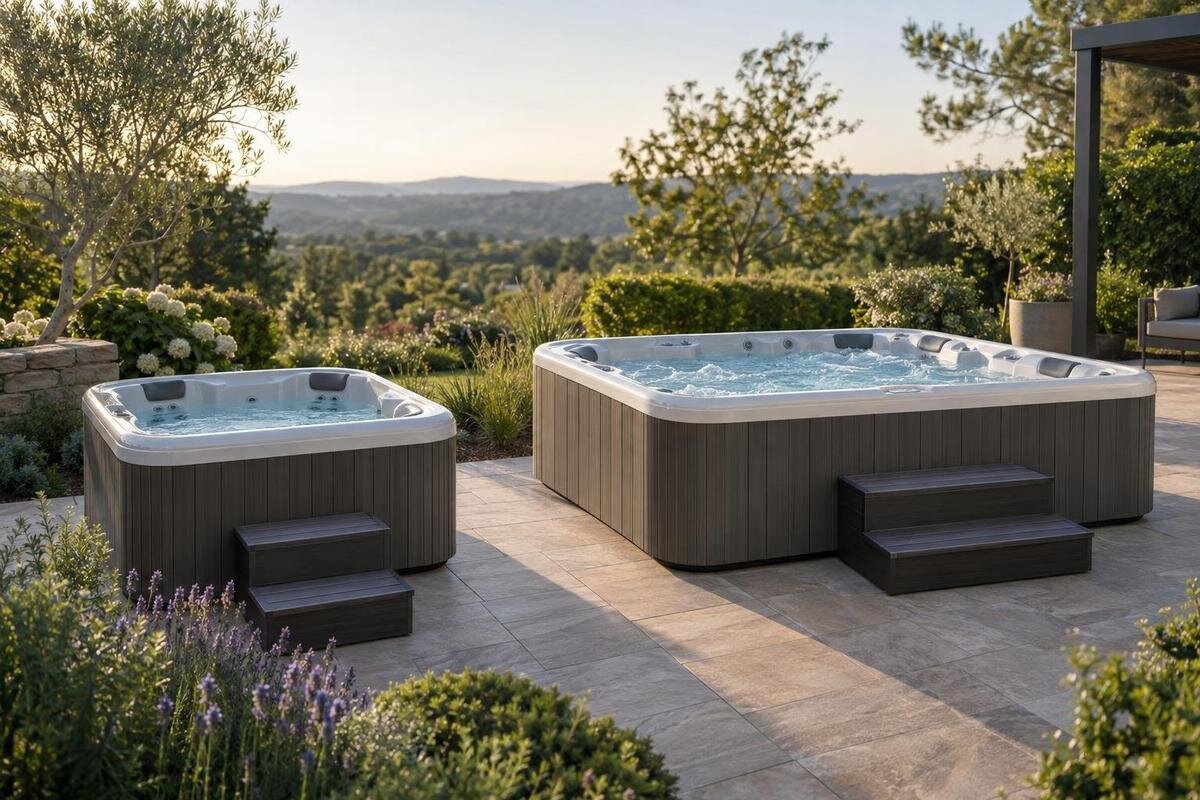
Hot tub capacity is easy to misread: a model name, an advertised seat count and the shell’s outside dimensions describe different things. Start with the group that usually uses the tub at the same time, then decide how often guests genuinely need to join that session. Compare stated occupancy with the seating layout and the space each position provides. The aim is to find a comfortable fit for ordinary use without buying extra capacity for gatherings you rarely host.
Count the people who will use it regularly
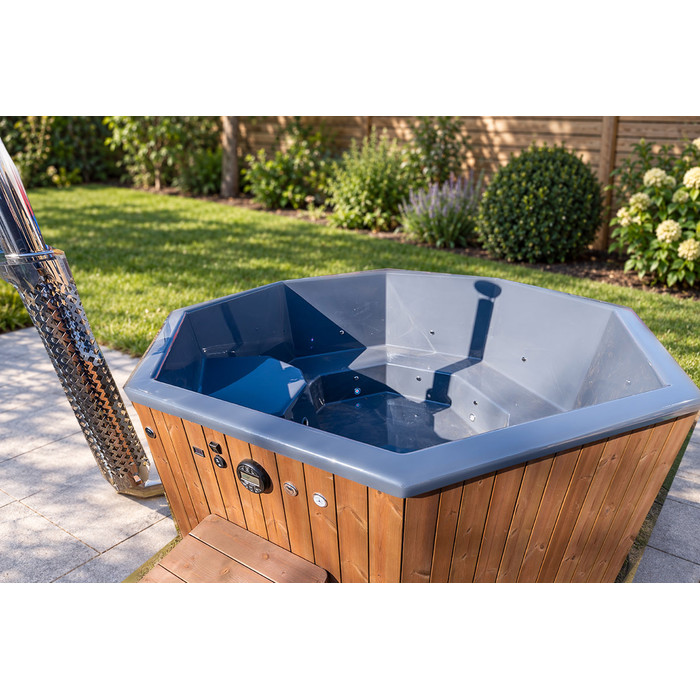
Begin with the people who will actually use the hot tub in an ordinary week, not the largest group you can imagine hosting. Write down who expects to soak and how often their schedules overlap. A household of four may usually use it as two separate pairs; another household of four may want all four to share a session. Although the headcount is identical, the capacity requirement is not. The practical baseline is the largest group that regularly expects to be in the water at the same time. That tells you more than adding every possible user into one theoretical maximum.
Look beyond who lives in the home. A friend who visits weekly and joins a soak may be part of the regular shared group; a relative who comes once a year is more sensibly counted as an occasional guest. Ask likely users whether they expect to use the tub and whether they are comfortable taking turns. This helps separate the everyday routine from a rare full-house event. If shared family sessions are central to the purchase, size for that recurring group. If use is usually solo or in pairs, capacity for everyone at once may add little day-to-day comfort.
Plan for the sessions you want to share
Turn your headcount into a couple of realistic session patterns. Note who would use the tub together on an ordinary weekday, then who might join on a weekend. Separate the shared sessions that matter to you from those that would simply be nice to have. For example, two people might usually soak separately but look forward to a shared session every weekend. That regular time together belongs in the capacity decision even if it is not the most frequent use. Conversely, several household members may have no interest in soaking as one group. Ask each person rather than assuming that everyone wants the same arrangement. The aim is to identify the sessions you would be disappointed to lose, not just to calculate an average headcount. An average can hide a recurring group that needs more room, while an absolute maximum can give too much weight to a gathering that may never happen.
Use explicit specifications to test your preferred session patterns against a model. When considering Bloomcabin Hot Tub Cove 2, look for a stated occupancy figure and an explanation of what it measures; the model name alone does not establish a two-person capacity. Compare that figure with both your usual group and the regular shared sessions you want to preserve. If the two differ, note the compromise clearly: would some people need separate sessions, and would they actually welcome that arrangement? This gives you a practical question to resolve rather than assuming that a model will suit your routine because its name sounds appropriate.
Allow for guests in proportion to how often they visit
Guest capacity is worth paying for when it supports a use you expect to have, not simply because a larger gathering could happen one day. Separate frequent visitors who are likely to join a soak from occasional holiday or celebration guests. Think about whether those visitors would usually arrive together and whether they would all want to use the tub at once. This gives you a realistic peak group to compare with your regular group, instead of letting an imagined party dictate the size you buy.
Decide whether taking turns would be acceptable when more people visit than the tub can comfortably accommodate. Consider the occasion as well as the guest count. Separate sessions might suit a long weekend visit but defeat the purpose of an evening planned around everyone soaking together. Also distinguish between guests who visit at different times and a group that regularly arrives together; they create different capacity needs. If shared sessions with friends or family are a priority, compare options that explicitly accommodate that group. When reviewing Bloomcabin Hot Tub Haven 6, apply this guest-count test without treating its model number as a confirmed capacity. Keep a simple note of how often you expect the extra places to be used and whether taking turns would be a genuine choice or an unwelcome compromise.
Read advertised capacity figures carefully
A headline seat count is useful as a first filter, but it is not a complete description of comfort. Listings may refer to seating positions, a recommended number of users or a maximum occupancy, and those terms are not necessarily interchangeable. Look for the wording around the number rather than copying it into your comparison as though every brand uses the same definition. If the listing does not explain what its figure means, ask the seller or manufacturer instead of treating an ambiguous number as confirmed capacity.
Ask whether the stated figure represents distinct seats, the maximum number of bathers, or another measure. Then check whether the manufacturer provides a seating diagram or guidance about how the positions are arranged. When reading the information for Bloomcabin Hot Tub Fjord 8, record the capacity wording exactly rather than shortening it to an unexplained number. If a listing gives both a seat count and a separate occupancy figure, keep both in your notes and clarify any difference. A clear definition helps you compare models on equal terms and avoids treating a headline figure as a promise of personal space.
Compare seating layouts, not just seat totals
Two hot tubs with the same stated capacity may offer different seating arrangements and a different sense of personal space. Check whether the layout shows separate positions, how they are distributed and whether any seats differ in shape or size. Then look at the arrangement as a whole: where would each person sit, which positions face one another, and where would their legs go? A labelled, top-down seating plan can help you identify these questions, even when it does not supply every measurement. Do not stop after finding enough positions for your group. Consider whether you would be happy using all of them at the same time, rather than relying on an empty neighbouring position for comfort. That distinction matters when comparing a tub used below its stated capacity with one you expect to fill during most shared sessions.
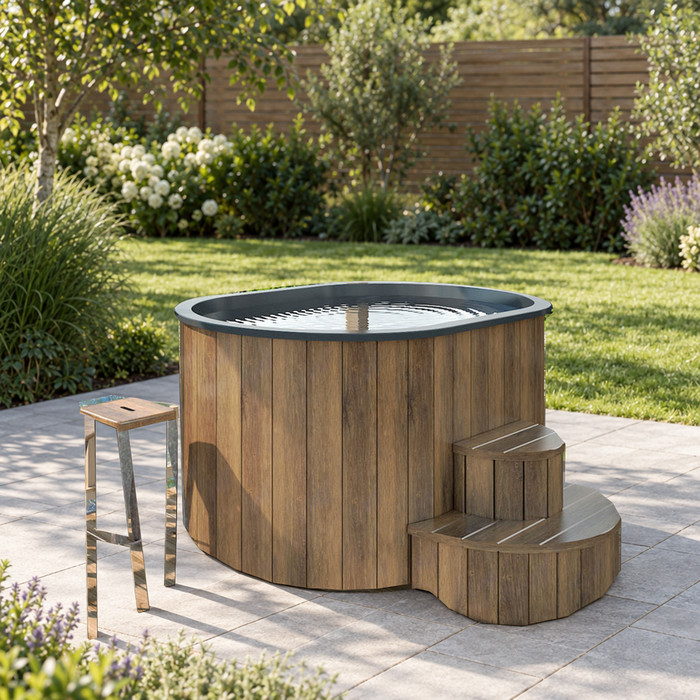
Use product images as a visual aid, not as a measuring tool. Camera angle and perspective can make positions look farther apart or closer together, and an image cannot confirm internal measurements. For Bloomcabin Hot Tub Aurora 10, look for a labelled layout or ask for one if the product information does not make the arrangement clear. Compare the diagram and written specifications together; do not infer seat counts, spacing or capacity from a photograph.
Consider who needs to fit in each position
Comfort depends on more than the number of people in the tub. People vary in height, body size and preferred posture, and individual seats may not provide identical room. Think about who would use each position rather than treating the group as a set of interchangeable occupants. A taller user may want different legroom from someone who prefers a more upright, compact sitting position. Ask regular users what they find comfortable and which compromises they would dislike. If you can inspect a model, use those preferences to assess the seating rather than judging it only by its overall appearance. For a group that expects to swap positions, consider whether several seats would suit each person. If only one position seems suitable for a particular user, that is worth discussing before assuming the full group will be comfortable together.
If you cannot inspect a hot tub in person, turn those preferences into specific questions about the bathing area and seating positions. Ask for available seat measurements or a detailed diagram, and identify the particular position you are asking about. A question about the room between a seat and the space opposite it is more useful than simply asking whether the tub is spacious. When reviewing the Cove 2 product page, distinguish measurements supplied for individual positions from those describing the interior as a whole. Where a detail is unavailable, leave the fit question open rather than assuming that an overall occupancy figure answers it. This keeps the comparison tied to the people who will actually use the seats.
Keep bathing capacity separate from outside dimensions
Exterior dimensions describe the overall size of the hot tub, not the space available to bathers. The inner shape, walls and seating arrangement all affect how much usable room there is. A larger outside measurement does not automatically mean more comfortable seats, just as a smaller exterior measurement does not establish that a particular group will fit. Treat external dimensions and bathing capacity as separate specifications when you compare products.
Look for both the exterior measurements and information about the internal bathing area or seating layout. Keep them in separate fields so an overall width does not accidentally become your estimate of available legroom. For example, assess the Haven 6 listing using its own stated occupancy and layout, not a headcount derived from its outside dimensions. If internal measurements are provided, check what points they describe: a measurement across the bathing area is not necessarily the width available at an individual seat. Ask for clarification when the labels are unclear. Water volume is another separate specification, not a substitute for a user count. Each measurement can help describe the product, but none should silently stand in for the seating information you need.
Use a specification checklist for each model
Record the exact occupancy wording, the number and arrangement of seats, any available internal measurements and the exterior dimensions. Note which details are published and which still need confirmation. Use the same fields for every model so that you do not compare one product’s maximum occupancy with another product’s number of seating positions as though they meant the same thing. If a specification is missing, mark it as unknown rather than filling the gap with an estimate.
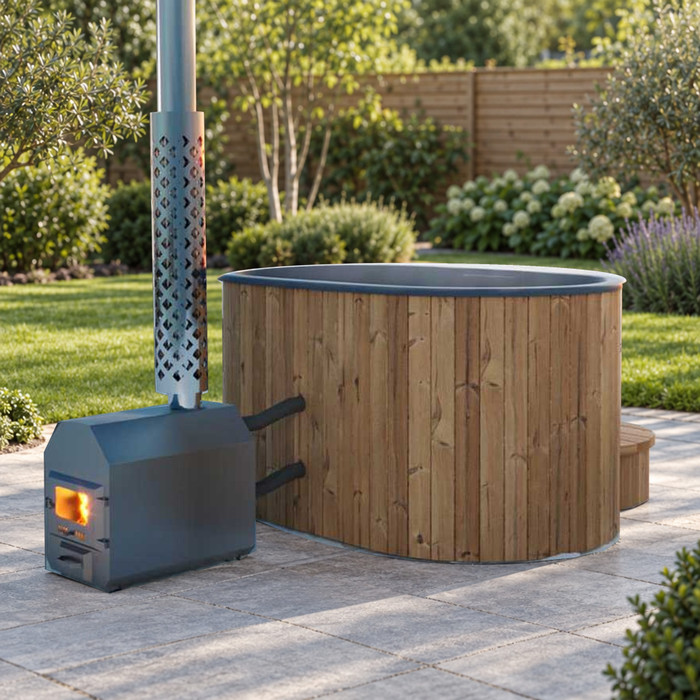
The product information supplied for this guide identifies Bloomcabin Hot Tub Cove 2, Bloomcabin Hot Tub Haven 6, Bloomcabin Hot Tub Fjord 8 and Bloomcabin Hot Tub Aurora 10, but does not state their capacities, seating arrangements or external dimensions. Those fields therefore remain unknown in a comparison based on the supplied information. When consulting the Fjord 8 product details, add only specifications explicitly given for that model. Keep unanswered questions beside the relevant field so you can see whether you still need an occupancy definition, a layout or a particular measurement. This is more useful than a single general note saying that further information is needed.
Compare your shortlist on confirmed details
Use your completed checklist to separate a known mismatch from a gap in the information. A model with a clearly stated capacity below your essential shared group presents a different issue from one whose occupancy has not been stated. Mark the first against your requirements and leave the second unresolved; do not award or deduct capacity based on a guess. Check that measurements use the same units and that all details refer to the exact model or configuration you are considering. Then identify which unanswered questions could change your choice. This keeps the comparison manageable and prevents a well-presented listing from seeming more suitable simply because it contains more text.
When reviewing the Aurora 10 product page, use the same requirements you apply to the other candidates rather than treating the number in its name as a ranking. The supplied information does not establish which of the four Bloomcabin models has the most seats or the roomiest layout. Until comparable specifications are available, keep your preferred group size as a buying requirement, not a claim about any model. If two candidates eventually meet the same occupancy requirement, compare how their layouts suit your group rather than declaring a winner from the headline count alone. A useful shortlist shows both what fits your plans and what remains uncertain.
Decide whether extra capacity is worth it
Compare your largest regular shared group with the occasional peak you have identified. Ask how often that larger group will realistically use the tub together and whether taking turns would meet your needs. If the extra places would be used often and the confirmed layout gives everyone adequate room, additional capacity may be worthwhile. If they are only for a rare, hypothetical gathering, they may not improve your ordinary experience. Make the trade-off explicit: what would you gain during a typical month, and what would you give up by choosing less capacity? Also distinguish extra seats from extra room for your usual group. You might value a more comfortable layout without needing a higher occupancy figure. The smallest option is not automatically right, but neither is the one with the largest advertised headcount. Choose according to the shared sessions and personal space you expect to value repeatedly.
Capacity alone cannot tell you what a hot tub costs to buy or operate. Compare actual prices and any model-specific operating information, and consider relevant variables such as water volume, heating system, insulation, usage frequency and climate. Do not assume that a model with a higher seat count will cost a particular amount more, or that its running costs can be worked out from the name. A sound choice balances verified specifications with the way your household will actually use the tub.
Frequently asked questions
How many people should a hot tub fit?
Choose capacity around the largest group that regularly expects to use the tub together. Consider occasional guests separately, based on how often they visit and whether everyone would soak at the same time. Then confirm the model’s stated occupancy and seating layout.
Does an advertised seat count mean everyone will be comfortable?
Not necessarily. A seat count may describe the number of positions or a stated maximum, and it does not show how much room each position provides. Check how the manufacturer defines the figure and compare the layout with the people who will use it.
Should I buy a larger hot tub for parties?
Only if having guests soak together is a frequent or important part of your plans. For rare gatherings, consider whether taking turns would work. If not, compare the extra capacity against the tub’s confirmed dimensions, price and operating information rather than assuming a larger model is automatically better.
Do outside dimensions tell me how many people fit?
No. Exterior dimensions describe the overall size, while the bathing area and seating layout determine usable room inside. Check those details separately, along with an explicit occupancy figure; neither outside measurements nor water volume alone establishes a comfortable headcount.
Can I tell a hot tub’s capacity from its model name?
No. Treat numbers in model names as identifiers unless the manufacturer explicitly confirms that they describe capacity. For the Bloomcabin models discussed in this guide, the supplied product evidence confirms their identities but not their capacities, seating arrangements or external dimensions.
The right capacity is the one that fits your largest regular shared session, with occasional guests included only when their visits make the extra room worthwhile. Use a stated occupancy figure, seating layout and dimensions as separate pieces of information, and treat model numbers as names rather than specifications. That keeps the decision focused on everyday comfort instead of a headcount you may rarely need.
