
Wood-Fired or Electric Hot Tub: Which Suits Your Routine?
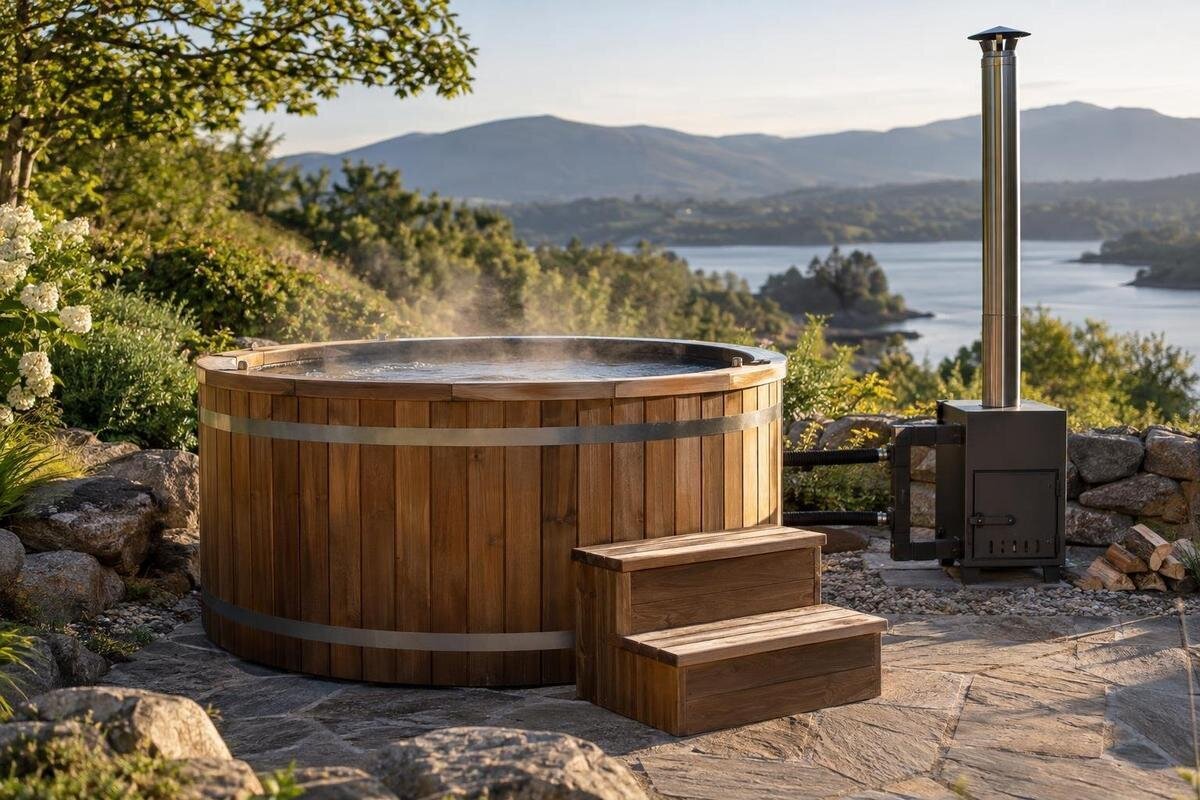
Hot tub heating guide
Choosing between a wood-fired and an electric hot tub is really choosing what you want the heating routine to involve. A wood-fired setup can make fuel handling and fire management part of the occasion; an electric setup depends on an appropriate power supply and the controls supplied with that specific model. Neither label tells you how soon the water will be ready, whether it can hold a set temperature or how much supervision is needed. Compare your real weekly pattern with the exact product and operating information, not a general promise about a heating type.
01
Start with how often and when you soak
Think in calendar terms, not an idealized holiday routine. Are you likely to soak one weekend evening, several weeknights or only when company visits? A planned Saturday session may leave room for fuel handling and preparation; an after-work soak you hope to start on impulse puts more weight on the documented start-up routine and available controls. Include the person who will do the work: the person who wants the soak may not be responsible for preparing the tub. Don’t judge the choice by a rare, unusually free evening.
Write down a typical week and a less convenient one, such as a rainy evening or busy day, then ask how each option fits both. Note how far ahead you are willing to plan, whether use is regular or in occasional bursts, and what you expect between sessions. Ask the manufacturer for preparation guidance for the exact model rather than borrowing timing from another tub or relying on a model number. If use is seasonal or irregular, check whether the manual describes a different routine after longer gaps. Include travel or other predictable breaks so the plan reflects how your household actually uses the tub.
What a wood-fired routine involves
With a wood-fired configuration, fuel and fire are part of the operating routine. Confirm the specified fuel, the storage conditions described in the manual, how the fire is managed and the tasks required before and after a session. If you like practical outdoor tasks, heating the tub can become part of the occasion rather than a background process. If collecting, carrying or preparing fuel would become a repeated frustration, count that honestly. Consider whether fuel will remain accessible during the season you intend to use the tub, and who can carry out the required steps. Ask whether the maker specifies a fuel type or condition and whether you can source it reliably where you live; don’t assume all wood is interchangeable.
Imagine arriving home wanting a soak: would you be content to prepare the system and follow its operating instructions, or would you often postpone it? Ask the seller to explain the actual fire-management sequence and what must be monitored; designs differ, so advice about another unit is not enough. When checking the Cove 2 product listing, verify whether the exact offered version has a wood-fired configuration at all; its name alone does not establish one. If the option is unclear, request the matching manual before planning around it.
02
What an electric routine involves
An electric configuration replaces wood-fuel handling with dependence on a suitable electrical supply. That may be a simpler fit where fuel storage is inconvenient, but it does not make the tub self-managing or ready at a particular time. Electrical requirements, start-up and user responsibilities belong to the exact model. Don’t assume an outdoor outlet or existing circuit is suitable; ask for the manufacturer’s written requirements, then have a qualified electrician assess the property before relying on this option. If the property is seasonal or has interruptions to its power supply, ask how those circumstances affect the recommended routine. This is a feasibility check, not a reason to improvise changes to an existing connection.
Electricity also does not guarantee a preset schedule, remote access or continuous temperature maintenance. Those are model-specific functions and may be optional, so confirm them rather than inferring them from the heating method. Ask which controls are included, what each allows you to set and what still requires a person to check. For the Bloomcabin Hot Tub Haven 6 listing, confirm the heating variant, controls and included equipment for the version being offered. A written answer is more useful than a broad label such as easy to use.
Compare the attention each session needs
Compare the work across the full session: preparing the system, checking it while it operates, soaking and putting it back into the condition described in the manual. With wood-fired heating, ask who handles the fire and any required monitoring. With electric heating, ask who operates the controls and whether the instructions call for checks during use. The pattern may differ by product; electric should not be treated as shorthand for unattended, and wood-fired does not tell you the exact sequence. Count the attention of the people who will actually use the tub, not just the time spent in the water.
Household schedules are a useful reality check. If the person who manages the heater is away, can someone else follow the manufacturer’s routine, or would the session be cancelled? If your main hope is to turn the system on from inside the house or while away, confirm that the feature exists and how it works; don’t assume an app or timer is available. When reviewing the Aurora 10 product listing, use the operating instructions for its exact version to identify which tasks another household member would need to take over. Discuss whether that person is comfortable accepting those responsibilities.
03
Check fuel storage and electrical access
Fuel storage and electrical access are different property questions. For a wood-fired option, identify a practical place for the specified fuel, the route for bringing it to the tub, and whether storage remains workable in wet or snowy conditions. Follow the maker’s handling instructions and confirm any local requirements that apply to a fire-based appliance at your address. Available firewood does not, by itself, prove that a site or particular product is suitable. Think through the repeated trip from storage to tub, especially if more than one person may prepare sessions.
For an electric option, the key question is whether the product’s stated supply can be provided at the proposed location; the heating label alone cannot answer that. Ask for the manufacturer’s exact electrical requirements, then consult a qualified electrician and the relevant local authority about the proposed setup. Keep the model variant and site description together when seeking advice, and resolve uncertainty before buying. Discuss practical access for inspection or service as well as the initial connection. While reviewing the Fjord 8 product page, request any missing requirements rather than assuming they match another tub.
Find out what the controls actually do
Controls can make a routine easier to plan or leave it dependent on active attention, but features vary. Ask whether the specific version has a temperature setting, thermostat, timer, scheduled start, remote access or another control; confirm which are included and which are optional. Then clarify what each one actually does: setting a target is not automatically the same as starting at a chosen time or keeping water ready between visits. Request a manual that describes operation for the exact version, especially if a control matters to your weekly schedule. If a seller mentions a timer or smart control, ask for documentation showing the function.
Apply the same questions to a wood-fired model: which tasks are manual, what must be watched and what operating conditions does the manual specify? For an electric model, ask how its settings behave after a power interruption or when the tub is unused, if those situations matter to you. For the Bloomcabin Hot Tub Aurora 10 page, distinguish controls supplied with the offered version from optional equipment. Then compare those functions with the routine you described: which steps would they handle, and which would still need your attention? This makes the control list useful rather than simply a collection of appealing feature names.
04
Consider the weather at your property
Conditions vary across Canada, so base the decision on the weather at your property and the season you intend to soak. In a colder, exposed location, wind, snow, access and long gaps between sessions can make a planned routine less predictable; none of that establishes that one heater type is better. Ask the manufacturer for guidance in the conditions you expect, including any stated limits and required cover or protection. Don’t assume advice for a mild area fits your site. Consider how comfortably you can reach the tub and its controls on a typical winter evening.
Distinguish regular winter use from occasional winter visits. If you expect year-round use, review the exact model’s instructions for cold-weather operation and care between sessions. If the tub will sit unused for longer periods, compare the guidance for those absences, extended shutdowns and returning it to use. These are different routines, so decide which reflects your plans rather than asking only whether the tub can be used in winter. Follow the current manual and discuss site-specific installation questions with a qualified local professional. A Canadian winter is not a product specification; the heater label alone cannot settle these questions.
Compare the care each system requires
Both heating paths still require care of the water and product, but the correct routine comes from the manufacturer, not from a generic heater comparison. Before choosing, obtain the care guide for the exact option and note its instructions for water treatment, cleaning, filtration, inspection and service. Confirm the owner’s responsibilities and where professional servicing is expected; don’t infer an interval or chemical choice from another model. If a routine seems too demanding to maintain consistently, that is a practical mismatch worth considering. Compare the clarity and frequency of documented tasks, not a claim that one method needs no upkeep. If several people share the tub, decide who keeps track of the required care.
Ask about upkeep specific to the heating arrangement as well. If a wood-fired design includes a firebox or venting components, its instructions should explain any ash handling, inspection and venting care that applies. For an electric design, identify the checks for its heater and related controls, and who services them. Keep these tasks separate from routine water care so the workload is easy to see. When reviewing the Bloomcabin Hot Tub Cove 2 page, use the matching manual and package details to identify the relevant maintenance tasks; the model name alone cannot confirm its components or care requirements.
05
Confirm the exact model configuration
Compare like with like. A model may have more than one heating configuration, or a listing may refer to a particular package; confirm the exact version, selected heating option, included equipment and available controls in writing. Ask whether anything needed for your preferred routine is included or sold separately, and whether the operating and care manuals match that version. A broad category label is not enough to settle a detail that affects daily use. Record the seller’s exact terminology so you can match the answer to the product documentation and the model you are considering.
Treat model names and photos as identifiers, not technical evidence. A number or suffix does not confirm heater type, electrical requirements, control functions or operating steps. Don’t infer a heating option from a model name, picture or neighbouring listing. For the Haven 6 product page, compare the written specification with the exact package being offered; ask for the current manual or clarification if a control, fuel requirement or care detail is missing. Keep confirmed facts separate from unanswered questions rather than filling gaps with assumptions.
Use a routine test to make the decision
Make the decision with three tests. First, preparation: are you willing to obtain and manage the specified fuel, or would you rather use a system that depends on an electrical connection? Second, property fit: can the required storage or power supply be provided at the chosen site after appropriate checks? Third, schedule: do confirmed controls and operating instructions match the hours and frequency you actually use the tub? A wood-fired choice is a poor fit if you cannot consistently manage its required fire routine; an electric choice is a poor fit if the required supply or documented controls cannot support your plan. Each essential requirement needs a workable answer.
Run the test against an ordinary week, then against the least convenient likely session. Write down who prepares the system, how far ahead you can plan, what requires attention and what happens during a gap in use; use manufacturer guidance rather than guesses for timing. Apply the same questions to the Bloomcabin Hot Tub Fjord 8 product listing, without assuming it offers either heating method. If household members favour different options, compare the tasks each person is willing to handle. A routine everyone expects someone else to manage is not a workable plan, however appealing the heating method may seem.
Frequently asked questions
Is wood-fired or electric heating better if I use a hot tub often?
Frequency alone does not decide it. Regular use can make preparation and ongoing care more noticeable, but the better fit depends on how you schedule sessions, who manages them and whether the property meets the model’s requirements. Compare the documented routines for the exact versions you are considering. A familiar weekly pattern is more useful to plan around than a theoretical advantage in one session.
Does an electric hot tub automatically keep the water ready?
No. Electric describes the energy source, not the control package. A model may or may not include a timer, scheduled start, remote setting or a function that maintains a chosen temperature. Check the control list and operating manual for the exact configuration, including what is included and what is optional, before treating it as an automatic or on-demand solution.
Does a wood-fired hot tub always need someone to tend the fire?
Follow the operating instructions for the exact unit. The required monitoring and sequence can vary by design, so there is no universal schedule that applies to every wood-fired tub. Ask the manufacturer who needs to be present, what must be monitored and which tasks occur before, during and after use. Do not assume a setup is suitable to leave unattended.
Can I use either type through a Canadian winter?
A Canadian location and a heating label do not establish winter suitability. Confirm the exact model’s cold-weather guidance, any stated limits, care during long pauses and requirements for the planned installation. Conditions vary by property, so ask a qualified local professional about site-specific questions and follow the product instructions.
Are Cove 2, Haven 6, Fjord 8 and Aurora 10 wood-fired or electric?
The supplied product information identifies these catalogue names but does not verify their heating configurations. Check the current specification for the exact version and ask the seller or manufacturer to confirm the heater, controls, included items and matching manual in writing. Do not infer the configuration from a model name, number or image.
Once you picture a normal session from planning through care, the choice becomes less abstract. A wood-fired setup suits a routine that has room for its specified fuel and fire management; an electric setup makes sense only when appropriate power access and its documented controls fit the way you use the tub. Compare exact variants, manuals and property constraints, then choose the method whose required tasks you can reliably make time for. The best match is the one that fits your life in practice, not simply the most appealing label.
