
Bathroom privacy glass: frosted, patterned or reflective?
Planning a bathroom window
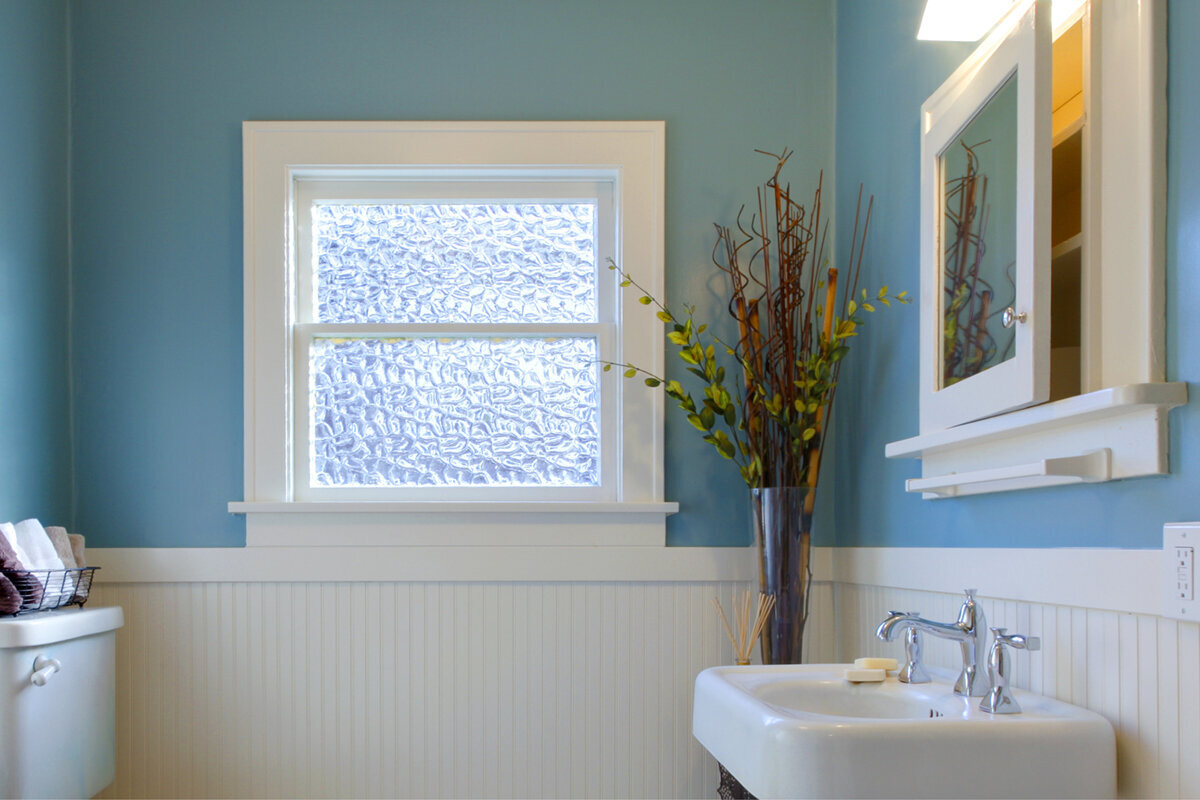
A bathroom window must admit daylight and air while shielding anyone using the basin, shower or bath from view. Choosing it therefore involves more than asking for obscure glass. Frosted, patterned and reflective finishes interrupt sightlines in different ways, particularly under backlighting, after dark, at close range and during cleaning. A sound decision takes account of the window’s dimensions and operation, how the room is used, and actual views from a neighbouring home or footpath. Inspect those exposed angles before settling on a finish; otherwise, glazing that seems bright and private by day may feel unexpectedly revealing once the bathroom lights are on.
Judge real sightlines before choosing a glass finish
Survey the installed window or its proposed position first. Identify every place from which somebody could look towards it: an opposite property, a path at the side of the garden, an upper-floor home or a point close to the wall. The same finish may screen a window over the bath more effectively than one positioned low beside the toilet. Record whether blinds, planting or external screening will always be present or only offer occasional cover. If the bathroom is in regular use, such features should not carry the entire privacy burden. Review the view in ordinary daylight, then repeat the exercise with the bathroom illuminated as evening approaches.
Set the priorities in sequence: protect the most revealing sightline, decide how much light the room needs, and only then consider appearance and maintenance. Looking at a sample solely from the bathroom side gives an incomplete picture. Ask to inspect each option from outdoors, against both bright and shadowed backgrounds, and at several viewing ranges. Test a hand immediately behind the pane, a nearby outline and somebody farther back in the room. The quotation should name the precise pattern or finish rather than merely saying privacy glass. That detail keeps the specification unambiguous if the frame, dimensions or handing are finalised later.
A soft, uniform look from frosted glazing
A treated frosted face scatters the light reaching it. Seen from outside, forms in the bathroom usually become softer and the pane reads as a bright, consistent surface. This restrained appearance works where the window is not intended as decoration. Useful daylight remains, although the outward view is reduced along with visibility into the room. That trade-off can suit a small bathroom because the opening still brightens the space without turning a cluttered exterior scene into part of the design. Different finishes produce different degrees of blur and residual visibility, so neither a photograph nor the general description “frosted” can replace inspection of the actual sample.
Confirm which face of the pane receives the treatment and whether that arrangement suits routine cleaning. Hard-water marks, splashed soap and finger marks can appear differently on matt glass and polished clear glass. Ask the supplier about the specified orientation, permitted cleaning products and the likelihood of wear on either the room side or the exterior. A one-sash window opening inwards can work in a compact bathroom, although the chosen finish does not alter the sash’s travel or the clearance it requires. Consider tall cupboards, the basin and towel rails at the same time as the glazing instead of resolving those details separately.
How patterned glass reshapes outlines and light
Patterned glazing obscures views through a formed texture rather than an entirely matt surface. Its design may animate incoming light, strengthen upright lines or evoke older glazing styles. It can therefore make the window a visible feature while preventing an unobstructed view into the bathroom. The category does not represent a single level of privacy, however. Fine texture may look dense from across a garden yet disclose more recognisable shapes at short range or under intense backlighting than a pronounced relief. Inspect the exact pane rather than just a photograph of its pattern, and view it in the orientation proposed for the finished window.
When renovating, texture also affects how the new unit relates to the windows already present. A historical-style outward-opening Kombi casement identifies the window’s arrangement and character, not its patterned finish. Specify separately which glass suits the elevation, the existing glazing bars and nearby windows. Combining bars with textured glass can create a distinctive period effect, but several competing lines within a small pane may appear visually busy. Request a drawing at the intended scale or place the physical samples over the proposed opening. This makes it easier to decide whether the pattern behaves as a restrained screen or becomes the dominant decorative element in the bathroom.
Why reflective glazing needs a night-time backup
In strong exterior light, reflective glazing can look mirror-like and hinder a view from outdoors. That result is controlled by the relative brightness on each side of the pane. After sunset, a lit bathroom commonly becomes brighter than the area beyond the window, so the daytime mirrored appearance cannot be treated as dependable cover. Anyone using the room early or late should assess the real lighting arrangement before selecting this finish. Illumination from a yard, wall fitting or street lamp may change the result again, which is why a broad promise about reflective privacy would be misleading.
This type of glazing may still suit a project where daytime façade appearance or solar exposure is important, provided another evening screen works independently. Possible measures include an easily operated blind, an internal covering or a permanent physical shield. Convenience is significant: a solution that must be remembered after every shower may not be used consistently. Ask what an observer would see from outdoors when the ceiling light alone illuminates the room at night, and insist on more than a daytime demonstration. If privacy is needed throughout every normal period of use, a suitable frosted or textured finish generally provides a clearer basis for comparison.
Distribute daylight deliberately, rather than chasing brightness alone
Privacy finishes need not make a bathroom dark, but they alter how daylight occupies the space. Clear panes preserve an outward connection and cast more defined light. A frosted face softens and disperses it, whereas a relief pattern may produce stronger variations of brightness and shadow. Room depth, surface colours and the window’s setting determine which result feels right. A narrow room facing a nearby wall may benefit from a luminous diffuse pane; a larger, well-screened bathroom may gain more from retaining an outlook. Assess the sample as part of the completed room, with its finishes and proportions, rather than treating it as an isolated display item.
The shape and height of the opening can also manage privacy. A fixed light placed higher on the wall admits daylight with fewer direct views than a low-level pane. Windows with non-opening glazing may be suitable where that particular section need not open. They do not themselves resolve ventilation or escape provision, both of which require attention elsewhere in the room design. Where one frame combines a fixed pane with an opening section, each area may serve a different purpose: stronger obscuration below and greater visual openness above. Establish early whether the proposed split is compatible with the window construction, installation details and desired appearance.
Plan air movement and privacy together
The glass can screen a closed window but offers no equivalent barrier while the sash is open. Plan for this before relying on the window to air the bathroom after a shower. Consider whether the opening sits above normal sightlines, whether side views are restricted, or whether another screen is needed during ventilation. Beside a shared route or near a site boundary, the sash’s open position may matter more than its closed-pane finish. Draw its swing or projection on the room plan and trace normal movement around the fittings. This will reveal possible interference with the shower, toilet, cupboards or circulation space.
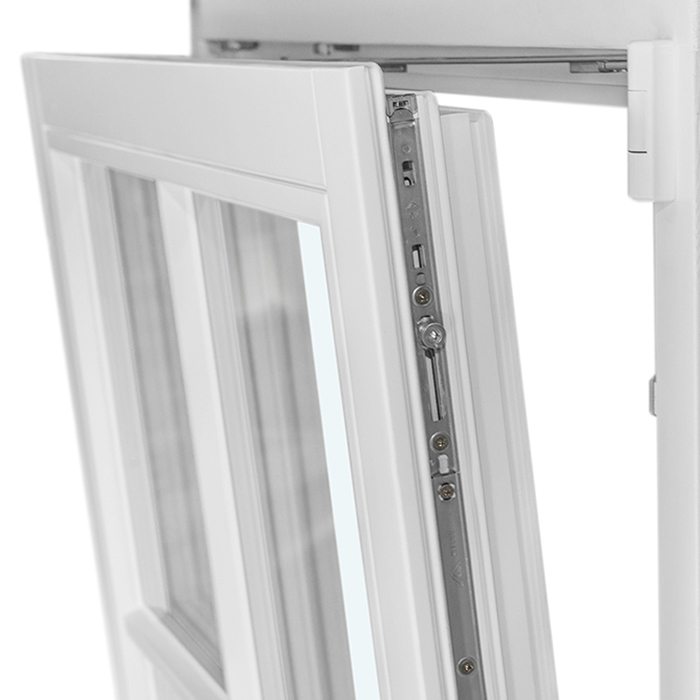
An outward-opening window hinged along the top can provide high-level ventilation without behaving like a low side-hung sash. Its name describes only the opening action; request confirmation of dimensions, controls, pane construction and compatibility with the proposed aperture. Establish how both sides will be reached for cleaning, including the available access outdoors. Seek advice from the window designer or an appropriately qualified installer where ventilation, moisture management and existing construction must be coordinated. Obscure glazing can sit successfully within that design, but it is not a substitute for deciding how the bathroom itself will be ventilated.
Choose care methods for the finish and location
Moisture, hard-water deposits, toiletries and regular wiping all affect bathroom glazing. A plain face may be dried differently from an etched or textured one, while dirt can be more noticeable in a relief’s recesses. Look beyond the product label: establish whether the matt or patterned face will be inside the room and whether you can reach it comfortably. Obtain the care instructions for the exact specification in writing. To avoid damaging the visible finish, check the maker’s guidance before using scourers or an unfamiliar cleaner. A sample remains useful; without wetting a showroom piece, turn it towards raking light and inspect its texture and any visible marks.
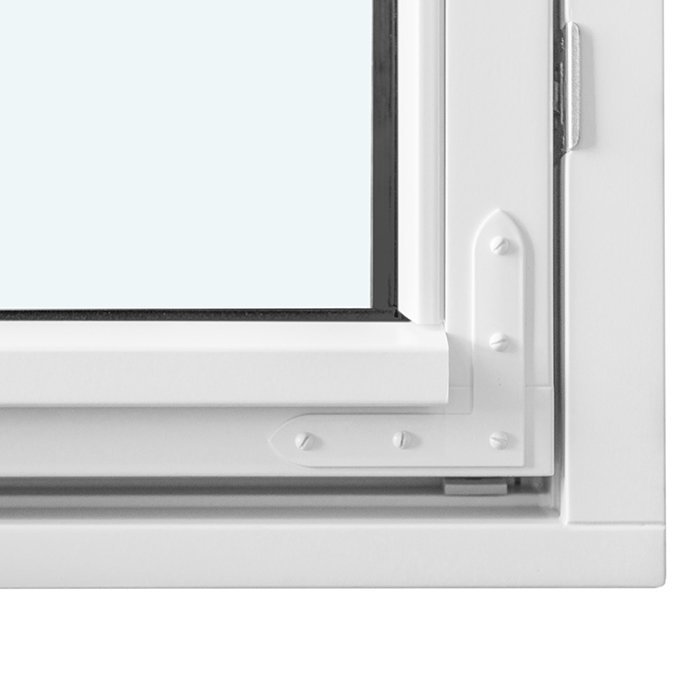
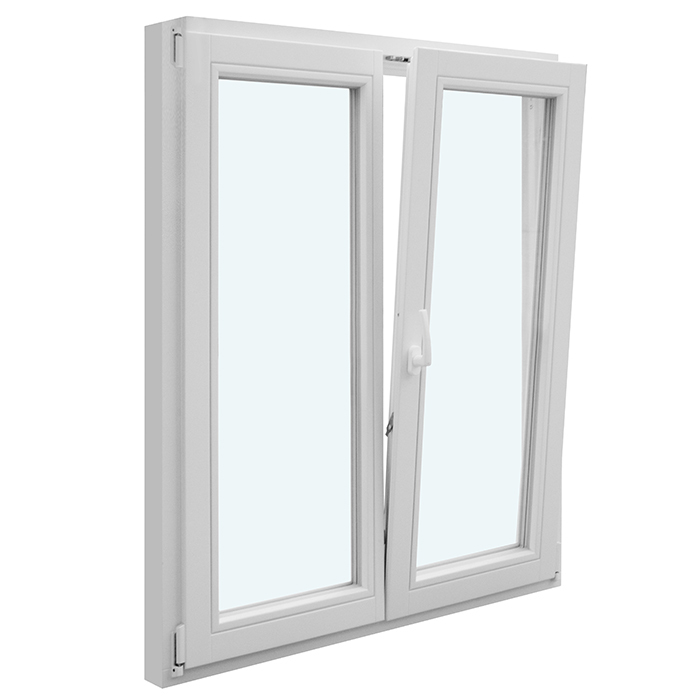
Multiple sashes add pane edges, hardware and frame junctions that need to be reached during cleaning. Check whether taps, the sill and the window reveals leave sufficient working space for your hand, cloth and squeegee. Where the reveal is deep, a modest pane within easy reach may be more manageable than a broad surface with inaccessible corners. A two-sash window opening inwards can fit a wide aperture, but both leaves must be tested against the furnished room for movement and cleaning access. Maximum opening width should not decide the specification on its own. A washbasin beneath the glazing or a large adjacent mirror may create greater day-to-day difficulty than the drawing suggests. Before fixing the format and operation, decide whether the exterior will be cleaned through the opening, from the garden or balcony, or with professional assistance.
Coordinate the frame, bars and glazing as one composition
The pane always forms part of a larger visual arrangement. Slender framing can make a matt area appear expansive, whereas heavier subdivisions give the opening a stronger outline. Glazing bars can organise the elevation and break the bathroom window into smaller fields, but they cannot perform the work of a deliberately selected privacy finish. Visibility of shapes remains relevant within every field. Confirm whether the specification uses bars applied over the pane or true glazing bars that separate individual panes. The intended interior and exterior appearance should be recorded unambiguously on both the drawing and quotation.
With a historical-style, two-sash outward-opening casement period character may come from the leaf arrangement and the pattern of its glazing bars. Choosing restrained frosted glass, ornamented glass or another finish then affects illumination, appearance and cleaning. Consider the complete scene on each side: tiles, mirrors and fittings indoors; wall colour and surrounding windows outdoors. Any departure from the standard product should be documented with the required divisions and pane finish. Clear documentation helps the designer, customer and installer interpret the same result throughout specification, ordering and fitting.
Match the sample size to an unusual window shape
Circular, half-round, triangular and raked windows can illuminate awkward areas that do not accept a conventional rectangle. Their shape already draws attention, making the texture of the pane more prominent. A subdued frosted finish may emphasise the outline, while an energetic relief can make the feature stronger still. Scale changes the impression: detail that seems refined on a hand sample may become forceful across a broad arch, yet almost disappear in a compact shaped pane. Ask about the available finishes for the precise geometry near the start of the design process, rather than discovering after other decisions have been completed that the preferred glass cannot be supplied.
Non-opening triangular and raked windows offer one way to glaze these forms. As the pane does not open, any necessary ventilation must be provided by another part of the room design. Privacy also depends on the angle of observation: glazing that appears safely elevated from straight ahead might remain exposed to an oblique view from an upper neighbouring window. Place a scaled drawing of the elevation beside the site layout and sketch each plausible line of view. That site-specific exercise is more informative than seeking one supposedly ideal finish for every shaped window.
From glass comparison to a clear window specification
Before placing the order, prepare one concise specification that every participant can follow. Include the window position and structural aperture, handing, number and arrangement of sashes, exact pane finish, orientation of any treated face and the presentation side of the glazing bars. State which outcome takes precedence: strong privacy, abundant light, an attractive exterior, period styling or straightforward upkeep. Obtain a firm quotation against that information and review the drawings before approval. If the original sample check took place only by day, repeat it under evening conditions. For refurbishment work, have a suitably qualified installer assess the opening and ensure the selected pane works with the full window junction.
A pivot roof window illustrates how location and operation must be assessed as a pair. Compared with an upright façade window, its pitch, mounting height and reach alter illumination, cleaning access and the direction of possible views. The product description alone does not determine which privacy finish belongs in your bathroom. List the glazing separately and ask what samples can be reviewed before sign-off. Coordinate arrival with secure storage and the wider works programme. If delivery precedes plastering or tiling, assign responsibility for receiving, protecting and fitting the unit. Check that every document agrees on dimensions and viewing orientation before approval. Bloomcabin windows and doors have a 5-year guarantee. Delivery takes 4–6 weeks, subject to order confirmation. These commercial details do not remove the need to verify the technical specification or coordinate installation with tiling and other finishing work.
Questions buyers often ask
Is frosted bathroom glass always opaque?
No. Frosting describes a matt-looking surface, but perceived visibility depends on the version, distance, backlighting and movement close to the glass. Check a particular sample from both sides. Testing with interior lighting on and a dark outdoor setting is especially important.
Does reflective glazing keep a bathroom private after dark?
It should not be your only safeguard. The brighter side of the pane determines much of the reflected effect. Once an illuminated bathroom outshines the exterior, an observer may see through it more readily. Provide another privacy measure that remains effective for evening use.
What makes one glass easier to clean?
There is no reliable overall ranking. Cleaning depends on the precise finish, whether its treated face is indoors, the local water hardness and the available reach around the window. Obtain the manufacturer’s instructions for the specified pane. In practice, convenient access and a finish suited to the room are more useful than a general category name.
May privacy glass be limited to the lower panes?
Yes, a split treatment may preserve outlook above while screening exposed areas below. Ask the supplier and window designer whether that arrangement can be made for the selected configuration and whether it performs as intended. Review the resulting subdivisions, sightlines and access for cleaning before approving it.
Must I give up ventilation for privacy glass in a bathroom?
No. The two requirements should be resolved together. The pane only screens the room when the sash is shut, so examine open-window views, reach and operation once the bathroom is furnished, alongside the proposed ventilation method. A suitably qualified installer can review the actual opening and surrounding construction.
Next step
The right bathroom pane is not necessarily the finish that looks most opaque on a display stand. It is one whose behaviour has been checked in the actual sightlines, both in daylight and with the room illuminated at night, and which also suits cleaning, ventilation, shape and appearance. Frosting gives diffuse visual screening; ornamented finishes add texture and require comparison of the exact sample; reflective glass demands particular caution after sunset because its effect follows relative brightness. Map the exposed views first, choose the precise glass second, and put that choice in the order beside the sash arrangement and opening method. Privacy is then designed in rather than corrected later.
