
Buying a 44 mm Wooden Garden Shed: What the Wall Thickness Means
Garden shed buying guide
A 44 mm wall figure can look like a clear way to compare wooden garden sheds, but it describes only one part of the build. It does not, on its own, tell you how much room is inside, what the shed includes, or whether it will suit the way you plan to use it. Before choosing, check exactly what has been measured and compare the full specification: dimensions, floor and roof, finish, assembly requirements and the conditions you need the building to handle. That makes wall thickness a useful detail rather than a stand-alone buying verdict.
01
What a 44 mm wall measurement describes
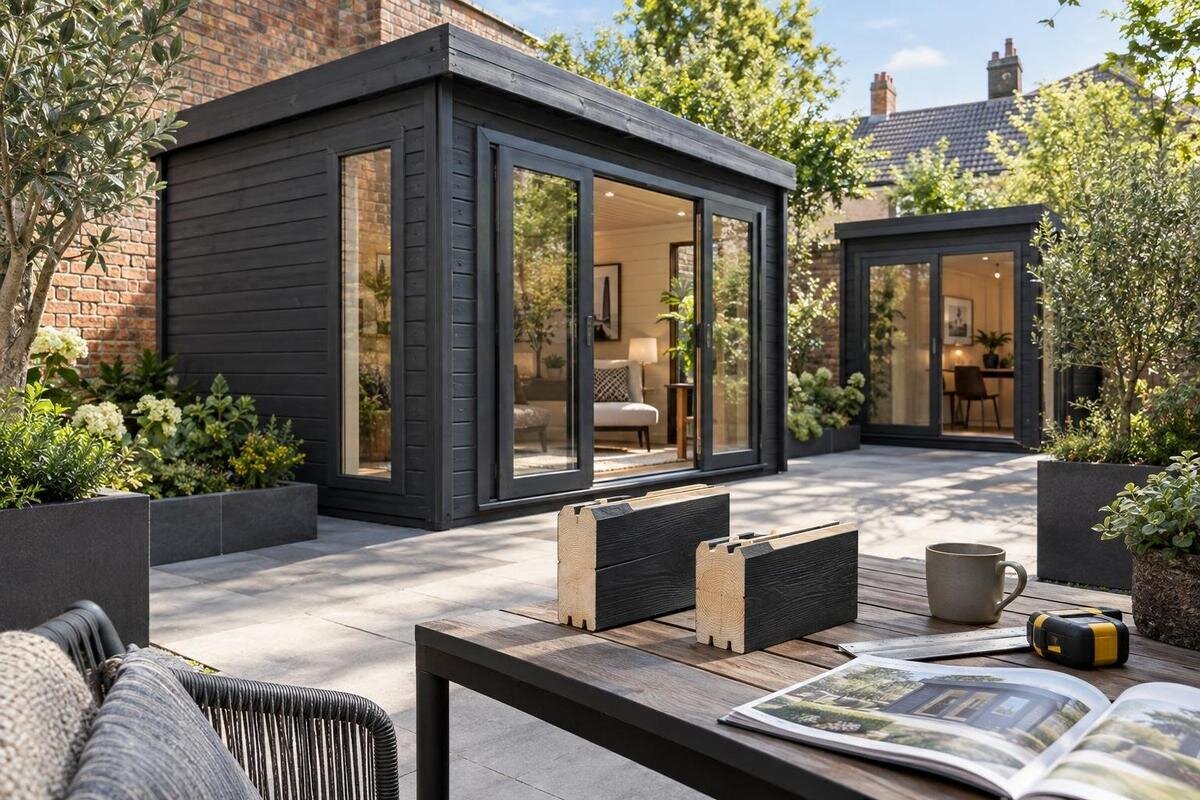
When a wooden garden shed is described as having 44 mm walls, the figure is a stated thickness associated with its wall construction. It is not the shed’s footprint, wall height or necessarily the thickness of every layer in the finished assembly. A specification may describe the timber element, a particular profile or a complete wall build-up, so read its wording alongside any cross-section drawing. Check whether the measurement is described as nominal or finished, and whether it applies to every wall. If the listing does not explain what the 44 mm includes, do not assume it matches a figure on another page: the number is comparable only when both listings measure the same part in the same way.
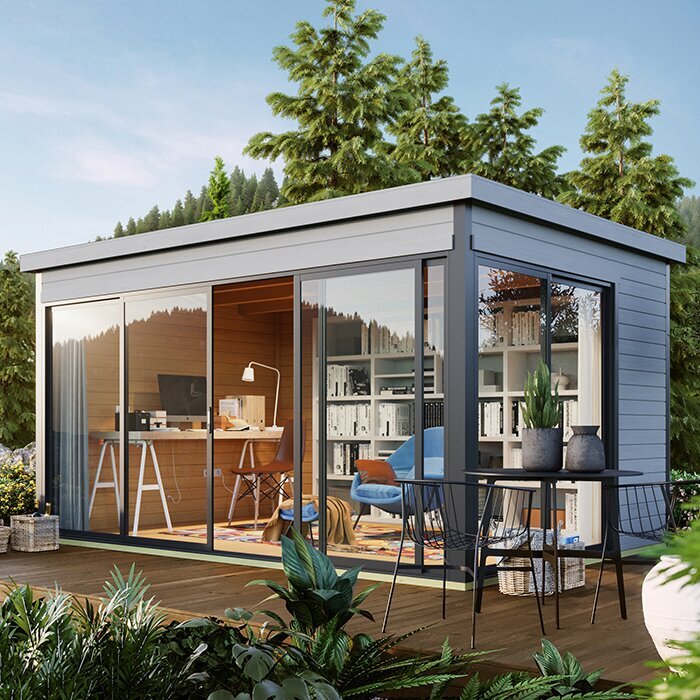
Look for a dimensioned section drawing, a description of the wall profile and a clear note about whether cladding or other layers are included. The page for the Verdana 1 garden house can be read in that same careful way: use its written specification to establish the wall build, rather than a model name or photograph. Do not assume it is a 44 mm option unless its details say so. A sales image can show an exterior finish but cannot reveal the measurement convention or the layers within a wall. Save the relevant specification when you shortlist models, so you can compare like with like later.
What wall thickness cannot tell you
A 44 mm figure by itself does not confirm how warm, dry, quiet or long-lasting a shed will be, or whether it is suitable for a particular purpose. Those are whole-building questions, not ratings supplied by the wall dimension. The answers can depend on construction, joints, openings, roof and floor details, exposure, assembly and ongoing care. Thickness is not evidence that insulation, lining or a weatherproof finish is included. Likewise, broad words such as durable or premium do not replace details about materials and construction. Decide what you need the shed to do, then look for documentation that addresses those needs directly rather than translating millimetres into a performance claim.
Compare like with like before judging two listings. Beside each wall figure, note the exact wording, material information and any layers or treatments the specification says are included. A second product page such as the Verdana 2 garden house listing should be assessed on its own published details; its name does not establish a wall thickness or performance level. A higher number may refer to a thicker component without describing the rest of the building. If one listing provides less information, mark that point as unknown rather than assuming that the shorter description means a simpler or better design. Ask for equivalent details where comparison matters.
02
Match the shed to its intended use
Set out the intended use before you decide whether the wall figure matters to you. For straightforward storage, list the items, their largest dimensions and how often you will need to reach them; access and layout can matter more than a single wall measurement. If you expect to use the building for hobbies or spend longer periods inside, check whether the product information addresses that kind of use, including ventilation, glazing and any insulation or lining options. The 44 mm figure does not confirm that those features are supplied or that the building is intended for regular occupancy. Note anything that needs particular protection from damp or temperature changes, then look for information specific to those requirements.
Keep the intended use tied to facts in the listing. On a page such as the Durano garden shed listing, check the stated dimensions, construction and included features rather than reading capacity or suitability from a photograph or model label. Measure the items you plan to store and note how they need to enter and be arranged once inside. For a use that depends on a stable indoor environment, ask for written information on the complete building specification; do not rely on a general rule that a 44 mm wall will deliver a particular result. This turns an abstract thickness comparison into a practical fit check.
Compare the complete construction
Read the walls as one part of the construction, alongside the floor, roof, door and any windows or other openings. Check what the seller says about timber type or grade, profile, finish and treatment, where those details are provided. Then identify what arrives in the package: the floor, roof covering, glazing, fixings or finishing products may be specified separately, and illustrations can show options that are not included. The point is not to assume that every shed needs the same extras, but to see which elements are part of the quoted product. A clear list of components helps you judge the complete build rather than overvaluing one measurement.
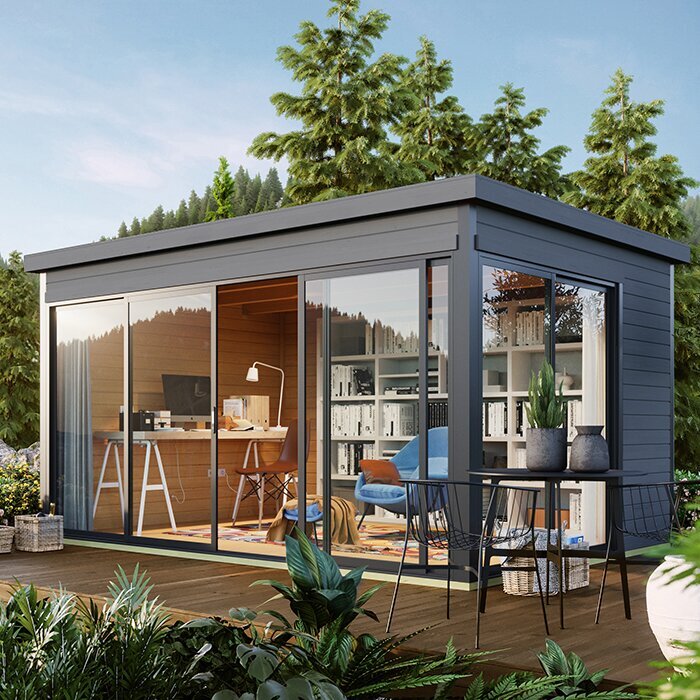
Use the same comparison questions on each shortlisted page. The Veltor 1 garden house page is another listing to read from its own written specification, not a source for assumptions about another model. Record its stated wall construction, floor and roof information, supplied finish and any exclusions only when those facts are actually given. If two descriptions use different terms or leave out a component, do not treat the figures as directly comparable. Ask for the missing detail, especially if it affects a required use or an extra purchase. Comparing complete stated contents is more useful than ranking sheds by wall thickness alone.
03
Check internal dimensions as well as the footprint
External measurements do not tell you exactly how much clear space you will have inside. If two sheds share the same outside footprint, a wall build-up takes up part of that span, so the thicker assembly can leave less interior width or depth; the actual difference depends on how the manufacturer defines and measures the walls. Roof overhangs, corner joints and floor dimensions can also affect what a listed size represents. Look for separate external, internal and base dimensions on a drawing, and check which one is used in the headline measurements. Avoid subtracting 44 mm automatically unless the wall profile and measurement convention are clear.
Think about height and openings as well as floor area. Check clear internal height, door opening and the space needed to put your largest item through the entrance; a shed that fits on the lawn may not work for its contents. When using the Orello garden house page as another example of a product listing, look to its own written measurements and any drawings provided for that model. The page name is not a substitute for a dimensioned plan. If internal measurements are not shown, request them before choosing. A simple sketch of the proposed position and the objects to store can reveal a layout problem that a wall figure cannot.
Plan for the site, base and delivery route
A suitable location is a separate part of the buying decision. Measure the available area and the route through the garden, including narrow gates, turns and overhead obstacles that could affect delivery or assembly. Consider ground conditions, drainage and room to reach the exterior for maintenance. The 44 mm wall measurement does not tell you what base the model needs or whether your chosen spot is suitable. Check the manufacturer’s instructions for the specific product and discuss uncertain ground or levelling requirements with the supplier or a competent installer. Where siting rules or permissions may apply, confirm them with the relevant local authority or a qualified adviser rather than relying on a general article.
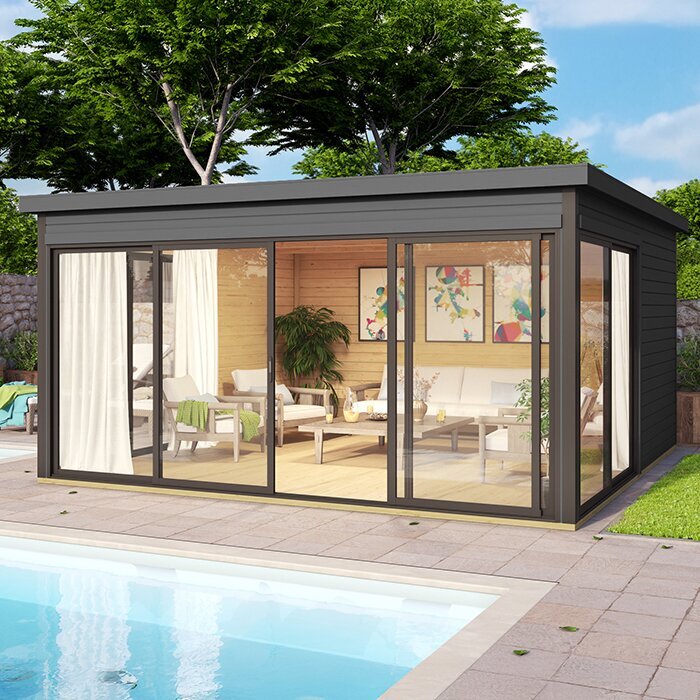
Before ordering, compare site and assembly information for the Modano 1 garden house listing with the place you have measured; rely on explicit instructions, not the way a picture appears to sit on the ground. Confirm what the maker specifies about the supporting base, clearances and assembly conditions, and whether installation is included or arranged separately. If access is tight, check the delivery method and the space required for the work. A qualified installer can help assess questions about the site itself. This check prevents a wall-thickness comparison from distracting you from a practical issue that could stop the chosen model fitting or being assembled as planned.
04
Timber finish and maintenance
Timber care is worth checking before you commit, because the attention a building needs depends on its supplied finish and exposure as well as its construction. Timber can respond to moisture and changing outdoor conditions; a 44 mm measurement does not guarantee that the shed will stay dry or that its timber has already been treated. Look for written information about whether treatment or a finish is supplied, whether further finishing is required, and what care the manufacturer recommends. Check details about the roof and wall junctions too, since wall thickness alone cannot explain how water is managed. If the instructions are missing, ask for them rather than applying a generic treatment schedule to an unspecified product.
Review a product’s care information, where available, on pages such as the wooden garden tool shed listing; the title itself does not tell you what finish is supplied. Ask which parts arrive finished, what you will need to do after assembly, and whether the maker provides a maintenance guide. This helps you estimate the time and any additional items needed without assuming that all timber sheds require the same routine. Also leave practical access to inspect and maintain the exterior, subject to the product’s instructions and your site conditions. Treat these questions as part of comparing the complete product, not as a judgement about 44 mm timber alone.
Review the contents and assembly details
Look beyond the wall specification to the order contents and the work needed to get the shed ready. Check whether the floor, roof covering, fixings, door hardware, glazing and any finish are included or described as optional; do not infer this from a staged photograph. Read the assembly information to see what preparation is expected and whether help or a separate installation service is needed. Delivery access also matters: the clear space for a completed shed is not necessarily the same as the route needed for its components. Ask how delivery is arranged and what you need to have ready, without assuming a particular service or timetable.
Read the wooden garden shed listing for the details stated for that specific product, but do not transfer them to another model. Before placing an order, make sure the chosen model name and written specification match the one you intend to buy. Note any excluded items, optional extras, delivery arrangements and assembly responsibilities in the order information. If a wall figure is central to your choice, keep a copy of the specification or drawing that states it, so there is no uncertainty about what description you relied on. Clarifying contents and responsibilities now is more useful than finding a missing component or a different interpretation after the kit arrives.
05
Compare the complete purchase cost
Compare the full amount you will spend, not just the shed’s displayed price. Depending on what the chosen model includes, the overall project may also involve a base, floor or roof items, treatment, optional components, delivery or assembly; check each against the actual product information rather than assuming it is extra or included. If you compare models, use the same list of required components for each option so that an apparently lower price is not missing something you need. No price label tells you whether a 44 mm wall matches your priorities. Decide which features are essential, which are preferences and what uncertainty would make you postpone the purchase.
Think about trade-offs in practical terms. A wider footprint may solve a storage problem but require more garden space; a different specification may address a requirement that the wall measurement alone cannot answer. Do not assume that a thicker or more expensive option automatically gives the best value, and do not treat a lower price as evidence of poorer construction. Compare each written specification against your list of uses, dimensions, care expectations and included parts. If 44 mm appears to be the main reason for favouring a model, pause and ask what specific, documented outcome you expect from that figure. Your answer will show whether the measurement is relevant to the decision.
A final specification check before ordering
Make a compact record for the exact model you have selected: the wall specification and what its measurement describes; external and internal dimensions; floor and roof components; finish and care guidance; what is included; and any assembly or site requirements. This is not busywork: product descriptions can use different units and measurement conventions, and a short note helps you compare like with like. Mark each item as stated, optional or still unclear. If a detail matters to your intended use but is not documented, get written confirmation before you rely on it. That approach is especially important when a precise figure has shaped your shortlist.
Make the final choice against the garden you have and the task the shed must perform, not against a number in isolation. A 44 mm wall specification is useful when it is clearly defined and considered with the rest of the construction, but it cannot answer questions about interior space, contents, assembly or ongoing care. If one shortlisted product fits the location and published requirements more clearly, that is a stronger basis for choosing than an assumed performance advantage. If no option has the information you need, keep the decision open until the missing point is resolved. That leaves you comparing actual sheds and actual requirements, rather than guesswork.
Frequently asked questions
What does 44 mm mean on a wooden garden shed?
It is a stated thickness associated with the wall construction, but the listing should explain what is measured. It may refer to a timber element, a profile or another part of the wall build-up. Check the wording and any drawing before comparing it with a measurement from another shed.
Does a 44 mm wall mean the shed is insulated?
No. The thickness figure alone does not confirm that insulation or lining is included, or how the complete building performs. Check the product information for details about the walls, roof, floor, openings and any insulation options if those matter for your intended use.
Can I use a 44 mm shed throughout the year?
The wall measurement alone cannot establish whether a shed suits year-round use. Look for written information about the complete construction and the use the product is intended for. If you need particular indoor conditions, ask the supplier for details rather than relying on the millimetre figure.
Does wall thickness affect the usable space inside?
It can. For the same external footprint, a thicker wall build-up can leave less internal width or depth. The actual measurements depend on how the maker defines the dimensions and builds the walls, so check separate internal and external measurements or request a drawing.
What should I check before ordering a 44 mm garden shed?
Confirm what the wall measurement describes, then check internal and external dimensions, the floor and roof details, included components, finish and care guidance, assembly requirements and delivery access. If an important point is not stated, get it clarified before relying on it.
Choosing a 44 mm wooden garden shed is less about deciding whether one number is good or bad and more about understanding what that number describes. Once you have the wall construction in writing, compare it with the dimensions, included parts, care needs, location and intended use. That gives you a fair basis for choosing between listings and makes it easier to spot when a missing detail, rather than the wall thickness, is the real reason to hold off.
