
Buying a Garden Shed for a Home Gym in Ireland
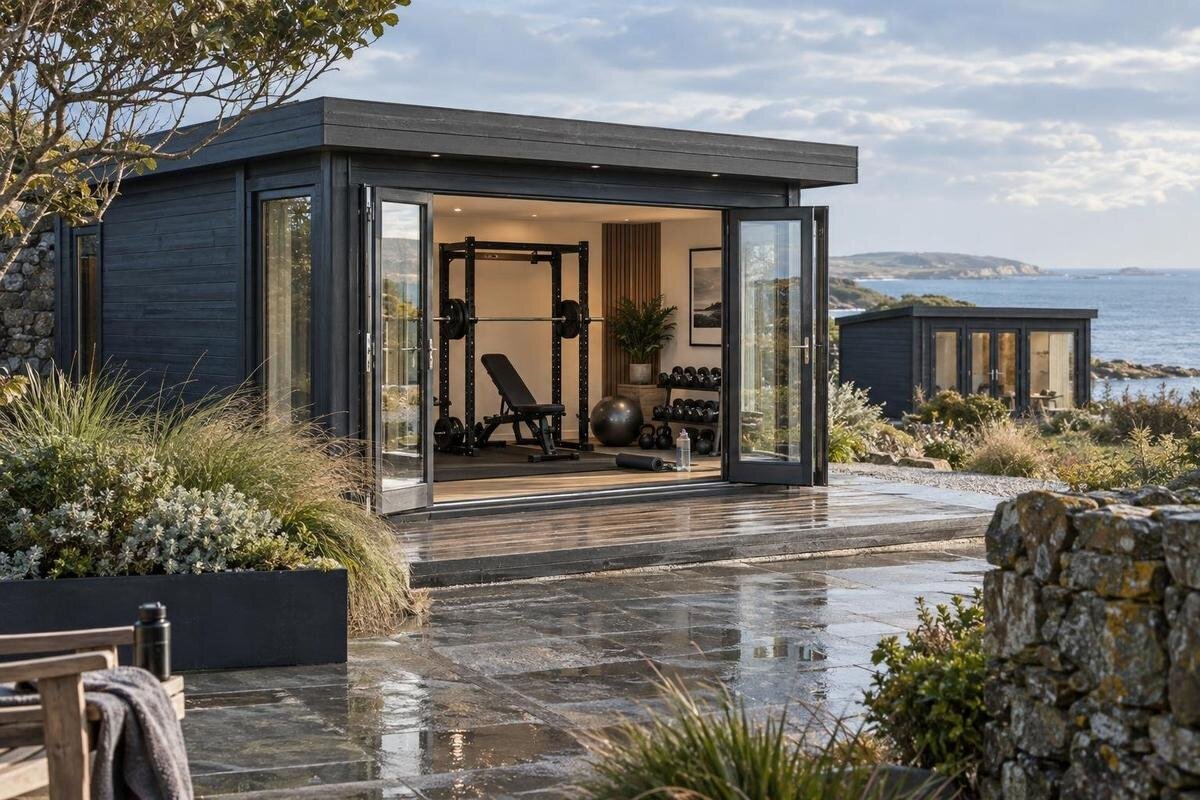
Garden shed buying guide
If you plan to buy a garden shed for a home gym, start with the movements and equipment, not just the space needed to fit a machine inside four walls. Your choice depends on usable internal area, clear height, the doorway, floor suitability and the conditions in which you expect to train. Before comparing models, decide what will stay set up, what must be moved and whether you will train occasionally or throughout the year. That gives you a practical brief for reading product listings and helps distinguish a workable training space from a shed that only looks roomy in a photograph.
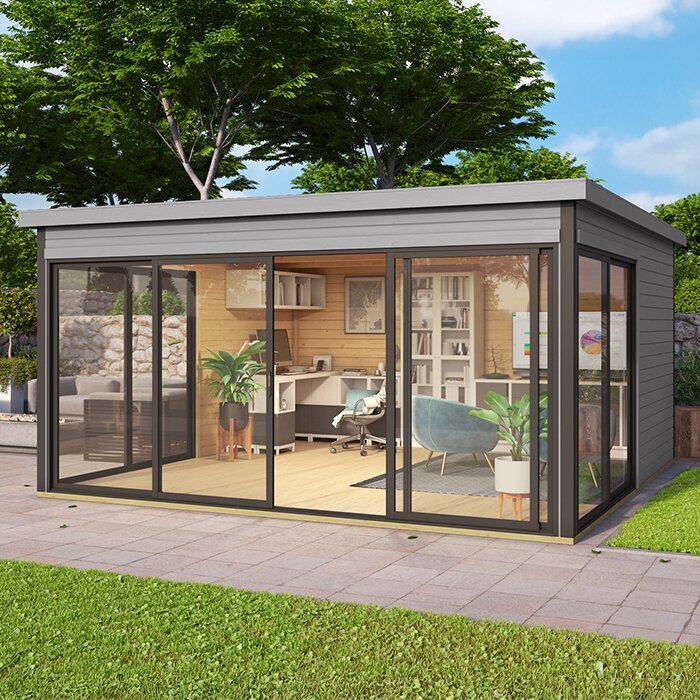
01
Match the shed to your training plan
Begin by listing the sessions and equipment you actually expect, rather than choosing a shed by a size label. Note large items such as a treadmill, exercise bike, bench, rack, adjustable weights and mats, then mark which pieces must remain ready to use and which can be stored away. Add the movements around them: stepping on and off a machine, changing weights, stretching, lifting your arms overhead and moving between exercises. A room can fit equipment at rest yet feel cramped once a workout begins. If two people may train at once, allow for their movements and shared routes, not just the floor area occupied by their kit. Separate planned purchases from equipment you might buy someday, or you may reserve space for things that never arrive.
Turn that list into a minimum set-up and a more comfortable preferred one. A routine built around one stationary machine and a mat has different space demands from a plan with several fixed pieces, weights and an open floor area. Include accessories such as a towel, bottle, shoes and small items, so they do not spill into the route to the door. The Verdana 1 garden house can be one listing to compare, but its name and image do not establish gym suitability. Check its published internal dimensions, clear height, door opening and floor information against your written plan.
Work from usable internal space
Use internal measurements to test a layout, not only the external footprint. Wall thickness, corner posts, a recessed doorway or a sloping roof can reduce usable space; outside length and width do not describe the clear floor at every point. Check whether each figure is internal or external and where it is measured. Look for the narrowest width and any low eaves if you plan to place equipment near the sides. Leave room for the door to open and for equipment to be brought into position. If a listing omits a measurement you need, ask the seller instead of estimating it from a photograph.
Make a simple scaled plan and place each item on it, using the equipment maker's clearance guidance for access and operation. Add a walking lane, mat area and small storage for weights or towels; do not count these as free space if another machine will occupy them. The Verdana 2 garden house can be included in your comparison, but rely on the measurements the listing states rather than its name or image. If possible, mark the plan on a clear floor with tape and rehearse the movements. If a door, weight or machine overlaps another part of the layout, revise it or compare a different size before ordering.
02
Measure headroom where you will train
Headroom can matter as much as floor area, particularly for standing movements or equipment with a raised frame. Measure clear height over the exact place you will use, including the lowest point of a sloping roof, rather than relying on the highest point at the ridge. Think through the full movement: standing upright, raising both arms, stepping onto a machine or using a bar if that is part of your plan. Follow the equipment maker's clearance instructions and allow for lights or other fittings that hang down. A machine that fits when stationary may not leave the room needed to use it.
Product pages may give exterior measurements without making clear how much headroom is available inside. Assess the Durano garden shed listing for whatever internal height and roof-profile information it actually provides; do not infer clear space from a name, image or headline measurement. If you intend to attach a pull-up bar, suspension point or other load-bearing equipment to a wall or roof, get confirmation from the shed supplier or a qualified professional that the structure and fixing suit that use. A photograph of a beam is not confirmation. If the information is unavailable, leave the fitting out of your plan.
Check the doorway and equipment route
Measure the largest item you need to bring in, including its height and width in the form it will pass through the doorway. If it arrives in parts, check the maker's instructions to see whether assembly inside is practical; do not assume that every item can be dismantled. Compare the clear door opening, not just the nominal door size, and allow for handles, a threshold and the door leaf when open. Trace the route from the garden entrance to the shed as well, noting gates, corners, steps and narrow passages that could make delivery or assembly difficult.
Match the entrance position to the layout so that the door does not swing into equipment or leave weights and mats blocking access. Keep a direct route into the training area, and consider where bulky equipment will sit during assembly or when you need to move it. For the Veltor 1 garden house, check the door and access details that the product page actually publishes; the model name does not reveal the clear opening or its position. Ask the seller about any missing measurements or configuration details before ordering, particularly if a machine will be difficult to carry around once the garden is in use.
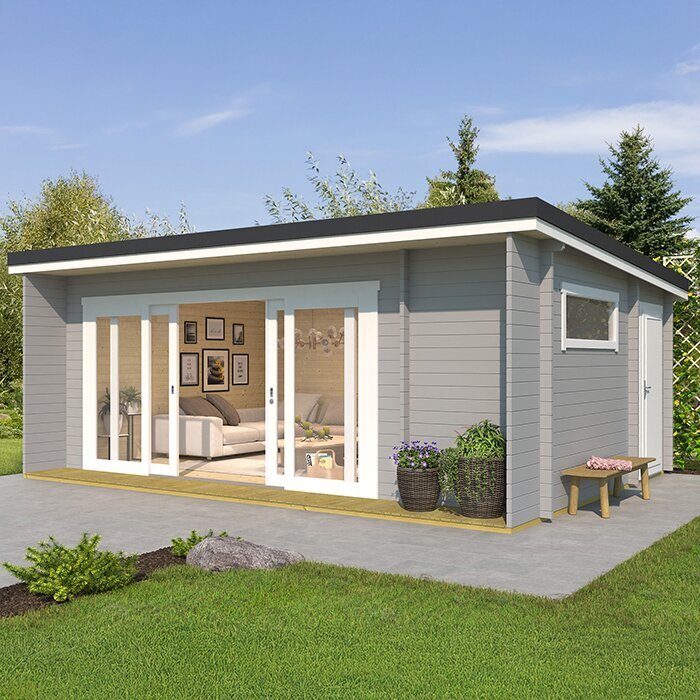
03
Verify the base and floor capacity
A gym can place different demands on a shed floor from boxes or garden tools. Equipment and users add load, while some workouts involve repeated movement or concentrated weight from racks and free weights. Do not assume that a floor shown in a photograph is included, or that a floor supplied with a shed is rated for your intended use. Check the manufacturer's requirements for the base and site preparation, and find out what is included in the product. If the ground holds water after rain or is uneven, raise this before arranging the base rather than assuming the problem will resolve itself.
List the equipment and the type of training you intend to do, then ask the supplier or a qualified building professional whether the proposed floor and base are suitable. Avoid relying on rough estimates or assumptions about a general shed category when capacity is not stated. A mat may protect the surface or soften contact, but it cannot increase the building's structural capacity. Check the Orello garden house information for any stated floor or base details and ask for clarification if the listing is silent. It is better to resolve the question before purchase than to discover that a planned rack or workout is not supported.
Decide whether insulation fits your routine
Think about when you will train before paying for an insulated garden shed. Occasional use in milder weather may call for a different specification from regular early-morning sessions or training throughout the year. Consider how comfortable you need the space to be, what equipment will stay there and whether you are prepared to manage it when indoor and outdoor conditions change. Insulation can help moderate indoor conditions, but the result depends on the complete building and how it is put together. Do not treat a product label as a guarantee of a particular temperature or year-round comfort.
Check exactly what the insulation description covers. It may refer to particular parts of a building rather than the walls, roof and floor as a complete system, so ask what is included and what would need to be added separately. Extra lining can also affect usable space, clearances and where fittings can go. Review the Modano garden house page in the same way as any other option: rely on stated specifications, not assumptions about its insulation or construction. If you plan to heat the space or add electrical equipment, consider those requirements before choosing the shed and ask a qualified professional about the work involved.
04
Plan for ventilation and damp gear
Workouts add moisture to the air, and towels, footwear and clothing can bring in more. Plan a practical way to exchange air during and after training rather than assuming that closing the door will keep the room comfortable. Check the actual ventilation arrangements described for a product, such as whether openings are specified and how they can be used. A door or window may help with airflow when open, but that depends on the layout, weather, privacy and security. Make sure that equipment or storage will not block the openings you intend to use.
The label wooden garden tool shed M does not establish what openings or ventilation arrangements a product has. Inspect its stated details as you would for any candidate and ask if information is missing. If powered ventilation is part of your plan, include it when considering the layout and have any electrical work assessed by a qualified electrician. After training, remove damp towels and kit rather than leaving them piled beside equipment, and give the space an opportunity to dry. A small place for wet shoes or outdoor gear can also help keep the exercise area clear.
Allow for lighting, power and wall fittings
Plan lighting around the way you will use the room. You may need enough light to move between equipment and read its controls, while a mirror or glazed panel can create glare depending on its position. Consider where shadows will fall and whether a light fitting would interfere with headroom or movement. If any equipment needs power, list it before settling on a layout and decide where cables and sockets would need to be. Avoid planning a route that leaves cables across the main walking lane. Have an electrician assess electrical requirements and installation rather than attempting to alter wiring yourself.
Mirrors, shelves and wall-mounted exercise equipment need suitable support and fixings; do not assume that every wall panel is designed to carry them. Ask the supplier or a qualified professional to confirm what the structure can support before planning a fixed fitting. A product title such as wooden garden shed S does not establish whether its walls are suitable for a mirror or gym hardware, so use the published construction details and ask about any uncertainty. If the shed has glazing, include it in the layout so that heavy equipment is not placed where it could strike a panel.
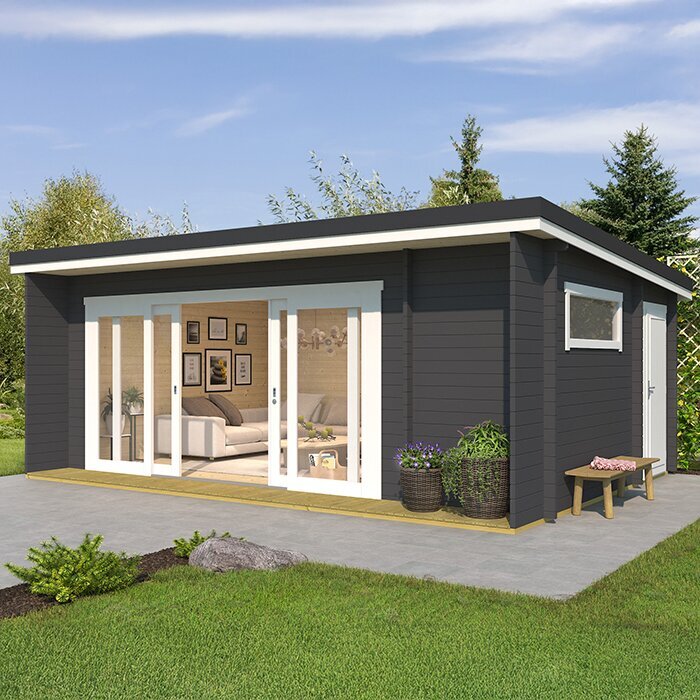
05
Choose a suitable place in the garden
Check the proposed spot in more than one set of conditions. Look for ground that holds water after rain, consider whether the base can be prepared as required by the manufacturer, and make sure the route is workable for delivery and assembly. A site that seems straightforward on a dry day may be less accessible when the garden is wet. Leave the space needed for the door to open and for the building to be assembled or maintained in line with the supplier's instructions. If ground levels or drainage are a concern, get advice before committing to a location.
Think about privacy, light and the effect of sound on other parts of the garden and nearby homes. Place the shed so that access does not repeatedly cross a busy part of the garden, and avoid choosing a spot that blocks an existing route. If you want electricity, ask an electrician to assess the proposed location before you finalise the layout. Check any property restrictions or permissions that may apply to your site, and ask the local authority or a suitable professional if you are unsure. These checks can affect where the shed can go, so they belong in the buying decision.
Compare specifications and confirm the order
Compare a small number of product listings using the same details for each: internal and external dimensions, clear height, door opening, floor and base information, insulation, ventilation and any included floor covering. Note what is stated and what remains unanswered rather than filling gaps from photographs or model names. If a listing offers different sizes or configurations, make sure you are comparing the exact version you intend to buy. A simple table makes it easier to see whether a lower external footprint still leaves enough room for your equipment and movement, or whether another option better matches your drawn layout.
Before placing the order, confirm what is included and what is separate, such as the floor, base preparation, finishing, assembly or delivery. Check the required access for bringing the building and equipment to the site, and confirm the current delivery and installation arrangements with the retailer. Ask about any maintenance or treatment needed and read the terms for the chosen product and configuration. If a detail affects your gym plan, get the answer in writing rather than relying on a general description. Add any professional work you need to arrange to your overall budget so that the purchase decision reflects the finished space, not just the shed itself.
Frequently asked questions
What size garden shed is right for a home gym?
There is no single suitable size. Work from the internal floor area needed for your equipment, its operating and movement clearances, walkways, storage and any open-floor exercises. Check clear height and the doorway too: a generous external footprint does not guarantee a usable layout. Draw the plan before choosing.
Do I need an insulated garden shed for a home gym?
It depends on when and how often you plan to train. Insulation may help moderate indoor conditions, but it does not provide heating or manage moisture by itself. Check what the specification actually covers, including the roof and floor, and consider ventilation and condensation alongside insulation.
Can a standard garden shed floor hold weights?
Do not assume that it can. Check the stated floor and base information against the equipment and workouts you intend to use, especially if you plan to have racks or free weights. Ask the supplier or a qualified building professional if capacity is unclear. A floor mat does not increase structural capacity.
What ventilation should I look for in a garden gym?
Look for a practical way to exchange air during and after workouts, and check the product details for the actual openings or ventilation options. Consider whether equipment will block them and whether you can use them while maintaining privacy and security. If you plan powered ventilation, discuss the electrical work with a qualified electrician.
Can I choose a shed based on its outside dimensions alone?
No. External measurements do not show the space left inside after walls, posts and the doorway are accounted for, or how the roof affects headroom. Compare internal dimensions, clear height, door opening and floor details with a drawn equipment layout. Ask for missing measurements rather than estimating from photographs.
A suitable garden gym begins with a layout that leaves room to use the equipment, not simply store it. Once you have matched your training plan to the internal dimensions, check the floor, headroom, access, insulation and ventilation as parts of the same decision. Then confirm what the chosen product includes and what the site will require. That way, the shed you order is judged against the space and workouts you actually intend to have.
