
Buying a Garden Shed for a Long, Narrow Garden
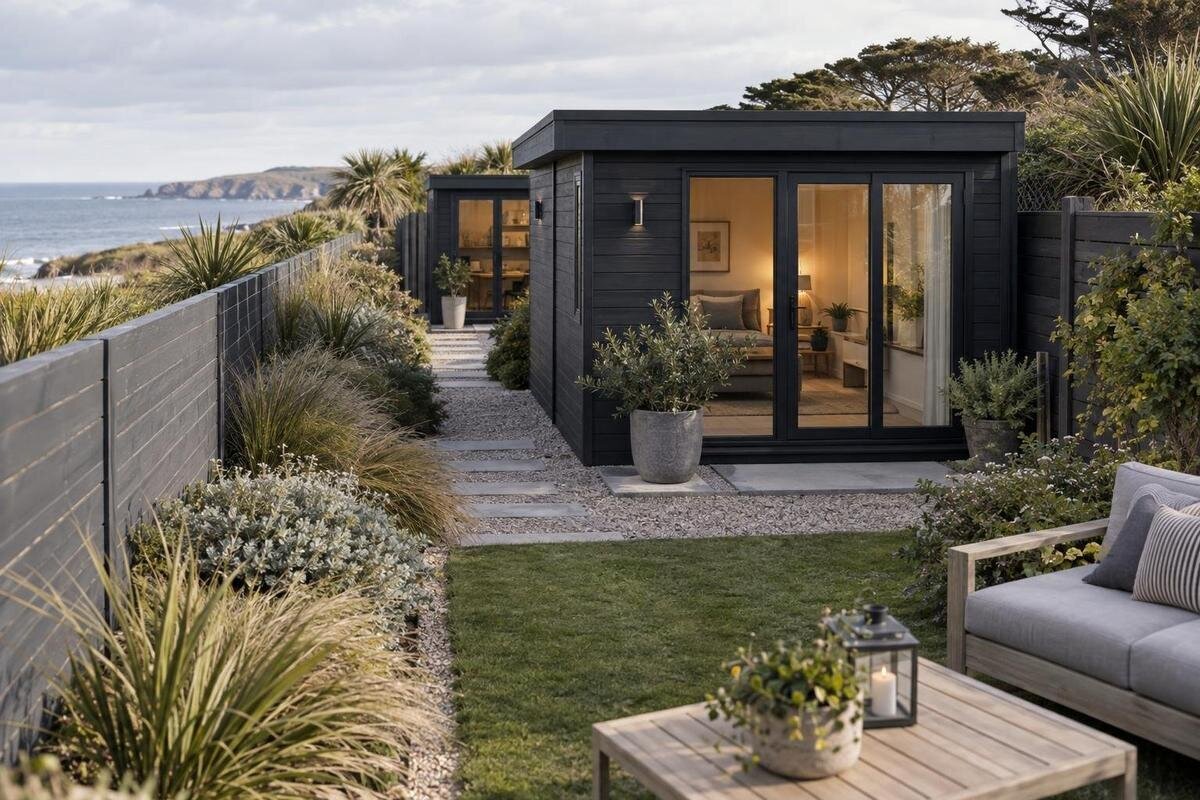
Garden shed buying guide
A long, narrow garden can offer plenty of depth but little room to pass a shed or turn at its door. The choice is therefore about how the building fits into the route through the plot as well as how much ground it covers. Before you buy, measure the clear strip at several points, decide what you need to store and mark out a possible position. Then compare each candidate's full dimensions, entrance arrangement and delivery requirements. A footprint that appears to fit on a plan may still leave an awkward bottleneck beside the house, gate or outdoor area.
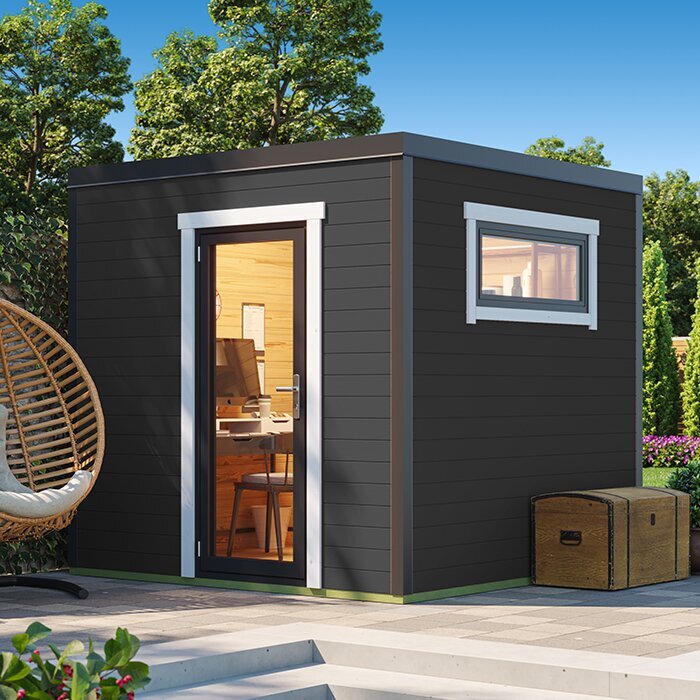
Before you buy 1
Measure the clear width at the intended position
Begin with the part of the garden where a shed could realistically go, rather than dividing the total lawn area by a nominal shed footprint. Measure the usable width between fixed boundaries at several points: fences can angle, walls may step in, and paths or beds can reduce the clear strip. Record the length available along the garden too. A plot that looks like a straight corridor on a sketch may have a pinch point near a gate, drain, tree or change in paving. Take measurements at the exact proposed position and note the narrowest point the building and any roof projection would occupy. A simple plan makes the constraints visible instead of relying on one optimistic measurement.
Note anything that must remain accessible, including gates, taps, drains, washing lines and planting you do not want to remove. Include the space needed to reach the shed for routine care, but do not assume one standard side gap: the product instructions and the actual site matter. Mark the proposed outside footprint on the ground with string, chalk or temporary markers, using dimensions for the exact model and version. Walk the remaining strip in both directions and try opening the gate. If you need to turn sideways or step around an obstacle, the plan has revealed a real constraint before purchase. A quick photograph with measurements written beside it can also help you compare a drawing with the site.
Choose the internal layout around what you store
Make an inventory before settling on a shape. Long-handled tools, garden furniture, a mower, bicycles, bags of compost and seasonal equipment all occupy space differently; list the largest items and note which need to be lifted, wheeled or taken out frequently. Storage on a narrow plot works best when the things you use most can be reached without unloading a row of less-used items, though the right arrangement depends on your contents. If you also intend to pot plants or do occasional jobs inside, allow space to stand and work. Do not treat every centimetre of floor area as available storage if you need room to move.
Compare a long internal arrangement with a broader one by drawing the items to scale or laying out their approximate positions on the floor. A narrow interior may use the garden's length efficiently yet leave little room to turn; a wider layout can give a clearer aisle but reduce the passage outside. Consider shelving only where stored items and the entrance will not collide. If you are assessing the Verdana 1 garden house, compare confirmed internal dimensions with your inventory and look for the stated entrance position. Its name or product image cannot establish whether that layout will work.
Before you buy 2
Allow for the door and the space to use it
An entrance can make a fitted shed awkward if there is nowhere to stand while opening it. For a hinged door, allow for the full movement of the door leaf and a person carrying an item; for a sliding or folding arrangement, check where the panels travel and what width remains clear. Do not estimate the opening from a product photograph. Confirm the usable doorway, the direction of opening and whether the stated arrangement can be changed, rather than assuming it is reversible. On a narrow garden, these details can determine whether you approach from the long side or need a clear run to an end door.
Think through an ordinary trip: approach with a spade or a box, open the entrance, put the item away and leave without shifting something else. If a bike, mower or bulky chair is involved, compare its widest point with the actual doorway and the turn outside it. The Verdana 2 garden house can be assessed in the same way: use product-specific opening measurements and assembly information, if provided, and clarify unanswered points before buying. A door that can technically open is not automatically convenient to use, especially if its movement blocks the only route through the garden.
Keep a continuous route through the garden
Plan the shed alongside the way you already move through the garden. Trace a route from the house or gate to the places you use most, such as a patio, clothes line, compost area or lawn. Include the real width of anything carried along it: a wheelbarrow, bin or bag may need more room than a person walking empty-handed. Mark the route on your sketch and on the ground, then check whether it remains direct when the shed footprint is in place. This is particularly useful in a long garden, where a narrow passage can turn a short task into repeated detours.
Consider whether the route needs to pass the shed, lead to its door, or do both. Putting the building against one boundary may preserve a wider strip on the other side, but only if the entrance and maintenance access remain practical. Placing it across the far end can leave little room to turn in front of the door. There is no universal path width that suits every household and use: test your own movements, allow for the items you actually carry and follow the manufacturer's guidance on access around the finished building. If several people use the garden, ask them to try the marked route too.
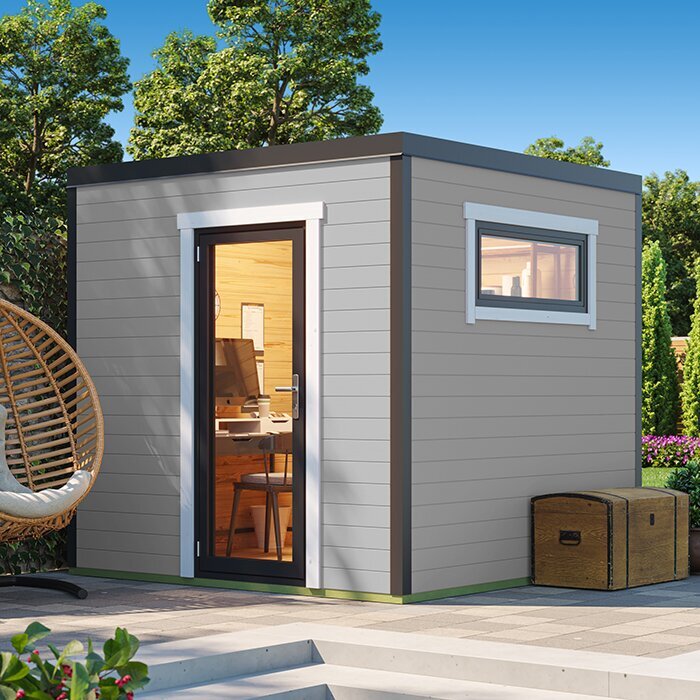
Before you buy 3
Choose a position along the garden's length
Distance from the house changes how useful a shed feels. Keep frequently used tools close to the area where they are needed, or place the shed nearer the garden entrance if carrying equipment from outside is part of your routine. A far-end position may leave more room nearer the house for seating or planting, but it can mean a longer walk and make stored items less convenient to reach. There is no best location based on length alone: compare the routes you use in a normal week and decide which should remain shortest. A simple plan with zones for storage, access and outdoor activities makes the trade-off easier to see.
Check the view from the house and from the garden, not only the shed's footprint. A new structure may narrow a view, sit beside a window or make an open section feel enclosed; another position might preserve the visual line while keeping the route clear. Leave practical access to fences, planting and equipment that still needs attention. Use the Durano garden shed as one named option in a comparison only after confirming its exact dimensions and layout; its label alone says nothing about whether it fits a particular section. If no position keeps both the main route and the intended use workable, reconsider the size or shape.
Compare the full dimensions, not just the floor footprint
Product listings may give several measurements, so identify what each number represents before comparing models. Check the external width and length, the base or floor dimensions, internal usable space and overall height; roof projections can extend beyond a footprint shown in a simple plan. On a narrow site, a small increase in overall width may matter more than extra length, while internal measurements determine whether your equipment fits. Read a dimensioned drawing for the precise model and version, if one is available. Keep units consistent, and avoid scaling a photograph or relying on a model name to estimate size.
Match the dimensions to the exact location, including any roof edge, entrance and path beside it. Check the height where there are low branches or nearby structures, and confirm that doors and panels can be used in the orientation you have planned. Some product pages distinguish base dimensions from overall dimensions; if wording or a drawing is unclear, ask which figure to use for site planning. When comparing the Veltor 1 garden house, verify the measurements for the version you intend to order rather than assuming similarly named models share them. Keep confirmed figures beside your garden measurements so you can compare candidates on the same basis.
Before you buy 4
Assess the ground and water around the proposed site
Look at the ground where the shed would sit after wet weather as well as on a dry day. Note dips, soft patches, run-off from roofs and any route where water tends to collect. A narrow garden gives you fewer alternative positions if a chosen spot proves unsuitable, so treat the surface condition as part of the location decision. The base must suit both the product and the site; use the manufacturer's requirements rather than assuming that paving, soil or an existing platform will be adequate. If the ground is uneven or drainage is difficult to judge, ask a qualified installer or groundwork professional to assess it.
Include the ground preparation and finished base in your marked plan, because their outline can affect the passage beside a shed. Check whether water from the building could run towards a doorway, a neighbour's boundary or an area you need to keep usable, and plan for drainage without blocking existing routes. Do not rely on a generic base detail when the site is uncertain. For the Orello 1 garden house, check the product-specific base and installation information for the version you intend to order; if it does not answer a site question, get qualified advice before committing.
Check delivery and assembly access before ordering
A shed that fits in its final position still has to reach it. Measure the route from the delivery point through the gate and along the side passage, including the narrowest opening, corners, steps and low obstructions. Ask what form the product arrives in and whether package dimensions or handling requirements are available; assembled dimensions do not show whether the parts can be carried through a tight turn. Check the retailer's delivery terms for your destination and access conditions, rather than assuming delivery includes movement to the final spot. Confirm the details before arranging other work around the order.
Think about where components can be staged and assembled without blocking the only route through the garden. The work area may need to be wider than the final footprint, and the available space can affect the practical assembly plan; follow the supplied instructions or agree arrangements with a competent installer. Consider how the route can remain safe and usable while work is under way, especially if the garden is also needed for access. For the Modano 1 garden house, as with any candidate, confirm delivery and assembly details for the selected model rather than inferring them from its image or title. A narrow passage may affect handling even when the final position is roomy enough.
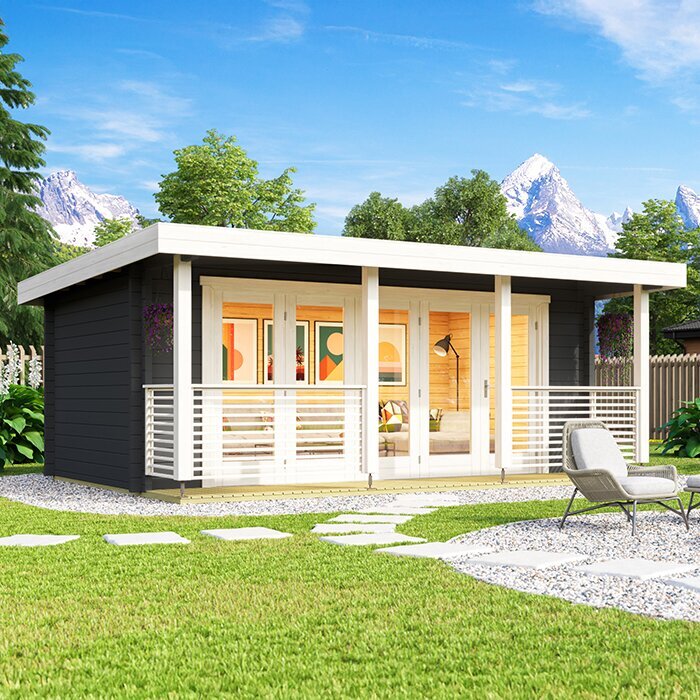
Before you buy 5
Compare what the purchase includes and what it requires
Compare the full scope of each option, not just its footprint or headline price. Establish what comes with the shed and what must be sourced separately, including any base, finish, fixings or assembly service mentioned in the product information. Add site preparation and any changes needed to keep the route usable to your own budget; these can matter when access is restricted, even though they are not part of the shed's dimensions. Do not assume that two listings include the same items. If a detail affects your decision, ask for it to be confirmed before checkout.
Read the stated construction, finish and care instructions for the precise product rather than using a category label, photograph or adjective as a guide to upkeep. Consider whether you can reach the outside for maintenance after positioning the shed, and whether a tight passage would make future work awkward. The garden tool shed M should be compared on its confirmed specifications and inclusions, like any other candidate; its product name is not a substitute for them. Where different models have different details, keep the information for the exact version you are considering so the eventual order matches your plan.
Run a full-size layout check before you order
Bring the decisions together on the ground. Mark the confirmed outside dimensions and any roof projection, then mark the entrance, its opening movement and the route you need to retain. Walk from the house to the door with an item similar in bulk to your largest stored object, and try the turn at each narrow point. Stand where you expect to work or unload and check that stored items will not block the entrance. If possible, repeat the exercise with a second position. This practical rehearsal can reveal an inconvenient pinch point that was easy to miss on paper.
Before placing the order, confirm the model and version, stated dimensions, door configuration, base requirements, delivery access and included items against the product information. Ask the retailer about any missing measurement or installation detail that changes the layout; do not fill gaps with assumptions from a photograph or a similar model. The garden shed S can be checked against the same site plan if it is among your candidates. Choose the option that stores what you need while preserving a clear, workable route through the garden, rather than the one whose footprint alone looks most promising.
Frequently asked questions
How wide should a garden shed be for a narrow garden?
There is no single width that suits every garden. Measure the clear space at the planned position, including any roof projection, then allow for the entrance and the route you need to keep open. Check that the internal width will hold your largest items without making them difficult to reach.
Is it better to put a shed at the end of a long garden?
Not necessarily. A far-end position may preserve space nearer the house, but it can make everyday tools less convenient to reach or leave little room to use the door. Compare it with a side position against the routes and activities you need to keep.
Which garden shed dimensions should I compare?
Check the external width and length, base or floor size, internal space, overall height, roof projection and usable doorway. Confirm which model version each measurement refers to, and use a dimensioned drawing where available rather than estimating from a photograph.
How much space should I leave around a garden shed?
There is no universal clearance. Allow for the door to operate, the paths you use and any access needed for care or installation. Check the instructions for the specific model and test the marked layout on site before ordering.
How can I check that a shed can be delivered through a narrow passage?
Measure the gate, passage, tightest turns and steps along the full route. Ask what form the shed arrives in and whether package dimensions are available. Check the retailer's delivery terms and clarify how access to the final position is handled.
For a long, narrow garden, a useful shed has to fit both its contents and the movement around it. Measure the intended position carefully, check the actual entrance and overall dimensions, and rehearse the route before you order. When the footprint, access and installation plan work together, it is easier to choose a shed that serves the garden without obstructing its everyday use.
