
Buying a Garden Shed When Delivery Access Is Limited
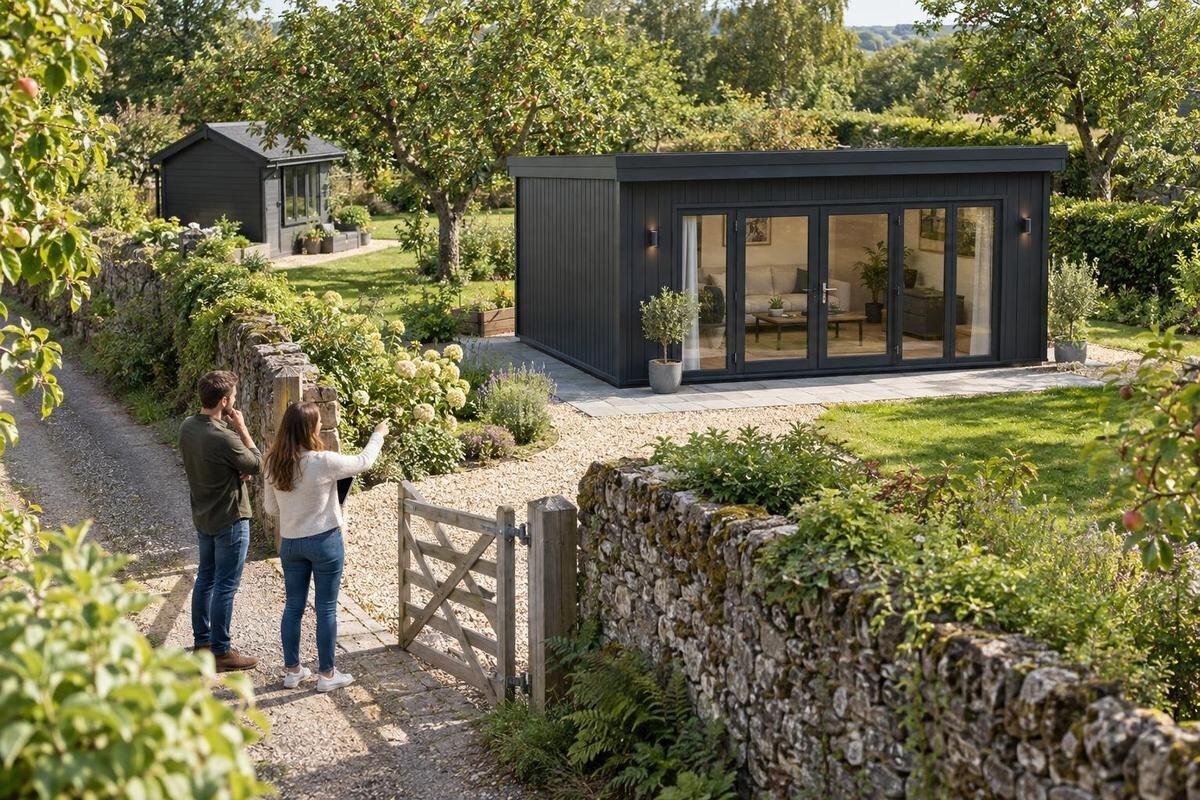
Garden sheds
Restricted access can affect which garden shed you buy, even if the planned building fits neatly in the garden. A delivery may be handed over at a point some distance from the plot, a long component may not turn through a gate, or an assembly team may need room that the route does not provide. The building’s finished dimensions alone cannot answer those questions. Before comparing models, map the route from the realistic unloading point to the proposed location, take measurements at each pinch point and check the seller’s requirements for packed components and assembly. That gives you a more reliable basis for choosing and ordering.
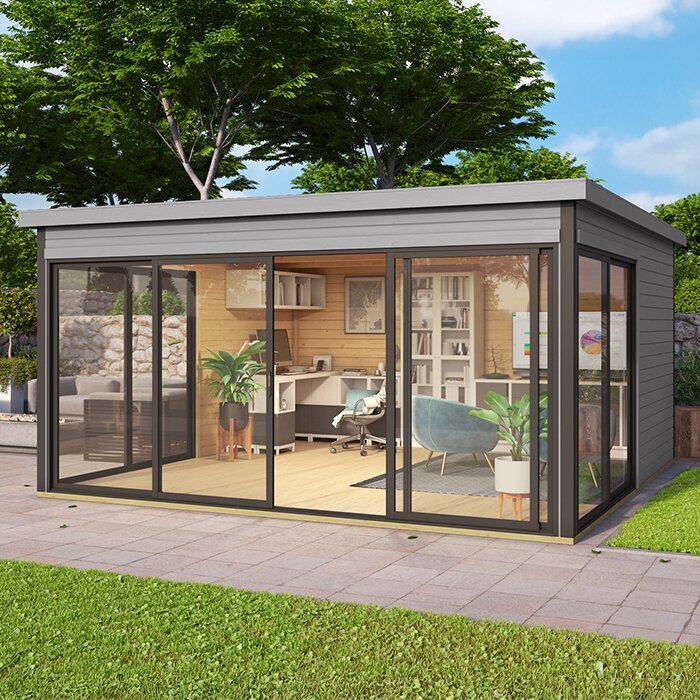
The full route from delivery point to shed site
Begin at the place where the delivery vehicle is expected and permitted to stop, not at the front gate. The agreed handover point may differ from the place you first had in mind, and the distance to the garden can affect how components are moved. Draw a simple route to the proposed shed location, including every gate, passage, step, corner and change from a hard path to lawn. Mark whether it crosses a shared drive, another part of the property or an area that is not available for the delivery. If access depends on someone opening a gate or allowing passage, confirm that arrangement before counting it as part of the route.
Walk the route with a tape measure and note its narrowest usable width and lowest fixed obstruction. Measure the clear space, not only a gate’s nominal opening: hinges, handles, posts and an uneven edge can reduce it. Note where someone carrying a bulky item would have to turn or pause, and whether there is room to set it down. Check the route in the position a gate will be held on delivery day, and record any restriction that remains. Photos from each bend can help explain the route to the seller or delivery team, but include measurements too; an image can hide depth and scale.
Gate widths, thresholds and tight turns
At each gate and doorway, measure between the surfaces that actually limit passage, with the gate in the position it can be held on delivery day. A latch, handle, handrail, low wall or raised threshold can make the usable opening smaller than it looks. Record the height from the floor or threshold to the lowest obstruction as well as the width. If the passage narrows at one point, note where that happens rather than giving only its widest measurement. A route that is straight may still be unsuitable if a delivered item cannot pass through at the required angle.
Corners need their own measurements. Record the length of the approach to each bend and the clear space beyond it; a long rigid pack may need room to swing, while a narrow corridor after the turn can make manoeuvring harder. Do not judge only by whether a person can walk around the corner empty-handed. Ask for the dimensions of the delivered packs and identify the longest or widest one. Keep the exact item details beside your route sketch—for example, the Verdana 1 garden house listing—because the model name does not show whether the kit will fit.
The final position and assembly space
The final stretch can be tighter than the entrance. Check whether there is a turn between the last gate and the proposed base, a step onto a patio, a narrow gap beside a wall or a change in surface that affects where packs can be carried or set down. Confirm the shed’s intended position as well as the route to it: components may need somewhere accessible to wait, and an installer may need working room around the structure. Ask about the actual space required rather than assuming the footprint is the only area that matters.
On a simple sketch, mark the finished footprint, the end of the route, any temporary staging area and the side from which the building will be approached. Reaching the garden does not necessarily mean that a pack can reach the precise installation point. Do not assume it can be lifted over a fence, carried through the house or moved across a neighbour’s land unless the delivery provider agrees and that route is genuinely available. For a specific candidate such as the Verdana 2 garden house, use the plan to ask where delivery stops and what space is required for assembly.
Overhead clearance along the route
Look above the whole route as well as at the ground. Low archways, eaves, beams, tree branches, clotheslines and cables can restrict a load when it is being carried or tilted. Measure the vertical clearance at the lowest fixed point and note anything flexible that would have to be moved; do not assume the delivery team will trim branches, remove fittings or alter the route. If an overhead service or other hazard would need attention, ask an appropriately qualified person how it can be dealt with rather than attempting to change it yourself.
One height measurement may not describe the problem if a roof slopes, a beam crosses only part of the passage or the route bends beneath an overhang. Photograph these spots from both directions and record where the lowest point is. Ask the seller or carrier how the packs are expected to be handled—flat, upright or at an angle—and whether the measured clearance is adequate for that method. Do not assume a particular carrying position will solve a tight gap. If the answer is uncertain, request an assessment of the route before confirming the order.
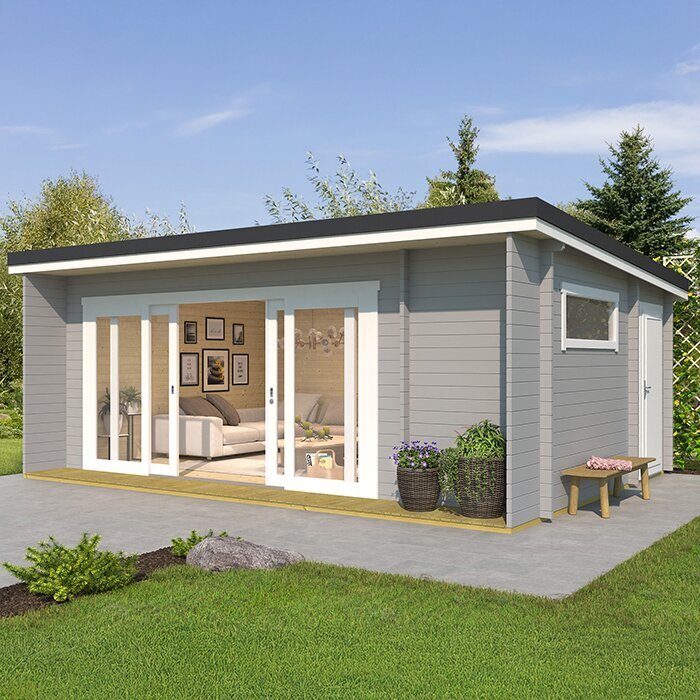
Where the delivery service ends
Check the garden shed delivery requirements for the exact handover point. The terms may specify a location that is not the garden, so ask what the seller and carrier mean by delivery, unloading and access to the property. Find out whether the vehicle must reach the driveway, whether goods are carried beyond it and whether a side or rear route is included. Do not assume the driver will take packages through the house or along a route that was not agreed. If the vehicle cannot reach the garden, measure from the realistic unloading point instead of the nearest gate.
Tell the seller about restrictions before ordering and ask what information is needed to assess them: the narrowest opening, turns, overhead clearance, surface changes and photographs. Confirm the agreed endpoint and which parts of the route are included in the service, preferably in writing. If you are asking about a listing such as the Durano garden house, identify the exact item so the delivery details match the order. Ask what happens if the carrier considers the route inaccessible, and whether a missed or rearranged delivery could involve a charge; do not rely on assumptions about the terms.
Dimensions of the delivered packs
The outside dimensions of an assembled garden shed describe the space it occupies, not the size of the kit on arrival. A building supplied in parts may have a long panel, bulky section or package that is awkward to turn, even when the finished structure appears modest. Do not estimate pack dimensions from a product photo or compare the gate width with the shed’s outside width. Request the number of packs, each pack’s length, width and height, and its weight if available. Ask which pack creates the tightest access constraint and whether all packs arrive together.
Establish what handling the seller or carrier expects at the property. Ask whether packs are to be moved by hand, whether equipment is needed, who supplies it and whether the recipient is expected to help. Do not assume that staff, lifting equipment or assistance will be provided, or volunteer to move a heavy pack without clear instructions. If product information is incomplete, request the delivery pack details before paying. For the Veltor 1 garden house, as with any candidate, have the seller confirm the actual components and handling requirements rather than inferring them from the name.
What on-site assembly can and cannot solve
On-site assembly may solve one particular problem: the finished building may not need to pass through the access route. It does not automatically make a restricted route workable. Components still have to reach the plot, and the assembly team may need to bring tools and materials through the same gate, bend and overhead space. There must also be an agreed place for the work and for components to be laid out. Ask whether assembly is available for the exact model and your address before treating it as an option.
Clarify the service scope rather than relying on a general mention of assembly. Ask whether it is offered for the exact model, whether the team carries packs from the delivery point to the site, what access dimensions it requires and whether base preparation is included. Confirm what you must have ready, how the work is booked and whether it is arranged or charged separately. For the Orello 1 garden house, request answers tied to that exact selection and keep the terms with your order.
Comparing models against access measurements
Shortlist by matching two sets of dimensions: the finished building and the route needed to deliver and assemble it. For the shed, compare the actual footprint, height, door orientation and storage space with the garden. For the route, use the narrowest opening, turning space, overhead clearance, pack dimensions and final staging area. A small footprint does not guarantee small packages, and a product image cannot show whether a pack will clear a gate. Treat every missing delivery detail as an unanswered question, not as confirmation that the route will work.
A comparison table makes gaps visible: list each candidate beside your route measurements, then mark every delivery detail as confirmed, awaiting an answer or incompatible. Do not rank models by the wording of a name or by an image. Apply the same method to the Modano 1 garden house and any alternative; the confirmed pack and assembly information is what matters. If there is no confirmed way to move the parts to the intended position, remove that option from the shortlist or ask whether another delivery arrangement is available.
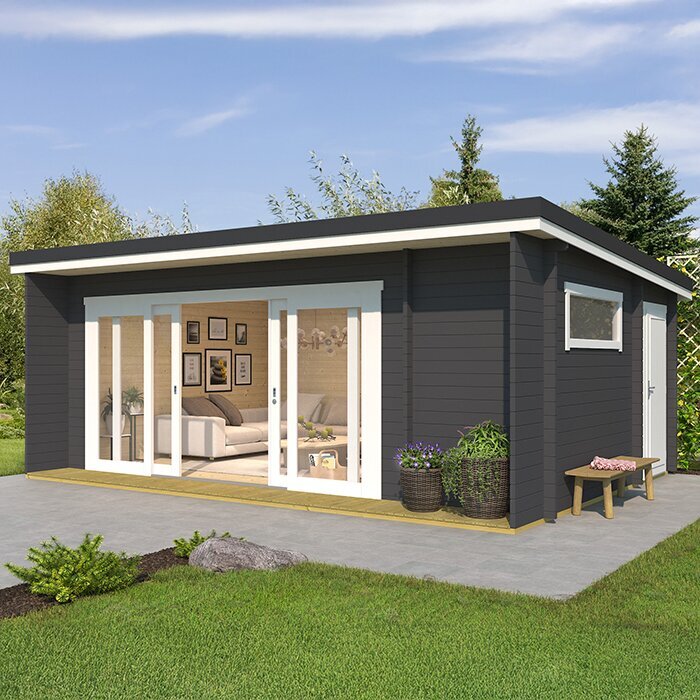
Preparing for the delivery handover
Once the seller has confirmed the route, plan the handover rather than leaving access to chance. Agree which gate will be used, make sure it can be opened and clear movable items from the agreed path and set-down area. Check that parked vehicles, bins, garden furniture or temporary work will not narrow the route on the day. Do not dismantle fixtures, cut branches or move heavy objects at short notice without permission and suitable help. Ask what presence or assistance is expected from the recipient; do not assume you will need to carry the packs.
Keep the route sketch, measurements and written delivery instructions to hand, and tell the seller if a relevant detail changes—for example, if a gate becomes unavailable or work blocks the passage. For an exact product such as the wooden garden tool shed M, confirm the plan for that item before ordering. Leave the carrier to follow the agreed handling method. If the route is blocked or a pack cannot be manoeuvred safely, pause and contact the delivery provider rather than improvising. That helps avoid a failed handover as well as unnecessary risk to people and property.
Questions to settle before ordering
Before placing the order, make one final check against the exact model and delivery address. You should have the route from the confirmed unloading point, measurements for every tight opening and turn, overhead clearance, the pack dimensions and handling guidance, the agreed delivery endpoint and a clear answer on assembly. Separate facts from assumptions: if a package size, service or access condition is still unknown, ask the seller rather than treating it as suitable. Read the relevant delivery terms for limits, possible extra charges and what happens if access is not as described.
Put important answers in writing and retain them with the order confirmation, so there is no confusion about which model, route and service were discussed. If you are considering two possible locations or delivery approaches, confirm the one you intend to use instead of relying on general approval. For example, ask the seller to assess the route for the wooden garden shed S specifically. Where access remains borderline, wait for a clear answer or compare another option with a confirmed delivery method; a guess about a narrow gate is a poor basis for a purchase.
Frequently asked questions
Which route measurements should I take first?
Measure from the agreed unloading point to the intended shed position. Record the narrowest opening, lowest overhead clearance, thresholds, steps and tightest turns, as well as any place where a long pack might need to swing or be set down. Then compare those measurements with the selected kit’s confirmed pack dimensions and handling method.
Are a shed’s finished dimensions enough to judge access?
No. Finished dimensions help you plan the building’s footprint, but they do not tell you how large each delivered component or pack will be. A long panel or bulky package can create a different problem at a gate or corner. Ask for the actual pack dimensions instead of inferring them from a product name, photograph or assembled size.
Will on-site assembly solve a narrow gate?
Not necessarily. Assembly may mean the finished building does not have to pass through the gate, but its components and the people doing the work still need to reach the site. Confirm whether assembly is available for the exact model, what access it requires and what preparation or space is needed at the final position.
Where should I measure from if a vehicle cannot reach the garden?
Start at the unloading point that the seller and carrier agree to use, rather than the nearest gate or the point you would prefer. Measure the full carry route from there, including turns and changes in surface. Confirm who is responsible for moving the packs beyond that point and whether the agreed delivery service includes it.
Should I help the delivery team carry the packs?
Do not assume that you will be asked to help or that you should move a pack yourself. Check the seller’s and carrier’s instructions about handling, staffing and any equipment. If the agreed route is blocked or a pack cannot be moved as planned, pause and contact the delivery provider rather than attempting an improvised manoeuvre.
Restricted access is easiest to judge when the garden shed, delivery route and service are considered together. A measured route and confirmed pack details can reveal a mismatch before it becomes a delivery-day problem. If one gate, bend or handling requirement remains uncertain, get an answer for the exact model and order before committing. Once those details are settled, compare the remaining sheds for the space and storage they provide, knowing that delivery is part of the fit.
