
Buying a Garden Shed with Folding Glass Doors
Garden shed buying guide
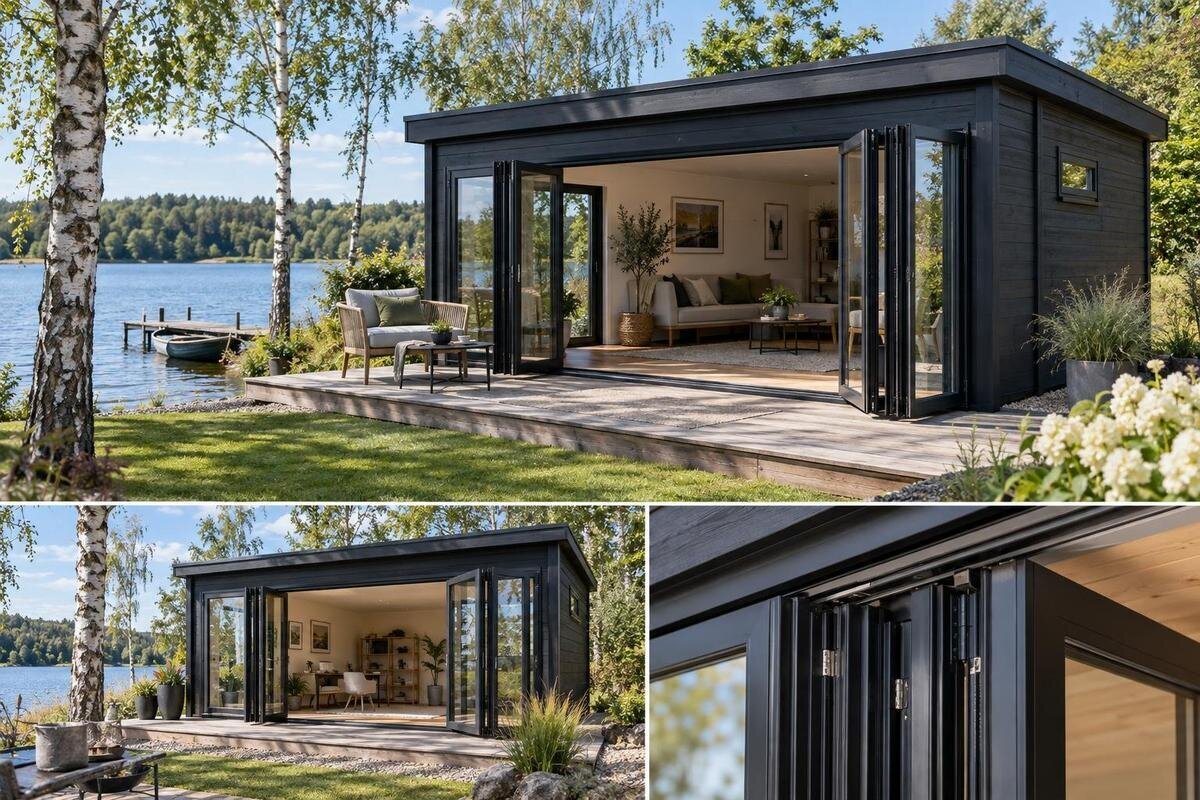
Buying a garden shed with folding glass doors involves more than choosing a glazed front. The leaves need room to fold, the clear opening must suit what you plan to move through it, and the footprint has to fit without disrupting the garden. Interior layout, glazing details, site requirements and delivery access all affect whether a model will work for you. Compare written specifications and the exact configuration you intend to order; a product name or photograph is not enough to establish how the doors operate or what is included.
Match the shed to its intended use
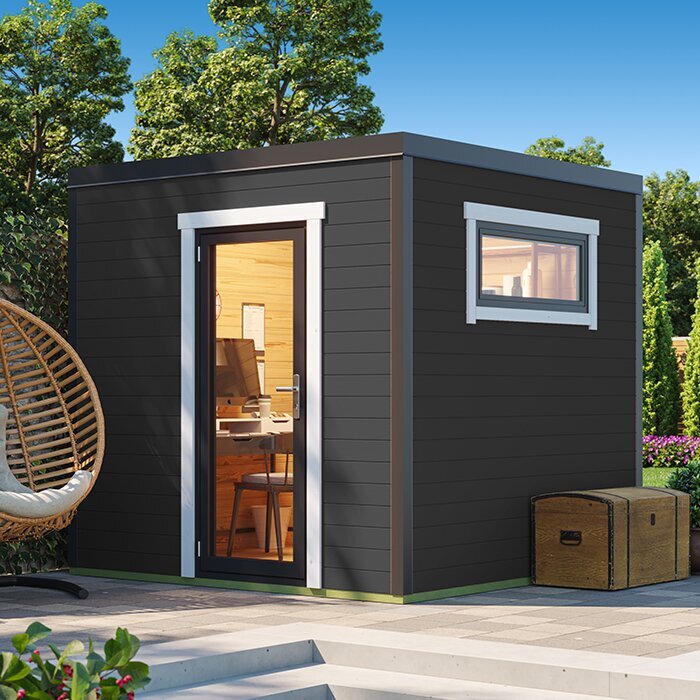
Decide what the shed is expected to do before comparing door designs. A building used mainly for garden tools has different access needs from one where you plan to store larger equipment, pot plants or work on a hobby. Think about how often you will go inside: daily use can make an easy-to-open entrance more important than occasional seasonal storage. If you expect to spend time inside, check that the particular model is described for that kind of use; a glazed front alone does not establish comfort, insulation or suitability for an activity. This purpose gives you a standard against which to judge the dimensions, layout and opening, rather than relying on a broad label such as garden room.
Make an inventory of what needs to go in: the widest and tallest item, things you use often and anything that must stay reachable. Note whether you carry objects by hand, use a trolley or need to move them in one piece. Sketch the interior with likely shelves, a work surface or seating, leaving a route from the door. This exposes conflicts early: a broad entrance may still lead to a cramped floor plan, while a generous floor area can be difficult to use if stored equipment blocks the main route. Separate must-haves from attractive extras, and include seasonal items that take up room part of the year. There is little value in prioritising an opening arrangement you will rarely use.
How the folding leaves affect the layout
The central question is what happens to the folding leaves when you open them. Depending on the design, panels may gather at one side or divide between both sides, and a fixed section may remain; do not assume every set folds in the same way. Check the door diagram, opening direction, panel arrangement and stated clear opening for the exact model and size. A photograph of a closed front rarely answers all of these points. If you are considering the Verdana 1 garden house page, first confirm that the selected configuration has the folding-door arrangement you want, then use the written details or request a drawing. The model name alone does not establish the layout, and this matters if you need the opening to stay clear across most of the frontage.
Look at the open position as carefully as the closed one. The folded leaves need a place to rest, and handles or catches may need room before the doorway is clear. If the panels fold inwards, check whether the parked leaves would meet shelves or equipment; if they fold outwards, consider whether that area is needed for a path, furniture or planting. Check what hardware is included and how the leaves are held in place when open, if the listing states it. Draw the door in both positions on a simple floor plan, including its stack, and note anything that would need to move whenever you enter. This shows whether the arrangement would interrupt a routine route.
Measure the opening and the approach
Measure the intended site, then compare it with the dimensions shown for the exact shed. Record the available width, depth and height, with room for access and door operation. Check whether each published figure refers to the building’s outer edge, base, roof projection or another measurement; product descriptions can show several different dimensions. Mark nearby paths, gates, planting, bins and other structures, and decide where you can stand while the doors are open without blocking a route. Where boundaries or existing structures limit placement, establish the manufacturer’s site requirements rather than assuming a narrow gap will be workable. The fit needs to account for using the shed, not just its outline on a plan.
Measure the route from the gate to the planned entrance as well as the final position. A shed may fit in the garden but be awkward to approach with a wheelbarrow or the largest item you intend to store. Note turns, narrow passages, steps and changes in surface; compare them with the clear width and height of the opening, not just the building’s overall width. For any model, including the Verdana 2 garden house listing, first verify that its selected option has the door type you want, then use the stated dimensions, if given, to check the route. Measure vertically too: a low lintel or branch can be as restrictive as a narrow gate. Delivery access is a separate question from everyday access.
Choose a footprint that leaves usable space
A shed’s footprint is not the same as its usable floor space. Compare external and internal dimensions, and see whether the figures include cladding, door frames, roof projections or a base. Verify the interior height where you plan to stand, store tall items or place shelving; overall height alone may not show how the space is shaped. Ask whether a floor is included or whether the product requires a separately prepared base, and check what the stated measurement refers to. If you plan to add shelves, look for information about the wall surfaces rather than assuming every wall is suitable. These details prevent a generous-looking frontage or large outside measurement from disguising a layout that will not work for your equipment.
Mark the doorway, any fixed panels and the places where the leaves fold on a rough floor plan. Add the approximate footprints of shelves, benches, pots or larger tools, and leave a usable route between them. A wide entrance can make loading easier while taking away wall space you expected to use for storage, so the door arrangement and interior need to be considered together. Draw the route for your largest item, including where it would turn once inside. If reviewing the Durano garden shed page, first confirm that the selected door type matches your brief; then compare dimensions only where the page states them for that option. This helps you judge the layout rather than relying on a product name.
What to verify about the glazing
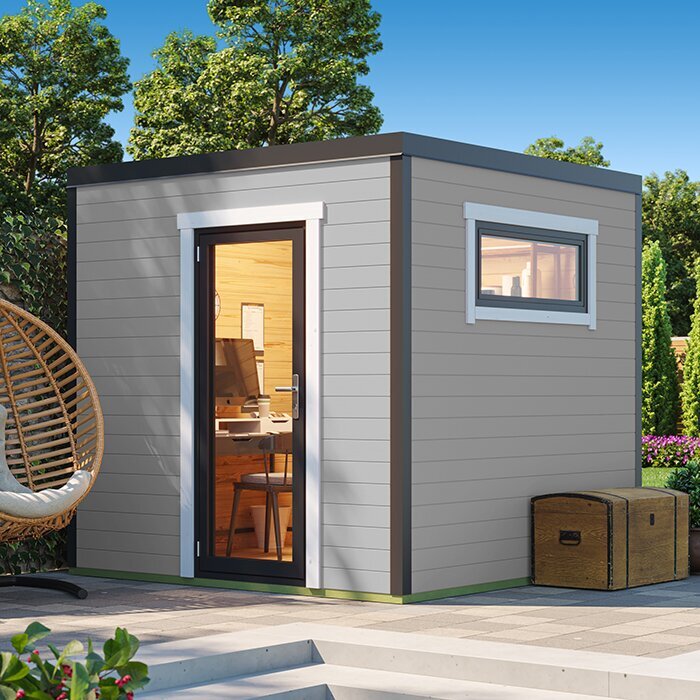
Glass doors are not a complete glazing specification. Look for the stated glazing material, pane construction and thickness, and whether the supplier gives safety-related information or care guidance. If children, pets or frequent movement near the doors are part of everyday use, check the relevant details for the exact configuration before ordering. This is a product-specific question, not one to settle by appearance. Specifications may differ between models or options, so make sure the information applies to the size and door arrangement you intend to buy. Do not infer the type of glass or its safety performance from a clear photograph or the general description of folding glass doors.
Check what the product information says about the glazing’s fit in the frame, seals, replacement panes and cleaning. These details help you understand upkeep and what to ask if a component needs attention, but they may not be shown in an image or short description. If the Veltor 1 listing is among the pages you are reviewing, check whether it states glazing information for the exact option; if it does not, do not assume the answer. Note whether the details refer to the door panes or to any fixed glazing as well. Where a safety question remains important for your intended use, get advice from the supplier or a suitably qualified professional.
Materials and ongoing care
Read the declared materials for the walls, frame, doors, roof and floor separately rather than assuming every part is made or finished in the same way. Product names and images can suggest a style without telling you exactly what is supplied. Check whether a surface comes finished, needs treatment before use or requires periodic maintenance, and whether any treatment mentioned is included in the order. If a particular look or material matters to you, look for it in the written specification and ask about options rather than treating a photograph as proof. When viewing the Orello 1 garden house page, use its stated details if available; do not read properties into the name.
Think about the garden conditions that may affect maintenance: exposure to rain, wind-blown dirt, leaves or frequent splashing can make routine cleaning more noticeable. That does not establish how a particular model will perform; it helps you ask what its finish, joints and door hardware require. Look for the manufacturer’s care guidance and any stated intervals, approved products or limits on treatment. Consider whether you can reach the outside of the glazing and the parts of the frame that need attention once the shed is in place. Include ongoing effort in your decision, especially if you want the doors to remain straightforward to operate over time.
Light, views and privacy
Glass changes what you can see through the front when the doors are closed, so consider the view from both sides. Stand in likely garden positions and note whether the shed would face a seating area, a neighbouring window, a path or a boundary. Think about whether stored contents would be on display and whether you would want to add blinds or another privacy measure. Do not assume an accessory is included: check whether the selected product option names it and whether it can be used without interfering with the folding leaves. If you are considering the Modano 1 listing, confirm that the chosen configuration has the glazing you want before using its details in a comparison.
Consider the direction of the glazed side and how light changes across the day and year. A position that looks bright at one time may feel different later, and reflections or direct sun may affect how you use a work surface or seating. Walk the garden at the times you normally use it, if possible, and picture where you might stand inside. If light control is a priority, check whether blinds or curtains are available for the selected door arrangement and whether they would obstruct the folded panels. The aim is not to predict an exact light level, but to make sure the glazing and orientation suit the use you have in mind.
Check the site and delivery route
Before ordering, understand the base and site requirements stated by the manufacturer. Check whether the building needs a prepared base, what condition the surface must meet, and whether the floor is supplied as part of the selected configuration. These are model-specific details, so do not assume a shed can be placed on any convenient patch of ground. If the site slopes, holds water or has limited access, ask the supplier or a qualified installer what needs to be assessed; avoid improvising a foundation from general advice. Confirm the exact preparation needed before work begins, so the product and site requirements can be considered together.
Plan for delivery and assembly access as well as the finished footprint. Measure gates and narrow passages, check for low branches or overhead obstacles, and consider where a delivery vehicle could stop and how packages would reach the site. Ask what is included in delivery, whether unloading or assembly is offered, and how much space is needed to put the parts together; do not assume a service is part of the purchase. If the garden tool shed M reaches your shortlist, check its stated delivery information and ask about anything not covered. Apply the same check to any option: compare the package and access requirements with the actual route through your garden.
What the order should specify
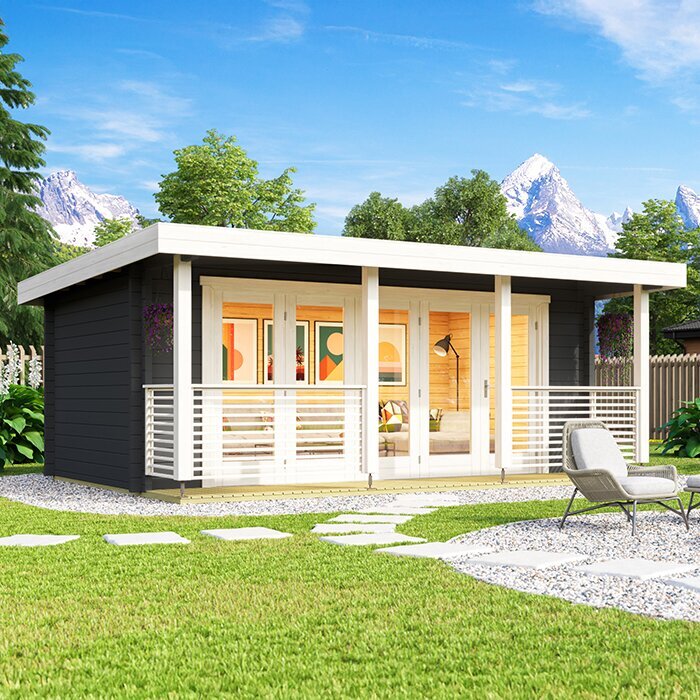
Turn the product description into a checklist of the exact configuration: model and size, external and internal measurements, clear door opening, folding direction, glazing details, materials, included floor and stated base requirements. Check whether photographs show optional items or a different size from the one selected. Note which elements, such as a finish, lock, floor or accessory, are included and which must be ordered separately. The garden shed S can be one of the pages you review, but compare only the details given for the selected option. A short product description is not a substitute for confirming the specification.
Before paying, compare the order summary with the product option you intended to buy. Confirm the selected model and variant, quantities, finish, accessories, delivery charges and stated delivery arrangements; if a detail is missing, ask rather than assuming it is standard. Keep a copy of the specification or any written clarification so the information you relied on is clear. If assembly is being arranged separately, confirm what it includes and what preparation is expected from you. These checks do not imply that every seller uses the same terms; they help ensure the order corresponds to the shed and door arrangement you actually chose.
Compare shortlisted sheds on the same basis
Compare a small number of candidates against the requirements you wrote down, using the same measurements and questions for each. Put essential facts first: clear opening, folded-leaf position, overall footprint, internal usable space and the glazing details that matter for your use. Then compare preferences such as the appearance of the frame or how much of the garden is visible through the front. Mark unanswered points as unknown rather than giving a model an assumed advantage. A simple side-by-side note often makes differences clearer than browsing separate photographs, especially when product names are similar or the doors are shown in different positions.
Choose the option that meets your practical requirements with the fewest unresolved questions, not simply the one with the widest-looking glazed front. Revisit how the doors would be used during an ordinary week: whether you can open them without shifting stored items, whether the approach stays clear and whether you can reach the glazing for care. If a crucial point, such as the actual opening dimensions or an included floor, is missing, pause until you have an answer and update the comparison. Once the layout, specification, site and order details make sense together, appearance can be the final tie-breaker.
Frequently asked questions
Are folding glass doors the same as sliding glass doors?
No. Folding leaves turn at hinges and gather to one or both sides; sliding panels move along a track. The space needed beside the opening and the clear width can differ, so check the diagram for the exact design rather than assuming the two arrangements work alike.
How can I tell if the opening is wide enough?
Measure the widest and tallest item you expect to move through it, then compare those measurements with the stated clear opening when the doors are folded back. Allow for any fixed panel or threshold, and check that the route through the garden and inside the shed is also clear.
Do folding doors always open across the full frontage?
No. A design may have a fixed section, or its leaves may gather at one or both sides. Look for an opening diagram and the dimensions of the chosen configuration. If the listing does not give them, ask for clarification rather than relying on a photograph.
What glazing details should I check?
Look for the stated glazing material, pane construction and thickness, as well as any safety-related information and care guidance. Check that the details apply to the exact option you intend to order. If a point matters for your intended use but is not specified, ask the supplier or a suitably qualified professional.
Can I put a garden shed on any base?
Do not assume so. Check the manufacturer’s requirements for the chosen model and whether a floor is included. If the site is uneven, holds water or otherwise raises questions, ask the supplier or a qualified installer what needs to be assessed before preparing it.
A suitable garden shed with folding glass doors is one whose opening, parked-leaf space and interior layout work for your actual tasks. Check the glazing and care information, confirm the site and delivery requirements, and make sure the order reflects the option you compared. When an essential detail is missing, get it clarified before committing rather than trying to infer it from an image. With those practical points settled, you can choose between the remaining designs on appearance.
