
Can a Garden Shed Be Used for Overnight Stays? What to Check First
Garden houses | Planning and ownership
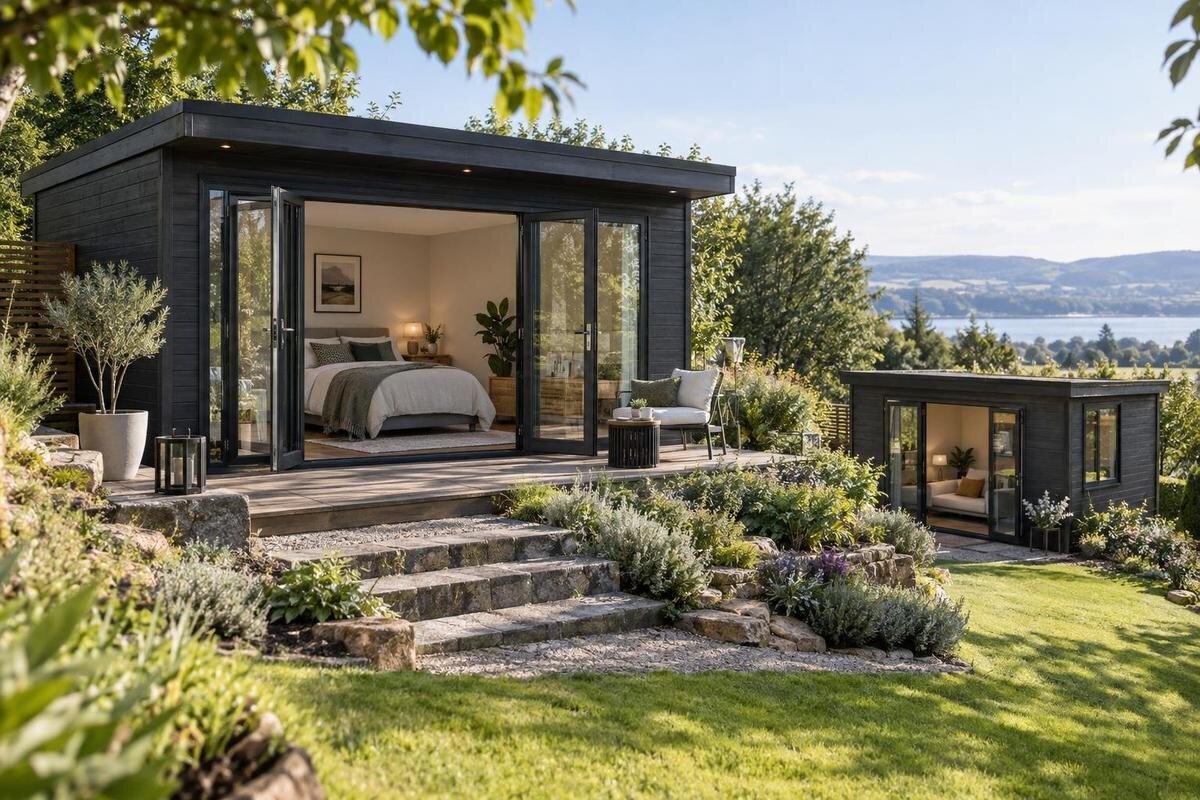
An overnight stay changes the question from whether a garden shed can stand in a garden to whether the particular building and site can be used as sleeping accommodation. A product name, an attractive picture or an occasional visit from family cannot settle planning permission, building regulations, insurance or the technical design. In Ireland, check the proposal against the address and the use you have in mind; do not assume that guidance for a storage shed answers the accommodation question. Before ordering or fitting out a structure, clarify the position with the relevant local authority, a suitably qualified building professional and the supplier. This guide explains what to ask and what evidence to gather.
An overnight stay is a different use from garden storage
A garden building bought for storing tools or furniture is being considered for a different purpose when someone sleeps in it. The word “shed” on a product page, a furnished interior or a previous one-off visit does not show whether that use is acceptable or whether the structure has been designed for it. Overnight occupancy raises questions about planning, construction, safe access, ventilation, facilities and insurance that may not arise for storage. That does not mean every occasional stay is automatically impossible; it means the intended use needs to be assessed rather than inferred from appearance or habit. The fact that a building fits in a garden does not settle how it may be used on your property.
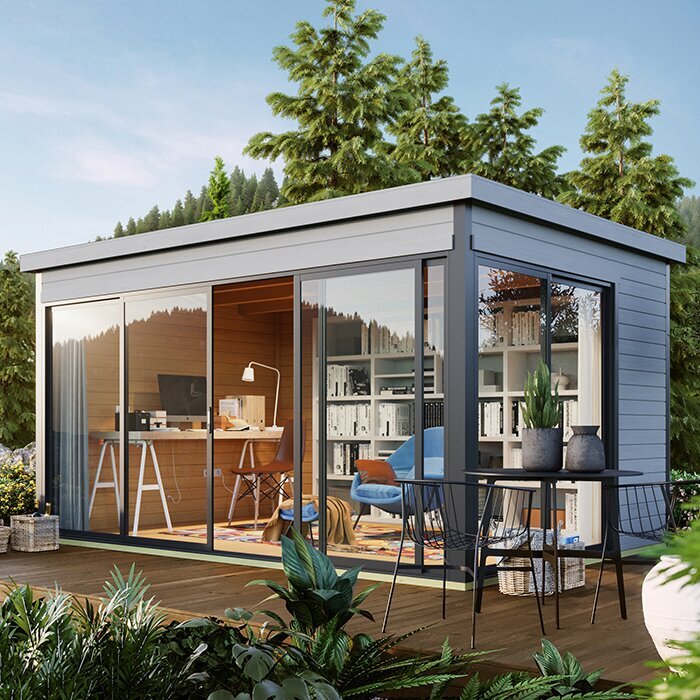
Be precise about your plan before asking for advice: a family member staying a few nights, regular use as a bedroom, year-round sleeping accommodation and paid guest stays are not interchangeable descriptions. State how many people would sleep there, how often, in which seasons, and whether they would cook or wash in the building or use facilities in the main house. These facts help planners and building professionals understand the actual proposal. If you are considering a particular model, identify it clearly: the Verdana 1 garden house page identifies a model, but its name alone says nothing about approval or accommodation performance. If you expect the pattern to change, say so now rather than relying on advice based on a different use.
Ask the planning section about the overnight use
Contact the planning section of the relevant local authority early, before placing an order. Do not assume that permission or guidance for a garden building used for storage also answers the question of sleeping in it. Ask whether the proposed occupancy is covered by the site’s existing planning position and whether any conditions, property constraints or designations affect the answer. Even if the structure is already standing, its intended use is part of the question to raise. A neighbour’s shed or an online example cannot establish the position for your address, because the site and proposal may differ.
Make the enquiry concrete: give the full address, describe who will sleep there and how often, and explain whether toilet, washing, cooking or other facilities will be shared with the house or provided separately. Supply the information the authority requests, such as a site plan or product drawings; do not guess at dimensions from photographs. Naming a candidate such as the Verdana 2 garden house listing helps identify what you mean, but is not a substitute for technical documents. Ask what formal process, if any, is needed and whether a reply is informal guidance or a decision. Keep written correspondence and check again if the design or intended use changes.
Check building requirements separately
Planning and building-control questions should be asked separately. A planning response does not, by itself, tell you whether the construction and proposed occupancy meet the applicable technical requirements. Ask the relevant building control authority or section which building regulations may apply to this specific proposal, what information is needed and whether a suitably qualified designer should assess it. Topics worth raising include structural design, thermal performance, ventilation, fire precautions, safe access, sanitation, drainage and any electrical or heating work. Their relevance depends on the building and intended use, so seek an assessment rather than applying a checklist from another project.
Before you buy, find out who will provide and review the drawings and technical details, and whether any notifications, inspections, certificates or other records are required. Ask the supplier what documents are available for the exact configuration and what is excluded from its supply or installation; a general product description may not answer those questions. You can identify a candidate as the Durano spacious garden shed page, then request supporting information for that model without treating the listing as an approval or technical assessment. Include any work planned after delivery in the discussion too, rather than assuming it can be added later without further checks.
Describe how the building will be occupied
Set a realistic occupancy brief, because “a place to sleep” can mean very different things in practice. A spare bed for a rare guest differs from regular use by a household member, extended seasonal stays or accommodation offered to visitors. Consider the number of occupants, length and frequency of stays, likely time of year, privacy, storage and access to the main house. Do not try to infer a legal category from these labels; give the details to the local authority and professional so they can advise on the actual arrangement. If you expect the pattern to change, include the likely future use. For guest stays, also consider bedding, cleaning, laundry and who will manage the space between visits.
Decide whether the building is intended only for sleeping or also for cooking, washing and toilet use. Each additional activity affects the layout, services, ventilation, maintenance and cost that need consideration, even where facilities are shared with the house. Ask the seller what use the manufacturer describes for the exact model and whether any planned fit-out is covered by the supplied information or support. When discussing an option, name it accurately, for example the Veltor 1 listing, and request answers for that configuration. A model name or category is not evidence that the building is designed for accommodation.
Plan a safe, practical route to the building
Evaluate the route between the house and the proposed sleeping space as carefully as the building itself. At night, occupants need to reach the entrance without relying on a route that is awkward, poorly lit, slippery or regularly obstructed. Think about guests unfamiliar with the garden, carrying belongings, using shared bathroom facilities or arriving in wet weather. Consider the likely occupants’ mobility and explain any particular access needs to the person assessing the design. Ask how the approach will remain usable and whether the arrangement provides reasonable privacy without isolating occupants from help. Safe access and access in an emergency should be discussed as part of the proposal.
Check how delivery, construction and future maintenance can reach the chosen position, and where any service routes would need to run. Make sure there is a practical way for installers and qualified tradespeople to work without blocking essential access around the home. Ask the local authority or designer about boundary, neighbour and site-specific constraints rather than assuming a distance or route that applies everywhere. Use actual drawings for comparison: the Orello 1 listing identifies a candidate model, but only relevant plans and documented dimensions can be assessed against the access route and site.
Ask about insulation, condensation and ventilation
A shed that feels acceptable during a short daytime visit may be uncomfortable for a full night, particularly if it is used in more than one season. Ask for documented information about the walls, roof, floor, windows and doors, and whether insulation or other upgrades are included, optional or unavailable. Look for details about the complete building rather than relying on a description such as solid timber, an image or the thickness of one component. A suitably qualified designer can assess whether the proposed enclosure and heating approach suit the intended use. Check which parts of any stated performance depend on optional components or work carried out after delivery.
Ventilation and moisture need attention alongside insulation. People sleeping in an enclosed space add moisture simply by breathing; cooking, washing and drying clothes can add more. Ask how fresh air is provided and how the design manages condensation, especially if windows are closed or heating is used. Opening a window when convenient may not be a complete answer for every layout, so have the approach checked by a professional against the intended occupancy. Request written product information for the precise option, such as the Modano 1 product page, and ask the supplier to identify any performance details it cannot confirm.
Review doors, windows and fire safety
Doors and windows affect more than appearance. Check which openings are included in the exact configuration, how occupants will enter and leave, whether the building can be secured, and how privacy will work after dark. Ask a qualified professional whether the proposed openings and any emergency exit arrangements are suitable for sleeping accommodation and comply with the requirements that apply. Do not assume that a window provided for daylight or ventilation is an appropriate escape route, or that a door layout is adequate simply because it works for storage. Have fire precautions and detection assessed for the planned use.
Glazing, curtains or blinds, locks and outside lighting also shape day-to-day use, but none should be treated as a substitute for a safety assessment. If guests must walk back to the house to use a toilet, consider whether their route is easy to find without compromising household privacy. A product title such as the wooden garden tool shed M listing identifies a garden product; it does not confirm that its openings, access or safety provisions suit overnight occupancy. Ask for drawings and model-specific information, then have the proposal reviewed rather than relying on a photograph.
Decide how washing, toilets and services will work
Be clear about facilities before choosing a structure. Will occupants use the house for a toilet, washing and drinking water, or do you want any of these in the garden building? Will there be cooking, hot water or a place to store food? Shared facilities may avoid some work but require a dependable, private route at all hours; separate facilities raise questions about water supply, drainage and waste management. Decide what is essential and what is optional, and ask the local authority and building professional how each arrangement affects the proposal. Do not assume that a building can be connected simply because services are nearby.
Ask the supplier to state in writing which equipment, service connections and installation work are included, if any, and what would need a separate contractor. A product page may identify the garden building without detailing the cost or feasibility of preparing a site or installing services. For example, the wooden garden shed S page identifies a model; it does not establish that water, drainage, electricity, heating or sanitary facilities are provided. Have qualified tradespeople assess connections and safety-sensitive work, and include their scope and fees in the project plan before ordering.
Confirm insurance, costs and ownership
Check insurance before sleeping in the building or inviting guests. Ask your home insurer or broker in writing whether the intended use affects cover for the building, contents, visitors, liability or the main home, and whether occasional, regular or paid stays are treated differently. Do not assume a standard garden-shed policy or household cover automatically applies. If you rent, share ownership or have a management agreement, check who has authority to approve the project and whether the arrangement imposes conditions. Keep the insurer’s response with planning and technical paperwork so the same use is described consistently.
Budget for the complete project rather than comparing only the structure: professional design and advice, delivery and assembly, site preparation, services, fittings, ongoing maintenance and any required changes can affect the final commitment. Request itemised written quotations and make clear which tasks each provider will do. If visitors will pay to stay, ask the local authority, insurer and a relevant tax or accommodation adviser whether additional requirements apply before advertising or accepting bookings. Also consider privacy, noise, lighting and access for neighbours; addressing those questions early can prevent avoidable disputes.
Keep a complete record before placing the order
Before placing an order, assemble one accurate pack: the property address, written description of occupancy, site information, planning correspondence, exact model and configuration, drawings, product data, proposed facilities and professional advice. Compare the supplier’s actual deliverables with the information used in planning and building discussions. If the door arrangement, size, openings, fit-out or use changes, tell the people who advised you and ask whether the earlier answer still applies. A product image or verbal assurance should not fill a missing technical detail; request it in writing or have a qualified professional specify what evidence is needed.
Set a clear decision point: proceed only when you understand the planning position, know which building requirements and professional checks apply, and have a credible route to safe access, ventilation, services and insurance for the intended stays. If an authority or designer says the proposal needs revision, settle that before ordering a structure that cannot readily be adapted. If the requirements remain unclear, pause and obtain further advice rather than treating delivery or completion as permission to sleep there. Keep the final documents accessible to anyone responsible for the property or the accommodation.
Frequently asked questions
Can I sleep in my garden shed for one night?
One night does not, by itself, confirm that the proposed use is permitted or that the building is safe for sleeping. Check the position for your address and describe the intended use honestly, including whether it is genuinely occasional or likely to become regular.
Does planning permission for a storage shed cover overnight stays?
Do not assume that it does. Ask the local authority planning section whether the existing planning position covers the intended occupancy and whether any conditions affect it. If you already have a planning decision, refer to the decision and approved information rather than relying on memory.
Are planning permission and building regulations the same check?
No: they are separate questions to resolve. Ask the planning section whether permission is needed for the proposed building and use, and ask the relevant building control authority what technical requirements and procedures apply. An answer on one does not automatically settle the other.
What should I check before using a garden shed for sleeping?
Check the planning position, construction information, ventilation, moisture management, safe access and exit, facilities, services and insurance. Have a suitably qualified professional assess the design for the intended occupancy. A bed, product photograph or general description is not evidence that these matters have been addressed.
Can I offer overnight stays to paying guests?
Do not assume that paying guests are covered by the same arrangements as occasional family use. Explain the intended operation to the local authority and insurer, and ask a relevant tax or accommodation adviser whether anything further applies. Resolve these questions before advertising or accepting bookings.
An overnight stay may be possible only when the proposed use, planning position, building design, safety arrangements and services all line up. Treat the structure as accommodation from the start, not as a storage shed with a bed added later. A clear description of who will sleep there and how it will operate helps the relevant professionals assess the right proposal; supplier documents can then show whether a chosen model can form part of a suitable solution. If an important requirement remains unresolved, pause the order and settle it before the first night.
