
Can You Put a Hot Tub on a Deck? What to Check First
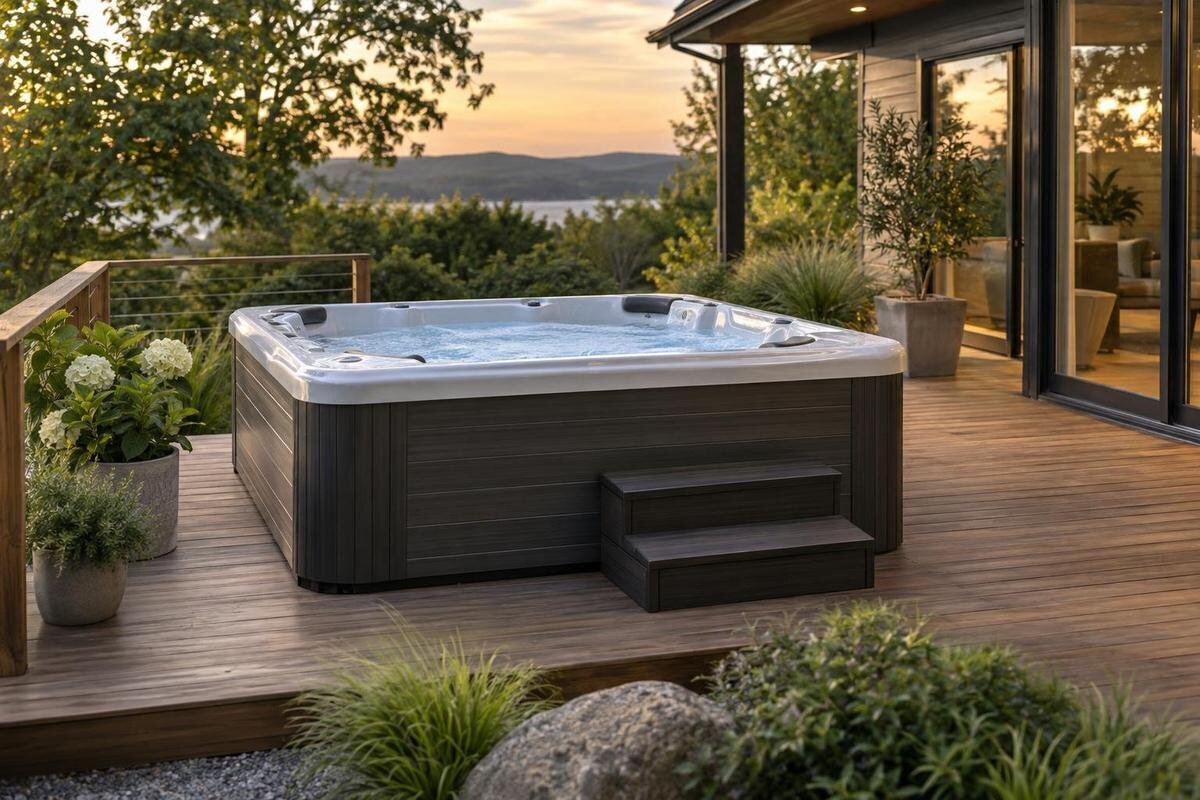
Hot tub site planning
An existing deck can look solid and still be unsuitable for a hot tub. The relevant question is not whether the boards feel firm underfoot, but whether the complete structure can carry the filled tub and the people using it at the chosen position. That requires information about both the hot tub and the deck, followed by a professional assessment of the load path from the surface to the foundations. Gather the deck records and model-specific instructions before ordering; appearance alone cannot provide approval.
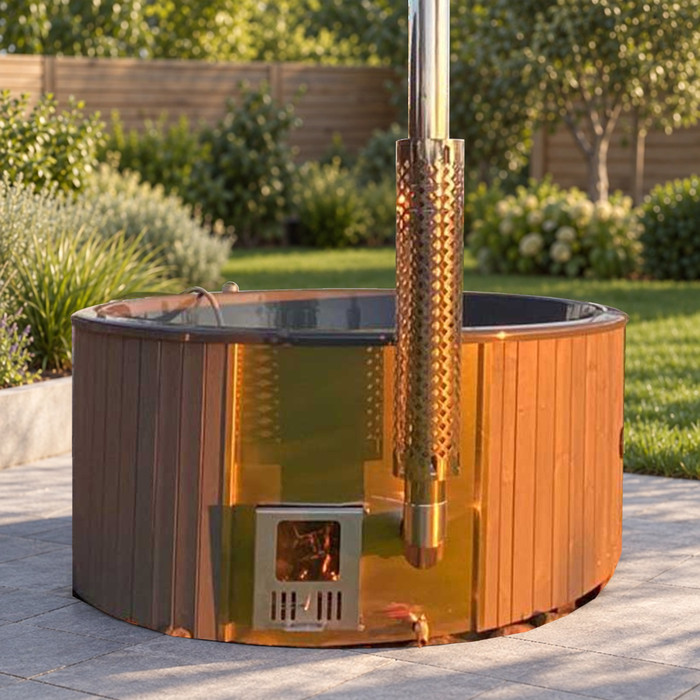
Before you buy 1
Why the combined hot tub load matters
A hot tub adds more than its empty shell weight. An assessment needs to account for the tub, the water at the specified fill level, equipment included with the unit and the people using it. Ask the manufacturer whether its stated filled or operating weight includes users, and precisely which fill level and supplied components the figure covers. Do not fill gaps with a rough estimate based on a capacity label or model name. The deck must be considered for the intended operating condition, not only while the tub is empty or being positioned. A figure that excludes water or users cannot, on its own, answer whether the deck is suitable.
The total is not the only issue: the load must enter the deck through the tub’s base or designated support points. Depending on the design, it may be spread across a base or delivered at particular points; neither arrangement should be assumed. A footprint shown in a listing does not explain how the load is distributed or what support surface the manufacturer requires. For the Bloomcabin Hot Tub Cove 2, the name identifies the product to ask about; obtain its current filled-load and support information before asking an engineer to assess it. The engineer can compare those details with the proposed position and the structure below, rather than treating the deck’s overall size as proof.
Deck boards do not show what lies beneath
Decking boards are the walking surface, not a stand-alone verdict on capacity. They span between joists, which transfer loads to beams, posts or other supports before the load reaches the foundations. A board’s apparent thickness, condition or firmness under ordinary foot traffic reveals little about the dimensions, spacing, span or condition of the members underneath. A deck may have been built for a different use, so its everyday feel underfoot cannot establish that it will support a hot tub. Replacing boards or adding another surface layer does not necessarily change how the frame carries the load.
Even on a large deck, the intended position may sit between supports, near an edge or over a part of the frame not suited to this use. Only an assessment of the actual layout can resolve that. A product page for the Bloomcabin Hot Tub Haven 6 can identify the model you are considering, but it cannot establish the capacity of your decking. Do not use another deck’s apparent success as a comparison: construction, condition, support spacing and foundations differ. Keep the product decision and deck assessment connected, while treating each as a separate set of facts to verify.
Before you buy 2
Records and measurements to gather for the deck
Before arranging an assessment, look for original deck drawings, construction or material specifications, invoices, handover notes and records of repairs or alterations. If appropriate, ask the original builder, previous owner or contractor whether they have documents, but do not assume records still exist or are complete. Note when the deck was built, what work has since been done and whether there have been concerns about movement, water damage or repairs. An earlier design or assessment may help explain the build, but it is not automatically proof that the current structure or a new hot tub position is suitable. Give the engineer documents as evidence to review, not as a substitute for an assessment.
Make a simple sketch showing the proposed tub position in relation to the house, deck edges, stairs and visible posts. Record useful measurements and photograph the surface and, only where it is safe and readily accessible, the underside and supports. Label what is known and what remains uncertain. Do not lift boards, dig around supports or enter a confined or unstable area to find details; ask the engineer what further inspection is needed. If you are considering the Bloomcabin Hot Tub Fjord 8, record that exact model name and request its current instructions rather than relying on measurements for a similar product.
What an engineer needs to assess in the structure
A structural engineer needs to assess the route by which the proposed load travels through the deck: from the hot tub’s support surface into the decking and joists, through beams and posts, and into the foundations or other supporting structure. Relevant information can include member sizes and layout, spans, connections, materials and condition, along with the location and characteristics of the foundations. These parts work together; a strong-looking beam cannot answer questions about its supports or connections. The engineer, rather than the homeowner, should interpret the evidence and decide whether a site inspection or further information is needed.
How the deck relates to the house also matters if it is attached, while a freestanding deck has its own arrangement of posts and foundations. The proposed spot must be assessed against the actual support layout, not just the deck’s overall dimensions. The hot tub’s manufacturer-specified base and support requirements are part of that comparison. Moving the tub could change which parts of the frame carry its load, so do not assume a position beside a wall, over a post or near a beam is automatically better. Give the engineer the precise location you intend to use, and ask before relocating it.
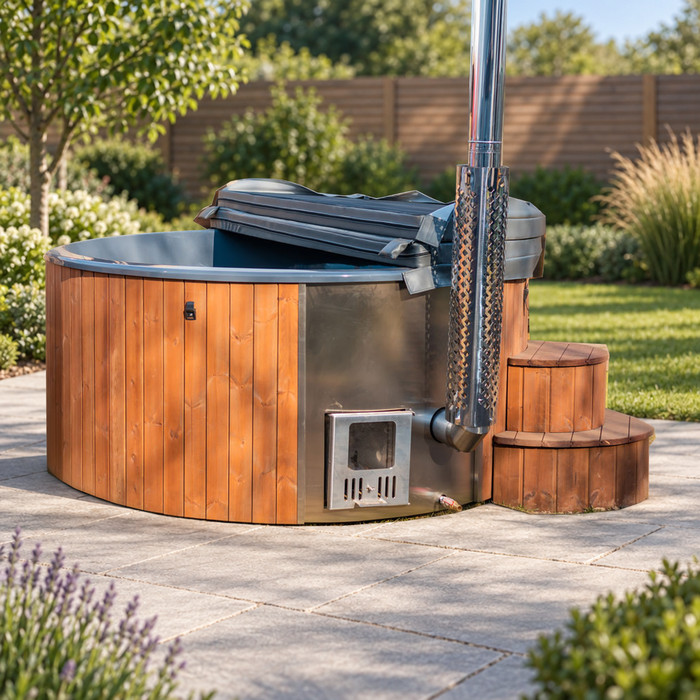
Before you buy 3
How deck condition affects the assessment
Visible wear is relevant evidence. Sagging, noticeable movement, loose or failed connections, split or decayed timber, damaged support members, corroded fixings, or posts that appear to lean or have settled are reasons to pause and tell the engineer. They are warning signs, not a way to calculate how much weight the deck can carry; a deck may need assessment even if none is visible. Do not test it by adding heavy objects, bouncing on it or trying an improvised load test. Record what you have noticed and where, using photographs taken from a safe position.
Condition can be difficult to judge from the surface. Water exposure, repairs, deterioration around a connection or problems at a foundation may be concealed, and a fresh-looking board finish says little about those areas. Share the deck’s maintenance and repair history, including anything you are unsure about. If a material detail cannot be established or a critical support cannot be inspected, the engineer may need more evidence before reaching a conclusion. A reassuring appearance is not a substitute for that work, and a homeowner’s visual check should not be used as approval to fill or use the tub.
Get the chosen hot tub’s weight and support details
Ask the supplier or manufacturer for the current technical information and installation instructions for the precise model and version you plan to buy. Request the empty weight and filled or operating weight, with a clear explanation of what the latter includes; ask for water capacity or fill information if provided. Confirm the overall footprint and, just as importantly, the underside support arrangement, surface requirements and any restrictions on where or how the tub may be supported. For the Bloomcabin hot tub Aurora 10, the catalogue name identifies the product only; it does not establish its weight, dimensions or suitability for a deck. Do not infer specifications from a model number or product image.
Check whether the figures cover the whole unit or exclude separate equipment, and ask the supplier to identify anything that must be considered separately for that model. If the manual uses terms such as empty, filled or operating weight without defining them, request clarification. The structural engineer needs the manufacturer’s figures and instructions, not a guess based on a nominal capacity or a general hot tub guide. Make sure the documents refer to the exact model selected. If your choice changes, obtain the new model’s information and ask whether the assessment needs to be revisited.
Before you buy 4
Prepare a useful brief for a structural engineer
Send the engineer one organised brief containing the deck records, sketch, measurements, safe photographs, known repair history and the chosen hot tub’s current manufacturer documents. Mark the exact proposed location and orientation, and state clearly which deck details remain unknown. If your shortlist is not final, identify each model under consideration rather than relying on one set of figures for several products. If you have shortlisted the Cove 2 hot tub, include its exact product name in the brief and attach the relevant specification sheet; a product page alone is not a technical assessment. A complete brief helps the engineer assess the actual proposal instead of making assumptions about the tub or deck.
Ask about relevant experience with timber decks, qualifications, whether a site visit is included and what the assessment will cover. Useful questions include whether the full route through the frame, connections, posts and foundations will be considered, and whether the proposed position is being assessed specifically. Ask what further inspection or manufacturer information is needed, how any conclusions or conditions will be recorded, and whether the engineer needs to inspect the deck before or after specified work. If a crucial dimension or foundation detail is missing, ask whether it must be confirmed first or whether the assessment can proceed on a clearly stated assumption.
What the assessment should confirm
Ask for a clear conclusion tied to the exact hot tub and position: suitable as proposed, suitable only if stated conditions are met, or not suitable on the information available. The conclusion should set out the assumptions used, identify any limitations and explain what must happen before the tub is used. It should also make clear whether the relevant supports and foundations were assessed or whether any area could not be checked. A general statement that a deck seems sound is not equivalent to an assessment of the intended loaded arrangement.
If the assessment names the Haven 6 hot tub, check that it refers to the same model and current manufacturer information you supplied; the model name alone does not settle the question. Where the engineer recommends alterations, ask for the required work and any follow-up inspection to be clearly described. Keep the written assessment with the product instructions and records of completed work. If the recommendation is conditional, do not treat that condition as optional or infer that a contractor’s completion of unrelated deck repairs satisfies it.
Before you buy 5
Options if the deck is not suitable as it stands
If the existing deck is not suitable, options may include an engineer-designed alteration, a redesigned deck or moving the hot tub to another location. Which option makes sense depends on the structure and site, so a list of added joists, posts or boards from a general guide is not a safe design. Strengthening the surface alone may leave the beams, connections or foundations as the limiting part. Have the engineer specify any structural change and how it relates to the intended load path; involve a contractor to carry out the work to that design rather than improvising a fix.
Choosing a different hot tub may help only if its verified weight, footprint and support requirements work with the assessed structure. A smaller-looking model, a lower number in its name or a different product photo is no evidence of a lighter filled weight. If you add the Fjord 8 to your shortlist, obtain that exact model’s current figures and ask whether a new assessment or amended conclusion is needed. A different location may be simpler than altering the deck, but it still needs to be checked for the chosen product and its manufacturer’s support requirements.
When to proceed with the deck installation
For an existing deck, wait for a model-specific structural assessment before ordering on the assumption that the deck will carry the tub. If the deck is still being planned, give the deck designer and structural engineer the hot tub’s confirmed technical information before the structure is designed. Choosing the product after the deck is built can leave the key question unanswered. If any details are not yet available, make that a clear purchasing condition and ask the supplier when they can provide them. A generic load limit cannot replace an assessment of your particular deck and proposed position.
Before committing, check that the paperwork matches the product you will actually receive, that the intended location has been assessed and that any specified conditions or alterations have been addressed. If you switch to the Aurora 10 hot tub, or move the tub to a different part of the deck, tell the engineer rather than assuming the earlier conclusion still applies. The product information, structural assessment and any required work should all refer to the same arrangement. If that cannot be established, choose another location or postpone the deck installation.
Frequently asked questions
Can I tell whether a deck is suitable by looking at the decking boards?
No. The boards are only the visible surface; joists, beams, connections, posts and foundations all affect how the load is carried. Boards that look sound cannot confirm the capacity or condition of the full structure. A suitably qualified structural engineer needs to assess the proposed hot tub and position.
Could an existing deck be strengthened for a hot tub?
Possibly, but the solution depends on the whole structure and how it transfers the load to its supports. An engineer should specify any alterations; adding boards or supports without a design does not establish that the deck is suitable. A different location may be more practical.
Should the hot tub sit directly above a post or beam?
Do not assume that this makes the position suitable. The load still has to pass through the connections and foundations, and the tub’s support arrangement also matters. Give the engineer the exact proposed position and the manufacturer’s support instructions before deciding where it should go.
Does a smaller-looking hot tub mean a lower load on the deck?
Not necessarily. A model name, appearance or nominal capacity does not establish its filled weight or how its base transfers the load. Compare current manufacturer information for each exact model, including its weight and support requirements, and have the proposed choice assessed.
What if I cannot get a filled weight or support details from the supplier?
Ask the supplier or manufacturer for the current technical information and installation instructions for the precise model. Tell the structural engineer which details are missing and ask whether the assessment can proceed. Do not estimate the missing figures or treat incomplete information as confirmation that the deck is suitable.
A deck is a potential hot tub location only when its complete structure has been checked against the exact filled unit and planned position. Gather the deck’s construction and condition records alongside the manufacturer’s current weight and support instructions, then obtain a clear professional assessment. If the engineer specifies work, complete it and confirm any required follow-up before use. If the structure cannot be verified or altered appropriately, choosing another location is the sensible way to move forward.
