
Child-Safe Windows: Restrictors, Handles and Opening Types

Planning Windows for Families
Picture a toddler moving a chair beside a window while an older child wants to air the room without help. Later, the bedroom still needs a quick change of air. No single fitting resolves all these situations. Planning must account for which openings are within reach, the permitted sash movement and the intended user. Locking handles, restrictors and fixed, single- or double-sash designs each answer a different need. Concentrating on the handle alone can miss the swing direction, nearby furniture, cleaning access and household ventilation habits. Assess every window and patio door room by room. The resulting arrangement should remain practical for adults without giving a child unsupervised access to a fully open window.
Pre-purchase check 1
Start with use, not accessories
Children living in a home does not, by itself, make every window equally concerning. Look instead at its exact position and how the room is used. Could the handle be reached from a bed, sofa, floor or stool that can be moved? Might the window be open during play, and is there a patio, roof or drop outside? An upper-floor opening calls for a different assessment from a small bathroom window set high in the wall. For each room, record the window level, furniture that can be climbed, normal ventilation routine and intended independent users. This keeps an obvious but minor feature from distracting attention from the real hazard.
Next, decide the job of that particular window. The living room might require quick changes of air and unobstructed patio access, whereas daylight alone may be sufficient in an inaccessible gable. Where opening is unnecessary, one possible design choice is: windows with fixed glazing. With neither a moving sash nor a handle, it removes operation at that point. It cannot provide the ventilation strategy or usable opening required elsewhere. Assign every element its main role—daylight, fresh air, view, passage or cleaning access—before choosing a restriction, a lock or a permanently closed design.
Opening restrictors: controlling the movement range
A restrictor sets the extent of sash movement. Because the hardware controls that movement, the outcome is not entirely reliant on an adult watching continuously. On a regularly used window, it may create a useful partial position that permits airflow without allowing full opening. Suitability still depends on the particular window, fittings and installation. Ask the supplier whether the device is always active, how an authorised person disengages it and how far the sash can then travel. Quoting a general distance in millimetres, without identifying the system and assessing the setting and risk, does not provide a sound specification.
Restriction changes maintenance as well as operation. Limited travel may make the glass awkward to clean; an intentional release can provide access, although it must not become the routine unsupervised setting. Consider whether curtains, fly screens, window boards or radiators interfere with useful airflow at the restricted position. For two sashes, determine whether both need equal control or one will serve as the normal ventilation sash. Write down the operating sequence, including the authorised person, the point at which protection is restored and the storage place for any key or release tool. That is more precise than placing a general request for child-resistant fittings.
Pre-purchase check 2
Understand the role of locking handles
While locked, this type of handle blocks its usual operation. It can suit a window that adults sometimes need to open fully but that a child must not operate alone. The lock does not, however, control a sash that has already been left open. The two fittings therefore deal with different decisions: authority to use the window belongs to the handle, while permitted movement belongs to the restrictor. Locking the handle only once ventilation has finished provides protection only after the sash is closed. Effective use consequently relies on a household routine that adults will follow every time.
Test a sample unit, or a closely comparable one, before settling on the fitting. Check whether the key operates comfortably, cannot easily be confused with another and leaves the handle position easy to recognise. When a carer must deal with several windows twice each day, agree a secure key location beforehand. A key routinely left in the lock defeats the intended control. Bedrooms, guest accommodation and shared rooms may justify different decisions even when the same handle is available. The window schedule should state the ordinary locking condition and identify the responsible adult, rather than recording only the fitting name.
Make opening style part of the protection plan
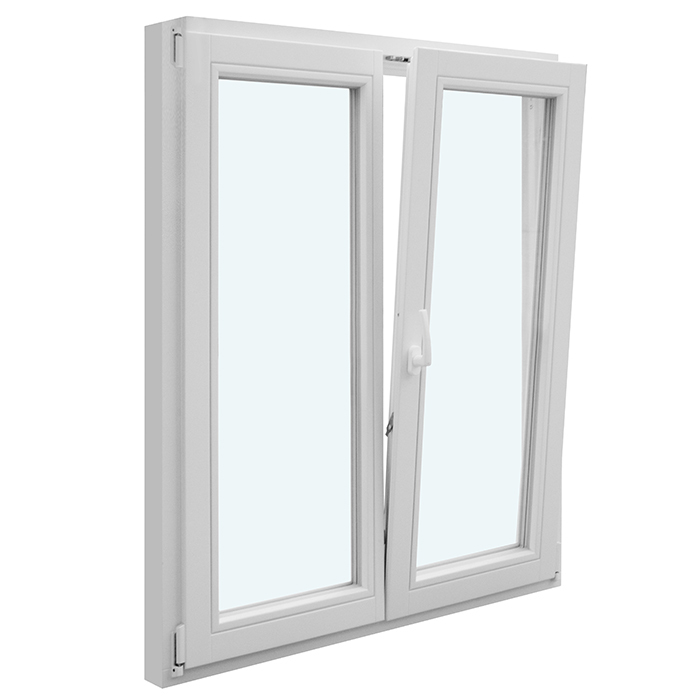
An inward-opening window swings into the room. Although the moving sash is obvious and furniture can deliberately be kept back, it must have clearance from beds, desks and shelving. A window with one inward-opening sash offers a straightforward arrangement, but safety for children still turns on the controls, permitted movement and furniture plan. A sash opening outwards preserves indoor space; outside walkways, balconies and interference with blinds or awnings must then be assessed. Direction of travel is one design consideration, not a substitute for suitable protection.
Two sashes introduce additional choices. Identify the everyday sash, decide whether the other is reserved for cleaning or a larger burst of ventilation, and establish how the protection works across both components. A two-sash window opening inwards may create a wide aperture, so the inactive sash and every handle position need an unambiguous operating rule. Have each intended condition demonstrated: secured closure, partial ventilation, adult-only full opening and restoration of protection afterwards. This reduces the chance of a different routine emerging after furniture is rearranged or the windows are first cleaned.

Pre-purchase check 3
Room by room, not one standard solution
In a child’s bedroom, a cot or bed, changing table, play furniture and a later desk may all become steps towards the handle. Consider how the room will evolve, not only the child’s present age. A high window can become accessible after a loft bed is introduced. In a living room, low glass, sofas and access to the patio may govern the decision; a bathroom may place greater emphasis on privacy and short periods of ventilation. Sketch each wall and mark the window, fixed furniture and items that can be moved. The drawing will show whether height genuinely prevents access or is easily overcome by nearby furniture.
For rarely used, high-level or architecturally unusual openings, fixed glazing can reduce complexity. A triangular and sloping fixed-glazed window is a closed configuration intended for triangular or angled forms. Do not choose it simply to sidestep the protection decision where the room still requires ventilation, maintenance or access through an opening. For every room, answer three practical questions: must this element open; must adults be able to open it fully; and should a child ever operate it? Those answers give a clearer basis for selecting fittings than a general description such as “family-friendly”.
Keep ventilation workable within the safety plan
A protection measure that discourages ventilation is unlikely to work well in practice. Agree how rooms will receive fresh air while children are present—for example, while an adult is actively supervising or by using a small set of chosen windows. Restrictors may provide a repeatable partial position, with locking handles controlling use between ventilation periods. The right arrangement varies with the purpose and size of the room and with the available openings. Do not wedge a sash with household objects or tie it with temporary cord. Such improvisation offers no substitute for compatible fittings and can leave everyone uncertain about the window’s actual condition.
Roof spaces require their own assessment. Opening a centre-pivot roof window involves a different motion from using an upright wall window. A bed, raised platform or sloping ceiling may also alter who can reach it. During specification, request a demonstration of the designed positions, the cleaning procedure and the compatible protection choices for the named model. Assign responsibility for closing it if conditions outside change. Any arrangement that adults routinely disable to save time will fail in ordinary family use. It is generally easier to maintain a dependable routine around a few designated ventilation windows than to alternate unpredictably among every opening.
Pre-purchase check 4
Review patio doors and low-level glazing separately
A patio door combines glazing with a frequently used entrance. Keeping its handle locked continuously may interfere with family life far more than locking a window that is seldom opened, particularly when the garden is used throughout the day. Decide whether children may pass through freely, only under supervision or not at selected times. That choice affects the handle, any travel restriction and the value of providing another window for ventilation nearby. Floor-level glazing is not automatically comparable to an upper opening: steps, outside surfaces, guarding, furniture and the intended route all influence the risk. Rehearse normal moments as well. What happens when an adult carries food outdoors and a child comes behind, when loading leaves the door open, or when somebody needs to operate it from the garden? These examples reveal whether the planned control will be bypassed. Treat use, supervision and re-securing as one complete sequence.
For a patio door with one inward-opening sash, keep the internal sweep free of toys and furniture so the leaf cannot strike an object and stop where it was not meant to remain. A lift-and-slide door or another sliding system has different controls; ask the supplier to explain the exact lock and operating sequence rather than assuming it behaves like a rotating handle. Decide whether children may pass through only beside an adult or may have supervised access appropriate to their age. Make that garden-access rule independently of the ventilation plan, avoiding reliance on the patio door as the household’s sole routine source of fresh air.
Coordinate the plan with architect, installer and family
On a new home, renovation or window-replacement project, treat position, sill level, fittings and furniture as connected decisions. Provide the architect, designer or competent installer with a schedule stating each room, configuration, direction of travel, intended ventilation position and access rule. Request confirmation that every chosen handle and restrictor suits the specified dimensions, hardware and added options. The project team should assess how the selection works within the full design and verify requirements relevant to the particular Irish project rather than relying on general web guidance. Include family members who will supervise, clean and ventilate the rooms. A drawing may look convincing while an inconvenient release or key position makes the arrangement impractical. Give each outstanding query an owner and a date, making clear whether the designer, supplier or installer must resolve it.
Unusual window shapes need early decisions. A fixed-glazed circular window contains no mechanism for opening and may suit a location intended mainly for light and visual effect. If a circular or bespoke-shaped element must open, its reach, controls and protection need a separate assessment. Finalise those choices before production instead of assuming that one retrofit will suit every design. Conclude the specification meeting with a plan that can be checked: identify the permanently fixed elements, restricted sashes, locking handles and any controlled exception for cleaning or full ventilation. File that record alongside the purchase documents and user guidance.
Pre-purchase check 5
Specify and check the order precisely
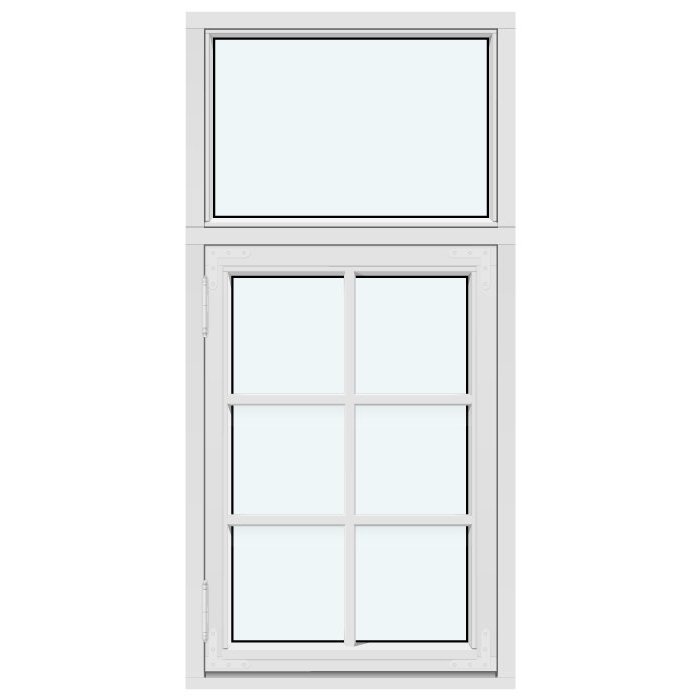
A name and product photograph cannot specify every ordering detail. A top-hung casement that opens outwards identifies the movement, but says nothing by itself about a restrictor, locking control or household procedure. List each function required in the quotation: the unique window reference, room, hinge location, direction, handle, lock, travel control, ventilation setting and method of authorised release. Obtain confirmation that the selected features are compatible. The paperwork should also say whether fittings arrive installed at the factory or require work later. For a larger order, carry the same unique references through the floor plan and schedule. A vague label such as “left window in child’s room” may mean different things to the site team and the quotation writer. Highlight variations between similar units and request a revised written quotation after changes. Do not approve manufacture on the basis of verbal additions alone.
Before signing off, check the schedule against both the floor plan and proposed furniture. Pay close attention to visually similar windows with different uses, such as a child’s bedroom and home office, an upper and lower storey, or a wall window and patio door. Verify the hinge location as viewed from inside because it affects both the available swing and access to the handle. Obtain the appropriate operation and maintenance information and agree how each fitting will be tested at handover. Bloomcabin provides a five-year guarantee for its windows and doors. Delivery is four to six weeks, subject to confirmation of the order. Neither term removes the need to verify the chosen technical arrangement.
Agree a clear routine after the installation
Use handover for a practical inspection of the whole arrangement. Operate each relevant window through every planned condition: ordinary closure, ventilation setting, restricted movement, adult-authorised full opening and locking again. Review the surrounding room at the same time. Could a new chair, basket or footstool now put the handle within reach? Do the curtain and fly screen still permit the intended operation? Everyday changes may invalidate the assumptions used during planning even though the window itself is untouched. Turn the window schedule into an inspection record and check each reference separately. Confirm that keys engage correctly, restrictors behave as specified and somebody has clearly demonstrated the controls. Attach every uncertainty or discrepancy to the individual reference, rather than writing one general note, so the installer can determine whether an adjustment, further instruction or another response is appropriate.
Teach every adult in the household the agreed procedure and choose a secure, consistent location for manuals and keys. Give children boundaries suited to their age, while ensuring adults have no reason to improvise with unprotected shortcuts when airing a room quickly. Maintain moving components as directed by the manufacturer. If something behaves unexpectedly, seek competent assessment instead of modifying the fittings. Repeat the review after a move, a change in furniture or the transition from toddler years to school age. Window safety for children is an ongoing combination of appropriate equipment and a routine that the household understands, follows and revisits.
Frequently asked questions
Can a locking window handle provide enough child protection?
The answer depends on what must be controlled. Locking the handle can prevent ordinary operation, yet it cannot reduce the gap if the sash has already been opened. If the aim is to maintain a limited position for ventilation, a compatible restrictor addresses that separate need. Ask the supplier to verify the proposed pairing for the particular window.
How do restrictors differ from locking handles?
A restrictor controls how much movement the sash has. A locking handle controls who can use the ordinary opening mechanism. They may work together, but each addresses a different part of the risk. Selection should reflect reach, cleaning arrangements, ventilation habits and the occasions when an adult needs complete opening.
Are fixed-glazed windows suitable for children’s bedrooms?
A fixed pane may be appropriate at a chosen point if no operable element is required there for fresh air, maintenance or passage. It removes the handle and moving sash at that location. Because a child’s bedroom still needs dependable ventilation, fixed glass should be coordinated with another suitable opening in the room rather than applied automatically to all its windows.
Should safety fittings be identical on every window?
No. Uniform hardware may make the routine easier to remember, but rooms present different uses and access conditions. A high stairwell opening, an accessible bedroom sash and a busy garden door do not serve the same purpose. Use one documented decision process while allowing the measures to vary with position, operation and the specified window.
Which details should I supply when requesting a quotation?
Provide the room and unique reference, dimensions, sash count and direction of opening, together with the intended ventilation setting and limits on use. Note furniture or objects that could aid climbing and explain the required cleaning and access arrangements. Request written confirmation that the proposed handle, restrictor and window hardware are mutually compatible. The supplier can then assess a defined specification instead of interpreting a broad safety request.
Next step
No accessory can make a window safer for children without clear decisions about reach, permitted movement and ordinary use. Begin by reviewing the room and realistic climbing routes. Then choose the configuration and state who may operate it. Restrictors, locking handles and fixed panes each have a distinct purpose. Recording the decisions in a window schedule reduces uncertainty at quotation, order and handover stages. After fitting, demonstrate and inspect the controls with everyone responsible for using them. The arrangement can then remain easy to understand, support necessary ventilation and be reviewed as the furniture or family routine evolves.
