
Garden Shed Delivery Day: How to Prepare Your Property

Garden shed delivery
Preparing for garden shed delivery means planning more than a clear patch of lawn. The vehicle needs an agreed place to stop, the shed or its packages need a route from that point, and the intended location must be ready to receive them. Those are separate checks: a driveway can suit a lorry while a side gate is too narrow, or the packages can pass through while the final spot is still obstructed. Before ordering, establish what the delivery service covers and compare its requirements with your property. A short, measured plan gives you time to resolve access questions before delivery day.
Confirm delivery terms before you order
Before placing an order, find out exactly what delivery covers. A product page may not settle whether the vehicle stops at the boundary, enters the driveway, unloads beside the house or leaves goods at another agreed point. It may also be unclear whether anyone carries packages through a gate to the garden. Ask the seller or delivery company to specify the drop-off point, unloading arrangement, any access limits and what help, if any, you need to provide. Check how you will receive a delivery date or time window and whom to contact if your access details change. Keep the answer with your order information; a clear agreement avoids relying on assumptions the driver may not share.
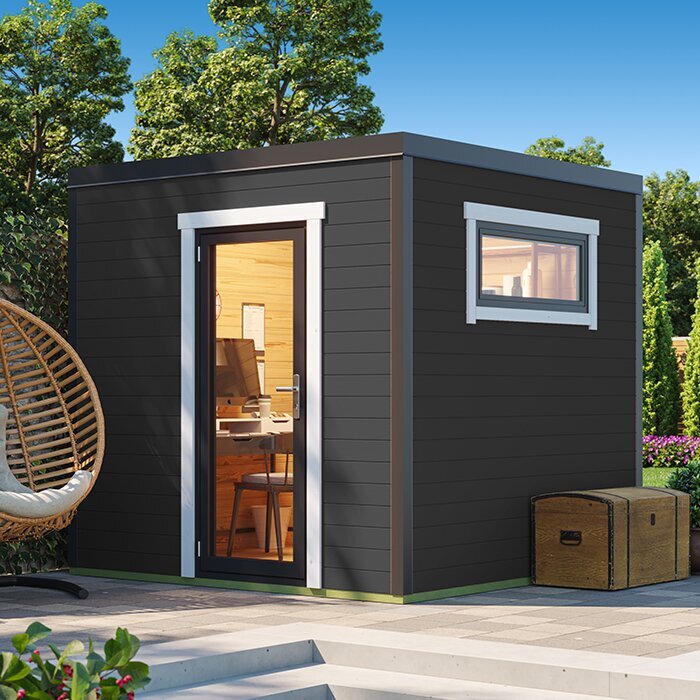
Compare the product information with your property rather than judging from a photograph or model name. Confirm the chosen item and quantity, use the published dimensions, and ask for package measurements if they are not available and the route is tight. The Verdana 1 garden house listing is one product page you can use when making that check; its title alone does not establish packed dimensions or delivery arrangements. Before confirming, check the delivery address, contact number and any gate or approach notes against the order details. If a practical question remains unanswered, raise it before dispatch rather than on the day.
Measure the route from the stop to the shed site
Walk the route from the proposed stopping point to the intended shed location, then measure its restrictions. Check the narrowest clear width at gates, walls and corners, the headroom under branches or other obstacles, and the room available to turn. Include hinges, latches and anything that reduces the opening when a gate is actually used. Note steps, changes in level, tight bends and any stretch that is too narrow for a person to pass while carrying something. A route that looks open from the patio may have a pinch point halfway along, so measure the full journey rather than the entrance alone.
Compare those measurements with the largest package or component information supplied for the selected shed, not just its finished footprint. Ask the seller whether it arrives as a kit or in another form, what the largest piece measures, and whether its orientation can be changed along the route. For narrow access, check this against the Verdana 2 garden house listing and the seller’s answers before ordering; do not infer its delivery format from its name or photographs. Write down the measurements and take a few clear photographs of the tight spots. That gives the delivery company specific information to assess, instead of a general description such as ‘the side passage is small’.
Check where the delivery vehicle can stop
Vehicle access is a separate question from whether the shed packages can pass through the garden. Identify where a lorry could stop without blocking the route you intend to use, and check the approach from the road, driveway entrance, gates and turning area. Look for low branches, overhead obstructions, narrow entrances, parked cars and surfaces that may restrict where the vehicle can go. Ask the delivery company what access details it needs and whether the planned stopping point is acceptable for its vehicle. Do not assume a large vehicle can turn or reverse into a driveway simply because a car can; confirm the route with the provider before you rely on it.
If space at the property is limited, describe the approach accurately and offer measurements or photographs before the delivery is arranged. Include where the vehicle can wait or turn, whether the driveway is shared, and any access gate that must be open; ask the provider to confirm the handover location. A listing such as the Durano garden shed page identifies a product, but the name does not tell you what vehicle access or unloading its delivery requires. Agree an alternative stopping point only if it is practical for your route and has been accepted by the delivery company. Keep the agreed location in your order notes so everyone knows where the handover is meant to happen.
Set out the exact place for the shed
Choose the final site before delivery is due, and compare it with the dimensions and siting information for the exact item you order. The receiving area needs to be clear enough for the shed or its packages to be placed as agreed; allow for the access needed to reach it, not only the shed’s footprint. Check that garden furniture, bins, planters or washing lines will not obstruct the spot, and consider whether the shed’s doors or access points will have the room described in the product information. If an installer is involved, confirm separately what condition the site must be in when they arrive. Delivery and installation are not automatically the same service.
Mark the intended corners with removable markers and walk the route once more from the agreed vehicle stop. This makes it easier to see whether a gate, path or stored item blocks the last few metres, and helps you give consistent directions on the day. Check that the marked area is the one intended in your order rather than a similar-looking place elsewhere in the garden. For example, the Veltor 1 garden house listing can be reviewed alongside your site measurements, but the product name does not establish whether a particular spot is suitable. Where the base or installation requirements are unclear, ask the supplier or installer what must be ready, rather than guessing from the delivery plan.
Clear the full path and working area
Clear the whole route in advance, including the approach from the vehicle stop and the space around the final drop point. Move bins, bicycles, garden tools, pots, toys, loose hoses and outdoor furniture; check that gates can open fully and that nothing narrows the passage after they swing. Remove only what you can move safely and without damaging property. If a hedge, fixed structure or other obstacle would need work, deal with it well before the delivery date or ask about another route. Keep a continuous clear path, rather than shifting clutter into a different pinch point. A quick walk with the measurements in hand can reveal anything that was missed.
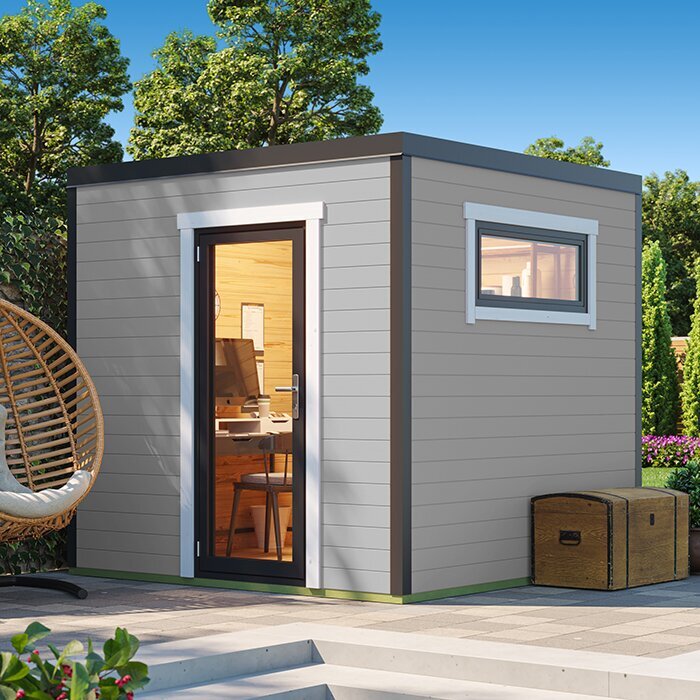
Give particular attention to items that are normally left out of sight, such as a hose across the side passage, a gate stop, a low branch or a step hidden behind a pot. Compare the clear route with the package information you have obtained, then open and close each gate to make sure it stays usable. A page such as the Orello 1 garden house listing is useful as an item reference when you check the order, but an image cannot confirm that your access route is clear or that the packages will pass. If a planned route is shared with another household member, explain the delivery window and ask them to keep it unobstructed too.
Account for changing ground and weather
Check the path and stopping area again close to the day, because conditions can change after you have measured them. Rain may leave grass or an unpaved section soft, while wet leaves, mud or loose material can make a walking route awkward. Clear loose debris and make sure any gates or temporary coverings will not trip up the handover. If the vehicle would need to cross soft ground, or packages would have to pass over a slope, steps or another difficult section, tell the seller or delivery company beforehand and ask whether the planned route is acceptable. Do not assume that a route suitable in dry conditions will remain suitable after a change in weather.
Send useful, current information rather than waiting until the driver arrives: a brief description, measurements and photographs of the approach can make the issue easier to understand. Ask whether the vehicle can stop on the firm area you have identified and whether the agreed package route still works in those conditions. The Modano 1 garden house listing does not describe your ground or access, so apply the same property check to whichever model you select. If you are unsure whether the site or route can safely take the vehicle or materials, do not try to calculate it yourself; ask the provider or an appropriately qualified professional what needs to be checked. Agree any changed drop-off point in advance.
Agree a delivery window and household contact
Ask how the delivery date and any arrival window will be confirmed, and make sure someone can receive updates on the day. Give the delivery company a working phone number and keep your phone nearby, but do not plan around an exact arrival time unless one has been confirmed. Tell everyone in the household when the route and drop point need to stay clear. If children, pets or visitors may be in the garden, arrange for them to be elsewhere during the handover and follow any directions from the delivery team. If you cannot be there yourself, agree in advance who can answer questions and make decisions about the agreed drop-off point.
Check that the order record matches the item you intend to receive: model, quantity, address, recipient and any agreed access note. Keep the confirmation and relevant product page easy to find if the seller asks for an order reference or needs you to clarify what was selected. For instance, keep the wooden garden tool shed M product page beside your confirmation while checking those details; it is the order record, not a similar product image, that should identify your purchase. If the recipient is someone else, give them the seller’s contact details, the planned stopping place and any limits on where the goods may be left. That avoids an unnecessary call to you while the vehicle is waiting.
Reserve a suitable place for the handover
Do not assume that a delivery team will carry the shed all the way to its intended place. Before the date is confirmed, ask precisely where packages are handed over, what unloading help is included and whether the customer needs to provide assistance. If goods may be left at an agreed point, reserve enough unobstructed space for the package information the seller has provided, without blocking a doorway, driveway or access route. Keep the receiving area separate from the place where you plan to assemble the shed if that is a different location. The aim is to have a clear, agreed handover point; moving or storing the kit afterwards is a separate task.
Check the expected package dimensions or other handling details for the exact model, and ask how much space to leave if this information is missing. Review the wooden garden shed S listing as part of identifying the product you have chosen, but do not use a model label or photograph as a substitute for the seller’s package and delivery information. If the handover point is behind a gate, confirm whether it is reachable under the agreed service rather than expecting the driver to make an exception. Keep access to your home and the vehicle route open while packages are being unloaded, and avoid marking a temporary area that has not been agreed with the delivery company.

Handle the arrival and handover calmly
When the vehicle arrives, point out the agreed stopping place and the route to the agreed handover area before unloading begins. If something has changed, explain it first rather than sending the driver down an unfamiliar or obstructed path. Keep other people away from the working area and follow the delivery team’s directions; do not attempt to handle an item that the team is moving unless they say that help is appropriate. Make sure the packages are put where agreed, not merely where the route becomes inconvenient, and speak up politely if the proposed point differs from what was confirmed. A calm, clear handover is easier when one person gives directions.
Check the delivery paperwork against the order details and follow the seller’s process for acknowledging receipt. If packaging is visibly damaged or the quantity appears different, note what you can see and ask how the issue should be recorded and reported; policies can differ, so do not rely on assumptions about signing or opening packages. Take photographs of visible damage if appropriate and keep them with the order reference. If the packages are left at a different point, record where and when, then tell the seller through its stated channel. Keep communications factual and retain any response, especially if the condition of the delivery affects the next arranged work.
Have a plan if the route is not ready
If the route is blocked, the ground has changed or the vehicle cannot reach the agreed point, pause and contact the delivery company or seller. Explain the specific problem—such as a locked gate, parked vehicle, unexpected roadwork or a route that has become soft—and ask what options are available. Do not assume that the driver can wait, use a different entrance or leave the packages somewhere else. Avoid last-minute changes that would put people, the vehicle or goods at risk. A quick call before the vehicle is sent, if you learn of the problem early, gives the provider a chance to advise you rather than leaving the driver to decide on arrival.
If delivery cannot go ahead as planned, ask whether a new date or an alternative handover point can be arranged and whether any change affects the order or delivery cost; the answer depends on the terms that apply, so get it confirmed. Record the agreed plan and update the person receiving the shed, then remeasure or clear the affected section before the next attempt. If the obstacle is permanent—such as a restricted gate or difficult approach—resolve the delivery method before rebooking, not just the timing. Do not accept a workaround unless it is safe and practical for your property. The plan is complete only when the provider and household understand the same route and destination.
Frequently asked questions
What should I measure before arranging delivery?
Measure the whole route from the vehicle’s agreed stopping point to the shed site, including the narrowest gate opening, overhead clearance and any tight turns. Compare these with the largest package dimensions supplied for the item, rather than relying on the finished shed’s footprint.
Will the delivery team take the shed to its final position?
Do not assume so. Ask where the goods will be unloaded, whether moving packages through the property is included and whether you are expected to help. Agree the handover point before the delivery date.
What if the delivery vehicle cannot enter my driveway?
Tell the seller or delivery company about the access limits before the vehicle is sent. Share measurements and photographs, then agree a practical stopping and handover point. Do not rely on the driver finding an alternative on arrival.
Does the base need to be ready on delivery day?
Ask the supplier or installer what must be ready for the exact service you have arranged. Delivery and installation may be separate, so confirm whether the goods are only being handed over or whether any siting work is included.
What should I do if the route is wet or soft?
Recheck the route and tell the delivery company if conditions have changed. Ask whether the planned access remains suitable, and agree an alternative if needed rather than improvising a route on the day.
A smooth delivery depends on matching the order to the property: agree where the vehicle can stop, measure the full route, clear the agreed handover area and make sure the final site is ready. Confirm package and unloading details with the seller rather than relying on a model name or photograph. When the delivery company and the person receiving the shed have the same plan, access problems are more likely to be identified before the vehicle arrives.
