
Garden Shed Foundations on Clay Soil: Questions to Ask Your Installer
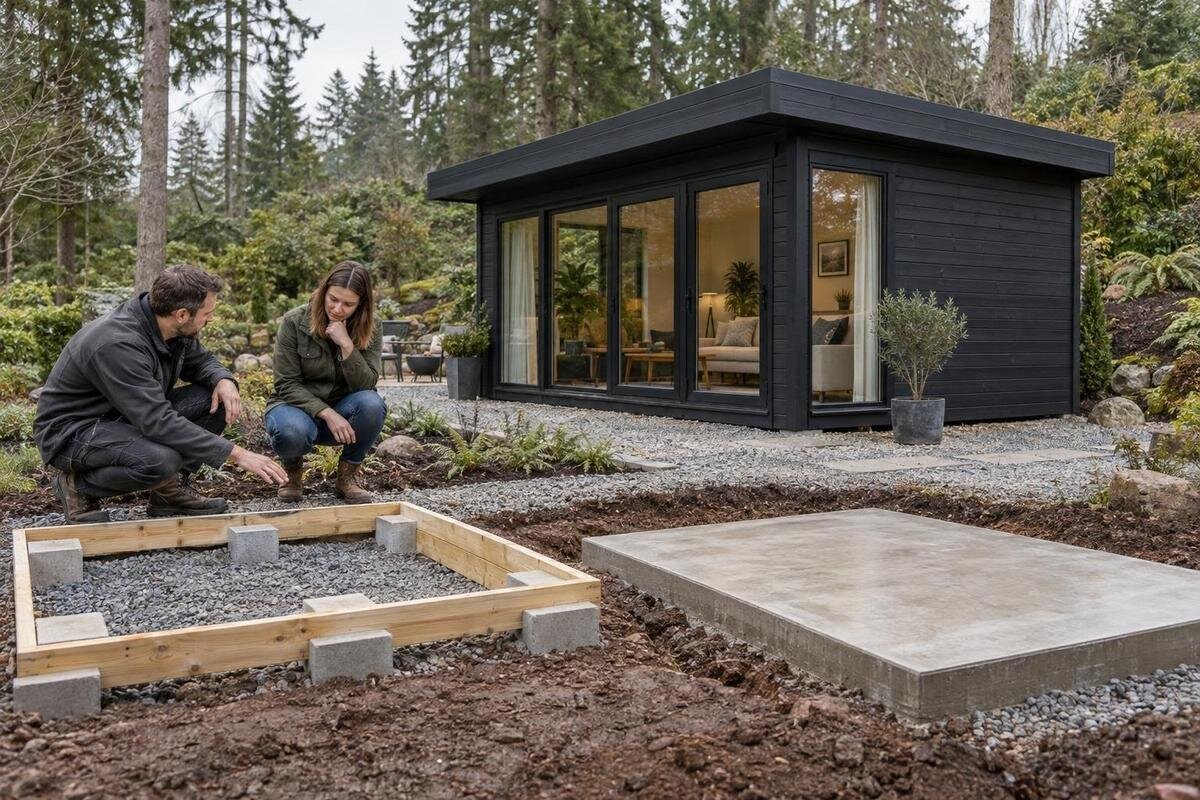
Garden shed planning
When you're planning garden shed foundations on clay soil, the soil label alone cannot tell you which base is right. Conditions can vary across a plot, and moisture, previous ground use and the exact building all matter. A useful installer conversation covers what was observed, why the proposed support suits the site, how water has been considered and what the quote includes. Use these questions before agreeing the work. This is planning guidance, not a foundation design; if the ground remains uncertain or the proposal raises structural concerns, ask what further assessment from a suitably qualified professional is needed.
Why clay soil calls for a site-specific foundation discussion
Clay is a broad soil description, not a complete ground assessment. Its composition and depth can vary across one garden; the top layer may conceal earlier fill, disturbed ground or a different material below. Some clay soils drain slowly, and some change in volume as moisture levels change, but those behaviours are not identical at every site. The label on a soil map, or a handful of damp earth, cannot by itself tell you what support a shed needs. Ask the installer what they mean by clay in their recommendation: are they responding to something observed on your plot, a known ground condition or an assumption that still needs checking?
A good discussion separates what is known from what remains uncertain. Ask what was directly inspected, what information came from you and what cannot be established from a surface visit. If the installer can describe the reasoning in plain language, you can assess whether the recommendation fits your situation rather than a standard answer for every clay garden. Where they cannot establish what lies below or explain how that uncertainty affects the proposal, ask whether further ground assessment or specialist advice is appropriate before you commit. The aim is not to diagnose soil yourself; it is to understand what the installer is relying on, who will resolve open questions and whether the price reflects them.
What to prepare before asking for a quote
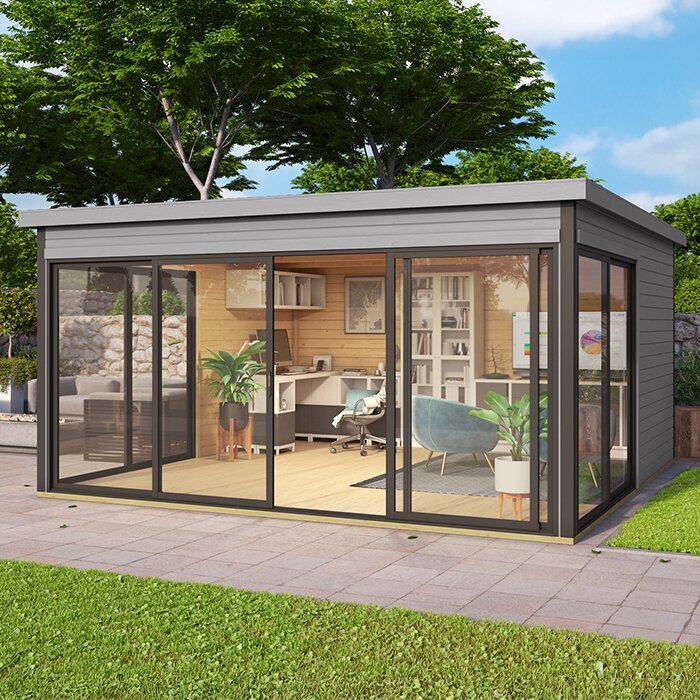
Before requesting a firm price, settle which garden shed you are planning to buy, or make clear that the figure is provisional. Give the installer the exact model name and any dimensioned drawing, assembly instructions or base requirements supplied by the seller. A product image or catalogue title is not enough to confirm the footprint, support arrangement or fixing details. If you're considering the Verdana 1 garden house, use the precise listing to identify the item, then ask the seller for the installation documents the installer needs. Do not infer foundation requirements from a name or picture.
Note the intended position, the direction the building will face, how the site is currently used and what you expect to store in it. Tell the installer about known ponding, soft patches, earlier ground works or repairs, and any change to the planned location. If you are considering more than one position, mark each one; a different spot may raise different ground or water questions. Photographs can help explain the setting, but do not replace an assessment where one is needed. Ask which documents or measurements they want before visiting, what can be estimated from them and what must wait until the ground has been seen. This helps prevent an early budget figure being mistaken for a final, site-specific proposal.
What should the installer inspect on site?
During the visit, ask the installer to walk the proposed footprint and explain what they are looking at. Relevant observations may include changes in surface height, places that stay wet, existing paths or paving, disturbed soil, nearby drains and the condition of the ground where supports are meant to sit. These are prompts for discussion, not a checklist that lets you approve a foundation yourself. Ask which observations affect the recommendation and whether any feature is merely being noted or requires an allowance in the work. Check whether the assessment covers the whole proposed position or only the parts that were accessible.
Make the location specific rather than discussing the garden in general. Show the intended outline, access route and nearby walls, boundaries, trees or known services that may constrain the work, then ask whether those features affect the assessment. If the Verdana 2 garden house is on your shortlist, give the installer its exact model identity and any supplier information for it; an estimate for an unspecified shed may rest on different assumptions. Ask the installer to list what they have not verified about the ground and what would prompt a further check before work begins. If a part of the site could not be inspected, find out how that limits the estimate.
Why has this base approach been proposed?
Ask the installer to name and describe the proposed base in ordinary terms: what it will consist of, how it will support the garden shed and why it is considered appropriate for the conditions observed. Calling it a solid base is not an explanation. You should be able to follow how the recommendation relates to the ground, the intended use and the supplier's installation information. Ask whether it relies on particular ground conditions being present and what would change if they are not. Find out which alternatives were considered and what site-specific reason led to the quoted approach.
Different base types can involve different preparation, materials and practical trade-offs, but their names alone do not show which is right for your plot. Ask whether the choice reflects ground suitability, access, the work included or another constraint, and what the alternatives would mean for the agreed scope. For a selected Durano garden shed, as for any model, ask the installer to connect the recommendation to the exact supplier documentation and the assessed position. The product identity does not establish a suitable foundation. Request enough detail to distinguish the proposed work from a generic allowance, without trying to design the base yourself.
How has water been considered?
Water deserves a direct question because it may linger near the surface on some clay sites, but its effect on a proposed base depends on the location. Ask where rainwater and surface run-off are expected to travel in relation to the footprint, whether the installer observed standing water or wet ground, and what part of the proposal addresses that observation. Ask for the intended route to be explained in plain terms rather than accepting that drainage will be fine as a complete answer. The point is not to specify a drain or change garden levels yourself; it is to establish whether water has informed the foundation decision.
Tell the installer about places where water collects after rain, nearby downpipes or hard surfaces, and any seasonal changes you have noticed. Ask whether those details alter the proposed work, whether any related work is included in the price and who is responsible if the issue extends beyond the base. If Veltor 1 is your chosen garden house, show its intended position and the supplier material for that exact model; discuss water at that location rather than assuming a product listing settles the matter. If the proposal depends on separate drainage work, ask who will assess it and whether it must be resolved before the base is agreed.
How will the base match the shed's footprint?
The base and the building need to be planned together. Ask which dimensions the installer is using and whether they come from the selected model's current plan or from a preliminary estimate. Clarify what the quoted outline represents, how it relates to the shed's walls or support points, and how the position will be confirmed before work starts. You do not need to calculate tolerances yourself, but you do need a clear answer about the dimensions and level required for this installation. If the seller's instructions and the installer's proposal appear to conflict, ask them to resolve that before either party treats the base as ready.
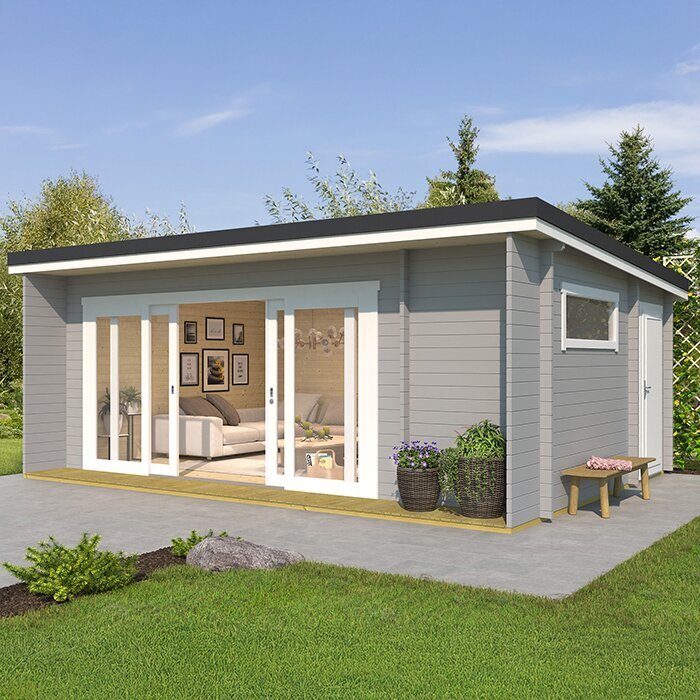
Discuss orientation and access too: where doors will open, whether the planned approach will remain clear and whether the base position matches how you expect to use the shed. This helps avoid agreeing a correctly described base in the wrong place. A page such as the Orello 1 garden house listing identifies a product but does not, by its name or image, confirm measurements. Ask the seller for the current drawing and give it to the installer. Then ask which dimensions and clearances the quote covers, and whether any part of the proposed layout remains provisional.
What ground preparation and access are included?
Ask what needs to happen to the ground before the base is built and who has priced each part. The quote should make clear whether clearing the surface, removing existing material, dealing with unsuitable or unknown ground, bringing in material and taking spoil away are included, excluded or provisional. Avoid accepting an unexplained phrase such as prepare as required; ask what the installer has allowed for and what would count as extra work. You are not looking for a DIY excavation plan. You are clarifying the boundary between the agreed job and conditions that may not be confirmed until work begins.
Access can change the practical scope too. Tell the installer about narrow gates, steps, soft routes or other constraints, and ask how the crew and materials will reach the location. If more work becomes necessary once the surface is opened, ask who will explain the issue, how a price change will be agreed and whether specialist advice is needed before the job continues. If you are ordering the Modano 1 garden house, include that exact model in the job documents, but do not let its name stand in for a ground-preparation allowance. Record exclusions and the process for approving additional work before booking.
How will the shed connect to the base?
Clarify how the completed base is intended to meet and secure the garden shed. Ask which parts of the manufacturer's installation instructions govern that connection, what fixing or support details the installer is assuming, and who supplies any components not included with the shed. An attractive surface finish does not prove that the building will be supported as required. Ask what must be in place before assembly, whether the person installing the shed is the same as the person building the base, and how responsibility is divided if different people carry out the work. Find out what checks or handover information are included when the base is finished.
If the seller's paperwork is incomplete or ambiguous, ask for a clear answer before dimensions and fixing details become part of the work plan. For the garden tool shed M, the model identity helps everyone discuss the same item, but the installer still needs the relevant current instructions rather than guesses from a photograph. Ask who will check the planned support and fixing arrangement against those instructions, and how any discrepancy will be resolved in writing. Keep a copy of the version used with the quote. If product details change after ordering, tell the installer before the base work proceeds.
What should the written quote state?
A useful quote should let you understand the work, not just its total. Ask it to identify the base approach, the footprint and location assumed, preparation included, materials and labour covered, any water-related work, waste removal, access assumptions and exclusions. It should also say what information the price is based on and which matters remain provisional. You are not seeking a technical design by email; you are checking that the price matches the scope discussed on site. If an essential point has only been explained verbally, ask for it to be added to the written description before you compare proposals.
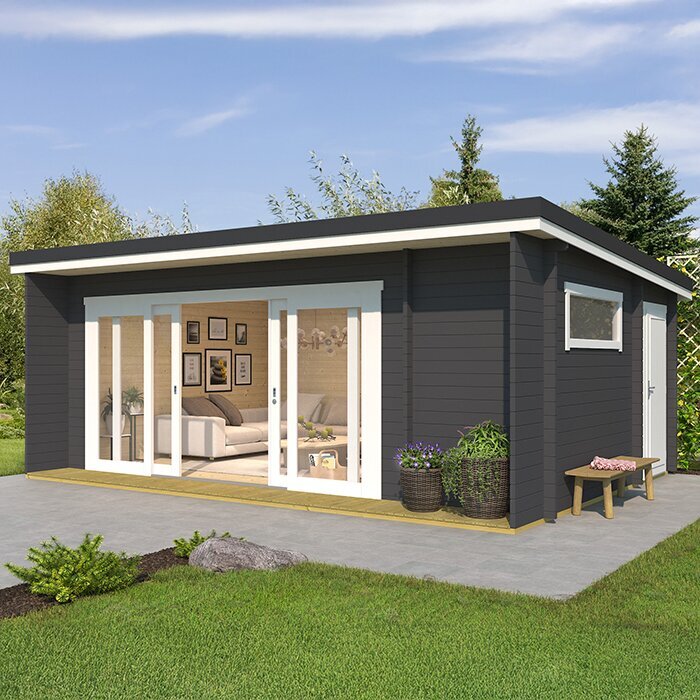
Line up the assumptions before comparing estimates. One installer may have allowed for different ground preparation or taken responsibility for a different part of the project. Ask how extra work will be described and approved, whether shed installation is included and what sequence is assumed for delivery and base construction. If the selected item is the garden shed S, put that exact model on the quote and ask what product information informed the scope. A lower or higher figure alone cannot tell you whether the same work is covered, so compare inclusions and exclusions as well as totals.
When should you ask for further assessment?
Pause if the answer is simply that clay is always fine or always unsuitable, or if no one can explain why the suggested base fits the conditions at your site. Other reasons to seek clarification include open-ended ground preparation, a visibly wet area that is ignored, conflicting advice about the shed's support requirements or a position the installer has not been able to inspect. Ask what information would resolve the uncertainty and whether input from a suitably qualified ground or structural professional is needed. The right person depends on the question; do not accept an improvised calculation where professional assessment is appropriate.
Before deciding, write down what was observed, what base is proposed, why it suits the site and selected shed, and what remains outside the quote. Add who is responsible for preparation and water-related work, along with the documents used to confirm the building's requirements. If the installer cannot answer one of these points, agree who will follow it up and whether the price or schedule must wait. Keeping those answers with the quote gives you a fair basis for comparison and helps ensure an assumption is not mistaken for an agreed part of the job.
Frequently asked questions
Can a garden shed be installed on clay soil?
Clay soil does not automatically rule out a shed, but the label alone cannot establish that a standard base will suit. The installer needs to consider the ground at the chosen position, the building's installation information and how water behaves there. If those points cannot be assessed confidently, ask what further qualified input is needed.
Does clay soil mean I need a concrete base?
No single base material follows from the word clay. Ask the installer to name the proposed approach, explain which site observations support it and say why other options were not chosen. A general preference for one material is not a substitute for a reasoned proposal for your plot.
What should a quote say about clay ground?
Look for the ground conditions and assumptions the quote is based on, the proposed foundation approach, preparation included, water-related work, exclusions and how unexpected conditions will be handled. Ask for vague allowances to be explained in writing, so you can compare the work covered rather than just the headline totals.
What information should I send the installer?
Share the exact shed model, current drawings and installation instructions from the seller, the proposed position, intended use, access constraints and anything you know about wet or previously disturbed areas. Photos can help, but ask whether a site visit or further assessment is needed before a firm quote can be given.
Should I order the shed before arranging its foundation?
There is no universal sequence. Coordinate ordering, delivery and base work with the seller and installer, and find out which product details are needed before the base is agreed. If ordering would commit you to a model or dimensions, resolve missing installation information first rather than relying on assumptions.
A sound decision is one you can trace from the ground observed to the base quoted: the installer has identified assumptions, explained how the selected garden shed will be supported, considered water and preparation, and stated who handles unexpected conditions. That gives you something concrete to compare when buying without asking you to act as the foundation designer. On clay, the useful answer is the one grounded in your actual plot and documented for the building you have chosen.
