
Glazing Choices for Aluminium Greenhouses
How to Select Glazing for an Aluminium Greenhouse
A greenhouse covering shapes warmth, moisture balance and usable daylight around your crops, while its surface affects day-to-day care. Before settling on a material, consider what you grow, how exposed the garden is and how much cleaning or temperature management you want to do. The sections below examine polycarbonate panels, toughened safety glass, glass with a self-cleaning coating and reflective film through their practical strengths and limitations.
Polycarbonate: warmth with everyday toughness
Polycarbonate has become a familiar option for greenhouse walls and roofs because it is both light and robust. Gardeners at any experience level can use it, and suppliers offer solid single-wall sheets as well as layered, multi-wall panels. Both provide a degree of insulation, and in the latter, enclosed pockets of air slow the movement of heat through the sheet. That construction can soften indoor temperature swings when the weather turns cool. If warmth matters, examine panel structure as carefully as appearance.
Resistance to impact is another reason to consider this plastic glazing. A polycarbonate panel tolerates hailstones and wind-carried fragments better than an ordinary glass pane, reducing the likelihood of sudden fracture. It still admits the daylight crops need, while suitable grades filter damaging ultraviolet radiation. Those properties can lessen weather and sun exposure risks for plants and make the material practical in gardens where conditions are unsettled.
Some polycarbonate is sold with an added UV-protective layer. Besides screening plants from the most harmful radiation, that finish helps slow sunlight-related deterioration of the sheet itself. The result can be a longer service life and a more controlled place for cultivation. Check the selected option so its protection suits your greenhouse.
Toughened safety glass: brightness, strength and visibility
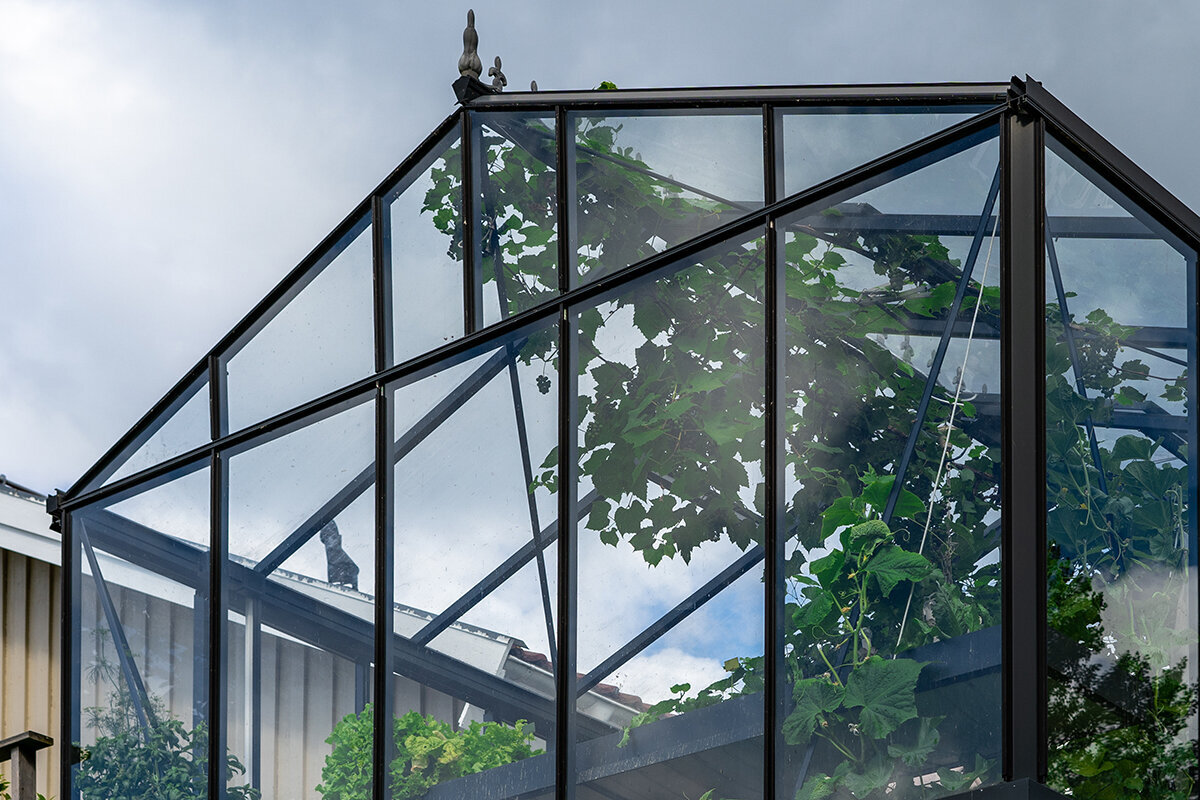
Toughened safety glass creates a very clear greenhouse envelope and is valued for its combination of transparency and strength. Generous daylight at leaf level supports photosynthesis; for crops that favour bright conditions, this may translate into more vigorous development and improved harvests. It also gives an open view into and out of the structure. Gardeners who put light quality ahead of maximum insulation may therefore find this glazing especially appealing.
Heat treatment makes the pane considerably more resistant than standard glass to routine knocks and changing temperatures. Should a break occur, it crumbles into small, relatively blunt pieces instead of forming long, sharp splinters. That failure pattern offers an important safety benefit in a busy growing space, where tools, pots or people can strike the glazing accidentally. Its ability to handle repeated warming and cooling also lowers the chance of cracking under normal greenhouse fluctuations.
Clarity does involve a trade-off. A toughened pane generally holds less heat than multi-wall polycarbonate, so closer control of air exchange or supplementary heating may be needed during sharp temperature changes. Plan ventilation and warmth together: either one, used without regard to the other, can push conditions away from what a crop prefers.
Self-cleaning glass: less routine washing
Self-cleaning glass uses a specialised finish on a toughened pane to make dirt easier to manage. Sunlight triggers a photocatalytic action in the coating, breaking down organic grime that would otherwise cling to the surface. The treatment also discourages dust, dirt and water from remaining on the glazing. Because deposits accumulate more slowly, clear surfaces can be maintained with fewer hands-on cleaning sessions, leaving the gardener more time for growing tasks.
This assistance is useful where rain is frequent or airborne dust regularly settles on the roof and sides. Instead of washing every few weeks, you may be able to leave longer gaps between cleans while still preserving good transparency. More of the daylight that reaches the structure can then continue towards the foliage. In an Irish garden, factor in shelter, coastal or inland exposure, drainage and controllable ventilation.
The name should not be read as a promise of zero upkeep. Persistent marks, leaves and other debris can still call for an occasional wipe or rinse. Price is another consideration, since coated self-cleaning panes may carry a higher price than ordinary toughened glass. Weigh that potential premium against the time and effort you expect to save over the life of the glazing.
Reflective film: redirecting sunshine and conserving warmth
Reflective film adds a mirror-like surface intended to send incoming sunshine towards other parts of the growing space, improve its distribution and reduce warmth escaping. This approach is mainly relevant where winter days are dimmer or the setting is cool enough that each gain in light and retained heat matters. By altering the path of available sunshine, the film can illuminate foliage that might otherwise receive less light and support photosynthesis during darker periods.
When reflected rays travel back across the enclosure, overall brightness can rise and illumination may become more even. Crops with demanding light requirements may benefit, and the extra usable sunshine can help extend cultivation beyond the main season. Better distribution, together with retained warmth, may also make internal conditions steadier and support productive growth.
Reflection is not automatically helpful for every crop. Plants adapted to shade or gentle, indirect light can struggle if the intensity becomes too great; tender foliage may scorch and the enclosure may overheat. Assess the crop mix before applying film, and be ready to moderate excess sunshine. A material selected to brighten one part of the year must still be manageable on clear days.
Match the covering to your garden
Start with the garden rather than a favourite material. Note seasonal sun, exposure, the crops on your list and the amount of maintenance that feels realistic. Choose polycarbonate when insulation and resistance to knocks carry the most weight. Consider toughened safety glass when clean views and abundant daylight matter more. A self-cleaning coating can reduce washing, whereas reflective film may suit a dimmer or cooler position where recirculating light and conserving warmth would serve the planting plan. In Ireland, shelter, secure siting, ventilation and drainage deserve particular attention, especially in exposed Atlantic conditions.
No covering wins on every measure. Rank durability, thermal performance, transparency, cleaning effort and reflection according to your own priorities, then compare the specifications of the actual products available. Think too about whether the chosen plants prefer strong sun or filtered light, and how you will manage moisture and temperature across the seasons. A decision grounded in both the crop plan and the site should give the greenhouse a useful, pleasant role in the garden for years.
