
What Greenhouse Frame Colour Works with Your Home and Garden?
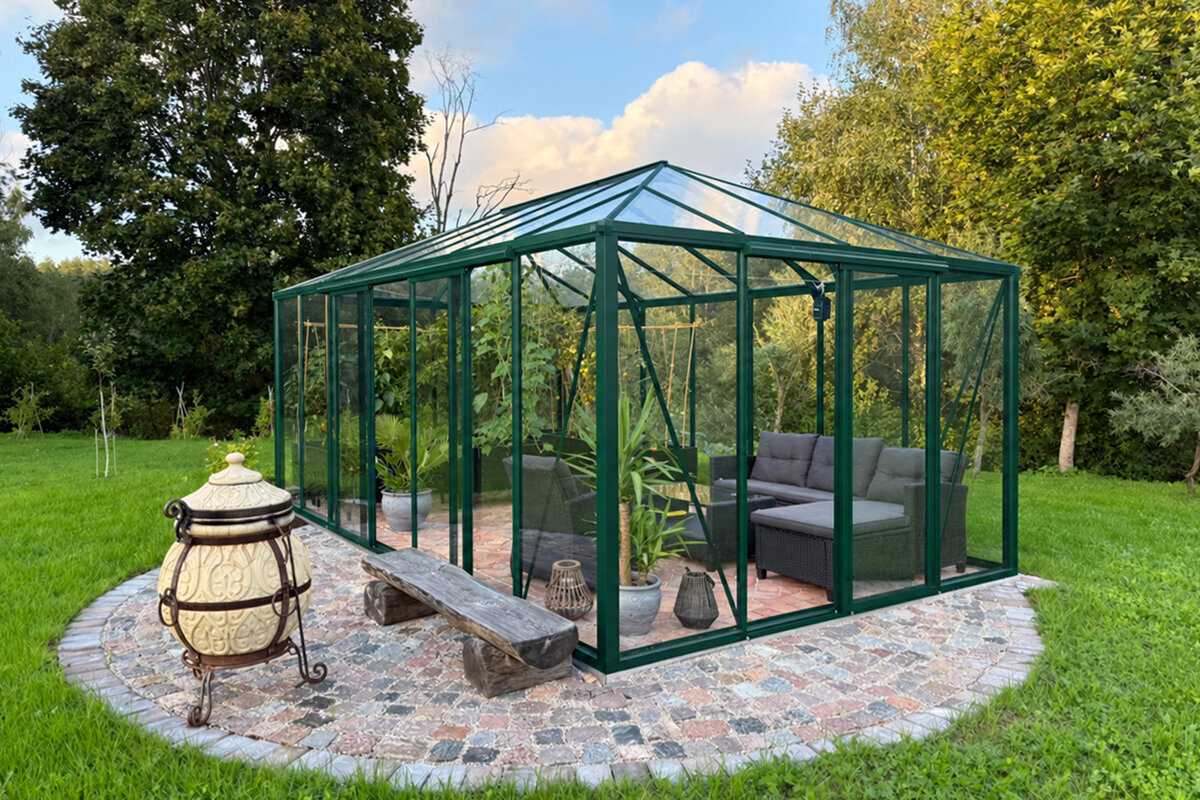

Planning colour into a greenhouse garden
How can frame colour express your garden while complementing the house?
Use remains unchanged by frame colour, yet the finish has a major visual effect outdoors. Weighing the wall finish, routes, terrace, greenery and daylight together leads to a result with lasting coherence.
Because the greenhouse stays in view across the seasons, its finish merits the same thought as siting, form and glazing. It might sit quietly within what is already there, introduce purposeful contrast, or act as a fine visual boundary between foliage and built form. Rather than following fashion, judge how those relationships work in this particular garden.
Study each finish as conditions shift, from early light and bright noon to an overcast day, always including the principal view. Background matters as well: hedging, pale render, open grass and stone paving all change the impression of a frame. Hold up samples, take photos and assess the scene through the windows of the house.
Start by deciding what job the greenhouse should do visually. A feature building benefits from a firmly outlined frame; a structure intended to sit back can borrow quieter cues from windows, roof trim and foliage. A finish will not rescue a poorly planned scheme, though the right one can tie a sound proposal together.
01 · Reading the frame colour
How profile lines shape the structure
Slender members divide the transparent planes of a greenhouse, so changing their colour noticeably alters the whole composition. Dark profiles trace each pane; paler metal attracts less attention. Green occupies a middle ground, relating an engineered frame to its planted setting. None of these approaches wins in every garden: the appropriate effect is the one that delivers the intended level of emphasis.
Judge the frame at both close range and from afar. Nearby, the eye notices hardware, junctions and the finish on each profile; across the garden, the overall outline takes over. Strong colour can anchor a detached greenhouse, yet may add clutter to a compact plot that already contains many details. Its purpose should be to clarify proportion, not fight it. Pay particular attention where uprights, eaves and roof bars meet, because colour becomes visually concentrated at those intersections. Ordering the network of lines can make a bold finish seem unexpectedly refined. Against a strongly different background, however, the same finish will command more attention.
- From farther away, a dark finish sharpens the outline and makes the greenhouse geometry more legible.
- Paler metal and green profiles sit back, giving the glazing, vegetation and wider scene more prominence.
Where a detached greenhouse needs an emphatic outline, look at a standard Classic greenhouse defined by its frame that gives the garden architecture an ordered presence.
02 · Working with black
The precision of a black frame
Choosing black turns the frame into an architectural element rather than a quiet background. Against clear glass, it picks out the bars, doors and roof geometry. Anthracite joinery, dark eaves, black lamps or steel seating can provide a visual link at the house. It also makes a fresh pairing with light render, gravel and pared-back beds. The effect is intentionally expressive, not neutral.
A richly planted setting can still accommodate black, especially when the design needs firmer structure. Light blossom and terracotta stand out around the dark lines, which remain distinct against deep foliage. First check whether nearby sheds, fences or walls already form a heavy dark mass. If they do, preserve open vistas and introduce paler ground finishes or loose, airy planting. The result is strongest when the linear character of the greenhouse finds a subtle response elsewhere. There is no need to repeat black on everything: a small number of carefully placed details can make the building read as a considered part of the garden.
- Use only a few dark echoes—perhaps lamp fittings, chair legs or pots—to connect the frame to its surroundings.
- Check the view under cloud too; black often appears stronger there than in sunny garden photographs.
Beside a dark or clearly articulated façade, a full-size regular black lean-to greenhouse can carry those lines onwards with measured definition.
03 · Working with green
Let green settle into planting
Choose green when the intention is for the building to settle among the garden rather than announce itself. It relates readily to lawn, hedging, woody plants and herbaceous beds, even though the shades are not identical. This quality often feels effortless in country, romantic and well-established plots. You still see the construction, but the evolving colours of the plants tend to claim more attention through the year.
Success depends on which greens and materials surround it. Evergreen hedging produces one relationship; silver leaves, brickwork and stone produce quite another. Assess the dominant foliage tones instead of treating green as a single automatic garden answer. A cold or exceptionally dark backdrop may create surprising contrast. Some breathing room beside a hedge also protects daylight, keeps a maintenance route open and prevents the outline disappearing. The spacing itself becomes a design tool: close foliage visually absorbs more of the frame, whereas a wider gap reveals its silhouette. Adjust that distance according to whether planting or constructed form should lead the view.
- This finish is useful where shrubs and borders enclose the position and visual calm is the objective.
- Set green beside wood, brick or gravel for an easy material relationship, without forcing every component into the same shade.
In a mature planted garden, a standard Classic greenhouse in green can show its form while still feeling comfortably settled into the setting.
04 · Working with natural aluminium
A quiet, lightweight look in aluminium
Natural aluminium introduces a clean, bright material note. Because it has neither black’s graphic force nor green’s botanical association, it can suit an understated scheme. It relates readily to pale walls, concrete, stone, galvanised details and simply finished paving. The construction appears visually light, leaving reflections and the movement of surrounding plants to animate the view.
Do not assume that a neutral material disappears. Sun can make aluminium flash brightly, while timber cladding brings out its cooler cast. Compare all neighbouring finishes at once, including downpipes, sills, balustrades, containers and hardware. Mixed metals need not be identical; coherence matters more than a perfect colour copy. Nearby silver details can quietly connect with the frame, so include them in the assessment. When the house contains several noticeably different metal finishes, choose and repeat a limited combination on purpose. That will usually look more resolved than chasing a match that never quite succeeds.
- Stone, concrete and glazing pair naturally with aluminium in light, pared-back, material-conscious gardens.
- Allow for reflections: depending on daylight, the structure may seem brighter or quieter than a colour sample suggests.
Along a pale, straight house wall, a full-size regular aluminium lean-to greenhouse can read as an airy continuation of those finishes.


05 · Relating frame and house
Take cues from the house exterior
Take colour cues from the building, beginning with the smaller features rather than the broad wall surface. Joinery, entrance doors, eaves, gutters, balustrades and awnings often repeat a useful accent. Black can answer dark window frames; aluminium can converse with silver metalwork; green can ease the meeting of built and planted areas. A connection through just one or two details is sufficient.
Next, assess the terrace because it is commonly the place from which the greenhouse receives the closest attention. Decking, tiles, brick paving and upholstery each establish a different palette. Contrast may define the sitting area and create depth, but a terrace already busy with colour and texture may call for a quieter frame finish. Test samples directly on the actual surface instead of judging them on a device. Then step indoors. The window opening and garden beyond act like a permanent picture; profiles that seem subtle outside may become strong dark marks when seen from the room. Review it from the chair or doorway you use most, not only while standing beside the structure.
- Echo one or two small house details; copying the colour of an entire wall is neither necessary nor always helpful.
- Assess views from living rooms and the patio, as these shape your everyday experience of the greenhouse.
For a self-contained structure where garden and terrace meet, the standard Classic garden greenhouse provides a legible shape with freedom to adjust its position.
06 · Style through the seasons
Seasonal planting reshapes the palette
Garden colour is never fixed. New leaves and blossom brighten spring; summer thickens the canopy; autumn warms it; winter exposes branches and hard landscaping. Green profiles can merge more closely during leafy months, while black traces a decisive outline once stems are bare. Aluminium changes noticeably with sky and surface moisture. Instead of judging the finish in one favoured season, consider when the garden is occupied and which months dominate the views from the house.
Let the garden’s underlying style inform the decision as well. Formal layouts readily accept disciplined repetition and decisive contrast. Looser, wildlife-friendly planting often sits better with finishes that remain secondary. Either green or black may work in a cottage garden; brick, edging and path materials will determine which feels more convincing. Establish a visual order by deciding whether the greenhouse is scenery, centrepiece or link. Its appearance through the year is shaped by nearby flowers, leaves and ground surfaces as much as by the profiles. Treat those changing surroundings as part of the composition, while giving the building a clear purpose in every season.
- If time permits, make a photographic record of the proposed position in different seasons before settling on the finish.
- Use nearby beds to develop the palette, but reserve practical clear routes for cultivation, cleaning and upkeep.
For a flowing connection between living space and seasonal planting, a full-size regular Lean-To greenhouse connected to the house offers a natural basis for the design.
07 · Scale, backdrop and position
How finish changes apparent scale
Scale changes the effect of any finish. On a large glazed elevation, dark profiles break the expanse into readable sections; on a small house, they make every structural line conspicuous. A pale frame gives the glazing a lighter impression, while green can retreat against a leafy edge. Treat dimensions and colour as one composition, since neither can be judged properly without the other. View the combination at full scale before deciding.
Perceived scale also shifts with the background. Black is crisply drawn against a light wall, while aluminium catches the eye beside a dark hedge. A greenhouse standing in grass is visible around much of its perimeter; one tucked between a wall and screening offers more control over what is seen. Peg or tape the proposed base dimensions on the ground, then walk the routes you ordinarily use. This exposes awkward sightlines or excessive prominence before installation. Remember to assess elevated views. From an upstairs room or raised terrace, the roof carries more visual weight than it does at path level, especially when its profiles are dark.
- A contrasting frame strengthens visible structure; a restrained one can make glazed areas seem lighter.
- Include the backdrop, distance and direction of view before choosing colour solely from the building frontage.
To establish a purposeful landmark within an open lawn, a boldly finished standard Classic greenhouse can reinforce the intended divisions and direction of the plot.
08 · Making the final selection
Test every finish in its setting
Comparison is more dependable than an impulse choice. Photograph the building in sunshine, shade and grey weather, then set the images alongside real finish samples. Judge the amount of coloured framing across the complete structure, not a thumbnail-sized patch. Invite other regular garden users to describe the effect they prefer. Their answers will reveal whether the shared aim is subtle belonging or an unmistakable architectural accent.
Include everyday practicalities in the review. Cultivation, washing and changing viewpoints affect how often dirt, pollen and rain marks are noticed, though no finish stays universally cleaner than another. Confirm the finishes currently offered for the chosen product before committing. A house connection, boundary location or other development constraint may need project-specific planning checks with the relevant Irish planning authority; if property-management rules apply, ask the relevant management body. When two colours remain in contention, reduce the brief to three qualities—bold, absorbed or light and orderly. Ranking those priorities makes the smaller considerations easier to resolve and prevents a tiny sample from deciding the scheme.
- Assemble the wall photograph, paving piece, furniture tone and seasonal plant images on one compact sample board.
- Ask the planning authority or property manager about any site-specific design conditions before finalising the proposal.
For a house-side addition whose finish belongs with its surroundings, consider a full-size regular lean-to greenhouse and compare its effect within the whole setting beforehand.

Comparison
Black, green and aluminium side by side
The three frame colours fulfil different design roles. This overview offers an initial guide, but cannot replace seeing your own site, existing materials and local light conditions.
| Colour | Effect | Often suits |
|---|---|---|
| Black | Graphic, precise and deliberately prominent | Dark profiles, clear architecture and contrast |
| Green | Plant-led, calm and integrated | Hedges, perennials, brick and mature gardens |
| Natural aluminium | Bright, neutral and material-led | Pale façades, stone, concrete and silver accents |
| Black against a pale backdrop | Strongly outlined and distinctive | Open spaces and intentional sightlines |
| Natural aluminium among dense greenery | Light and discreetly reflective | Bright garden spaces with glass and simple materials |
A five-stage route to the right finish
Work through the decision in a set order rather than selecting the frame finish on its own. A handful of observations will quickly reveal which options belong comfortably beside the house and within the garden.
01
Identify viewpoints
List the outlooks from rooms, terrace, paths and entrance. Rank them by how frequently they form part of daily life.
02
Gather materials
Place wall tone, joinery, paving, eaves and furnishings side by side, then identify echoes rather than demanding uniformity.
03
Observe the light
Return in bright sun and on a grey day; changing light continually shifts the appearance of metal and glazing.
04
Define the garden role
Decide whether the greenhouse should be a focal point, a quiet backdrop or a connecting element. That role points clearly towards black, green or aluminium.
05
Test your selection
Set the shortlisted finish against your site photographs and the latest product details, reviewing form, position and nearby plants as one scene.
Your frame-finish checklist
Use this list during a site visit or sample review. Clear answers will give the final aesthetic choice a firmer basis.
01. I have identified the everyday outlooks through windows, from the terrace and along garden routes, in varied light.
02. My comparison includes joinery, eaves, gutters and the other metal details visible on the building.
03. I have decided whether the greenhouse is to command attention or settle among the plants.
04. I have recorded what sits behind the site, whether render, planting, fencing, grass or several finishes.
05. I judge the finish beside reflected glass, plinth, walkways and terrace materials, not from a screen alone.
06. I am considering summer foliage, autumn colours and the garden’s open winter structure.
07. I have protected practical routes on every needed side for washing, tending crops and routine care.
08. I will check current finishes and clarify local requirements before placing a final order.
Questions gardeners often ask about frame colour
Does black always make a greenhouse look modern?
Although black commonly signals contemporary design, it can be equally persuasive with brickwork, stone and traditional planting layouts. What counts is whether another detail answers it and how assertive the frame should be. With no dark cue nearby, black becomes either a purposeful counterpoint or an overbearing addition.
Is green limited to naturalistic gardens?
No. It also belongs in structured gardens where formal hedging, clipped plants or living screens provide the order. Against a highly minimal layout it tends to read more gently than either black or bare metal. Ask whether the greenhouse should dissolve into the vegetation or retain the identity of a separate building.
Does natural aluminium always read as neutral?
It is a quiet finish, but sunlight ensures it never vanishes completely. Cool metal may stand apart from warm wood or a deep-coloured wall, yet relate beautifully to concrete, light render and silver hardware. Make the judgement with the actual exterior finishes present, because their undertones will alter how the aluminium appears.
Must the frame copy the window colour?
No precise colour copy is required. A greenhouse may simply repeat a minor accent or extend the building’s broader family of finishes. Where several colours already compete on the elevation, deliberately choosing a quiet frame can be more coherent than trying to reproduce each subtle variation.
What works in a heavily planted setting?
Among abundant foliage, green tends to withdraw and black keeps the frame legible; aluminium introduces a lighter note between leaves and glazing. The backdrop must be considered together with spacing. A hedge immediately behind the structure changes the effect compared with an intervening path or patch of open ground.
Can frame colour affect planning or property requirements?
Possibly. The answer depends on the site, its planning context and any property-management conditions. Avoid assuming that colour or the wider greenhouse proposal is automatically acceptable. For a position beside the dwelling, near a boundary or within a constrained setting, seek project-specific guidance from the Irish planning authority and any relevant management body.
Coordinate colour across the setting
Bring house and garden into visual accord
Architecture, vegetation, daylight and individual taste all contribute to the successful finish. Black outlines the form, green settles it into foliage, and natural aluminium maintains a light, practical mood. Decide first what visual task the greenhouse must perform; the suitable colour will then be easier to recognise.
Review the principal outlooks patiently and place finish samples against the materials already outdoors. The result can be both a useful growing room and a composed element in the wider property. Bloomcabin provides a range of design directions to help you develop that relationship.
Browse greenhouse forms and finishes that respond to your architecture, planting character and key garden views.
