
Greenhouse Glazing for Hail: Glass or Polycarbonate?
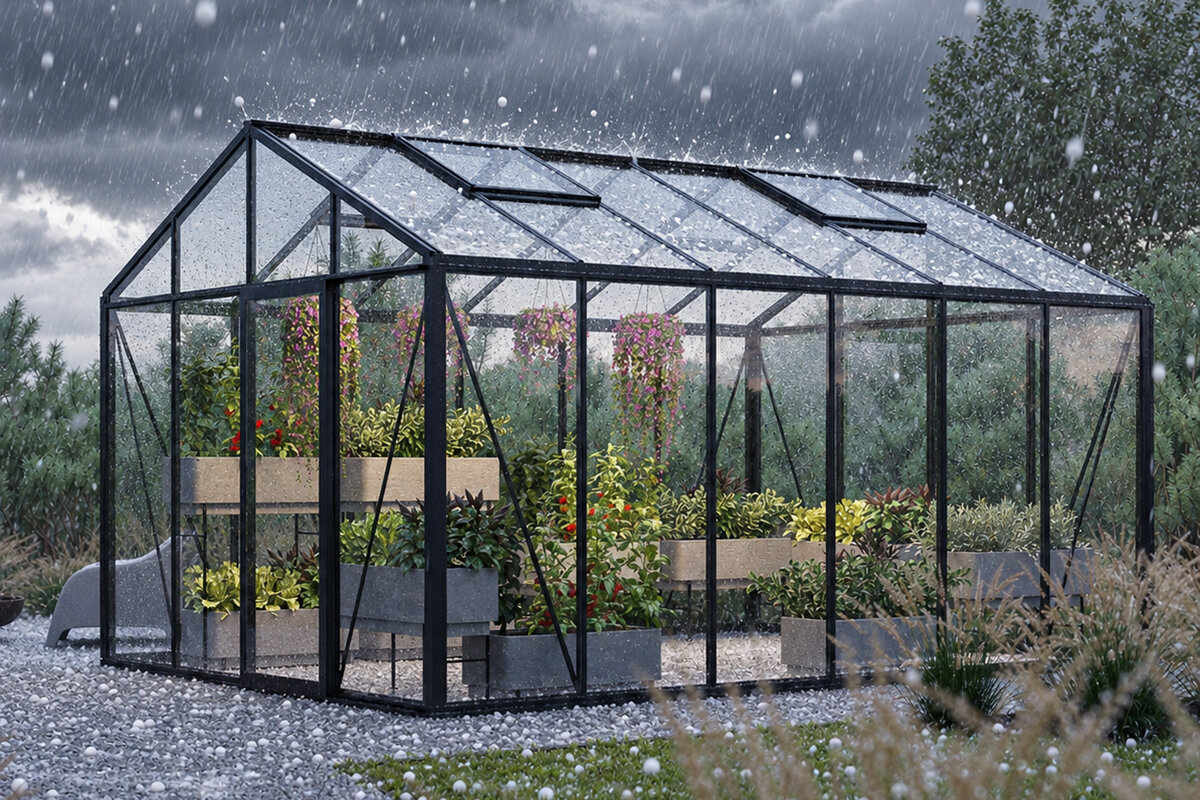

Advice for greenhouse owners
A quick view of hail considerations
In places that see repeated or intense hail, polycarbonate commonly makes the shortlist because impact toughness is inherent to the material. Glass remains viable when exceptional clarity and traditional styling lead your priorities, provided siting, fitting and the implications of damage receive deliberate thought.
Never assess glazing on its own. A stable base, properly seated profiles and a position away from avoidable hazards are equally important. Before buying, check what your insurance policy and the written details for the chosen configuration actually cover.
01
For hail-prone sites
Polycarbonate may work well where a sturdy panel appearance and softly distributed light suit the plants you plan to grow.
02
For clear garden architecture
Glass works well where transparent elevations, precise lines and an open view of the planting define the scheme.
03
For a sound decision
Weigh local weather history, position, workmanship, upkeep and the effects of potential damage as connected considerations, not isolated criteria.
Hail and greenhouse glazing: glass or polycarbonate?
Hail deserves consideration when you plan a greenhouse in Ireland. The size and hardness of hailstones, together with their impact angle, can change considerably by location and from one thunderstorm to another. No single glazing answer suits every Irish garden. Base your choice on the site's exposure, the crops planned and the architectural result you would like to achieve.
Glass provides unobstructed views, restrained architectural character and a familiar garden-building style. Polycarbonate softens the view and is regularly preferred when reduced susceptibility to breakage matters more. A fair comparison must go beyond the panels themselves: framing, fasteners, the foundation and accurate assembly all contribute to how the finished greenhouse handles external forces.
Use the following comparison to identify the issues worth investigating at your own site. You will still need to consult the relevant product papers and seek tailored input where the property presents unusual conditions. Considering weather exposure, intended activities and routine care before ordering makes the eventual choice easier to justify and maintain over future seasons.
01 · Material choice
Assess hail risk
No two hailstorms place identical demands on glazing. Small stones act differently from bigger hailstones, and wind strength, trajectory and the length of a storm alter the loading too. Combine forecasts with first-hand knowledge from nearby gardens. Conditions around a greenhouse standing in open countryside can differ substantially from those in an enclosed yard or a closely built residential area.
Start with a realistic appraisal of exposure rather than expecting complete protection. The construction of glass and polycarbonate makes each behave differently under a strike. Correct engagement between panel and frame is equally significant. Components that move, irregular foundations and fixings that are wrong for the system can worsen stresses, so treat each as an essential part of the assessment.
Visible screening tells only part of the story. A house wall may shield one aspect, yet downpipes, projecting eaves and turbulent airflow can introduce different pressures. Leave sensible clearance from hard building edges and provide orderly drainage for rain. Doing so preserves access around the structure and makes post-storm examination of the greenhouse considerably more manageable.
Future use also affects risk: regularly opening doors, working near the roof, or storing equipment should leave enough space from the glazing and maintenance routes.
Keep a note of hail seen over several seasons and discuss location-specific patterns with people living nearby.
Factor in exposed airflow routes, mature tree crowns and roof margins that could increase hazards in thunderstorms.
One practical freestanding option is the Standard Classic aluminium greenhouse which gives the project a straightforward basis.
02 · Location
Location matters
Rain and wind affect a greenhouse against a house, beside a tall boundary wall or below trees differently from a structure standing on open grass. Shelter may be useful, but dripping runoff, falling limbs and snow slipping from roofs create separate concerns. Watch what happens across the proposed position during wet and windy conditions before settling on it.
Where the structure sits near a wall, carefully coordinate it with the surrounding building. Pay attention to runoff, working access and the position of downpipes. Although the wall cannot guarantee protection from hail, it may alter airflow and the immediate growing climate. Preserve clear maintenance space so glazing, framing and junctions can be examined throughout the greenhouse's life.
Glass influences both appearance and the way planting and equipment are seen from the wider garden. If an open view of the interior matters, balance that quality against its sensitivity to concentrated blows. Before fitting begins, inspect the edges of all glazing and examine the retainers, confirming that nothing is damaged and every component sits as intended.
With lean-to models, also check whether leaves or damp can collect between the wall and greenhouse. Clear gaps make junctions and frame areas easier to inspect.
Do not site the greenhouse beneath suspect limbs or in the path of concentrated runoff from a roof.
Provide firm, even and convenient ground so future inspections, washing and replacement tasks can be completed sensibly.
For a generous wall-side solution, consider a full-size classic lean-to greenhouse with a carefully planned installation area.
03 · Glass
Choose clear views carefully
Glass creates an open, refined and enduring presence for a greenhouse. It keeps planting, benches and working spaces readily visible, making it particularly compatible with traditional gardens and formally composed landscapes. During hail, remember that a strong, concentrated strike can still damage this rigid material. The sensible approach is to assess the actual circumstances rather than apply a general verdict.
Bloomcabin uses 4 mm toughened glass for its greenhouse glazing. That specification identifies the supplied material; it cannot determine the weather risk at an individual property. Confirm that supporting surfaces are clean, seals have been installed correctly and the relevant fitting directions are followed. After harsh weather, examine glass margins, retainers and any pieces that appear to have moved.
Because polycarbonate scatters light, it can noticeably alter the atmosphere inside. Individual plants and outside views appear softer, but illumination can look more evenly spread. Weather exposure should not decide the choice by itself: assess propagation plans, visual preferences and the importance of transparency together. Obtain the maintenance guidance for your chosen panel system before committing to it.
Comparing samples in different daylight can help you see how reflections, visibility and the appearance of plants may work in your garden.
Choose glass where clear sightlines and the classic character of your greenhouse strongly shape your priorities.
On exposed sites, allow for the effort of a visual inspection after exceptional weather events.
For a scheme built around transparency and orderly garden lines, the glass-look Standard Classic greenhouse provides one coherent design route.
04 · Polycarbonate
Diffused panels for robust priorities
Where resistance to knocks carries more weight, polycarbonate is commonly evaluated as the alternative to greenhouse glass. It has its own visual character: incoming daylight is dispersed and objects beyond the sheets lose definition. Numerous crops can benefit from this distribution, whereas gardeners seeking an uninterrupted outlook may prefer to place greater emphasis on glass.
Bloomcabin supplies 6 mm polycarbonate glazing. Examine the selected system carefully, including its profiles and fitting directions. Its upkeep still matters: use mild methods and compatible products, keeping scourers away from the sheets to protect their finish. Revisit edges, closures and adjoining components periodically, with an additional check after strong winds or prolonged heavy rain.
While fitting the panels, keep channels and protective covers clean so water can escape. Pooled moisture, pinched seals and later drilling may interfere with how particular parts perform. Fit only construction-compatible pieces when making repairs, and record any alterations. This creates a useful history for subsequent checks and helps identify how the original build was arranged.
Planting density and interior fittings also affect how translucent sheets look. Arrange benches, circulation space and shading so they work with the softer visual character.
Choose polycarbonate where softly spread illumination and a panelled appearance support the way you expect to use the greenhouse.
Use mild cleaning products and soft cloths, avoiding anything harsh or coarse that could mark the panels during care.
For a building-adjacent project, a full-size classic polycarbonate lean-to greenhouse can fit this building-side siting concept.
05 · Construction
The frame matters too
Glazing performs properly only when the surrounding construction supports it. The aluminium framing, corner connectors, retaining beads and fasteners must correspond to the chosen model and be put together competently. Makeshift modifications and mismatched spares may create unwanted tension or weaken panel retention. Work from the supplied fitting directions, bringing in experienced assistance whenever a step is uncertain.
A sound foundation is also central to keeping the structure square. Distortion below the frame may cause stiff doors or impose strain on glazing. Specify an enduring, flat and structurally adequate base for the particular soil and model. When the build is finished, verify the alignment of each element. This preparation benefits ordinary use as well as performance during hail.
Take a measured approach to each examination. Begin at a secure vantage point and note any displaced elements or loose debris before moving closer to the frame and panels. Never place a ladder on slippery or unreliable ground. Where access cannot be made safe, or the extent of damage is doubtful, arranging competent assistance is the wiser course.
Make observation part of routine care, not merely a response to storms. Changes in doors, vents and joints can then be noticed promptly and investigated.
Before fitting glazing, check that the frame stands plumb and that every bearing surface is clean.
Retain the fitting papers to keep future servicing and parts enquiries tied to the proper model.
For framing that is easy to understand, the freestanding Standard Classic greenhouse can support a methodical assembly plan.
06 · Care
Inspect methodically after bad weather
Once a hailstorm has passed, confirm that approaching the structure is safe and choose bright conditions for the inspection. Survey the roofline, corners and entrance externally before examining the interior for hairline damage, shifted parts or dampness. Take photographs of anything abnormal and avoid unnecessary contact with affected components. If glass is broken, personal safety takes priority.
For polycarbonate, examine the sheets for strike marks, splits, displaced end caps and altered fixings. Glass failure may be immediately apparent, although small defects along an edge can be harder to see. Include rain channels, roof connections and the nearby ground in the survey. Clearing fallen twigs, debris and pooled water will make later assessment and maintenance more straightforward.
Good evidence is easiest to assemble before anything goes wrong. Store invoices, specifications and images in a way that identifies the model, panel type and completed arrangement. Following an incident, make a photographic record and stabilise affected areas only when that can be done without danger. Your insurer's policy conditions and subsequent directions determine what should happen next.
Exclude people from areas containing damaged glass, and use appropriate personal protection for any safe clean-up work.
After compiling the evidence, report a possible loss to your insurer and act in accordance with its directions.
A wall-side structure can remain convenient to inspect when the full-size classic lean-to greenhouse has an unobstructed route along the adjoining wall.
07 · Insurance
Prepare records for damage
Cover for greenhouse hail loss varies with the wording of your insurance contract, the category assigned to the structure and any agreed limitations. Informal assurances from other people are not enough. Before committing to a purchase, ask the insurer what documents it expects and whether it treats wall-attached and independent greenhouses differently or applies special conditions to either type.
Organise receipts, specifications, fitting papers and images that show the greenhouse after completion. They can simplify discussion if a loss occurs, although the insurer must still make its own coverage decision. Do not rush into permanent remedial work if approval or an inspection could be required. Agree the appropriate sequence directly with the person handling the claim.
Writing down the reasons for your choice can be useful: list the non-negotiable features, acceptable trade-offs and known risks around the property. This keeps aesthetics or a single material quality from dominating every other need. Record how the roof, walls and joints will be reached in future. Glazing remains a successful choice only when access, construction and maintenance have been planned around it.
Ask in advance about hail cover, excesses, documentation duties and any site-related requirements.
Create images from several viewpoints when construction is complete, replacing them whenever major alterations are made.
For a garden project with clear records, the Standard Classic greenhouse for the garden offers a model choice that can be documented coherently.
08 · Purchase decision
Prioritise the right glazing
The right choice follows your priorities. If clear views, a classic design and direct sight of plants matter most, glass may suit you. If your garden is in a hail-prone position and you place greater value on the material's impact resistance, examine polycarbonate more closely. Neither material removes your responsibility for the site and correct assembly.
Compare versions using the available product information and plan not only for purchase day but for future gardening seasons. How easily can you reach roof and sides? How important are transparency, light quality and cleaning? What weather events are locally possible? These questions turn glass versus polycarbonate into an informed decision for your own greenhouse project.
If competing considerations carry similar weight, list the benefits and unresolved questions under each material. A side-by-side record makes your eventual reasoning easier to revisit.
Rank hail exposure, illumination, visual character, washing needs and access according to your own priorities.
Where the planning position is uncertain, contact the local planning authority promptly and also examine the specification for your selected configuration.
For a substantial building-side project, a full-size classic aluminium lean-to greenhouse gives you a building-attached counterpart to freestanding designs.



Glass and polycarbonate compared
This table is intended as a guide for initial selection. It describes typical qualities, not a promise for a particular hail event. For a final decision, always consider model documentation, assembly requirements and the particular conditions of your property.
Appearance
Clear and transparent, with classic character.
Diffused appearance; plant outlines less distinct.
Hail consideration
Hard material; allow for possible breakage.
Often considered where impact resistance matters.
Indoor light
Direct views and clear light.
Scattered light with a softer feel.
Care focus
Inspect edges, panes and fixings.
Clean the surface gently and check connections.
Suitable priority
Architecture, clear views and traditional garden character.
Material character with weather-aware siting.
Five steps to suitable glazing
Allow time for a considered choice. An organised planning process can expose important distinctions that an immediate comparison of materials may conceal.
01
Observe the site
Observe the proposed position during rain and wind, in morning, midday and evening conditions. Record exposed aspects, runoff from roofs, nearby trees and sources of shelter.
02
Gather weather experience
Ask nearby residents about hail, storms and usual rain directions. Local observations often help more than broad assumptions.
03
Define the use
Identify whether visibility, ornamental effect, propagation, winter plant protection or usable workspace should have the strongest influence on the project.
04
Include construction
Match the foundation, location and fitting method to the selected greenhouse. Preserve enough access to examine its roof, walls and junctions in future.
05
Compare documentation
Before purchase, study the product specification, fitting directions and policy wording. Refer unresolved property or development matters to the appropriate official body.
Checklist before buying
Work through these points to confirm that the preferred glass or polycarbonate will serve daily gardening needs rather than appearance alone.
01. Local hail patterns have been discussed with neighbours and recorded alongside observations made at the property.
02. Branches, eaves and concentrated runoff do not create avoidable hazards above the chosen position.
03. The preferred balance between an open outlook and softly distributed light has been decided.
04. The base, approach route and working space correspond to the greenhouse's dimensions and form.
05. Documentation for the chosen glazing and all assembly requirements has been read fully.
06. After severe weather, the roof is generally reachable or visible for a safe inspection.
07. The insurer has confirmed how its terms would address this specific greenhouse project.
08. Routine washing, ongoing care and potential remedial work have a practical place in the gardening plan.
Common questions on hail and greenhouse panels
Is polycarbonate always the better choice in hail?
No. Polycarbonate often enters the discussion because impact toughness is one of its material qualities. Even so, illumination, appearance, position, framing and maintenance all affect which option fits best. Examine the specification of the actual system and recognise that severe weather may cause consequences for either material.
Is glass suitable where hail occurs regularly?
Yes. Choosing glass can still be reasonable in such a location. Build the possibility of breakage into the plan, assess exposure with care and ensure that assembly is completed accurately, whether by you or an installer. Before ordering, obtain confirmation from your insurer about the policy treatment of the proposed structure.
What should I inspect immediately after a hail shower?
First wait until there is no safety risk. Then inspect roof areas, panes, panel edges, frame and fixings for visible damage or movement. Photograph anything unusual and keep people away where glass is damaged. Before beginning major work, consult your insurer where appropriate.
Does the foundation affect hail resistance?
The base cannot prevent hail, but it helps the greenhouse remain square and limits unintended strain. Distortion may place the framing and panels under unfavourable loads. Provide an even, structurally adequate foundation that follows the requirements for the particular model, checking alignment throughout the work rather than only at completion.
What role does cleaning play with polycarbonate?
Careful washing keeps the sheet presentable and can reveal defects sooner. Choose compatible mild products and soft equipment, because coarse or chemically aggressive methods may harm polycarbonate. Following severe conditions, give joints, margins and fasteners separate attention rather than restricting the inspection to broad panel faces.
Is permission required for my greenhouse?
Possibly. In the Republic of Ireland, the answer turns on the property, dimensions, design and planning context. Since 27 July 2026, a conditional exemption may apply to qualifying incidental structures within a house's curtilage, subject to a 30 m² aggregate limit. It is not automatic; earlier structures and other restrictions count. Ask the local planning authority about your site, especially previous development, constraints or protected status.
Discover greenhouses
Glazing that suits your garden
The choice between glass and polycarbonate under hail exposure involves practical priorities, not aesthetics alone. Glass offers visual clarity and established styling; polycarbonate deserves attention where panel impact behaviour carries more weight. A dependable conclusion emerges only after weather, placement, construction and the planned use have all been considered in relation to one another.
Treat the greenhouse as an interconnected structure, allowing proper attention for its foundation, fitting and future examination. Combine first-hand knowledge of weather at the property with the specifications for each available system. This approach will help you identify a Bloomcabin version that works naturally with the way your garden is arranged and used.
Assess the available forms and panel systems in relation to conditions at your property.
