
Cold frame or greenhouse: two routes to a longer season
Bloomcabin Garden Knowledge / Season Extension
Cold frame or greenhouse: two routes to a longer season
Light enters both structures, but they use it differently. A cold frame holds warmth just above the earth; a greenhouse provides a room where plants and gardeners can work. Extra size is not always the answer. Consider how much protected cultivation you will genuinely use.
Cold frameGround-level warmth zone
GreenhouseWalk-in growing space
The core choiceHow far to extend it?
01 / The starting point
Work out the level of shelter required.
Neither structure can make the weather irrelevant, although each can lengthen cultivation. Sun supplies the warmth, their walls reduce wind exposure, and plants meet a gentler boundary with outdoor conditions. Scale changes the response: warming and cooling rates, crop clearance, watering methods and the amount of attention required all differ.
Picture a clear cover enclosing one defined piece of ground: that is the cold-frame idea. Usually unheated and low, it serves cool-season crops, seedlings being hardened and brief spells of shelter. The greenhouse works at human height. Benches, trays, climbing plants and tools fit inside, while the extra volume supports circulation and an orderly routine.
A cold frame is an exact tool for early lettuce, radishes and spinach, or for easing seedlings from the windowsill towards the open bed. Gardeners raising many young plants, tending tomatoes and cucumbers for months, or working through unsettled weather gain a broader working base from a greenhouse.
Greenhouse / the taller definition
A transparent structure tall enough for a manageable working climate.
Garden greenhouses are enclosed transparent structures you can step into; they have an entrance and commonly vents in the roof. Some remain unheated, while others receive occasional heat or active environmental control. Their defining feature is usable volume rather than the glazing material. Rising warm air, human movement, staging, shelves, irrigation and tall crops can all be accommodated.
Cold frame / defined at ground level
A low-sided enclosure beneath a clear lid, normally hinged.
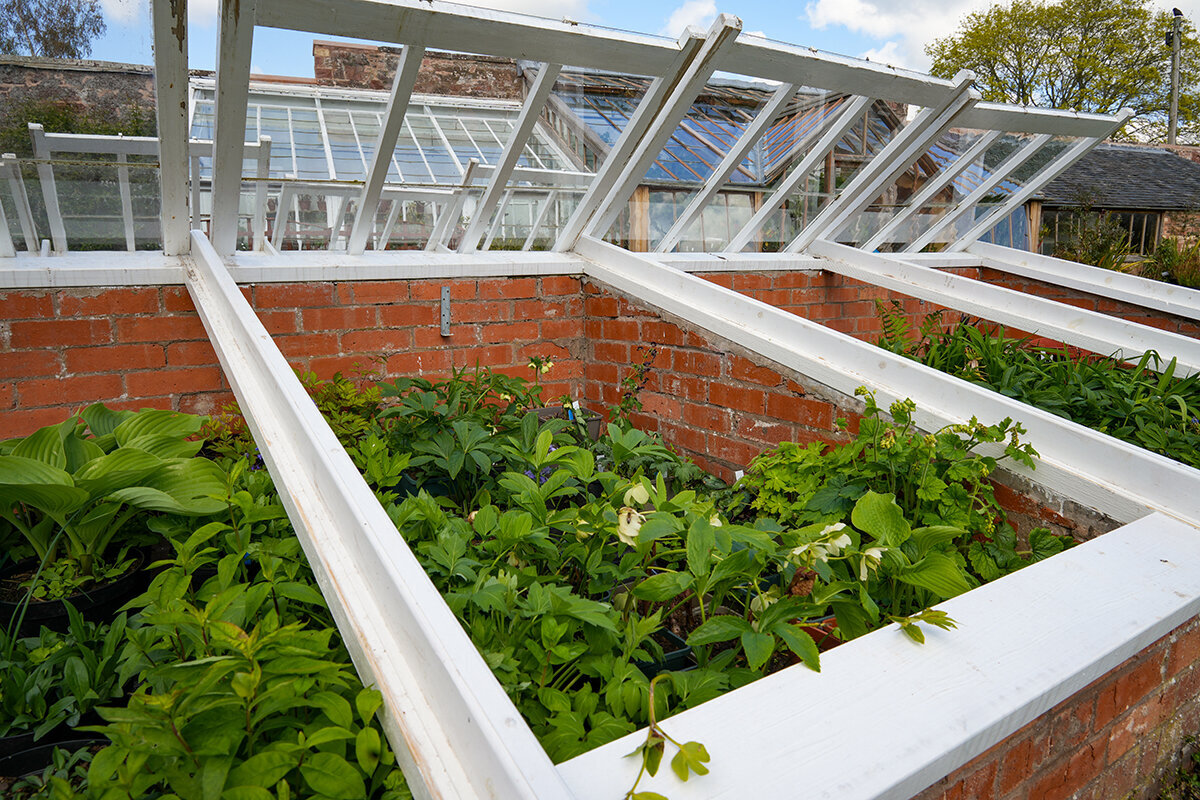
A cold frame may rest on bare ground, surround a garden bed or cap a raised planter. Timber, brickwork, metal or robust sheet material can form the sides, with a clear cover above. Most have no heating; ventilation comes from lifting the lid manually or using a temperature-sensitive opener. Their shallow form keeps captured sunlight near seedlings and soil. For practical detail, consult the German LWG notes on compact greenhouses for guidance on siting, foundations, ventilation and workable paths.
Retail terms are not always tidy. Traditionally, a heated frame may be called a hotbed; a polytunnel instead arches over a row or substantial growing area. One practical distinction works for most gardens: tending plants by raising an exterior lid follows the cold-frame model, whereas entering through a doorway indicates a greenhouse.
An enclosure is no frost guarantee. Sun, warmth retained in the soil, insulation, airflow and overnight cold determine how both unheated greenhouses and frames perform. Without another protective layer or heat source, neither provides dependable winter accommodation for tender plants.
02 / Climate in the cold frame
LOW
Warmth stays close to the ground.
The bed beneath a cold frame forms part of its climate. Daylight through the cover heats plants, pots, earth and enclosed air, while the sides curb wind. With little air inside, temperatures can swing rapidly. Venting may be necessary even on a crisp bright spring day, and stored warmth may disappear quickly under clear night skies.
What a cold frame does especially well
A small set of defined tasks shows this structure at its best. Hardy leaves can be sown sooner, salad harvests carried further into autumn, and vulnerable plants screened from chilly wind. Seedlings raised indoors can also be introduced gradually to direct sun and fluctuating weather. Plant into the bed or use pots and trays, remembering to raise the cover early on warm sunny days.Mini-greenhouse and raised-bed-cover notes This German LWG resource explains compact growing shelters and how a raised arrangement may improve working posture.
- Well suited Loose-leaf lettuce, spinach, rocket, Asian greens, radish, early kohlrabi, sturdy herbs, brassica seedlings and hardening trays.
- Daily routine Read the forecast, vent before temperatures climb, test the growing medium for moisture and replace the cover ahead of evening chill.
- Structural limit Plant height and reach remain limited. Crops that need tying in, frequent harvesting or permanent tall support soon outgrow the useful space.
- Visual value With restrained edging, a frame can sit naturally beside vegetables or form part of a raised planter without resembling another garden building.
03 / Climate in the greenhouse
Extra volume benefits the gardener as well as the crop.
Vertical space has practical value beyond appearance. Leaves can remain clear of overhead glazing, and rising warmth has somewhere to gather before roof vents release it. Height also makes a joined-up growing system possible: staging for propagation trays, storage shelves, an uninterrupted walkway, supports for cucumbers and tomatoes, and an entrance suitable for carrying compost, containers and harvest crates.
The additional room does not remove the work. Broad transparent surfaces admit substantial energy in sunshine and lose heat across a wide area after dark. Watering, hygiene, shade, ventilation and seasonal reorganisation remain regular jobs. Strong sunlight can drive indoor temperatures upwards while the air outside stays cold, so dependable venting throughout use is wiser than continually trying to retain every trace of warmth.German LWG advice for raising young plants It helps place the light and temperature needs of sensitive species in realistic context.
Versatility is the attraction for a committed home grower. Correctly positioned, the structure can organise propagation, carry tender crops through erratic spring spells, host cucumbers and tomatoes during well-ventilated summers, and continue herbs or leafy harvests into autumn. Bloomcabin’s Classic aluminium greenhouse packages that working volume in long-lasting aluminium, with dimensions, vent arrangements and glazing selected for the planned purpose.
04 / Understanding warmth without guarantees
Sunlight benefits both, but follows different paths.
Do not judge the options by an assumed rise in degrees. Instead, trace how each design handles incoming light, enclosed air, moisture, stored ground heat and venting, then consider how rapidly cloud, wind or darkness can undo the daytime effect.
Cold frame
Solar warmth at soil level
Greenhouse
Walk-in volume above the garden
Light entersSoil storesLid ventilates
Light entersAir risesRoof vents ventilate
How a cold frame behaves
A compact clear cover admits light to the soil, foliage and enclosed atmosphere. The bed receives a large share of the resulting warmth. Propping up the lid releases excess heat directly, which is straightforward but requires timely attention and can produce a sudden change. Once the sun sets, the limited air mass loses warmth swiftly. Earth, stone or water-filled vessels may moderate that swing, yet harmful low temperatures remain possible.
How a greenhouse behaves
Across the greenhouse shell, sunlight reaches foliage, staging, pots, paths and the enclosed atmosphere. Heated air generally gathers towards the roof, while greater volume permits circulation between sensibly spaced plants. Management comes through vents, doors, openings on opposing sides and shade. Whatever is absorbed by day will diminish after sunset. The unheated structure supplies valuable cover, but crop suitability still depends on local Irish conditions and the plant’s needs.
Measure climate at plant height Keep a dependable thermometer beside the foliage instead of judging conditions from the sensation of stepping indoors. Excess heat, cold nights, humid air or dry compost may damage growth before a brief visit makes the cause obvious. Advice from the Bavarian Garden Academy further stresses ventilation over heating and warns that temperatures above 25 °C may reduce growth and yield.German notes on seasonal growing and ventilation The linked horticultural material relates vegetable-growing tasks to active management of protected conditions through the year.
05 / Crops and duration
Let crop type and cultivation time guide the choice.
Low growth and temporary shelter favour the cold frame. The greenhouse becomes worthwhile when vertical clearance, larger quantities, successive sowings or prolonged cropping are priorities. Open-ground beds still have their place; either form of cover can make additional weeks usable.
- — Cold frame: A sheltered station for lettuce, radish, spinach, rocket, resilient seedlings and trays making a gradual journey outdoors.
- — Cold frame: A sensible final stage for autumn leaves approaching harvest, rather than a place for driving vigorous growth through the darkest period.
- — Greenhouse: Several trays can be handled together, with seedlings pricked out, labelled, watered, repotted and held temporarily at an easier working level.
- — Greenhouse: Better suited to trained tomatoes, cucumbers, aubergines and substantial pots, provided their particular needs for light, warmth, water and ventilation are met.
- — Both: A sheltered step between indoor raising and planting outside, allowing seedlings to meet sun, breeze and unstable spring weather gradually.
- — Neither alone: No replacement for choosing suitable varieties, planting at the right local time and inspecting crops regularly.German crop-protection advice uses whitefly to illustrate the connection between healthy plants, adequate airflow and well-timed shading.
06 / Access shapes the habit
The everyday movements are fundamentally different.
Using a frame involves kneeling, leaning across its edge, raising the cover and reaching the furthest plants. That close contact can suit brief visits to a modest bed, but consider flexibility, comfort, secure handling and repeated work with trays. Transparent lids may become hot in uninterrupted sunshine, while heavier examples are difficult to control during gusts.
Greenhouse tasks are generally performed upright. Staging limits stooping, and a central walkway provides a carrying route for cans or crates; overhead vents can discharge warmth without exposing every plant. The trade-off is a wider cycle of chores: adjust openings, monitor water, deploy shade, wash glazing, support stems and watch closely for pest or disease problems within the sheltered area.
↘AccessStep inside, or tend it externally.
↑ReachStaging level or the bed’s far edge.
⌒VentilateRoof vent or raised lid.
≋WaterCheck systematically or precisely.
□OrganiseMaintain an interior or a small bed.
What that means: Greenhouse dimensions can account for upright work, carrying, putting items down and turning while holding a crate. A frame needs side-to-side reach, secure support for its open cover and clear space for the lid’s movement. Mounting the frame over a raised bed may bring crops closer to a comfortable height. Where bending and lifting cause difficulty, everyday usability may outweigh a simple comparison of purchase costs.
07 / Space, wind, anchoring, durability
Allow for sun, dependable access and your garden’s actual exposure.
Position a frame beside the vegetable plot or use it to complete a raised planter. It requires useful seasonal sunshine, stable level support, drainage and unobstructed space for safe opening. During spring and autumn, buildings, mature hedges and trees should not leave it in prolonged deep shade. Test whether gusts could catch the lid and whether every part of the growing area is within an easy reach.
Take more time over a greenhouse position. Alongside its base dimensions, allow for the opening door, circulation routes, a water supply, rainwater management, nearby trees and wheelbarrow manoeuvring. Watch the course of sunlight and the usual wind over time. A garden exposed to Atlantic coastal weather needs different judgement from a protected urban plot or frost-prone inland site. A lasting structure depends on an appropriate foundation, sound fixing and assembly according to its manufacturer.
Match both the model and its fixing system to the location if you expect a high-quality structure to endure. Resolve assembly instructions and local requirements early. Product details for the Classic aluminium greenhouse help you assess its sizes, build choices and fit within the space available at home.
08 / A garden year on site
Think in seasonal stages, not year-round tomato guarantees.
Irish coastal, inland and city gardens do not advance at identical rates. Treat what follows as a sequence of activities rather than fixed dates. Available daylight, cultivar, frost at your own plot and the course of current weather may move every phase.
Late winterStart & protect
Early springHarden off & ventilate
Late springPlant out & train
SummerShade & water
Autumn / early winterHarvest & protect
Provided that warmth, airflow and daylight are adequate, late winter is a chance to arrange propagation inside the greenhouse. On suitable days, the frame may bring hardy leaves into growth or receive cold-tolerant seedlings. As early spring progresses, expose young plants gradually and vent freely under bright sun. The greenhouse can then accommodate transplanting, potting on and temporary shelter during unstable nights.
A frame left fully open in summer can revert to an ordinary bed or hold seedlings briefly. Greenhouse priorities then include steady irrigation, shade and effective exchange of air. During autumn, the shallow enclosure can protect maturing salad crops and robust leaves through cooler nights. The taller structure may prolong herb and vegetable use, shelter selected pots and take fresh propagation trays. Combining both is often effective: start under cover, grow outdoors and return late crops to low-level shelter.
09 / Cost is only one form of commitment
Maintenance effort also belongs in your budget.
A cold frame can be modest in scale yet highly productive. It consumes less material, remains visually quiet and usually creates only limited maintenance. Its less obvious price is timely attention whenever conditions turn quickly. The most successful frame on a sunny spring day belongs to the gardener who vents it early and replaces the cover before evening cooling.
A greenhouse calls for more planning and a higher initial investment, but brings many garden jobs together in one place. Accessories, services and long-term care matter more: gutters, glazing cleaning, automatic openers, shelves, shading, drip irrigation and, where relevant, heating or air circulation should match actual use.
- Cold-frame care Examine hinges, seals, glazing and lid stays; clear snow or fallen foliage cautiously; free stiff mechanisms; refresh the growing medium and promptly discard diseased material.
- Greenhouse care Wash panes and outlets, check seals and mechanisms, service watering and vents, monitor moisture collecting inside, and sanitise working areas between successive crops.
- Assess energy realistically Do not mistake an unheated structure for a warm winter growing room. Before adding heat or choosing dependent crops, establish the likely energy demand, operating expense and intended result.
- Ways to expand Cold frames can be repeated across several beds as needs grow. A greenhouse develops more inside: benches, shelves, drip irrigation, shading and thoughtful propagation routines can be added step by step.
10 / The decision
Fit the answer to everyday gardening rather than theory.
Treat the table as guidance rather than a league. A cold frame is a purpose-built answer to a compact job, not a lesser version of its taller counterpart. Nor does technical scale make the greenhouse inherently preferable. Its permanent transparent room makes sense when upright work, varied crops, extended cultivation and frequent use will repay the occupied space.
| Decision factor | The frame is strongest where … | The greenhouse is strongest where … |
|---|---|---|
| Growing aim | Your priorities are salads, radishes, robust seedlings and one compact place for acclimatising them. | Numerous seedlings, tall trained crops, containers or several simultaneous crop groups form part of your plans. |
| Available space | You have bed-sized space but do not want another walk-in structure in the garden. | You have room for the structure, access paths, workspace and a site with useful spring and autumn sunshine. |
| Access and posture | Short visits suit you, and you can comfortably kneel, bend and control the raised cover. | You want to work standing, carry boxes and reach plants on benches or from several sides. |
| Climate management | For a limited bed, you favour straightforward checks of the lid, temperature and growing-medium moisture. | You are prepared to manage ventilation, watering, humidity, shading and plant spacing regularly in a larger interior. |
| Permanence | A discreet low feature that can be moved or altered with relative ease would fit the garden. | You want a long-lasting design anchor and the basis for a permanent growing system. |
| Future development | You may later add another box to a different bed as your needs grow. | You expect your gardening to become more varied and want to organise that development spatially from the start. |
Choose a cold frame
When protection should remain focused.
Your main requirement is near-soil shelter for seedlings, salad leaves and seasonal handovers, occupying little ground and remaining directly linked to the bed.
Choose a greenhouse
When the growing space itself brings pleasure.
You value upright work, ordered propagation, tall crops and additional capacity, with a structure able to support increasingly ambitious plans. Consider the Classic aluminium greenhouse as a premium foundation for lasting cultivation at walk-in height.
Choose both
When the two shelters perform separate roles.
Let the greenhouse organise propagation, upright summer crops and routine work. Beside the vegetable plot, the frame can acclimatise seedlings, carry cool-season leaves and offer targeted shelter while seasons change.
11 / Common questions
Short queries that can shape the whole season.
Is a cold frame simply a miniature greenhouse?
That shorthand is understandable because sunlight passes through clear material in both cases. For planning and daily use, however, their forms are quite separate. The frame stays low and is tended while the gardener remains outside. The greenhouse surrounds both gardener and crop, providing greater vertical clearance, substantially more enclosed air and a wider range of working arrangements.
Can plants survive frost safely inside a cold frame?
The enclosure may buffer hardy crops against rain, wind and brief cold spells, but frost can still reach them. Performance changes with the crop, how tightly the lid closes, solar gain, breeze, moisture in the soil, the overnight low and any added covering. Bright days also demand venting, even in cool weather, because damaging heat may accumulate.
Can an unheated greenhouse lengthen the season?
Yes. It offers shelter, organises propagation and makes the shoulder periods of spring and autumn more usable. Available daylight and outside conditions still govern what happens inside. Tender plants kept through winter may call for heat, supplementary lighting and disciplined ventilation, all assessed against continuing energy costs.
Which beginner task suits a cold frame?
Start by acclimatising young plants, a useful task with manageable risks. Try sturdy salad crops or brassica seedlings, monitor temperatures and learn when the lid needs moving. After observing the response to sunshine, clear nights and wind at your plot, introduce earlier or later salad sowings.
How do I select an appropriate greenhouse?
First assess the location and crops you intend to raise, then allocate working room for staging, paths, water and airflow. Nominal floor size tells only part of the story. Long-term usefulness also depends on entrance clearance, overhead vents, glazing, secure fixing, drainage, site exposure to wind or snow and convenient daily access. See our overview of aluminium greenhouses to see how the same walk-in concept works across smaller and more spacious garden sizes.
Sources & further information
Specialist knowledge to support your planning.
The German horticultural references support the cultivation, ventilation, propagation and plant-health discussion; they are not Irish legal guidance. Adapt their gardening advice to local weather and your site. For planning questions in Ireland, use the listed Irish authority source.
More from Bloomcabin: Greenhouses and conservatories · Bloomcabin blog · Classic aluminium greenhouse
- Small-greenhouse guidance — Bavarian horticulture institute
- Raised-bed covers and mini greenhouses — LWG urban gardening
- Propagating young plants — LWG
- Seasonal vegetable work and cold frames — LWG
- Whitefly in small greenhouses — North Rhine-Westphalia agriculture chamber
- Cork City Council — planning clarification and Section 5 declarations
Small aluminium greenhousesSmall aluminium greenhouses
Classic aluminium greenhouseClassic aluminium greenhouse
Bloomcabin / plan with purpose
Decide how far your protected cultivation should reach.
Compare dimensions, site requirements, construction and the crops that truly shape your garden before planning your next protected growing space.
