
Grey mould rarely begins across the whole greenhouse.
Plant care / Ireland
Grey mould rarely begins across the whole greenhouse.
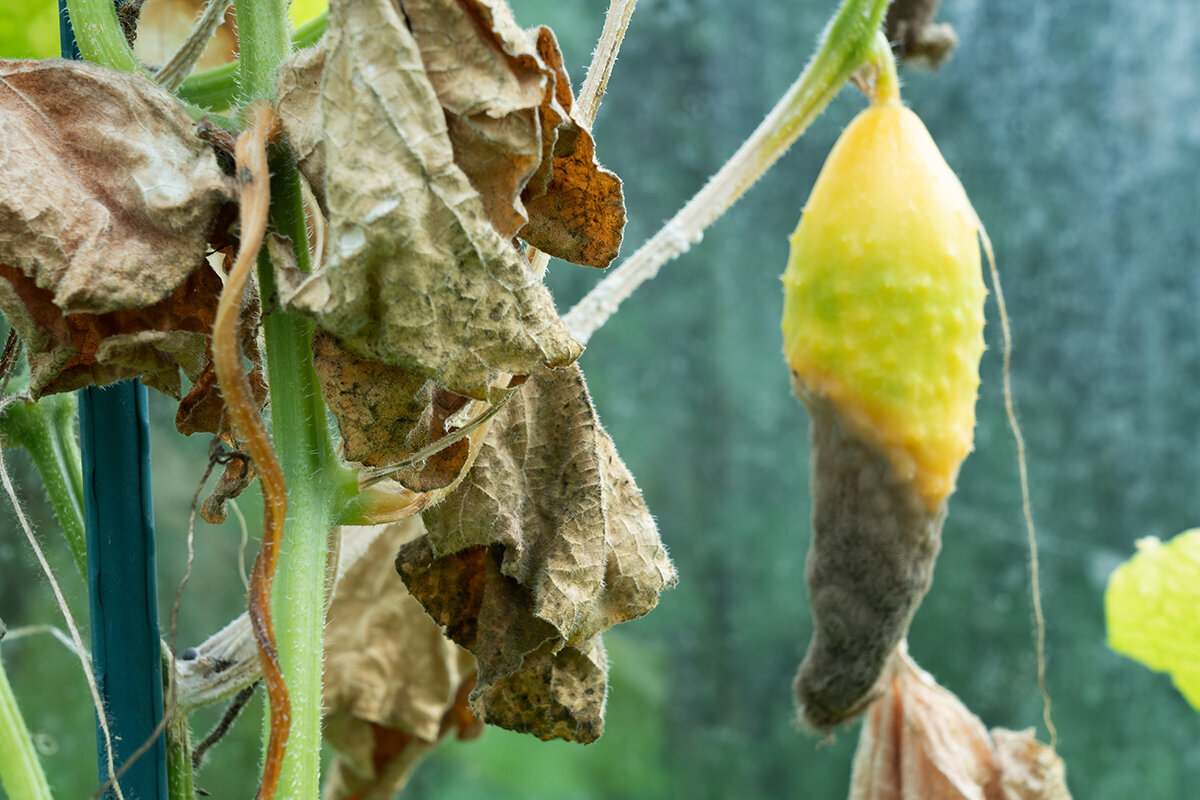
Botrytis usually takes hold in an overlooked detail: a spent bloom tucked into a leaf joint, an injured stalk, two wet leaves touching, or decay beginning on fruit. Cool, moist nights can turn these minor weaknesses into infection sites.
Botrytis cinerea occurs widely. Spores landing on vulnerable tissue may produce familiar grey growth quickly when the surface stays wet. Do not reach immediately for a spray. Work methodically instead: examine the signs, contain the area, remove affected matter, dry the plants, then strengthen prevention.
Principle for this evening: Do not leave dead, damaged or wet material between plants while the greenhouse cools.
Immediate action / respond before arguing over the diagnosis
Move calmly. Remove precisely.
Fuzz alone does not confirm Botrytis. Even so, treat tissue cautiously when it carries characteristic grey spores, is turning soft, or has a lesion that keeps advancing. Carrying it uncovered, jolting it or rinsing it can send contaminated fragments and spores elsewhere.
- 01
Pause routine care.
Do not continue pruning, harvesting or brushing through nearby plants before dealing with the suspicious area. - 02
Bag it at the plant.
Set a bag or lidded container next to the affected plant before making the cut. Keep removed material enclosed during transport. - 03
Remove visibly affected tissue completely.
With a clean, sharp implement, gently cut out the bloom, fruit or leaf together with every soft, collapsed portion. - 04
Read the surroundings, not only the lesion.
Inspect benches and floors as well as plants for droplets, damp foliage, still air, crowded leaves and discarded plant matter.
Accessible vents and uncluttered working routes are features of the Classic aluminium greenhouse. The daily growing routine still matters most: close inspection, wipe-clean surfaces and flexibility when weather shifts should not require every pot to be rearranged.
Identification / do not call every coating Botrytis
Read the pattern first, then respond.
Typical grey mould forms a dusty or downy coating, ranging from grey to grey-brown, across affected blooms, foliage, stalks or produce. Viewed from afar, natural ageing, another mould, chilling or wilt caused by root trouble may seem just as alarming. Consider where the damage sits, how the tissue feels and the recent growing conditions together.
More typical of grey mould
Look for fine, grey and easily disturbed spores across dead or softened areas; browning blooms; damage spreading from an ageing flower, injury or bruised fruit; or damp patches where petals, supports or foliage rested against a stalk.
Visible grey spores strongly support a Botrytis diagnosis, particularly after prolonged moisture and where symptoms begin on ageing material. Even then, examine the plant and its conditions as a whole.
Collapse without visible fuzz
Pale brown, dark brown or water-soaked areas may develop before Botrytis begins visible sporulation. Other possible causes include different rots, physical damage, chilling, root trouble and bacterial infection. Establish whether symptoms involve the roots, crown, leaf edges or only the injured point.
If valuable plants, young plants or food crops are affected, isolate the suspect plant and seek expert advice or plant diagnosis where symptoms are unclear or recurrent.
Normal senescence
Neither a faded, dry bloom nor a lower leaf turning evenly yellow is necessarily diseased. It offers Botrytis a foothold only when left against foliage or fruit within a shaded, humid planting.
The practical distinction: remove healthily ageing material during routine care. Carefully contain, bag and hygienically dispose of soft, spotted or fluffy suspect material.
Weak-point map – markers show risks, not proven infections.
1 / Spent flowers Old petals can trap dampness where they touch developing fruit, foliage or stalks.
2 / Leaf contact Leaves pressed together are shaded, so moisture from irrigation or condensation lingers.
3 / Pruning wounds Fresh cuts need clean work and rapid drying rather than continuing dampness.
4 / Fruit damage Cracks, feeding damage and bruising create vulnerable areas, particularly in damp weather.
5 / Plant debris Fallen fruit, flowers and leaves left on a bench or floor may keep releasing spores beside plants.
6 / Stem lesions Brown to light-brown areas around wounds, clips or dying leaves should be checked promptly.
Where the fungus enters
Botrytis favours the places good greenhouse care already keeps in view.
Ageing, damaged or declining tissue is particularly easy for Botrytis to colonise, yet the resulting disease can still be serious. After gaining a foothold on a spent bloom, injured stalk or softened fruit, it may disperse spores in moving air or spray and on people, garments and equipment.
A domestic greenhouse often displays the predisposing conditions before symptoms stand out. Tomatoes may retain flower fragments at leaf joints, and cucumber foliage can overlap. Fuchsias, begonias and pelargoniums can hold wilted blooms; strawberry petals may share a moist recess with ripening berries. Each situation raises opportunity for Botrytis without making infection certain.
- Check after cool, overcast days. At midday the house may seem fine, although leaves and flowers were wet from evening well into the morning.
- Work with healthy, dry plants first. Leave doubtful areas until last, then wash or clean your hands and equipment prior to handling sound plants again.
- Keep floors and bench surfaces visible. On clear, clean surfaces, petals, leaves and spoiled fruit are immediately noticeable.
The critical interval / from evening until leaves are dry
Humidity matters. Surface wetness says more.
A humidity reading provides useful context, though it cannot diagnose the problem alone. As temperatures drop, foliage, blooms and stalks may reach dew point and stay wet. Moisture on the panes is not merely cosmetic or a cleaning concern: it indicates that conditions inside have favoured condensation, so cooler parts of the plants also need inspection and corrective action.
Late afternoon
Sunset
Night
Early morning
After sunrise
Water early enough for drying
Irrigate early, leaving sufficient time for splashed or moist surfaces to dry ahead of the evening temperature drop. Direct water into the rooting area rather than across blooms and foliage.
Temperature falls
Glazing, metal and plant surfaces cool quickly. Dense crops and still corners often lose warmth and air exchange first.
Condensation risk rises
Damp air reaches chilled surfaces. Foliage may acquire moisture despite an absence of conspicuous drops or unusually high daytime meter readings.
Break the wet period
According to weather and equipment, use a balanced combination of gentle heat, controlled ventilation and light air circulation so plant surfaces can dry.
Check and adjust
Look between and beneath plants as well as at the glazing. Persistent dampness calls for changes to irrigation timing, spacing, air circulation or environmental control.
No single duration of leaf wetness predicts infection reliably across every temperature, variety and crop. Treat the evening-to-morning period as an observation window instead: prevent susceptible material remaining chilled and damp for long stretches. Cornell’s technical guidance likewise highlights keeping condensation away from plant surfaces when managing Botrytis.
A greenhouse fitted with roof vents that are simple to operate makes day-to-day climate control easier. The Classic aluminium greenhouse includes roof windows, while automatic openers may make routine responses more consistent. They do not remove the need to watch the weather and inspect plants.
Spacing
Create air routes, not merely decorative gaps.
Arrange pots and growbags before their foliage becomes permanently interlocked. Support cucumbers and tomatoes promptly, clear low or unhealthy leaves, and open space before flowering plants form a solid mass. A compact fan may help disperse humid pockets with little air movement. Set it for a mild flow through several plants, not a forceful draught aimed continuously at one.
Watering
Moisten the roots and keep evenings dry.
Drippers, a gently used watering can directed at the pot edge and similar low-level techniques reduce wetting of foliage. Morning irrigation lets stray splashes evaporate, whereas an evening application may prolong moisture overnight. Adjust quantity to both plant demand and weather: a gloomy, wet week should not follow the schedule used during a warm, sunny summer spell.
Pruning
Carry out clean work on a dry crop.
Where feasible, harvest, remove side shoots and make cuts while foliage is dry, using sharp, clean equipment. Keep wounds no larger than necessary. Clear yellow leaves and fading blooms ahead of substantial pruning. When tending several plant groups, begin with the soundest and leave any area showing doubtful symptoms until the end.
Season
Be alert as available light and natural drying weaken.
Ireland’s Atlantic weather can make cloudy spring intervals, rainy summer weeks and the approach of autumn troublesome. Exposure varies between sheltered inland and windy coastal gardens, so siting and drainage deserve attention. Plants may remain damp long after a calm-looking sunset. Bright periods favour ventilation and occasional shading; cooler weather may require measured ventilation, gentle circulation and, where fitted, restrained heat without chilling plants.
For forward-looking climate management, consider the Classic aluminium greenhouse, whose practical roof windows allow door use and low-speed circulation to be incorporated into regular climate care.
Hygiene / the route matters
Do not carry the problem through the crop.
Once doubtful material is noticed, restrict its movement immediately. Use the shortest route from the affected plant to a sealed refuse container rather than walking around the house carrying an uncovered harvesting trug.
Keep rotting produce, unhealthy leaves and spent blooms away from the area beneath benches, the doorway and uncovered compost containers near plants. Such material may continue releasing spores.
At the plant→
Cut→
Contain→
Take outside→
Reset
At the plant
Before making any cut, bring a sealable receptacle or bag right beside the plant concerned.
This moves the material less and prevents it brushing against healthy leaves.
The cut
Using a sharp implement that has been cleaned, cut away any diseased, softened or spore-bearing material.
A clean cut is easier to assess and avoids an unnecessarily large tear wound.
Containment
Put material straight into the bag and close it before leaving the area.
Avoid shaking the contents, resting them on work surfaces or walking them through the planting in an uncovered trug.
Disposal
Remove the sealed waste promptly, using household or organic-waste arrangements where these are accepted locally.
Do not store rotting material beside doors, windows or other ventilation openings.
Restart
First remove plant residues mechanically from scissors and work surfaces. Then clean tools with a suitable product following the manufacturer’s instructions; clean hands or gloves too before returning to healthy plants.
Start with physical removal. Plant fragments left behind may shield parts of the surface from the chosen cleanser or disinfectant.
Build this sequence into weekly care instead of reserving it for an outbreak. Uncluttered benches, open routes and robust components help keep a greenhouse practical and productive. See the Classic aluminium greenhouse when choosing a structure around the way you intend to grow, monitor, ventilate and wash down the space.
Treatment / prevention after correction
Treatments are secondary to cleanliness and drying.
Where Botrytis is present, begin by taking out diseased portions and changing the environment that favoured infection. A biological plant-protection product or fungicide may complement a coordinated programme intended to preserve healthy growth. No application can restore plant matter that has already rotted or been destroyed.
Task A
Use crop measures as the first treatment.
- Promptly clear infected produce, fading blooms, dead foliage and all other plant remnants.
- Promote drying with earlier irrigation, managed ventilation, appropriate warmth and mild circulation of air.
- Increase plant spacing and consistently open damp, compressed areas in the foliage.
- Carefully inspect neighbouring plants and the bench and floor beneath the affected spot.
Task B
Choose plant-protection products precisely for the crop and authorisation.
- Use DAFM guidance, its PPP register and the product label to verify Irish authorisation, amateur approval, the named crop and target, and whether greenhouse use is covered.
- Follow the complete label, including use, dose, protective clothing, ventilation, harvest interval and permitted number of treatments.
- Where repeat applications are permitted, plan resistance management and rotate appropriately rather than depending continuously on one mechanism.
- Authorisation for a different vegetable, ornamental plant, location or outdoor purpose does not show that the proposed use is approved.
Biological options: preventive, specific and authorisation-dependent.
In suitable crops and production settings, biological plant-protection products or antagonists may contribute to control. Performance varies according to formulation, product, crop, application timing, temperature, infection pressure and accurate use. They generally offer most value before disease becomes firmly established and when combined with sanitation and moisture control. A biological description alone does not establish suitability or amateur authorisation for every greenhouse vegetable or ornamental.
Conventional fungicides: a professional decision, not a standard reflex.
If continuing infection pressure and the importance of the crop warrant an authorised fungicide, resistance risk must influence its selection. Botrytis can develop resistance. Do not improvise mixtures, alter labelled rates or apply routine calendar sprays without an identified need. Severe stalk symptoms, repeated flare-ups or numerous infection centres merit advice specific to the crop.
Authorisation rule in Ireland: Amateur home and garden users may use only products authorised in Ireland and approved for amateur use. Follow the label exactly, including the crop, purpose, place of use, dose, precautions, intervals and treatment limits. An outdated recommendation cannot substitute for checking the current Irish authorisation and label.
Treat access to windows, glazing, work routes and circulation space as interconnected considerations when laying out the growing area. The Classic aluminium greenhouse uses roof ventilation and an orderly frame to support a clean, accessible and carefully managed working environment.
Recovery / check rather than hope
Signs of recovery include unmarked new vulnerable growth, dependable drying after irrigation, and benches or other work areas remaining clear of dropped fruit, foliage and blooms.
During the next 72 hours
Check the original affected spot and neighbouring plants daily. Remove new suspect material immediately. Look beneath leaves and into dense crowns, not only at plant parts facing the path.
During the next week
Record the times when condensation begins and clears. If moisture repeatedly persists after daybreak, alter one factor deliberately: irrigation timing, plant separation, air circulation, or the coordinated use of ventilation and heat.
For the next crop cycle
Choose crops and varieties suited to the available space, schedule a weekly care round and link every harvest or pruning task with cleaning the floor, bench and work surface.
For a clear and easily reached growing area, look at the Classic aluminium greenhouse. In practice, a straightforward habit followed consistently gives more benefit than an elaborate arrangement that is frequently neglected.
FAQ
Common questions when grey mould appears in a greenhouse.
Is a Botrytis-infected plant still worth saving?
Often it is, provided the affected area remains small and well defined and action is taken promptly. Cut away damaged parts carefully, leaving a margin beyond visible injury, clean nearby surfaces, encourage quicker drying and inspect the plant frequently. Extensive stalk damage, several centres or heavy sporulation may make separation or disposal wiser. Diseased tissue cannot heal.
Is lower humidity enough for prevention?
No. Reducing humidity is useful, yet condensation, wet surfaces, poor air movement, fading blooms, wounds, packed foliage and debris all contribute. Concentrate on preventing vulnerable parts from spending extended periods under simultaneous chill and moisture.
Should I spray grey mould off the plant with water?
No. Rinsing may scatter spores while keeping foliage damp for longer. Enclose and remove diseased matter carefully, then improve irrigation and environmental management. Any plant-protection product used must be authorised for the relevant crop, target organism, greenhouse situation and amateur user.
Should infected plant matter be added to domestic compost?
For material visibly carrying fungal growth or spores, sealed disposal through locally accepted household or organic waste is the cautious course. A domestic compost pile may not attain pathogen-killing temperatures evenly throughout. Keep affected matter enclosed while moving it, and never hold it inside the greenhouse or directly alongside the structure.
Why does grey mould appear after a cold night without watering?
During cooling, glazing and vegetation may fall to the dew point. Water vapour within the greenhouse can then settle across stalks, blooms and foliage although irrigation has not occurred. Inspect the middle of dense plantings next morning, then rebalance watering time, venting, circulation and, where equipment permits, gentle heat.
Sources and further information
Sound references for identification and decisions tailored to each crop.
Management choices vary with crop, growing system, weather and current product authorisation. In Ireland, use DAFM guidance, the Irish authorisation record and the product label for regulatory decisions. The clearly attributed overseas references below provide additional background on symptoms, condensation, hygiene and integrated crop care.
More from Bloomcabin: Custom greenhouses · Intelligent greenhouse solutions · High-quality aluminium greenhouses and conservatories
- DAFM – amateur home and garden pesticide guidance
- German Environment Agency – use plant-protection products sparingly
- German Environment Agency – grey mould and disposal of infected material
- Cornell guidance on Botrytis blight in greenhouses
- UMass Amherst guidance on Botrytis in protected crops
- UConn IPM guidance for greenhouse Botrytis
- Penn State advice on grey mould in young and bedding plants
Before nightfall
Remove vulnerable tissue before dusk.
A simple end-of-day check can deliver substantial protection: aim to leave plants dry, freely aired and without ageing matter that could harbour the first signs of grey mould by morning.
Classic aluminium greenhouse- 01
Gather faded flowers.
Remove petals and faded flowers before they remain in leaf axils or on fruit. - 02
Check damp inner areas.
Look into dense crowns, beneath leaves and along cold glazing – not only from the central path. - 03
Restore air routes.
Move touching pots apart, support loose shoots and leave clear passages for circulating air and close examination. - 04
Take waste out sealed.
Seal doubtful matter at its discovery point, then avoid leaving uncovered heaps either inside or next to the structure.
