
Growing Aubergines in a Greenhouse
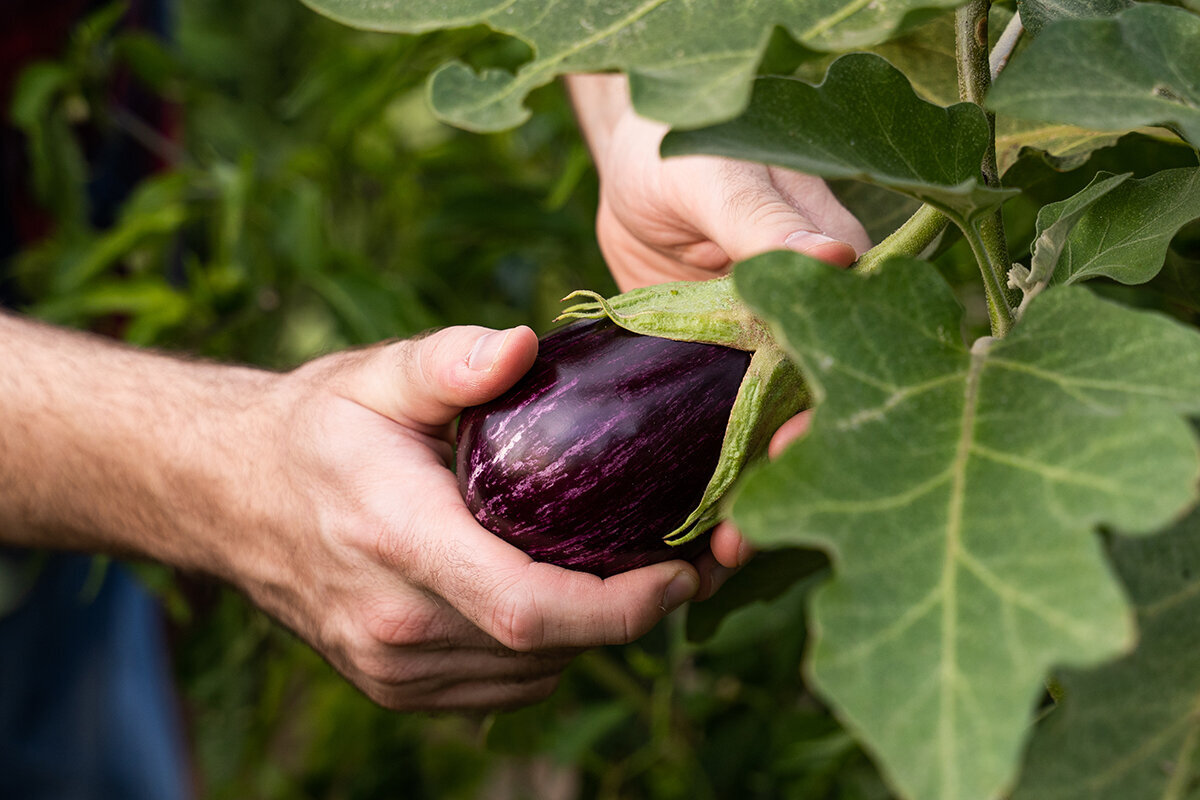
Greenhouse crop 02 · Solanum melongena · Ireland
Growing Aubergines in a Greenhouse
Few summer crops look as polished as an aubergine, yet that lustre takes work: stable warmth, undisturbed roots, sound supports and careful observation throughout flowering.
Growing aubergines under cover gives a long-season crop a more controlled setting. Besides bringing harvest forward, it helps maintain root warmth, shields foliage from rough weather, allows deliberate ventilation and keeps fruit developing through rainy spells or cool nights outdoors.
Starting rule · establish the climate first
A roof alone does not meet an aubergine’s needs.
Give the crop reliably warmer surroundings.Consistency matters more than an occasional hot spell.
Give the crop reliably warmer surroundings.Consistency matters more than an occasional hot spell.
Under glass, the gardener can actively regulate warmth.
Cold starts quickly check aubergines, members of the warmth-loving nightshade family. The Bavarian Garden Academy advises protected growing beyond Germany’s warm wine-growing districts; this is German guidance, not an Irish timetable. Low night temperatures, waterlogged roots and sudden swings slow development and may cause blossom loss. Against Ireland’s Atlantic variability, cover can give this long-season crop more dependable warmth than an exposed bed.
Tropical conditions are neither necessary nor desirable. Seek balanced warmth, strong light and timely air exchange. Cold compost, a container standing in runoff, extended shade or vents kept shut through damp weather each imposes a different check. Plants in equilibrium show erect leaves, compact extension, flowers that hold and fruit enlarging without repeated swings between dryness and saturation.
Treat the greenhouse as a working growing area, not merely weather protection. Keep the watering route short, ensure every window remains reachable and leave space to inspect the underside of each leaf. The Classic Aluminium Greenhouse offers ideas for allocating headroom, staging, paths, ventilation and rooting space before the first aubergine is planted.
Balancing stored heat
Hold warmth without holding stale air.
Take readings at leaf height, where the thermometer reflects what the plant experiences. Seed compost should be kept near 22–25 °C for germination, while later growth needs plentiful light and steady warmth. Strong sunshine may heat a glazed structure with surprising speed. Open high vents and the door early, then introduce shade only where necessary; prevention is gentler than trying to revive wilted foliage late in the afternoon.
22–25 °Cwarm germination
Gentle beginningReliable setVent earlyShade peaks
Germination
Maintain seed compost at approximately 22–25 °C to encourage prompt, even emergence rather than a drawn-out germination period.
Growth
Generous light and warmth encourage robust stems and productive foliage without creating pale, elongated seedlings.
Fruit set
While blossom is present, guard plants against chilly nights, trapped moisture and prolonged extremes of midday temperature.
Signs of stress
Flowering and fruit growth may pause when containers dry, nights turn cool or solar heat becomes trapped inside a shut house.
Build the routine around conditions: retain heat before an early-season cold night, begin airing the structure before morning temperatures climb and circulate air gently through foliage without directing a chilly draught along the row.
Selecting a variety
Fit the plant and its fruit to your floor space, container and cooking.
There is no universally ideal aubergine. A compact cultivar may preserve access along a restricted path, while a traditional large-fruited plant warrants extra root volume, height and dependable support. Choose according to the space available for the whole summer rather than the most impressive specimen in the nursery display.
Compact
Compact and patio cultivars
These suit substantial pots and structures with limited headroom. Small-fruited forms often mature sooner, and their restrained growth leaves more breathing room around the leaves.
Slender
Long Asian cultivars
Long, narrow aubergines lend themselves to regular picking and straightforward inspection. Arrange the shoots so developing fruit remains suspended away from foliage and glazing.
Large traditional forms
Dark oval fruit
This familiar sculptural type benefits from a generous container, a reliable cane or cord, and sufficient space for a limited crop that can ripen properly.
Unusual forms
Striped, ivory or petite
Striped, pale and petite forms make an attractive mixed collection. Beyond appearance, they offer variations in maturity, portion size and culinary use.
Where the greenhouse is also intended as a designed garden feature, consider the aluminium greenhouse collection from Bloomcabin while matching the available shade, headroom, staging and circulation space to your intended plants.
Seedling plan
Resist rushing the calendar; sturdy plants are the priority.
Ireland’s cool, changeable conditions often make indoor propagation worthwhile before an unheated house has fully warmed. Let available light and reliable heat determine when to begin rather than following a date alone. Premature sowing under inadequate conditions generally creates weak, elongated plants instead of extending the productive season.
A promising young plant has a sturdy stem, closely spaced foliage and a rooted plug that stays intact without being tightly congested. Avoid plants showing spots, soft stretched stems or exhaustion in an undersized cell. The aim is rapid establishment rather than prolonged recovery from cold, crowding or root injury.
- 01
Begin in heated seed compost
Sow approximately 0.5–1 cm deep in new, finely textured seed compost. A heated mat can aid germination, although the tray needs regular moisture checks: warmth may dry the compost before this becomes obvious at the surface.
- 02
Light the seedlings from overhead
After emergence, place seedlings under strong overhead light and maintain even, restrained moisture. Pot them individually before they lean towards a remote window, giving each root system room to continue developing without disturbance.
- 03
Move plants when conditions settle
Do not transplant until greenhouse nights are consistently mild and neither the bed nor container compost feels cold. Irish spring weather varies greatly between locations and years. A short delay causes less harm than weeks of stalled growth in a chilled root zone.
- 04
Install supports as you plant
Place the cane, cord or frame while transplanting. Retrofitting support can injure roots and leaves you manoeuvring shoots that may already hold blossom or developing fruit.
Planning the root zone
Adequate compost buffers changes in moisture, nutrition and temperature.
Containers: let volume moderate fluctuations.
Aubergines grow well in pots, but limited compost allows water, nutrients and root temperature to fluctuate rapidly. A mature plant needs at least 20 L; 25–30 L of structurally stable vegetable or container compost provides a steadier reserve. Use generous drainage holes and position the vessel so irrigation can escape completely rather than gathering around the base or remaining in a full saucer.
A dark container may provide welcome warmth in spring but can become too hot in intense sunshine. Keep pots in good light and, when necessary, protect their walls from concentrated midday sun or reflected heat. During hot spells, feel the compost and assess moisture around the roots as well as checking the visible leaves.
Beds: rooting depth with free drainage.
Add mature compost to a greenhouse bed once you know water moves away freely. Avoid making an excessively rich, saturated pocket that produces lavish leaves but erratic blossom. Use roughly 50–60 cm between plants as an initial spacing, adjusting for varietal vigour, the chosen training system and the access route needed for care.
Keep the crown at the same level as it was in the nursery pot. Water thoroughly and apply a light surface mulch if helpful, taking care not to trap dampness against the stem. In permanent beds, plan rotation: tomatoes, peppers, potatoes and aubergines are all nightshades and should not occupy unchanged soil year after year.
Training plants upwards
Keep branches reachable, well-aired and capable of bearing their crop.
Plant structure · selected stems, soft ties and crop weight
Build the framework before the branches become heavily loaded.
Aubergine branches look self-supporting while young, but fruit weight alters that balance. A single upright cane, flexible ties or one to three selected leaders can each work under household glass. Choose a system that keeps the plant open to inspection and lets you pick without forcing your way through tangled foliage.
Keep the main stem with a small number of strong, evenly placed side shoots. Remove frail, inward-growing or ground-level growth in stages rather than stripping the plant abruptly. Secure stems at intervals using soft ties arranged, ideally, in a figure of eight. When fruit begins filling, check that its branch retains the strength and foliage required to carry it safely.
Moderating the crop can produce larger, more thoroughly matured fruit while reducing snapped shoots. On large-fruited plants, five to six sound aubergines per plant is a practical guide, not an absolute target. An orderly framework also improves air movement and exposes early pest activity.
Helping flowers set
Each flower carries male and female organs, but conditions under cover still influence pollination.
Each aubergine flower contains the organs needed to produce and receive pollen. Under cover, however, wind and visiting insects may provide insufficient movement. A short, delicate vibration while flowers are open can improve contact. Forceful daily shaking and repeated handling of individual blossoms are unnecessary.
Air
Routine airing creates light movement around blossom and foliage while clearing humid pockets from within the canopy.
Vibration
On a dry day towards late morning, lightly tap the cane or nudge a flower cluster. This momentary movement is normally sufficient when hand assistance is warranted.
Humidity
Persistent enclosed humidity can impede pollen movement and favour disease. Direct irrigation into the compost and air the structure instead of regularly wetting blossoms and foliage.
Temperature
When blossom drops, examine recent temperatures and moisture first. Overnight chill, a parched pot or excessive heat trapped by closed vents often provides a better explanation than feeding.
Not every flower needs to become an aubergine. Look instead for continuity: blossoms remaining in place while earlier fruit enlarges. If shedding becomes persistent, simplify the investigation by checking night conditions, afternoon overheating, root-zone moisture, air movement and excessively soft foliage associated with too much nitrogen.
Balancing inputs with plant response
Aim for continuity in watering and feeding rather than abrupt correction.
A steady supply of root-zone moisture has a major bearing on aubergine quality. Repeatedly allowing compost to dry and then saturating it may reduce growth and yield, encourage physiological disorders and contribute to bitterness. Because greenhouse plants receive little dependable rain, irrigation becomes the gardener’s responsibility and should follow observation rather than an unchanging calendar.
Irrigation
Soak fully, then reassess
Water at the base early in the day, applying enough to moisten all the compost. Recheck only after the upper few centimetres have started to dry. Compare several pots, because a container near a bright doorway may lose moisture much faster than one standing in a dimmer back corner.
Water at the base early in the day, applying enough to moisten all the compost. Recheck only after the upper few centimetres have started to dry. Compare several pots, because a container near a bright doorway may lose moisture much faster than one standing in a dimmer back corner.
Reading the crop
Use resilient foliage, measured shoot growth and fruit swelling without shrivelling as your guides instead of repeating an identical watering routine each day.
Use resilient foliage, measured shoot growth and fruit swelling without shrivelling as your guides instead of repeating an identical watering routine each day.
Feeding
Moderate, suitable nutrition
Match fertiliser to the compost and its manufacturer’s directions. After the first fruit sets on a container plant, modest regular doses of potassium-rich liquid feed usually serve the crop better than a large attempt to remedy deficiencies late.
Match fertiliser to the compost and its manufacturer’s directions. After the first fruit sets on a container plant, modest regular doses of potassium-rich liquid feed usually serve the crop better than a large attempt to remedy deficiencies late.
Interpret the foliage
Excess nitrogen directs energy into impressive leaves instead of blossom. Older leaves may pale when compost is depleted, but exclude chilled or waterlogged roots before increasing feed.
Excess nitrogen directs energy into impressive leaves instead of blossom. Older leaves may pale when compost is depleted, but exclude chilled or waterlogged roots before increasing feed.
Free drainage
Let surplus water escape
Never leave a container standing in runoff. If a bed drains slowly, investigate why before adding still more water or fertiliser.
Never leave a container standing in runoff. If a bed drains slowly, investigate why before adding still more water or fertiliser.
Clues from below the surface
Wilting despite wet compost, yellow foliage and arrested development indicate impaired roots rather than simple dryness. Restore drainage and an appropriate root temperature before expecting renewed growth.
Wilting despite wet compost, yellow foliage and arrested development indicate impaired roots rather than simple dryness. Restore drainage and an appropriate root temperature before expecting renewed growth.
Timer-operated drip irrigation can be valuable, but set its duration after observing several complete watering cycles. Review it as the season changes: cloudy spring weather, a July heat spell and a heavily laden plant do not use moisture at comparable rates.
Managing an Irish greenhouse climate
Summer control depends on venting surplus heat before stress begins.
Aubergines welcome warmth, although solar gain can make an unventilated house inhospitable very quickly. Ireland’s Atlantic influence generally brings cool, windy winters and comparatively mild summers, with meaningful variation between places and years. During damp spells, exchanging air helps leaves dry and clears stagnant pockets. In bright, dry weather, combine ventilation with selective shade and more frequent inspection of containers.
Use a consistent sequence when airing the house. Open roof vents first, followed by the door or low openings, allowing rising warmth to leave without a harsh draught. A small fan may disperse stagnant pockets, although its airflow must not remain aimed at one plant. During exceptional heat, temporary blinds or mesh can reduce the strongest radiation without shading the crop unnecessarily for weeks.
Inspect developing aubergines along with the foliage. Exposed fruit may suffer sunscald during hot, dry conditions. Avoid removing substantial leaf cover immediately before a warm spell, as healthy foliage forms part of the crop’s shade and temperature defence.
Diagnose methodically
Start with the visible clue, then investigate the surrounding environment.
Yellow speckling and fine webbing
Fine pale flecks with delicate webbing often point to spider mites, favoured by warm, arid conditions under glass. They may weaken foliage before an infestation is evident from the path, so inspect lower leaf surfaces closely.
Bronzed or powdery-looking undersides
Hot, arid conditions can accelerate spider-mite populations. Examine lower leaf surfaces with a hand lens; an early infestation may appear only as a subtle decline in sheen and vigour.
Curling yellow leaves and progressive decline
Cold, saturated compost may prevent normal uptake and requires another remedy from ordinary dryness. Do not pour additional water into an already wet root ball; instead assess its moisture, smell and ability to drain.
Loss of gloss, firm seeds or bitterness
These changes usually indicate fruit left beyond its best picking stage rather than a defective cultivar. Aubergines alter quickly after optimum maturity, so shorten the interval between checks when production is strongest and use firmness and sheen as the principal clues.
A measured correction plan
Inspect lower foliage, shoot ends and tight branch junctions twice weekly. Move heavily infested container plants away from the crop promptly. Take off badly injured leaves sparingly so enough functional foliage remains for photosynthesis and protection of the fruit.
Pest response
Yellow sticky traps help reveal flying pests but cannot provide complete control. Discard severely infested material, open up crowded plants and obtain proper advice before releasing beneficial organisms. Where treatment is needed, use a product authorised in Ireland for amateur home or garden use, observe the label and prevent contamination of water.
For climate disorders
Look back over several days rather than judging only the present moment. Record cold nights, afternoon heat, gaps in watering, restricted drainage and feeding changes; the sequence usually offers more useful evidence than one isolated reading.
For disease risks
Where possible, keep foliage dry, remove dropped debris and fruit that has passed maturity, disinfect tools and do not grow nightshades repeatedly in the same untreated greenhouse soil.
To compare formats, entrances, ventilation choices and long-term ways of arranging the growing area, browse Bloomcabin’s greenhouse and conservatory range. Good climate controls help the gardener detect and correct change; they are not a reason to leave the interior unattended.
Judging maturity by shine
Harvest at maximum sheen and firmness.
Check aubergines often rather than relying on one weekly picking round. Harvest when each fruit is firm, glossy and appropriately sized for its cultivar. As it becomes overripe, the skin loses shine, seeds grow conspicuous and the flesh may become coarse or bitter. Cut with clean secateurs, keeping the calyx and a little stalk attached; twisting or tearing can damage the branch.
Too youngReady to harvestToo late
Shine may appear before an aubergine has filled out or developed its cultivar’s normal outline. Leave it to increase in width or length before cutting.
Look for firm flesh, taut shining skin, the cultivar’s normal colouring and a healthy calyx. A shallow mark from gentle pressure should spring back.
When lustre fades and developed seeds become prominent, the flesh usually grows coarser. Pick that aubergine anyway, then return sooner to assess the remaining fruit.
Use harvested aubergines fairly promptly. Their sensitivity to chilling makes extended time in the coldest refrigerator drawer unsuitable. For short keeping, select a cool place that is not icy. Better still, take them to the kitchen for grilling, roasting, layering or slow braising.
Practical questions beside the greenhouse
Aubergine FAQ
Can aubergines crop in an unheated greenhouse?
Yes, many Irish gardens can produce them if transplanting waits until the house and its compost have warmed. Use the structure to lengthen favourable growing conditions, not to overcome winter. Dependably mild nights and a warm root zone are crucial; during continued cold, delay planting or use a sheltered, frost-free intermediate stage.
How many plants suit a small greenhouse?
Fewer plants generally work better than anticipated. Space them about 50–60 cm apart and retain a passable route for watering, pollination assistance, tying and close examination of foliage. Two to four open, carefully trained plants can yield more useful aubergines than an overcrowded line that stays humid and cannot be reached.
What makes aubergine blossom drop?
Begin with conditions around the crop. Cold nights, intense afternoon warmth, parched containers or humid air that does not move can interrupt fruit set. Then assess feeding, since surplus nitrogen favours foliage. If neither wind nor insects move the flowers, a brief gentle tap to the cane or flower cluster can help distribute pollen.
Do greenhouse aubergines require pruning?
Cut only for a specific purpose. Remove injured leaves, weak branches and shoots that congest the middle, but preserve ample sound foliage for feeding and shielding the aubergines. Tie the main framework while it is young. If a fruiting branch starts to bow, reduce what it must carry rather than stripping away its protective leaves.
When should potted aubergines be watered?
There is no single watering interval for every Irish garden. Feel the compost below its surface and water the entire root zone whenever it requires replenishment. A laden plant may warrant daily checking in summer heat, while cloudy cool weather markedly reduces use. Avoid both shallow token applications and water collecting beneath the container.
How can I recognise a ripe aubergine?
Harvest while an aubergine is firm, glossy and showing its cultivar’s characteristic mature colouring. A faded surface, conspicuous hardened seeds and coarse flesh mean the ideal stage has passed. Use secateurs rather than pulling, retain a small length of stem and check the crop frequently so subsequent fruit continues developing.
Garden archive · references for further reading
Cultivation and storage information used for this guide.
- Garden Academy, Bavarian State Institute for Viticulture and Horticulture:Aubergine – cultivation guidance for Germany– German information covering seed sowing, temperature, propagation, planting, crop care and the harvest of Solanum melongena.
- Guidance from the Royal Horticultural Society:Growing aubergines– an overview addressing sowing, planting, routine care, training, harvesting and commonly encountered cultivation difficulties.
- Extension service at the University of Minnesota:Growing Eggplant in Home Gardens– English guidance on growing sites, establishment, watering, nutrition, harvest timing and typical garden difficulties.
- The University of Minnesota’s extension service:Harvesting and Storing Home Garden Vegetables– information explaining maturity indicators, picking methods and brief storage of vegetables from home gardens.
- Postharvest Research and Extension Center at UC Davis:Eggplant Produce Facts– technical material addressing aubergine quality, maturity, storage environments and behaviour following harvest.
Adapt the advice to the chosen cultivar, immediate weather, structure and manufacturer guidance. Before using plant-protection products, confirm Irish amateur authorisation and comply with the label. Follow supplier instructions for fertilisers and beneficial organisms, and consult a qualified local horticultural adviser where disease remains uncertain or pests become serious.
Thoughtful planning for an extended season
Give slow-maturing crops a warmer setting that remains easy to manage.
A thoughtfully arranged greenhouse works as a manageable growing environment: it provides height for trained stems, upper ventilation for releasing heat, a propagation bench and a clear route for daily checks. With aubergines, these practical choices may determine whether plants simply persist through summer or finish it carrying a polished, worthwhile harvest.
Classic Aluminium GreenhouseSee what the Classic Aluminium Greenhouse can provide adaptable surroundings for heat-loving plants, orderly staging and the regular ventilation demanded by aubergines during an Irish summer.
