
Growing Greenhouse Courgettes in Ireland
Glasshouse notes · Cucurbita pepo
Growing Greenhouse Courgettes in Ireland
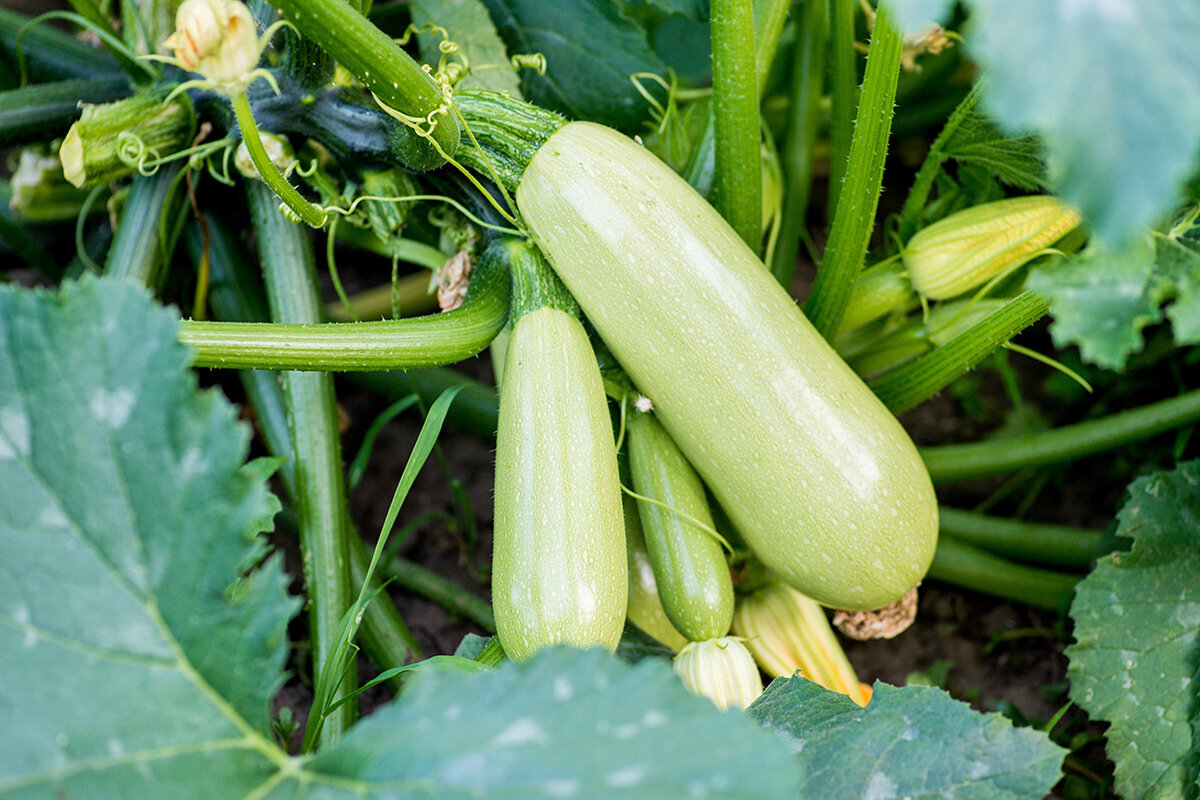
At first light, the blooms are open and the leaves remain cool. With thoughtful positioning, one plant can yield generously throughout the season.
Courgettes can begin earlier and crop well under glass, though shelter alone will not deliver a healthy harvest. Set aside generous ground space, keep air moving, maintain steady root-zone moisture and ensure pollen can reach the female flowers during their brief opening.
A single plant may sufficeVentilate from early morningPick while tender
What does the glasshouse change?
Courgettes soon become substantial glasshouse plants. Their broad foliage spreads quickly around a central crown whose flowers are useful for only a brief period.
A glasshouse softens the cooler beginning and end of Ireland’s season for this warmth-loving crop. It shields broad leaves from persistent rain and gives you closer control over watering. However, fewer pollinating insects may enter than would visit an outdoor bed. Excess heat is not the objective. Plan instead for air to move through the canopy, for the crown to remain easy to examine, and for bees or a fine brush to reach open flowers in the morning.
Most home glasshouses are best served by a compact bush type or a variety with an open habit. Give it a bed section of its own, or use a large stable container, rather than crowding it between cucumbers, tomatoes and staging. Better spacing helps wet leaves dry, exposes young courgettes and leaves the centre accessible. A crop checked every one or two days can then be picked without snapping leaf stalks or searching through tangled growth.
Think of courgette care as a short morning appointment. Look over the flowers, ventilation, root-zone dampness and fruit approaching its picking stage.
Planning space and selecting a variety
Picture the full leaf canopy first, then decide where fruit can develop.
Give the courgette a prominent position with usable space on every side.
Choose a courgette described as compact, bushy or open in habit for growing under cover. Seed catalogues use these terms differently, so read the full description. Short internodes, suitability for containers or tunnels and useful powdery-mildew tolerance are worthwhile traits. Also select a shape you will be happy to harvest and use often. An airy plant is easier to pollinate by hand, thin selectively and pick, but still needs proper spacing and ventilation. Follow any pollination guidance supplied for the named variety.
As a starting point, allow a compact courgette about 0.9 to 1.2 m of functional width; vigorous cultivars need more. This is an allowance for working around the crop, not a fixed spacing rule. You should be able to reach the crown, gather fruit from several angles, remove fallen leaves and use the door and roof vents without brushing continually against wet foliage. In a slim glasshouse, place the plant beside an outside bed edge and protect both the central walkway and the route for escaping warm air. One mature specimen can occupy as much useful room as several smaller vegetables.
Working area for each plantPlan view
Full leaf reachCrownHarvest accessVentilation path
Dashed boundary Keep free-moving air around the canopy at its mature extent.
Reachable crown Leave the plant’s centre accessible for harvesting and health checks.
Clear aisle Retain an open approach for watering, harvesting and moving pollen.
Door and roof vent Keep the escape route for heated air clear of foliage.
A steady start for seedlings
Sow late enough to avoid interrupting the seedling’s steady development.
Courgettes dislike cold ground and also suffer when held too long in a small pot. Direct sowing into the prepared bed is straightforward once the soil remains reliably warm. To gain a modest head start, sow one seed per sufficiently large pot about three to four weeks ahead of the intended planting time. Transplant while growth is compact and the root mass holds together. An excessively early start usually creates an overgrown, stressed seedling rather than a more productive plant.
01
Sow without rushing
Insert each seed about 1.5 to 2 cm deep in an open-textured seed compost that drains readily. It usually germinates quickly at 18 to 21 °C. Keep the mixture uniformly moist, never waterlogged. Reliable warmth around the roots matters more than choosing an early calendar date. Sowing separately avoids having to tease fragile young roots apart.
02
Repot only if planting is delayed
If cold weather delays planting out, transfer the courgette once, with care, to a larger container before roots circle tightly. Leave the growing point untouched. Provide abundant light, gentle airflow and sufficient space between plants. After emergence, somewhat cooler conditions are suitable provided the seedling remains frost-free. Two to three strong true leaves are enough before preparing it for the glasshouse bed.
03
Plant at the pot’s former depth
Prepare a generous planting position using mature compost and humus-rich soil with a stable, open structure. Set the root mass at the same level it occupied in the pot, then water the surrounding soil deeply. Mulch after the bed has warmed, keeping the material loose and away from the stem base. Do not bury the crown or compress the nearby rooting area heavily.
An unheated glasshouse may bring planting forward, yet a cold Irish spring remains cold. Wait for warmed soil and nights without frost, and acclimatise the seedling briefly to direct sun and moving air. Ireland’s Atlantic influence, local exposure, inland frost risk and annual weather differences make a single national planting date unreliable. Judge the soil and overnight conditions inside your particular structure before proceeding.
How courgette flowers work
Two flower forms, with one brief opportunity for pollen transfer.
Male and female flowers occur separately on the same courgette plant. Several males often appear before the first females, which is a normal stage of development. Their bases provide the clearest distinction. A female carries a small courgette-like ovary immediately behind its petals. A male stands on a long slender stem, with pollen-producing anthers at its centre. Both normally open during the morning and offer only a short period for successful pollination.
Male bloom
Slender stem · anthers
Anthers
Stigma
Female bloom
Ovary · stigma
Male: slender stem with central anthers
The male flower supplies pollen. It can be much more numerous than female flowers during the crop’s opening stage, signalling that flowering has started but not that fruit has set. If you pick blossoms for cooking, leave sufficient males opening that day to serve insects and any pollination you carry out yourself.
Identification clue: no miniature fruit sits behind it, while the centre carries visible pollen.
Female: swollen ovary with a receptive stigma
The tiny courgette beneath a flower is not yet a guaranteed crop. If the stigma receives too little pollen, that fruitlet may turn yellow, shrivel, enlarge only near the stalk or grow crooked, often dropping soon afterwards. Good coverage of the stigma supports more even development.
Identification clue: an immature courgette directly behind the petals and a lobed central stigma.
Morning flower check
Ventilate.
Pollinate.
Recheck.
Courgette flowers offer only a brief morning window. Guidance on fruit set in cucurbits explains that males can precede females and that pollen must be carried onto the female stigma. When a glasshouse is opened promptly, bumblebees and other insects may do this unaided. If cool rainy weather limits their activity, or doors and vents remain closed, transfer pollen yourself until dependable visits by pollinators can be seen.
Use a soft art brush to lift the pollen. Another method is to take a male flower that has just opened and gently expose its pollen-bearing parts. Brush the pollen over the stigma of a female flower open that morning. One male may serve several females. Work early, while both flowers are open and dry, and handle the fragile petals without spreading or tearing them unnecessarily.
01Open vents
02Check anthers
03Dust stigma
04Watch fruitlet
New female flower Walk through the glasshouse in the morning. A small fruit-shaped ovary immediately behind the petals marks a fresh female flower.
Find usable pollen Select a fully open male flower whose central anthers show dry yellow pollen.
Move pollen carefully Touch the female stigma lightly with the loaded brush or the exposed pollen-bearing part of the male flower.
Observe the fruitlet Over the next few days, a properly pollinated courgette should expand evenly. Yellowing, shedding, narrowing or unusual distortion often indicates that pollen coverage was incomplete.
Managing hot summer conditions
Prolonged high temperatures strain flowers, may stop buds developing and can reduce reliable fruit set. Do not wait for midday heat to build beneath the glazing. Open the door and roof vents widely during the morning, leave the upward airflow route unobstructed and use moderate temporary shading when sunshine is severe. The aim is a bright growing space with moving air and less heat, not a dark interior. Thin or position dense leaves so they do not hold a hot layer around flower height.
Irrigation, fertility & fresh air
Keep moisture steady at root level and air moving overhead.
Because courgettes grow quickly and carry broad leaves, they use substantial amounts of water. Soak the soil at the base rather than wetting the canopy as a routine. Weather, soil composition, container capacity, mulch and crop load all affect frequency. Test below the mulch by hand or with a simple sensor. Configure automatic irrigation only after learning how quickly that particular bed dries during Ireland’s warmer spells.
Once the soil is warm, mulch helps conserve water and limits abrupt swings in moisture. Well-rotted compost and fertile, humus-rich ground provide the basic nutrients. During sustained cropping, an organic liquid fertiliser at a moderate rate can be helpful; follow the instructions for the feed and substrate concerned. Heavy nitrogen encourages impressive but soft foliage while flowers and courgettes may suffer. In containers, lighter feeds given regularly are generally more dependable than infrequent concentrated doses.
Watering and ventilation must be managed together. Open doors and roof vents before heat accumulates. Using clean equipment, remove leaves that are aged, badly damaged or lying on damp soil, but do not strip healthy foliage. Keep neighbouring crops outside the courgette’s airflow and working zone. Measured shading can temper strong midday sunshine in July and August; it supports ventilation but never replaces fresh-air exchange.
Moisture and fruit quality
Steady soil moisture
Roots
Airy canopy
Young fruit
Calcium movement
Maintain even dampness in soil that drains freely.
Prevent repeated alternation between dryness and saturation.
An open canopy helps water and nutrients move through the plant.
Consistent growth supports a tender texture.
Stress can disrupt calcium supply to developing cells.
If the flower end develops a dark hollowed patch, first examine watering consistency, drainage and root health. Blossom-end rot is associated with inadequate calcium reaching fast-growing fruit cells, but unstable water movement is frequently the direct cause. Adding lime or fertiliser without a diagnosis cannot repair disrupted uptake and could create a further imbalance in the soil.
See how bed positions, working access and roof ventilation can be considered together in the Classic Aluminium Greenhouse.
Reading symptoms on fruit and foliage
Study the developing pattern before deciding how to respond.
A courgette usually displays early signs before a problem becomes serious. Use each harvesting round to inspect fresh flowers, leaf undersides, the base of the stems and small fruit. Watch how the symptoms develop for several days rather than reacting dramatically to one yellow leaf. The remedy is often straightforward: create more airflow, stabilise watering, pollinate in the morning, harvest sooner or cut away severely affected tissue with disinfected secateurs.
Fruit set
Poor growth
Fruit health
End lesion
Foliage
Powdery growth
Pest check
Feeding damage
Temperature
Heat strain
Fruitlets turn yellow and drop
The usual cause is inadequate pollination. Check whether fresh male and female flowers are open together, then move pollen by hand on the next dry mornings. Opening the structure early also permits insects to enter. It is not unusual for a young plant to lose its first few fruitlets, and this alone does not mean that later cropping will fail.
Dark patch at the flower end
Blossom-end rot results when water flow and calcium delivery to the fruit are disturbed. Keep soil dampness steadier, prevent saturated conditions and root damage, avoid excessive nitrogen, and remove badly affected courgettes. Before adding lime or another feed, assess the watering routine, available root space and substrate condition.
White powdery patches
Powdery mildew frequently affects the cucurbit family. Remove older leaves with extensive white coating, increase spacing and airflow, and water at soil level so foliage stays dry. Clear infected remains away from the glasshouse. Choosing a cultivar with useful mildew tolerance may reduce trouble in a future season, but that trait does not remove the need for good ventilation.
Chewed leaves or sudden wilting
Look closely beneath leaves, along the stalks and around the crown for damage or pests. Irregular holes with slime trails can point to slugs. Limp foliage might instead reflect heat, dry roots or an injured stem. Reassess it during the evening; a plant that has recovered was often reacting temporarily to midday warmth. Choose a control only when the likely cause has been identified.
- Do not spray open flowers indiscriminately while pollinators are visiting.
- Clean tools thoroughly after removing unhealthy plant tissue.
Flowers drop during prolonged hot weather
Start airing the structure in the morning, ahead of any heat build-up. Use modest shade in intense sun and keep water delivery regular. Glass can expose young courgettes and foliage to scorching as well as excessive temperature. Provide cooler air with continual movement rather than sealing the plants into humid stillness. Shading is an aid to ventilation, not an alternative.
Harvesting to a rhythm
Frequent cutting helps the plant continue producing flowers and fruit.
Harvest courgettes while the skin is glossy and delicate and the seeds remain small. With many long cultivars, around 15 to 20 cm gives especially good eating quality. The natural form and variety description matter more than a ruler, however, and round cultivars should be gathered at their appropriate stage. During peak summer growth, look every day or no later than every second day: warmth under glass can turn a hidden tender fruit into an oversized one surprisingly fast.
Cut through the stalk with clean secateurs or a knife, leaving a short piece attached to the fruit. Avoid wrenching or twisting, which may damage the plant at its centre. Regular harvesting directs growth towards further flowers and courgettes. Remove any fruit that has nevertheless become very large. It is usually still usable but will have tougher skin and bigger seeds; if left in place, it consumes resources and may slow the next flush.
Keep newly harvested courgettes cool for only a short period and use them soon. Their finest quality comes from picking young, when the skin remains fine, the flesh is firm and the seeds are scarcely evident. Holding them in refrigeration for longer does not enhance quality compared with prompt preparation.
Mini5–10 cm
Young10–15 cm
Ideal15–20 cm
Oversizedmore than 20 cm
Especially tender; cook briefly or slice into fine raw ribbons.
Delicate skin and small seeds suit a wide range of meals.
A sound compromise between texture and yield; harvest often at this size.
Tougher skin and larger seeds; remove promptly for stuffing or grating.
Two-minute harvest round
Open the glasshouse first, note its warmth and vent settings, then test soil moisture under the mulch. Lift leaves gently from the outside towards the crown, cut any ready courgettes and inspect female flowers that have opened. This quick round can reveal hidden fruit, absent pollen, drying roots, decaying flower remains or the first mildew marks before they become major problems. Walking the central aisle each day also keeps the route serving the purpose for which it was reserved.
Clearing the crop at season’s end
Clear the spent crop and ready the space for its next use.
When yields fall sharply, disease pressure rises or cooler weather stops growth, lift the whole plant and gather every fallen remnant. Do not leave mildewed foliage or soft courgettes beneath benches or bed edges. Clean aisles, containers, cutting tools and accessible irrigation fittings before another crop is planted. On dry days, ventilate the empty glasshouse thoroughly. Finishing cleanly is wiser than trying to force a last flower under weakening light and increasing dampness.
If courgettes return annually to the same glasshouse soil, rotate botanical families wherever the available area permits. For containers, renew the exhausted compost or recondition it appropriately. Growing under cover does not remove the principles of rotation, hygiene and soil care matched to each crop; it simply offers more control over their application. Record any place where mature leaves narrowed a path or blocked a vent. That information can be more valuable next season than finding room for another plant.
Close the season deliberately
- Remove all fruit, the spent plant and fallen leaves promptly.✓
- Clean harvesting tools and check drip lines and outlet points.✓
- Wash the glazing to make the most of limited winter light.✓
- Record where the mature canopy narrowed a path or blocked ventilation.✓
- Allocate next season’s planting area before choosing and buying the seed.✓
For a design that brings roomy paths, roof ventilation and organised beds into one growing layout, explore the Classic Aluminium Greenhouse from Bloomcabin.
Courgette questions answered
Clear advice for growing courgettes beneath glass.
Can courgettes thrive in an unheated glasshouse?
Yes, once the soil and enclosed air have warmed sufficiently and frost is no longer a risk. Courgettes are summer plants, so a glazed roof does not compensate for cold ground. An unheated house is useful for extending the season, shielding foliage from wind and persistent rain, and making water easier to manage. After establishment, overheating in a closed structure on a sunny day is often the more immediate danger; the plant does not require tropical conditions.
What number of courgettes will fit comfortably?
For many home glasshouses, one plant uses the space most productively. Depending on its variety, set aside about 0.9 to 1.2 m of useful width and preserve routes to the crown, doorway and roof vents. Grow a second only if there is a separate airflow corridor around each canopy and both plants can be reached without difficulty. Two cramped specimens generally perform less usefully than one plant accessible from all working sides.
Do flowers always need pollinating by hand under glass?
Not always. Early opening of doors and vents may bring enough bumblebees and other pollinators to the flowers. Hand transfer is a straightforward safeguard when the structure stays enclosed, mornings are cool and rainy, or female fruitlets repeatedly yellow and shed. Look for male and female flowers open at the same time in the morning, then carry pollen with a fine brush or use the pollen-bearing centre of a fresh male flower.
Why is there lush foliage but so little fruit?
Begin with pollination, heat and the amount of nitrogen supplied. Excess nitrogen encourages a thick, soft canopy, while trapped high temperatures can damage flowers and young fruit. Check whether both flower types open together, transfer pollen during the morning and improve ventilation. Do not respond automatically with more feed. Several male flowers commonly precede the first female ones on a young plant, so it may simply need time and consistently good growing conditions.
Should glasshouse courgette leaves be cut back?
Do not strip healthy foliage heavily. Remove only leaves that are old, badly damaged, clearly diseased or lying persistently on moist ground. You may also take out an individual leaf if it completely bars access to a fruit or the crown. Use sharp disinfected secateurs and cut conservatively. The plant still needs enough sound leaf area to sustain its harvest. Adequate initial spacing is a better solution than repeatedly pruning an overcrowded courgette to keep it small.
Sources and further guidance
Reliable horticultural decisions begin with sources that can be checked.
The German and international specialist sources listed here support the sections on sowing, planting time, conditions beneath glass, flower biology, fruit set and common problems. Across Ireland, exposure, locality, spring weather and glasshouse design can all alter growing conditions. Combine the general advice with regular observation of your own bed.
More from Bloomcabin: Classic Aluminium Greenhouse · Sliding doors for aluminium greenhouses · Bloomcabin greenhouse curtains
- Bavarian Garden Academy – establishing a courgette cropPractical material on raising plants, setting them out, care and harvest.
- Bavarian Garden Academy – preparing the vegetable gardenGuidance on seed timing, planting dates and waiting for reliably mild conditions.
- Bavarian horticultural institute – small glasshousesAn overview of construction, ventilation, practical use and managing crops beneath glass.
- Royal Horticultural Society – growing courgettesAdvice for home growers on culture, watering, pollination and harvesting.
- Royal Horticultural Society – courgette, marrow and squash problemsA reference for identifying and understanding disorders commonly seen in cucurbits.
- University of Minnesota Extension – flowering and fruit set in cucurbitsTechnical guidance explaining flower order, pollination and subsequent fruit formation.
Plan for morning access
Set aside growing space, moving air and an easy approach.
The best courgette glasshouse is not packed to every edge. Begin its layout with a usable aisle, vents that open without obstruction, a visible crown and simple access for timely harvesting. The protected area then works as an Irish summer growing space: warm enough to encourage vigorous plants, open to visiting pollinators and convenient for a quick inspection at the start of the day.
Classic Aluminium GreenhousePlanning note: mark out the central aisle before arranging beds, containers or staging. Keep every roof vent, flower and harvest point easy to reach. The unplanted area that appears spare on a plan often proves essential for consistent everyday care once the courgette is fully grown.
Continue comparing size, glazing, ventilation arrangements and access in the Classic Aluminium Greenhouse and view the available versions of the Classic Aluminium Greenhouse.
