
Growing Kale in a Greenhouse
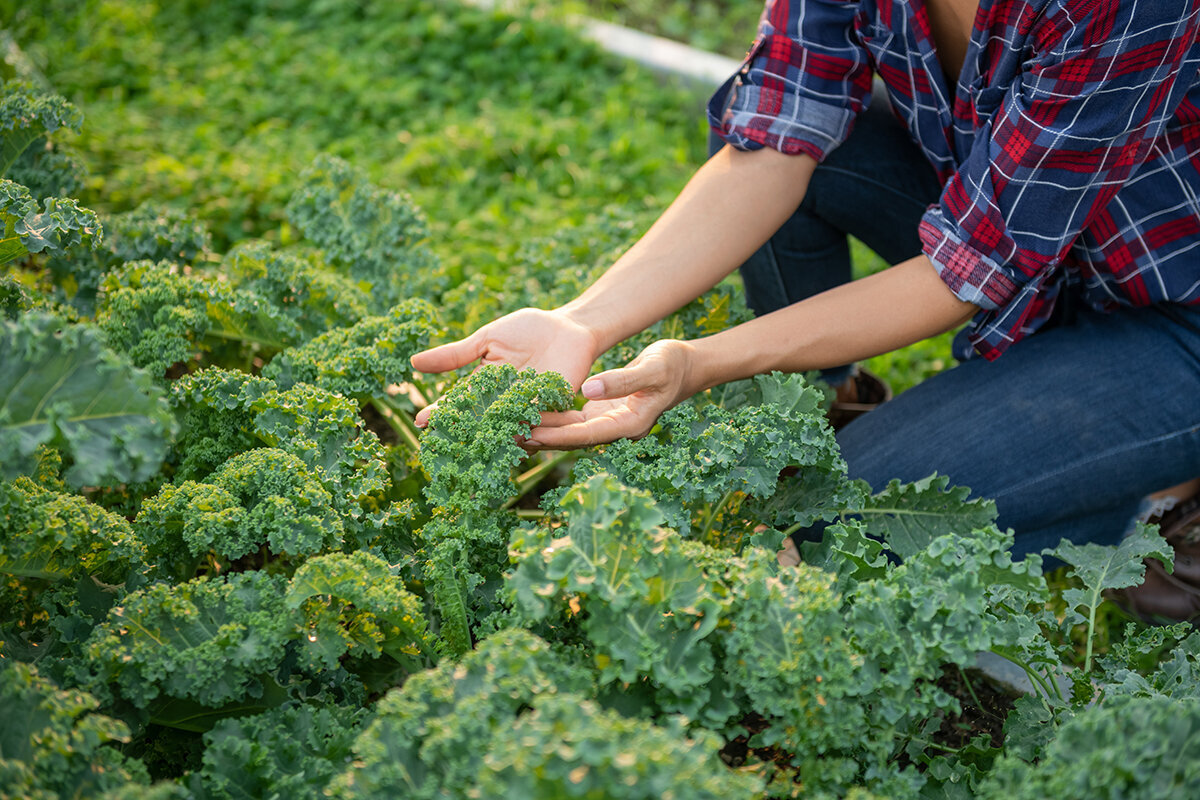
Bloomcabin crop journal / Ireland’s cool season
Greenhouse Kale for Ireland’s Cool Season
A handsome winter vegetable yielding sweet, sturdy foliage, several rounds of picking and worthwhile use of beds vacated by tomatoes, peppers and cucumbers.
Growing categoryCool-weather brassica suited to repeat picking
Main use under coverHarvests from autumn into early spring
Preferred settingBright, cool air with consistent soil moisture
Rule to rememberLeave the growing crown undamaged
Putting limited winter light to work
Tropical warmth is unnecessary for kale. What helps is cool shelter that limits exposure to driving rain, steadies the root area, keeps foliage cleaner and lets air circulate through tightly curled rosettes.
Let the crop describe its conditionA firm rosette and lively centre suggest measured development. Limp stalks, yellowing foliage or dampness lodged around the crown mean conditions need attention.
Growing under cover gives you more control over the season without cancelling it. Short days still slow the crop, and an unheated greenhouse may still freeze. What you can manage are wind, prolonged leaf wetness, uneven watering and sharp changes in temperature. In a small house, reserve a bright section of bed for kale and keep the route to every rosette unobstructed. A Classic Aluminium Greenhouse provides height, overhead ventilation and workable aisles, helping the winter bed stay orderly and easy to tend.
Kale tolerates cold, yet still suffers when conditions swing abruptly. The finest foliage comes from steady development, not repeated changes between chilled, waterlogged roots and sudden heat beneath glass. There is no need to force growth during December. Instead, maintain an even environment where each leaf can mature firmly, lose moisture after a damp night and retain good harvesting quality for as long as possible.
01 / Fit the plant to the available room
Begin with the space a mature plant will occupy.
Flavour is only one consideration when selecting a variety. Plant form also governs height, foliage density, picking method and ventilation within the bed. Match its eventual scale to the aisle, eaves and intended length of cropping.
Curly kale
Frilled leaves create plenty to harvest and give the bed its familiar winter character. Because droplets sit inside the curls, generous gaps and early ventilation matter particularly for this type.
Well suited toRepeated picking from the plant’s outer edge
Cover noteLeave room around each plant for air to pass
Tuscan kale / cavolo nero
Long, dark blue-green leaves produce a calm vertical shape in the border. This relatively slim plant is manageable beside a path, where its lower foliage can be reached and checked conveniently.
Well suited toNarrow rows and smaller borders
Cover notePick tender lower leaves regularly
Red kale
Red-veined foliage and purple stalks enliven mixed planting in the cooler months. Many cultivars supply tender young greens; examine the soft centre frequently for aphids.
Well suited toStaggered baby-leaf batches
Cover noteLook for aphids among the innermost leaves
Smaller-growing selections
Short cultivars work around restricted eaves, raised beds and narrow borders. Their contained rosettes can yield well without allowing overlapping damp foliage to obstruct the aisle.
Well suited toContainers, raised beds and limited floor plans
Cover noteSelect deep pots that drain without obstruction
As a starting arrangement for large mature plants, allow about 45 cm between plants in a row and 50 to 60 cm between rows. Closer planting is appropriate only for planned baby-leaf production or a stand that will later be thinned. In a compact greenhouse, convenient access matters more than maximum plant numbers. You should be able to see each stem, water its root area accurately and harvest without brushing repeatedly against wet foliage.
Use friable, humus-rich soil with dependable drainage rather than a compacted bed depleted by previous crops. Before planting, remove old debris and work in mature compost. Kale generally prefers a near-neutral to slightly alkaline soil with steady nutrition and moisture. If the ground is strongly acidic or clubroot has occurred, test it before adding lime or planting brassicas again. Sound rotation is safer than trying to correct uncertainty with extra fertiliser. After several intensive greenhouse seasons, analysis also helps direct nutrients where they are genuinely needed.
02 / Establish successive batches
Divide the sowing rather than committing everything together.
One substantial batch may glut the harvest before leaving an empty period. Two or three modest rounds create a steadier sequence: seedlings coming on, plants ready to pick and older specimens that can leave at the right moment.
Opening batch
Sow in place
Rake the seedbed to a fine finish, water it uniformly and cover the seeds lightly. Direct sowing avoids the interruption caused by moving seedlings and works well when the permanent greenhouse border is vacant, clean and prepared.
Thin deliberately. Crowded seedlings can be collected as baby leaves, while the strongest plants with adequate room remain to form mature rosettes.
Following batch
Move seedlings carefully
While summer crops still occupy the border, start kale in a clean propagation tray, individual pots or multi-cell trays. Strong seedlings can be transplanted after roughly three to four weeks, once several true leaves have formed.
Set the young plants slightly below their former pot level, then water them immediately. Brief shade is useful only when an unexpectedly hot, bright spell follows late-summer planting.
Final batch
Repeat after another two or three weeks
Make a modest follow-up sowing while temperature and light remain sufficient for robust development. It provides replacement plants and spaces the harvest through late summer and autumn. During the darkest winter period, stop sowing rather than encouraging pale, weak growth.
Record the position, cultivar and date for every sowing. Because each greenhouse develops a particular microclimate, observations made on site soon offer better guidance than a general calendar.
Irish sites do not share one reliable sowing date. Let local exposure, available light and conditions inside the greenhouse determine your timetable. Protect midsummer sowings from intense heat beneath the glazing. Later batches can still yield young leaves, although they may not attain the stature of a conventional winter plant. For compact kale and sheltered propagation, an Aluminium Mini Lean-to Greenhouse provides useful holding space while the principal border remains occupied.
Keep the growing medium evenly moist during germination without leaving it waterlogged. Once seedlings appear, give them bright light and gentle movement of air so their stems stay short and sturdy. For late-summer batches, check the tray itself as well as the greenhouse atmosphere: afternoon sun can dry a pot surprisingly quickly. If you need one plant in each pot, retain the strongest after emergence. Weak, stretched seedlings rarely make up all their lost development once autumn light declines.
03 / Read the covered climate
Keep foliage cool, crowns dry and roots evenly supplied.
Kale is adapted to the cool part of the year, and consistent surroundings support the best foliage. Encourage measured leaf formation rather than fast, tender growth followed by stress.
Sowing opportunity
Available daylight
Risk of excess warmth
Picking period
Light, sowing, heat risk and picking shift as one seasonal pattern.
Consider all four tracks as a single pattern. Growth naturally eases when daylight declines, so lower your yield expectations instead of reducing the spacing or trying to compensate with extra feed and irrigation. As days brighten towards late winter and spring, heat can accumulate beneath glass sooner than the calendar suggests, making earlier ventilation necessary. Staggered sowing distributes this transition among several plant ages, so older plants can be picked while younger crowns continue to develop.
Separated rosettes
Unobstructed air movement
Overlapping rosettes
Moisture caught within foliage
With open spacing, moving air reaches the soil surface and the bases of the leaves. There is also space to water beside each stem, take away older outer foliage and check after a wet night whether the centre has dried.
Where foliage overlaps, dampness lingers and insect checks become awkward. Any apparent benefit from fitting in more plants can disappear through damaged leaves, delayed drying and restricted access.
Do not neglect fresh air during winter. Plants and damp soil continually release moisture inside a closed structure; a short, purposeful opening replaces that humid air. High vents are effective because warmth and moisture rise together. Still inspect the centre of every plant, as curled rosettes can remain damp even when the panes look dry. The roof-vent arrangement on a Classic Aluminium Greenhouse makes this moisture-control task straightforward within an orderly growing area.
Let root-zone moisture determine irrigation. In cool weather, check about 5 to 8 cm beneath the surface, because dry-looking topsoil may hide moisture below. Pots lose water faster than a greenhouse bed, but kale needs far less under weak winter light than in bright spring. Water early enough for splashes to dry before evening, empty saucers and ensure heavy soil releases surplus water.
04 / Keep the crown intact
Pick from the edge and preserve what grows next.
For a long picking season, remove mature leaves one at a time around the rosette’s perimeter and keep the close cluster of new growth in the middle intact.
Mature outside foliage / developing inner foliage / undisturbed crown
Outside foliage Harvest fully developed leaves from the oldest outer layer first. Bend them down gently or sever each leaf stalk with a clean cut.
Developing foliage Leave developing inner foliage to supply your next picking.
Central crown Never slice into the compact centre of growth. Damage to the crown can stop progress, cause uneven branching or finish the plant’s production.
Damaging approach Taking the complete top produces one substantial picking but removes the plant’s capacity to continue cropping.
Wait until a leaf is large enough to justify the energy spent producing it. Then take a small number from several plants, rather than exhausting one rosette. Work upwards from the lower stem and move around the crown. Use clean scissors for substantial stalks; softer stalks can be detached with a controlled downward movement. After each picking, preserve no less than half the leafy rosette and considerably more when winter growth is slow.
“Today’s picking belongs around the crown; tomorrow’s leaves are already forming inside it.”
A deliberately dense baby-leaf stand can be cut just above soil level once or twice for quick harvests. Established individual plants are better treated by selecting outer foliage. This protects the active centre, maintains an upright habit and prolongs picking over numerous weeks. Young plants removed to create more space can likewise be used in the kitchen as tender greens.
Pick in late morning if possible, after dew and condensation have dried but while the greenhouse remains cool. Place the foliage loosely in a basket instead of packing it tightly. Thick central ribs may be removed before cooking. Older leaves suit soup, stew and slow-braised dishes; younger inner leaves can be eaten raw, briefly steamed or included in a winter salad.
05 / Interpret warning signs
Identify the cause before addressing symptoms.
Trouble seldom comes from one influence alone. Crowded foliage, persistent damp and a warm afternoon may combine to weaken kale. Examine the undersides, crown and soil before applying any treatment.
What you notice
Young foliage marked by small feeding holes
Possible reason
Caterpillars and other pests of brassicas can reach the crop through windows or doors left open for extended periods in late summer.
Response
Check leaf undersides often and remove caterpillars by hand. Protect young plants with suitable crop netting if needed, then clear all old brassica remains when the crop ends.
What you notice
Distorted, sticky foliage near the centre
Possible reason
Closely folded leaves can conceal small aphid colonies within the soft young crown.
Response
Ease the rosette apart and inspect the tender new shoots. Deal with small colonies in the morning using water or careful physical removal, take off heavily infested leaves and increase the gap between plants.
What you notice
Yellow tissue or darkened lesions
Possible reason
Wet leaves, poor air movement and infected residues can encourage rot or other foliar disease.
Response
Remove all affected foliage, clean the tools, keep irrigation beside the stalks and avoid following another brassica immediately with kale in the same border.
What you notice
Foliage that is limp, unusually tough or bitter
Possible reason
Possible factors include heat, insufficient moisture, imbalanced feeding or a transition towards flowering as the days lengthen.
Response
Increase venting sooner and restore consistent moisture. Feed modestly only where older foliage is pale. If the principal stalk begins extending clearly, collect the usable leaves and start another batch.
Quiet, consistent hygiene prevents trouble. Take off ageing yellow leaves, clean adhering soil from equipment and remove harvested stalks from both the bed and work surface. Especially where clubroot is known, plan a rotation break of three to four years after kohlrabi, broccoli, pak choi, rocket, radish, mustard and other brassicas. Give the young centre close attention during every inspection. For an airy growing area that remains easy to reach, a Classic Aluminium Greenhouse can be planned around clear routes, sensible gaps and reliable ventilation from the outset.
Before taking direct action, establish the likely cause. For a domestic crop, regular checks, physical removal, clean growing practices, protective mesh and better air movement are usually appropriate first responses. Avoid broad-spectrum treatments where possible. If chemical control is considered, Irish amateur gardeners should use only a product authorised for amateur home or garden use and obey its label. Do not compost badly diseased material when the cause is uncertain, and clean the bed after cropping. Extra water or fertiliser will neither remove a pest nor restore a damaged growing crown.
06 / Account for local conditions
Three patterns found in Irish greenhouse growing.
Weather, site exposure, glazing and the ventilation you can actually provide matter more than a uniform date. Use these regional patterns for orientation, but make decisions from observations at plant level, soil moisture and your own greenhouse records.
Atlantic and coastal gardens
Here, persistent humidity may be a greater challenge than low temperature. Aim to establish strong rosettes before the darkest weeks, keep their leaf bases uncrowded and ventilate during suitable weather. Deep in winter, kale may preserve existing foliage while producing little obvious growth. Harvest lightly, then expect a faster response as increasing daylight returns.
Inland sites prone to frost
Air frost can occur inland even late in spring. Have fleece ready for severe spells and place it immediately above the plants. Following cold nights, admit fresh air during the day whenever outside conditions permit, preventing condensation from lingering beneath the glazing.
Mild, protected locations
Winter sun may create the main difficulty in these gardens. A greenhouse that is frosty at breakfast can be far too warm by midday. Open it early, use external shading where necessary and clear older plants when stronger spring sunshine and increasing day length begin to lower leaf quality.
The same principle applies across Ireland: offer kale shelter without trying to create tropical warmth. Wide differences between daytime and night-time temperatures may support compact growth, whereas a persistently wet centre invites problems. Once a week, note whether leaf bases are drying, how quickly warmth is lost after sundown and whether picking is followed by new foliage. Those observations guide the crop more accurately than rigid watering and feeding schedules.
Even a small footprint can look ordered and remain productive. Grow dark Tuscan kale beside the path, use shorter cultivars in raised beds, and fill temporary spaces around young plants with quick-growing herbs. For propagation and seasonal changeovers, an Aluminium Mini Lean-to Greenhouse gives useful shelter; arrange the transfer to summer crops before increasing light and warmth make it urgent.
07 / Questions from practical growing
Covered kale: practical questions
These practical answers help turn an initial trial into dependable harvesting during Ireland’s cooler months.
Will kale grow without greenhouse heating?
Yes. An unheated house keeps much of the rain off the foliage, reduces wind exposure and softens abrupt temperature changes. Kale nevertheless develops far more slowly through short days and sustained hard frost. Treat the greenhouse as weather shelter and a means of extending the season, not as assurance of uninterrupted winter growth. During frost, fleece laid just over the crop provides another protective layer.
How do I know when kale is getting too warm?
Repeated heat peaks are more important than an isolated warm hour. When sunny weather often drives indoor temperatures upwards, open the roof ventilation and door earlier. External shade can be helpful towards the end of summer, although it cannot substitute for fresh-air movement. Continued warmth may result in soft or tough leaves and can push the crop towards flowering.
When should covered kale receive water?
Use moisture at root depth to determine when watering is due. In cool weather, inspect the soil 5 to 8 cm beneath its surface. It should stay evenly moist but never waterlogged. Containers need checking more often than a greenhouse border, while plants in the low light of winter use substantially less water than they do in bright spring weather.
Is kale suitable for greenhouse containers?
Yes. Choose compact cultivars and roomy containers with unobstructed drainage. Add a humus-rich quality growing medium, maintain even moisture and feed moderately while plants are actively developing. Arrange the pots so adjacent rosettes do not cover one another, and tip away water that gathers beneath them.
What makes greenhouse kale bolt?
Increasing day length, warmth and earlier stress all encourage flowering. Harvest good foliage promptly once the central stem begins to rise noticeably. Starting a fresh batch is normally more productive than trying to return a plant already committed to flowering to a compact leafy rosette.
Do yellow leaves at the bottom need clearing?
Yes. Take away lower leaves promptly when they turn yellow, become damaged or diseased, or are soiled. Removal improves circulation and lets you inspect the stem while denying pests a moist refuge in dying foliage. However, one or two naturally ageing yellow leaves do not by themselves signal serious trouble.
Specialist references
Sources and
further reading
These German references cover kale in domestic and commercial settings, soil care and small-greenhouse conditions. Interpret their guidance for the chosen cultivar, Irish weather, soil and the ventilation possible on your site.
Continue with Bloomcabin: Bloomcabin Magazine: Bespoke Aluminium Greenhouses · Design for the seasons ahead · Browse greenhouse equipment and planning ideas
- Hortipendium: Kale for German home gardens
- Hortipendium: Commercial production of kale and Tuscan kale
- Hortipendium: Soil and nutrition guidance for kale
- Hortipendium: Principles of small-greenhouse growing
- German Federal Centre for Nutrition: Winter kale overview
- Hortipendium: German home-garden cultivation notes for kale
A sheltered winter vegetable bed
Turn weak winter light into a sequence of useful pickings.
Beyond shielding the crop from weather, a greenhouse lets you observe changing conditions, balance humidity with fresh air and bring home-grown foliage into the kitchen while open beds outside are largely at rest.
Classic Aluminium Greenhouse