
Growing Onions in a Greenhouse
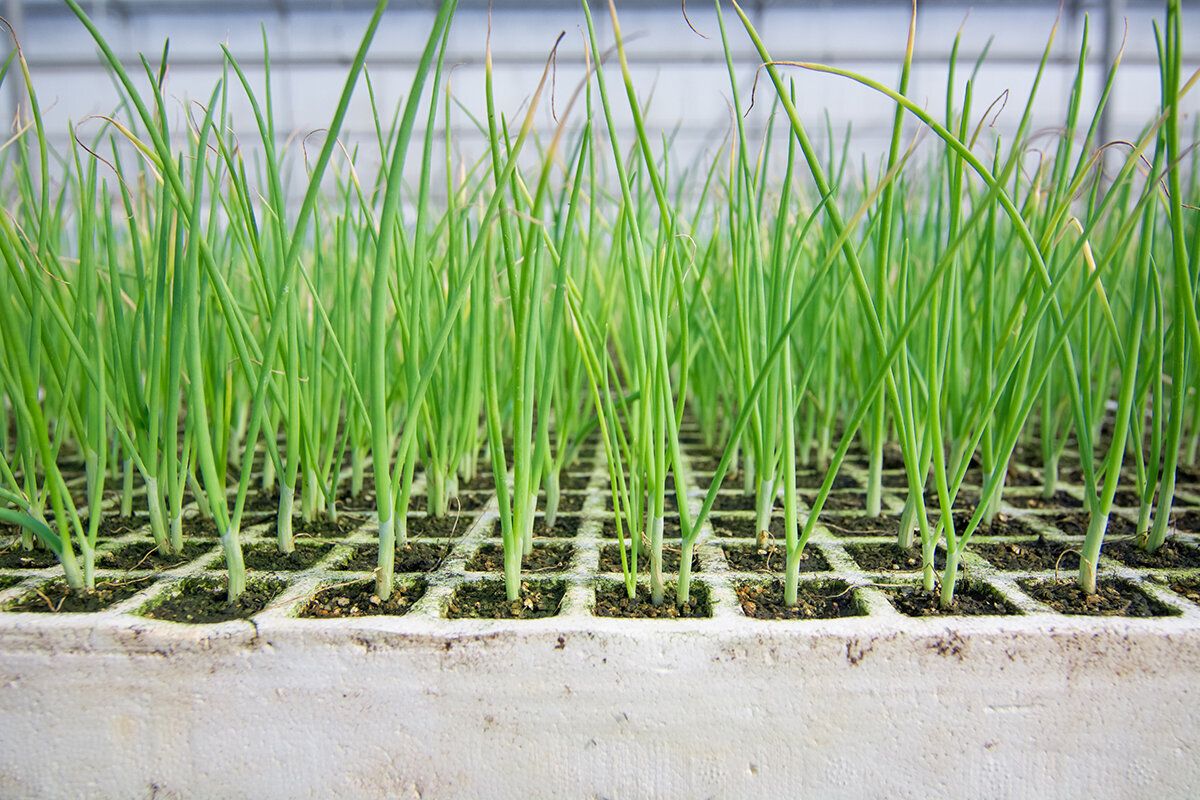
What does a greenhouse offer onions?
Weather protection without manufacturing summer
An onion is assembled through successive leaf layers well before a swollen bulb can be seen. Healthy foliage must be established ahead of the daylight cue for that variety.
The difference made by cover
Irish springs can bring cold rain, saturated ground, capped seedbeds and abrupt weather changes. Cover makes seedlings easier to establish, keeps prepared soil workable sooner and gives lifted bulbs a sheltered place to dry. It also allows closer control of watering, ventilation and hygiene, which benefits shallow-rooted onions that dislike both drought and warm, stagnant humidity.
The limit of greenhouse protection
Photoperiod remains the principal bulbing signal. Even under glass, long-day onions await sufficiently long days, while short-day types may swell before they have built enough foliage in Irish summer light. Routine household crops seldom benefit from added lighting. A variety recommended for northern European conditions is a more dependable starting point.
How to use the space
Protected space in an Irish garden is most useful early in the season. Sow long-day onions in late winter, or plant sound sets and sturdy transplants during March or April once the bed is workable. They can remain in an airy side bed until harvest. If tomatoes or cucumbers fill the house later, plan carefully for airflow, light and separate watering zones.
This routine suits a well-planned Classic Aluminium Greenhouse because propagation trays receive bright shelter at first, while low reachable beds accommodate upright leaves, watering near the soil and an uncluttered path.
Choosing how to begin
Will you use seed, sets or young plants?
Each method can yield sound bulbs, but the timetable, range of available varieties and use of protected space differ considerably.
Maximum control over the crop
Seed offers the broadest choice of day-length type, colour, shape, maturity and storage quality. It is especially useful when choosing a long-day onion suited to Ireland or northern Europe. Sow into clean, fine, free-draining compost. Multi-cell trays or small soil blocks encourage even growth and limit early competition from weeds.
Although it takes forward planning, sowing beneath glazing produces an even, vigorous batch before the main outdoor workload begins.
A quicker, uncomplicated route
Onion sets are small bulbs produced during an earlier season. They are easy to establish in spring and generally reach maturity sooner. Select specimens that feel firm and are completely dry and sound. Discard anything soft, marked or mouldy, as unhealthy material can carry problems into both the growing bed and the stored harvest.
Sets are useful when simplicity and speed matter more than access to an extensive variety list.
Uniform plants with an early lead
Bought or home-raised transplants shorten the time onions spend in their final bed. They combine deliberate variety choice with quick establishment, making good use of valuable greenhouse ground. Select fresh, upright plants with compact, healthy root balls, and reject any that are very soft, rotting or visibly stressed.
For a manageable household crop intended to keep, transplants offer consistent spacing and useful development before planting.
Bloomcabin’s suggestion. Sow seed where colour, variety or keeping quality is the priority. Use transplants for a regular crop that is easy to plan. Sound sets usually make the first protected onion season less demanding, although convenience cannot compensate for an unsuitable daylight response.
Daylight controls the next stage
Match the onion to seasonal light
The lengthening day quietly determines when bulbing starts. Protection benefits roots and foliage, yet the variety’s inherited response decides when enlarged leaf bases begin to form a recognisable onion.
Sowing and moving into the bed
Establish foliage before reserving room for swelling
Sow onion seed shallowly in clean, fine, free-draining propagation compost. Keep it evenly moist, never waterlogged, until germination. Afterwards, give seedlings maximum light and relatively cool conditions. A greenhouse bench works if nights are adequately protected and sunny days bring prompt ventilation; otherwise, begin the trays in a bright indoor position.
After emergence, give seedlings enough root room, singly or in small groups. Excess heat with weak light produces long, unstable leaves and sacrifices compact growth. Before planting, moisten the root ball without soaking it. Acclimatise plants gradually to bed conditions, taking care not to damage their roots or leaf bases.
Plant the final greenhouse bed before the variety’s normal bulbing stage. March or April often suits Ireland, depending on locality, the structure and current weather. Soil must be workable and drain safely. Early planting provides extra growing time, but calls for prompt ventilation in bright weather and preparation for short periods of hard frost.
Where garden space is limited, a Classic Aluminium Greenhouse can become an organised nursery for a modest number of onions. Stand adequately deep trays on secure staging, then transfer vigorous plants into prepared ground instead of confining storage bulbs to undersized pots for the whole season.
What lies beneath the outer skin
The edible onion is not a root
A bulb consists of enlarged leaf bases positioned over a compact basal plate. Fine roots grow from below this plate rather than forming the onion itself. This structure clarifies why deep setting, heavy mounding and ground that remains compacted and wet can obstruct neat expansion.
Set transplants at roughly the depth they occupied in the tray, with only the white leaf transition slightly buried. Place sets very shallowly, leaving the tip visible or barely covered. As each bulb expands, allow its shoulder to emerge and dry quickly after watering. Every healthy green leaf contributes to its eventual storage capacity.
Prepare loose, level soil with dependable drainage. Well-rotted compost applied earlier is preferable to fresh, nitrogen-rich fertiliser. Break firm clods and relieve compaction without disturbing the profile unnecessarily deeply. Where vegetables are grown repeatedly under glass, a soil test gives better guidance than routine feeding.
Plan the bed around regular care
Allow room for access, water, nutrition and air
Start with rows about 25 cm apart. Allow 7 to 10 cm between medium storage onions, increasing this to 10 to 12 cm for larger bulbs or a damp greenhouse. Crowding does not guarantee better keepers: dense foliage dries slowly and is harder to inspect. A proper path is productive space because it prevents feet compacting the shallow root zone.
Onion roots occupy mainly the upper soil and suffer when conditions swing between dryness and saturation. During establishment, leaf growth and bulb swelling, water the ground thoroughly. Check moisture 2 to 3 cm down rather than judging the dry surface. Drip irrigation suits greenhouse onions because foliage stays dry. Reduce watering gradually as bulbs ripen and necks fall naturally.
Troubleshooting disappointing onions
Identify the reason before changing the routine
Healthy tops but undersized onions
The daylight trigger may have arrived while plants were still small, or establishment may have been delayed. Recheck the variety’s photoperiod category and your planting date before adjusting nutrition. Fertiliser applied afterwards cannot undo a mismatch in seasonal light.
Broad necks and bulbs that keep poorly
Generous late nitrogen, plentiful irrigation during ripening, insufficient room or lifting before maturity can all delay drying within the neck. Reduce water and nutrients at the correct stage, then complete curing somewhere with steady circulation.
Young plants turning yellow and limp
Feeding by onion fly larvae may leave tunnels and damage near the base of the foliage, and affected plants can sometimes be lifted with little resistance. Take out suspicious specimens and examine nearby onions. An open greenhouse door or vent does not exclude every flying pest.
Marking, collapse or grey fungal growth
Wet leaves, tightly packed plants and motionless air favour fungal trouble. Give the crop more room where necessary, maintain ventilation and direct irrigation solely onto the earth. Remove plants with severe symptoms. Rotate onions and related alliums rather than returning them to identical ground every season.
Protection from rain does not make a crop immune to disease. The benefit is visibility: condensation, congestion and weakening foliage can be noticed promptly. Wide doors, effective roof openings and a practical internal plan are therefore worthwhile considerations when viewing the Classic Aluminium Greenhouse.
Natural neck fall, lifting and curing
Allow the crop to acquire a dry, papery finish
The potential to keep well is established before onions leave the ground. Wait until many necks lose firmness, bend naturally and start to dry. Never fold or twist sound green tops simply to imitate maturity. Damage imposed by hand is not the same process and can create wounds that interfere with curing.
Choose a dry day for lifting whenever possible. Work beneath the onions with a garden fork, shake away only loose earth and protect both necks and outer skins. Bulbs intended for the store should not be washed.
Whenever space allows, spread the bulbs as one layer across mesh or slatted racks. Avoid piling them in a humid corner, and never shut them inside plastic crates. An empty greenhouse can act as a curing room only when day-and-night ventilation is excellent and harsh direct sunlight cannot scorch the onions.
Use mild varieties relatively early. Onions selected specifically for keeping generally last longer, provided the skins and necks are completely dry and no bulb has been injured.
Once curing is complete
Inspect every onion before it joins the store
Sort onions firmly after curing. If needed, trim dry foliage to a few centimetres while retaining the protective skins. Store sound bulbs somewhere cool, dark, dry and well ventilated, in nets, shallow open boxes or on slatted racks. Check them regularly through autumn and winter; remove soft, sprouting or damaged onions promptly and use them first.
Keep storage onions away from damp, fluctuating conditions and do not place them beside potatoes. A greenhouse may suit curing but is not automatically reliable for winter storage. The location must offer dry air, cool conditions and frost protection. A suitable cellar, sheltered garage or ventilated utility room may be steadier.
Keep for longest Choose hard, unbruised bulbs whose necks are sealed and whose skins have dried fully.
Set aside for earlier use Prioritise onions that are split, nicked, soft, thick-necked or not yet cured completely.
Practices to rule out Never put damp whole bulbs into storage or seal them in plastic without any exchange of air.
Closing the season Clear roots and other crop remains from the bed, clean the growing area and move future alliums elsewhere if disease has occurred in this soil.
Questions gardeners often ask
Practical answers for an onion crop beneath glazing
May onions spend their full growing cycle in a greenhouse?
Yes, provided they have a deep enough, loose, well-drained bed, abundant direct light and dependable ventilation. The real limitation is choosing the right day-length type, not the roof. In summer, prevent excessive heat and stagnant air, and avoid sharing an irrigation zone with thirstier neighbouring crops.
Can lamps make every type of onion form bulbs?
Not in a useful way for the ordinary home crop. Day length governs the start of swelling, but artificially extending light is no substitute for choosing an onion adapted to the locality. Lighting can assist with compact seedlings. Later, clear glazing, a bright position and the correct long-day type matter much more.
Why is there plenty of foliage but hardly any bulb growth?
Likely explanations include the wrong daylight category, delayed planting or too little growth when the crucial seasonal cue occurs. Crowding, shade, premature loss of leaves and insufficient water through May and June can also restrict size. Investigate those possibilities before resorting to a strong late application of fertiliser.
What should determine the watering interval?
Base watering on soil moisture, weather, crop stage and soil type rather than a fixed timetable. While plants establish and bulbs swell, keep the root zone evenly moist but never saturated. Test 2 to 3 cm below the surface. A thorough morning watering directed onto the ground is better than frequent light sprinkling over foliage.
Does folding the tops bring maturity forward?
No. Wait for neck tissue to soften and for leaves to settle without intervention. Folding healthy foliage neither produces reliable storage maturity nor avoids damage. Lift the crop only after it has largely ripened on its own, then complete curing in a sheltered, shaded position where air circulates generously.
References and additional reading
Horticultural sources for further study
Continue with Bloomcabin: Classic Aluminium Greenhouse · Made-to-measure Aluminium Greenhouses · Premium Aluminium Greenhouses for Irish Gardens
- LWG Bavaria — Organic-gardening handbook
- Bavarian Garden Academy — Overview of sowing and planting times
- North Rhine-Westphalia Chamber of Agriculture — Onion fly affecting bulb onions
- Hortipendium — Onions in commercial horticulture
- FiBL, Bioland, KÖN and Bio Austria — Guidance on organic onion crops
- FiBL technical leaflet — Organic methods for onions
- LWG Bavaria — Crop health and the natural ripening process
- Bavarian Garden Academy — Onion schedules and distance between rows
