
Raising Watermelons Under Glass in Ireland
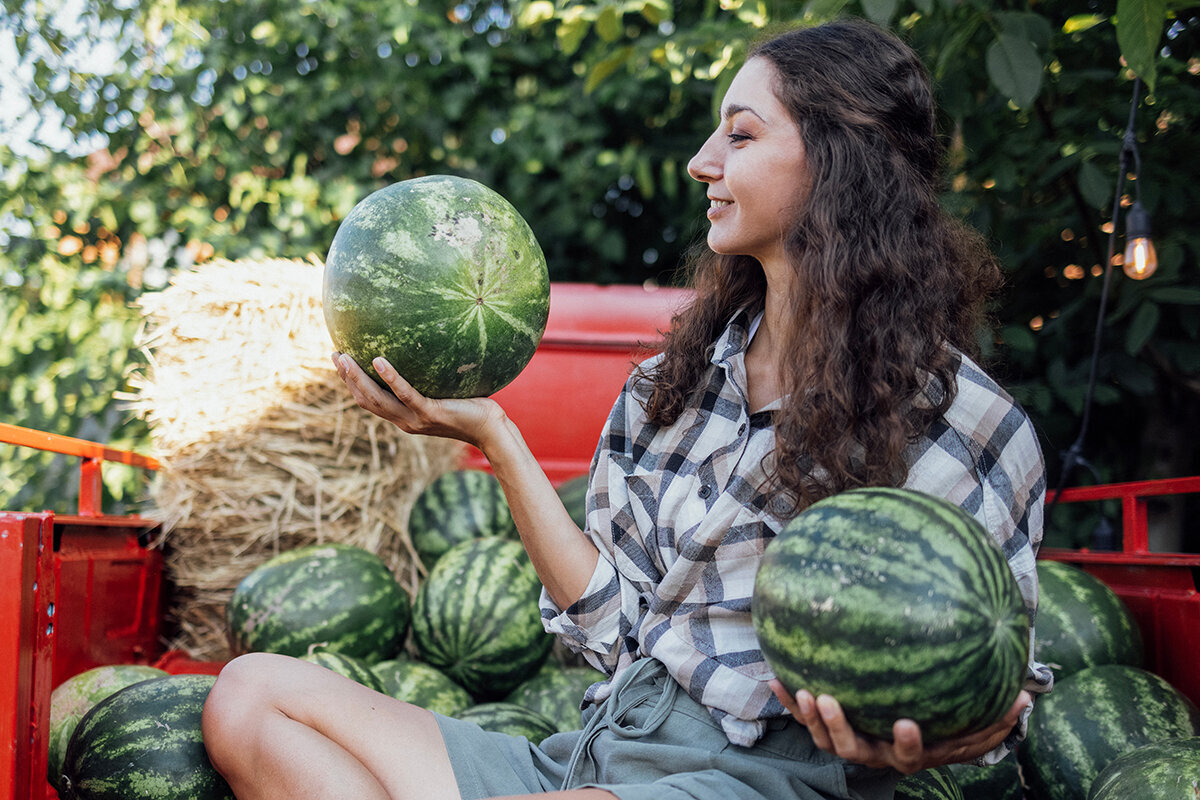
Greenhouse growing · Ireland · A weighty summer crop
A Successful Watermelon Crop Under Greenhouse Cover
Space. Warmth. Support. Growing watermelon under glass involves more than giving a vine extra heat. Its stems claim space, its fruit becomes heavy, and inconsistent watering causes trouble. Map the vine’s course before summer growth occupies the greenhouse.
1 One strong vine per small greenhouse area
Begin with the room you can offer; variety comes afterwards.
A sound under-cover plan coordinates rooting space, fruit you can reach, usable entrances, safe footing and circulation that lets leaves dry.
In a small garden greenhouse, a single well-managed plant can outperform several tangled vines. First protect a proper working aisle and mark a route for the stems. Then decide whether fruit will rest on the bed or hang from an independent support. For more guidance on arranging the interior, visit the Classic Aluminium Greenhouse . Assess the bed, passage, entrances, vents and room for routine care instead of looking only at the greenhouse’s external footprint.
This heat-loving crop may occupy its protected space from the latter part of spring until summer is nearly over. A Classic Aluminium Greenhouse provides an orderly setting with long beds, a continuous central aisle, effective roof ventilation and room to tend each swelling fruit.
The job required of a greenhouse changes across Irish sites. In cooler inland gardens or places with a short growing window, shelter can warm the rooting area and give fruit longer to ripen. In a sunny, protected position, excess heat and slowly drying leaves may become the greater concerns. Treat the house as a climate you actively regulate, not a promise of perfect conditions. Watch the bed and night-time readings, vent before trapped warmth becomes excessive, and preserve enough space to respond to Ireland’s changeable summers. Coastal exposure, local wind, drainage and possible late frost inland should shape everyday decisions.
01 / Give roots a dependable start
Propagate briefly. Plant with care.
01
Sow warm and separately
Germination responds to heat, not impatience. Late March to April may suit many unheated houses where the local setting allows. Sow seeds singly in generous pots of clean, open, freely draining seed compost. Keep them in strong light and dependable warmth. The compost should remain evenly moist, but drainage must carry away excess water from the very beginning.
02
Keep young plants compact and sturdy
After emergence, give seedlings strong light and modest watering, spacing the pots so their leaves do not overlap. Watermelon roots dislike disturbance, and allowing long vines to develop indoors brings no benefit. Aim for firm, compact young plants rather than impressive trailing specimens already weakened before they reach the greenhouse bed.
03
Let bed conditions set the planting date
Plant only when the soil under cover feels thoroughly warm and the individual garden is beyond a realistic risk of frost. In Ireland, exposure, night-time conditions and the greenhouse’s capacity to retain warmth matter more than a fixed calendar date. Acclimatise seedlings to the site during the day. Cold soil, draughts and sharp temperature changes can cancel any advantage gained by planting prematurely.
02 / Train at floor level or upwards?
Settle how weight will be supported before tying in any growth.
Although its stems are trainable, watermelon cannot be handled as a weightless decorative climber. Base the method on expected fruit size, available bed area, convenient access and verified structural capacity. An impressive leafy canopy is no reason to place heavy melons overhead on fittings that were never designed to carry them.
A / Ground growing
For larger fruit and straightforward structures
Lead the vine across a warm, mulched growing area or around a clean margin. Place each developing melon onto a dry board, brick or purpose-made support that permits air movement. Its skin then stays away from wet soil while the full weight remains safely at low level.
- Use the ground method for large cultivars, uncertain support capacity or a first attempt at growing watermelons under cover.
- Allow stems a generous course beside the bed, easing them through broad curves instead of forcing tight bends.
- Arrange every melon within reach so irrigation and ventilation never require stepping across the vines.
B / Vertical training
For compact varieties and a separate load-bearing structure
Guide one robust main stem loosely upwards on plant string or an independently supported trellis. Add a broad sling before a chosen fruit becomes large. Training vertically improves visibility and releases bed space, but the framework itself must safely accept the eventual weight rather than transferring it through the vine.
- Favour compact, early-ripening mini or small-fruited varieties.
- Provide a secure trellis rated for the likely load; never improvise with glass, window mechanisms, gutters or lightweight greenhouse sections.
- Leave clear space between foliage and glass so leaves avoid scorching and trapped pockets of humid air.
Layout for one greenhouse growing area
ROOTING ZONE
WORKING AISLE
STEM COURSE
REACHABLE MELONS
Even with a vigorous crop inside, the greenhouse must remain fully usable. Arrange the vines around secure footing, doors that open freely and window controls that remain accessible without brushing through dense foliage. Combine a deep bed with an unobstructed passage and fruit positioned within easy reach. For related structural guidance, consult the Classic Aluminium Greenhouse . It adds useful considerations about weather protection, ventilation and maintaining a manageable working interior.
Measure from the edge of the bed that can actually be planted, rather than taking the wall as the starting point. A stem may be redirected gently later, but a blocked entrance, inaccessible dripper or melon hidden below thick leaves can hinder care for many weeks. Check in advance that there is safe footing for examining fruit, pollinating flowers and operating each window. Reduce the planting plan whenever these jobs would be awkward. A smaller number of vines often produces fruit that receives better care and has more opportunity to ripen properly.
03 / Building a dependable fruit cradle
Direct the developing weight deliberately into a suitable support.
An enlarging watermelon can tear its vine or bend an improvised hanger. A sling therefore has a practical load-bearing role, not an ornamental one. Wide contact distributes pressure across the rind, while the fruit’s weight passes to dependable fixing points on a structure with suitable capacity.
Make the hammock from material that is broad, smooth, clean and able to dry readily. Suitable options include sturdy mesh, soft cloth or a sling designed for fruit. It should surround the melon without constricting the skin. Do not use narrow string, wire, cable fasteners or tight knots against the rind. Put the support in place early, allow for continued growth, and examine both its position and attachments every week.
For upright cultivation, assess the greenhouse frame separately from the support carrying the melon. Attractive roof bracing does not by itself establish spare load capacity. If that capacity is unknown, keep fruit close to the soil on a clean rest or use freestanding internal uprights and crossbars that do not rely on the greenhouse frame.
Support route
MELON
WIDE CRADLE
INDEPENDENT FRAME
Safety warning: Do not attach a melon support to opening roof windows, glazing strips, gutters or components without a stated capacity for extra loading. Recheck every knot, clip, fixing and sling after fast fruit growth, strong wind or work around the windows.
04 / Pollination requires action, not chance
Identify each flower. Move fresh pollen. Select the best fruitlets.
A greenhouse changes the route by which pollen reaches the flowers. Bees and other insects can enter through wide-open doors, but a crop plan should not depend entirely on their visits. Watermelon plants bear distinct male and female blooms. The female has a small swollen fruit shape immediately behind it; a male flower is carried on a slender stem and provides pollen.
At dawn01 FRESH BLOOM
Identify02 MALE FLOWER
Transfer03 FRESH POLLEN
Check04 FRUITLET GROWS
Look for flowers that have opened that morning, while pollen is fresh and the female bloom is receptive. With a small, clean, soft brush, collect pollen from the centre of a male flower and dab it carefully onto the stigma of a simultaneously open female. A male flower can alternatively be used directly with care. Successful pollination is usually followed by steady swelling during the coming days. Remove fruitlets early if they turn yellow, stop developing or become conspicuously misshapen.
Note on seedless varieties: Seedless cultivars also require pollination before fruit can develop. Grow the compatible pollen-producing cultivar named by the seed supplier and follow the recommended arrangement; a seedless plant should not be left without its specified polliniser.
Note on fruit numbers: Once fruitlets are clearly increasing in size, keep the strongest examples that can still be reached and supported comfortably. No universal number is appropriate for every greenhouse or cultivar. Available roots, light, temperature, foliage, final melon weight and the duration of summer all affect the load a plant can mature. In limited space, retaining fewer fruit often gives them a better chance to develop flavour and ripen fully. Remove weak, injured, misshapen or inconveniently placed fruit early with a clean cut.
05 / Water steadily, then adjust
Change irrigation as the weather and growth stage change.
Water demand rises while foliage and melons are expanding. Quality suffers, however, when the roots repeatedly move between drought and complete saturation. A drip line offers calm, measured irrigation at soil level. It helps keep leaves and paths dry while allowing the quantity and timing to be adjusted in controlled steps.
Check moisture beneath the surface covering and several centimetres down, rather than using dry topsoil as the only guide. Free-draining soil may need smaller doses at shorter intervals. Heavier ground benefits from slower watering and a pause that restores air around the roots. Set the schedule according to actual temperature, plant development and the way the bed drains, not a fixed daily timer.
Rain does not reach a greenhouse bed, so observation must form part of irrigation. Check drippers at the beginning and far end of each line, particularly after cleaning a filter or resetting a timer. Uneven output may look like an unexplained plant disorder when one side is merely receiving less moisture. Keep notes whenever run times change, alongside periods of pronounced heat, chilly nights and obvious fruit growth. Such records provide a sounder basis for the next weather shift than watering by instinct. A standard number of litres would be misleading because soil, conditions and crop stage all differ.
Water needs by stage
After planting
Uniform
Flower production
Consistent
Melon expansion
Peak
Near harvest
Reduced with care
Avoid alternating parched soil with a deluge. Dryness around flowering can reduce successful fruit set and encourage uneven development. Later, drenching a previously dry bed increases the chance of splitting and loss of quality as fruit ripens. Ease back the supply near harvest only in small steps. Never make the plant wilt deliberately in the hope of producing a sweeter melon.
06 / Manage sun, heat and humidity
Vent promptly. Shade thoughtfully. Keep leaves dry.
Watermelon enjoys heat, but sunshine can make a closed glasshouse excessively hot within a short time. On bright mornings, open doors and high vents before the crop wilts. If troublesome peaks occur repeatedly, use shading outside the glazing or mount it with clearance, maintain airflow across the house and inspect conditions during the morning rather than responding only after overheating is obvious.
Humidity is an equally important part of greenhouse control. Thick foliage, wet paths, watering from above and doors kept shut late into the day create favourable conditions for leaf disease. Apply water at soil level, cut away badly affected foliage with clean equipment, keep melons off damp ground and vent moisture when the weather outside permits. The following page offers further configuration guidance: Classic Aluminium Greenhouse . It explains how entrances, opening windows and ventilation choices contribute to a controllable greenhouse climate.
A heatwave is not a reason to keep every opening shut simply because watermelon is a warm-season crop. Removing hot, motionless air takes priority over conserving all accumulated warmth. Conversely, an unexpectedly cold night or spell of wet weather may justify shutting earlier, then airing the house cautiously the following morning. Perfectly level temperatures are unrealistic during an Irish summer. Instead, maintain the root and leaf environment within a workable range so growth, pollen transfer and ripening can proceed without severe swings. Retain warmth towards evening, but do not leave moisture trapped for days.
Field guide / diagnose before acting
Midday wilt disappears by evening Start by checking the greenhouse temperature and moisture around the roots. In hot, dry air, leaves may temporarily lose water faster than roots replace it. Do not respond automatically with extra fertiliser or heavy watering.
Blooms drop or young melons stop growing Poor pollination, inconsistent watering, insufficient light, excessive warmth or excess nitrogen may be responsible. Hand-pollinate suitable flowers in the morning, then monitor the greenhouse for several days before making broad changes.
Pale powder appears across leaves The symptoms are consistent with powdery mildew. Improve airflow, take out heavily infected tissue and keep water off the leaves. In an Irish home garden, use only a product authorised for amateur use on that crop, following every instruction on its label.
Sticky shoots, aphids or spider mites Regularly inspect shoot tips, flower areas and the undersides of leaves. Where practical, remove a light early infestation by physical means, dispose of badly injured plant material and correct persistent leaf wetness. Seek horticultural advice locally if control remains difficult.
Fruit splits or shows water-soaked areas Check whether irrigation reaches the bed evenly and review nitrogen feeding. Sudden shifts in growth near the end of development are likelier causes than an inherently weak plant.
07 / Build a case for ripeness
Judge several clues together; no single trick is decisive.
A watermelon does not become sweeter once picked. Record each hand-pollination date and check the variety’s expected time to maturity. Actual progress still varies with warmth, sunshine, cultivar and plant health. Increase the frequency of inspections when a melon approaches its anticipated harvest window.
Evidence to note
Tendril beside stalk
Compare fruit
Surface sheen
Low-grown fruit only
Resting patch
Supporting clue
Tap note
Tendril beside the stalk: The tendril nearest the fruit stem often turns brown and dry when ripeness is approaching. Because stress may produce this change too soon, never use that sign without supporting evidence.
Surface sheen: On many varieties, the rind looks duller and loses its hard shine as ripeness approaches. Compare it directly with less developed fruit on the same plant rather than relying upon memory alone.
Resting patch: For a melon resting in the bed, the contact area commonly changes from whitish or pale to a creamy or yellow tone. A hanging melon lacks a meaningful ground mark, so do not apply this indicator to vertically trained fruit.
Tap note: A deep, muted sound may support the other signs, but tapping is subjective and differs between cultivars. Give it little weight unless fruit age, the nearby tendril, rind appearance and feel point in the same direction.
Pick without bruising: Cut through the stem with clean secateurs rather than twisting or pulling the fruit free. Lift from below with both hands, as bruises reduce keeping quality. Take harvested melons out of direct sunshine. Once cut, watermelon should go straight into the refrigerator and be eaten soon. Store whole fruit away from apples, bananas or tomatoes, which give off substantial amounts of ethylene.
Crop-planning appendix
Watermelons under cover: common questions
Which varieties work well under glass?+
Choose a cultivar whose growth habit suits the planned training method. Early, compact plants with smaller fruit are generally easier to manage vertically through an Irish summer. Leave full-sized or especially heavy melons at bed level. Weigh the stated ripening period and expected fruit weight against the space that will genuinely remain available.
How many plants can a garden greenhouse accommodate?+
The practical limit depends on bed dimensions, rooting room, ease of access and the chosen training system. A restrained plan is usually more productive and manageable; one disciplined vine can occupy a small greenhouse. Never sacrifice the working passage, doorway or ventilation zone merely to fit one additional plant.
Is hand pollination needed under cover?+
You should at least check that pollination is succeeding. Reliable visits by insects entering through open doors and vents may remove the need for manual help. If visits are sparse, move fresh pollen in the morning between a male flower and a newly opened female. A seedless cultivar additionally needs the compatible polliniser specified for it.
Can greenhouse roof members support watermelons?+
Only a separate support with sufficient capacity for the expected fruit load should carry the melons. Do not use opening windows, glazing strips, gutters or lightweight frame sections as hanging points. String may guide the vine, but it is not a fruit support. If strength is uncertain, rest each melon on a dry support near ground level.
What makes greenhouse watermelons taste bland?+
Flavour depends on good sunshine and warmth, healthy leaves, consistent irrigation and harvesting at maturity. Cold soil, disease, heavy shade, drought stress or excessive late watering may all reduce quality. Picking prematurely is also common, which is why several ripeness indicators should agree before harvest.
Should watermelon vines be pruned under cover?+
Prune sparingly. Remove shoots that are diseased, injured or positioned where they create a serious obstruction, and guide the remaining vines along their allocated route. Repeated heavy defoliation takes away the leaf area that produces sugars for the melons. Careful fruit selection is generally more useful than aggressive cutting.
Sources for further reading
Horticultural evidence informing this approach
These German and American horticultural publications underpin the guidance on crop warmth, protected growing, cultivar choice, water, pollination and ripeness. They remain foreign references: choices in Ireland must also account for the seed supplier’s directions, the local soil, current weather and the greenhouse’s particular microclimate.
- Bavaria’s viticulture and horticulture institute – hydroponic production of watermelon
- LWG Veitshöchheim – 2024 protected soilless melon-growing trial
- Hortipendium – Watermelon in commercial cultivation
- Minnesota Extension – home-garden melon growing guidance
- Minnesota Extension guidance – harvesting and storing melons
- University of Minnesota Extension – Pollination requirements for food crops
Good harvests are planned before any seed is sown
Arrange the house while every route is still clear.
Start with a substantial bed, a passage that remains clear, ventilation you can adjust and supports selected for the eventual fruit load. Beyond providing cultivation space, this arrangement makes inspection and climate adjustments more orderly through Ireland’s variable summer weather.
Classic Aluminium GreenhouseCompare the genuinely usable bed area, available height, ease of reaching the doors and the effectiveness of roof ventilation. The chosen arrangement should leave scope for later irrigation, measured shading and standalone fruit supports, without makeshift access or loading unverified greenhouse components.
