
How Many People Are Needed to Assemble a Garden Shed?
Garden shed planning
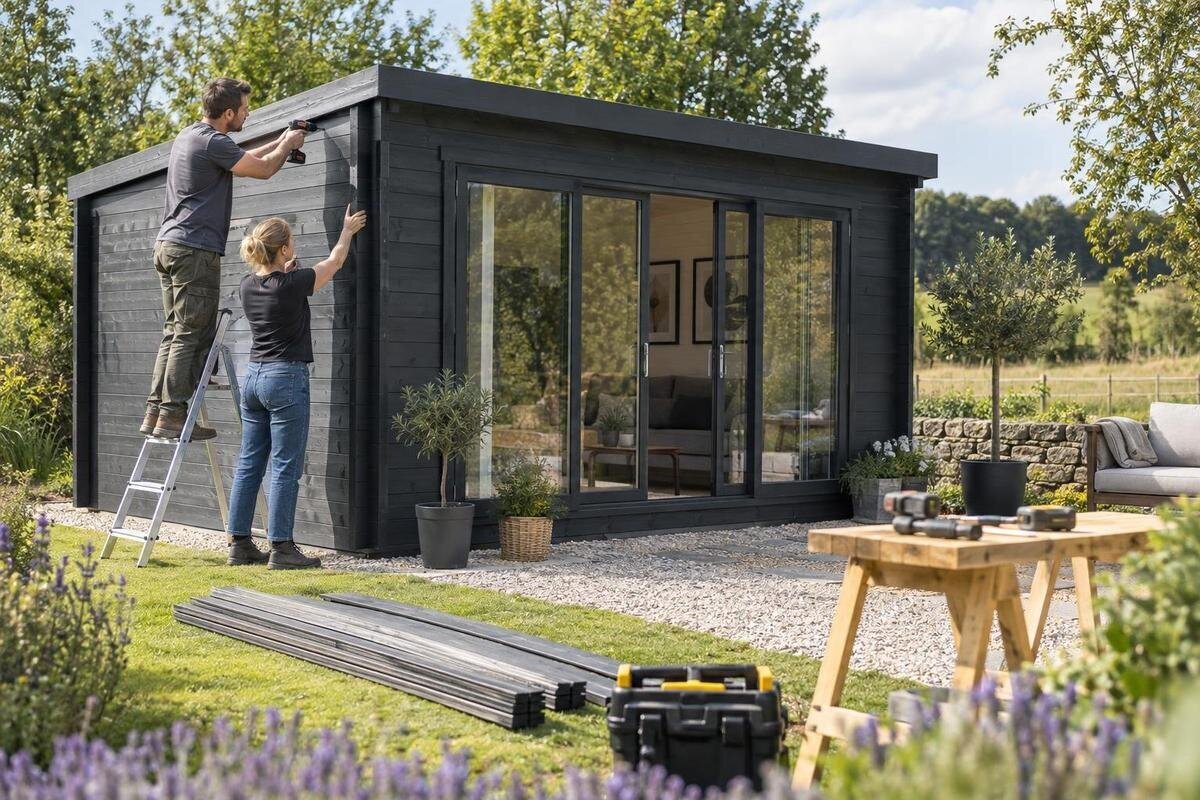
There is no fixed crew size for every garden shed. For a typical self-assembly build, two capable adults are a sensible planning baseline, but the model’s instructions and the most demanding handling stage decide whether that is enough. Awkward components, restricted access, overhead work or limited experience may call for an extra helper or a professional installer. Plan around the specific model and site, rather than assuming a product name or photograph tells you how much help you will need.

01
Plan around two capable adults
Two adults who can safely handle the work are a sensible planning baseline for many self-assembly garden sheds. Assembly is not always a row of separate fixings: at some stages, one person may need to keep a component steady or aligned as the instructions direct while the other follows the sequence or completes a task. The arrangement varies by kit, so use two as a starting estimate, not a guarantee. A solo build may suit a particular design, but do not assume every awkward part can be positioned safely alone because it looks manageable in a photograph. If the manual gives a minimum crew, follow it and check that requirement before ordering.
Count the people who can be present at the most demanding stage, rather than choosing a number from total build time or average workload. A person following the instructions and another handling a section may both be occupied; neither should be expected to supervise a lift while carrying out a separate task. Site preparation, delivery handling and clearing the route are separate jobs, not reasons to inflate the assembly crew if they happen earlier. A third helper can be useful briefly, but may crowd a confined area if no role is agreed. Arrange help around the maximum simultaneous need, and make sure those people will be there at the right time. Children should remain clear of the work area, not be counted as assembly help.
Check the model’s assembly guide before ordering
Before placing an order, look for the assembly guide for the exact model and read beyond a brief product overview. Check whether it states a minimum crew, identifies stages that need two people at once, or gives handling warnings for particular components. The sequence may show whether the work involves larger sections or many smaller pieces, which affects how the team moves and organises the job. If the instructions are not available before purchase, ask the supplier what documentation is provided and whether it can be reviewed in advance. A parts list is not a substitute for handling guidance, and a manual for a similar model does not prove that its assembly sequence is the same. Look for crew and handling notes throughout the instructions, not only in the opening section.
Before ordering the Verdana 1 garden house, find out what its own guide says about the people needed at key stages. A product name or photograph cannot establish package size, component weight, assembly method or recommended team. Ask whether the instructions explain any simultaneous handling, whether delivery includes help beyond unloading, and whether installation is a separate service. These details affect not only headcount but who must be available and when. If the listing does not answer a question, request clarification rather than assuming that a familiar-looking shed uses the same method as another model.
02
Component handling can determine the team size
Component shape and handling can matter more than the number of parts in a kit. A long or broad section may be awkward to turn through a gate even if its weight seems manageable; small items may be easier to move individually but take more time to identify and fit. Use package or component dimensions and weights if the supplier provides them, and ask for missing details rather than estimating from a photograph. The practical question is whether the team can move each part along the route and position it as instructed, not simply whether one person can lift it briefly. A model label or size category alone is not enough to set the crew.
For the Verdana 2 garden house, check information for that exact model rather than treating its number as a clue to dimensions or required people. Look for details about how parts are supplied, whether any stage needs simultaneous handling and what space the instructions leave around the work. Many small components can mean more organising, while one awkward section may dictate when an extra pair of hands is needed. If package measurements are given, compare them with the narrowest point on the route, not just the garden entrance. If details are not published, ask the supplier what the assembly guide says rather than relying on a neighbour’s experience with a different shed.
Check the access route before the kit arrives
Walk the route from the likely unloading point to the intended spot before settling on a crew. Note gates, narrow turns, steps, uneven ground, low branches and places where a long component might need to be turned. Measure the tightest openings and compare them with any package details the supplier provides. Also check the space around the planned build area: several helpers need room to work without blocking one another. A person who is not assembling may be able to help keep the route clear, but only if there is safe space and the instructions allow the task. Do not improvise a difficult lift just to avoid changing your delivery or assembly arrangements.
When considering the Durano garden house, compare confirmed delivery and component information with your own access route. The name and photographs cannot show whether a package will pass through a side gate or around a corner. Ask who is responsible for unloading and moving the kit, whether delivery includes carrying it to the intended area, and what access needs to be clear. If the route is unsuitable, seek guidance before ordering or arrange appropriate help; adding an unbriefed person is not a reliable fix for a blocked path or a tight working area.
03
Prepare the base separately from the assembly
Keep site preparation separate from shed assembly when planning the crew. Find the model’s stated base and support requirements, and confirm that the area will be ready and clear before the helpers arrive. If the base is unfinished, the people preparing it cannot also be available to assemble the shed at the same time, so allow for separate tasks and possibly separate dates. Follow the manufacturer’s instructions for the finished base. If you are unsure whether it meets those requirements, ask the supplier or an appropriate building professional rather than relying on assembly helpers to decide during the job.
Before ordering the Veltor 1 garden house, confirm its own base and clearance requirements instead of relying on the name, another model or a photograph. If someone else is preparing the site, agree when the work will be finished and who will check it against the instructions. An unfinished base can delay a booked crew; it does not mean that more people are needed for assembly. Separating these tasks makes the headcount clearer: arrange the people responsible for site preparation on their own schedule, then book assembly help for the stages where it is needed.
Roof and overhead work need a safe plan
Parts that need to be positioned higher up may determine the crew size. Roof sections, tall sides or other components raised into place can be harder to control than ground-level pieces, depending on the kit and its assembly sequence. Do not assume extra hands alone make a lift safe, or that an improvised ladder or support is suitable. Follow the manufacturer’s method and any instructions about access. If the guide does not make a task clear, or the people available lack the experience it requires, pause and ask about professional installation rather than guessing.
Before choosing a team for the Orello 1 garden house, check its own instructions for stages that require simultaneous handling or particular access. Words or numbers in a product title do not describe the assembly procedure. A third person may be needed for a short stage rather than throughout the build, but arrange that help beforehand. If the instructions are unclear or the work exceeds the team’s experience, ask the supplier whether an installation service is available or speak to a suitably qualified installer. More helpers are not a substitute for a safe, appropriate method.
04
Choose conditions that suit the work and crew
Outdoor conditions can affect how easily a team handles components. Wind may make a broad section harder to control, while rain or poor footing can make movement awkward; visibility can also deteriorate as daylight fades. Check any weather advice in the manufacturer’s instructions and choose a day when the crew can work with clear visibility and stable footing. If conditions make handling uncertain, pause rather than pressing on because people have taken time off. Before starting, understand from the instructions what to do if the work cannot be completed that day, instead of leaving the structure in an unknown state.
Availability matters as much as total headcount. Try to have the people needed for the most demanding stages present together, not just a pair who overlap at the start. If helpers need to take turns, schedule a handover at a point when work can pause safely and make sure the replacement knows which stage has been completed. For the Modano 1 garden house, use its own assembly guidance when choosing a date. A weather contingency or a back-up helper can be more useful than trying to squeeze the build into an unsuitable afternoon.
Give each helper a clear role
Agree roles before the first component is moved. One person can take responsibility for following the manual and calling out the next step; another can organise components and carry out the tasks assigned by the guide. Both should be able to stop if the instructions do not match what is in front of them. Avoid having two people make competing changes to the sequence or guess independently where a part belongs. A clear lead reduces confusion, but it does not make unclear instructions safe to improvise around. Keep anyone who is not needed for that stage out of the working area.
When checking the garden tool shed M, consider who will lead and whether that person can follow the exact instructions, not just who is free on the day. Give a third helper a defined role only if the site and instructions make it useful, such as keeping a route clear or passing a component at a safe point. Do not place people where they obstruct the work or distract someone checking the sequence. Experience with another build can help, but designs vary and each model’s instructions still matter. Make sure everyone knows who will pause the job if something does not fit.

05
When a third helper or installer is needed
Bring in a third helper when the instructions call for simultaneous handling, when a particular stage cannot be managed safely by the two people available, or when someone is needed to coordinate a difficult route. That may mean help for one planned task, not a third person working from start to finish. More people are not automatically better: in a cramped area they can block access or make it harder to follow the assembly method. Decide where an extra person is useful, give them a clear role and make sure they understand what is expected before work begins.
If a lift, access issue or assembly task is beyond the team’s experience, consider a professional installer instead of recruiting more untrained helpers. When assessing the wooden garden shed S, use the exact model’s guide; its name does not establish how many people are needed. Ask the supplier whether an assembly service is available and what it covers, including moving the kit, preparing the base or only assembling the structure. Confirm what you must have ready. Do not assume that delivery staff are installers or that a service includes every part of the project.
Coordinate delivery and assembly dates
Choose an assembly date after you have reviewed the instructions, checked the route and confirmed that the base and work area will be ready. Delivery and assembly are separate arrangements unless the supplier confirms otherwise, so do not count delivery personnel as your build crew or assume they will carry components to the final spot. Confirm how the kit will be handled on arrival and whether the helpers you need can attend the relevant stages. If any of those arrangements change, it may be better to move the assembly date than to begin with an incomplete crew.
Use the manufacturer’s estimate, if provided, to plan the time; a generic number of hours cannot account for the model, site, weather or experience of the people involved. Allow enough time to follow the instructions without rushing, take breaks and stop if conditions change. Tell helpers in advance what role they have and which stages may need their attention. Have a back-up plan if someone required for a key task cannot attend. The aim is not to assemble with the largest possible group, but to have the right people available when the work calls for them.
Frequently asked questions
Can I assemble a garden shed on my own?
Only if the instructions for that exact model allow it and you can manage every stage safely. Some tasks may be straightforward for one person, but moving or positioning components can require help. If the guide calls for another person, or you cannot manage a step safely, arrange assistance rather than attempting it alone.
Are two people enough for every garden shed?
No. Two capable adults are a useful starting point for many self-assembly projects, not a guarantee. The model’s instructions, the parts, access to the site and the team’s experience all affect the number needed. A particular stage may call for a third helper or a professional installer.
Does a third helper need to stay for the whole build?
Not necessarily. An extra person may only be useful for a specific handling stage, while two people can manage other work. Check the assembly sequence and arrange for the helper to be there when needed. Avoid crowding a confined work area with people who have no clear role.
Should I count the delivery team as assembly help?
Only if the supplier confirms that delivery includes the relevant handling or assembly work. Delivery and installation can be separate arrangements, so check what is included and where the kit will be left. Do not rely on delivery staff as your assembly crew without clear confirmation.
When should I use a professional installer?
Consider one if the instructions recommend professional assembly, if a handling or overhead task is beyond your team’s experience, or if the site makes safe access difficult. Ask what the service covers, including whether it includes moving the kit or preparing the base. Do not assume an installation service covers every part of the project.
For many buyers, two capable adults are a useful number to plan around, with an extra helper or installer considered for particular stages. Confirm the crew against the exact assembly guide, the route from the delivery point and the prepared base. Then arrange for the right people to be present when the difficult work is due, rather than simply gathering the largest group you can.
