
How to Care for a Hot Tub’s Wooden Exterior
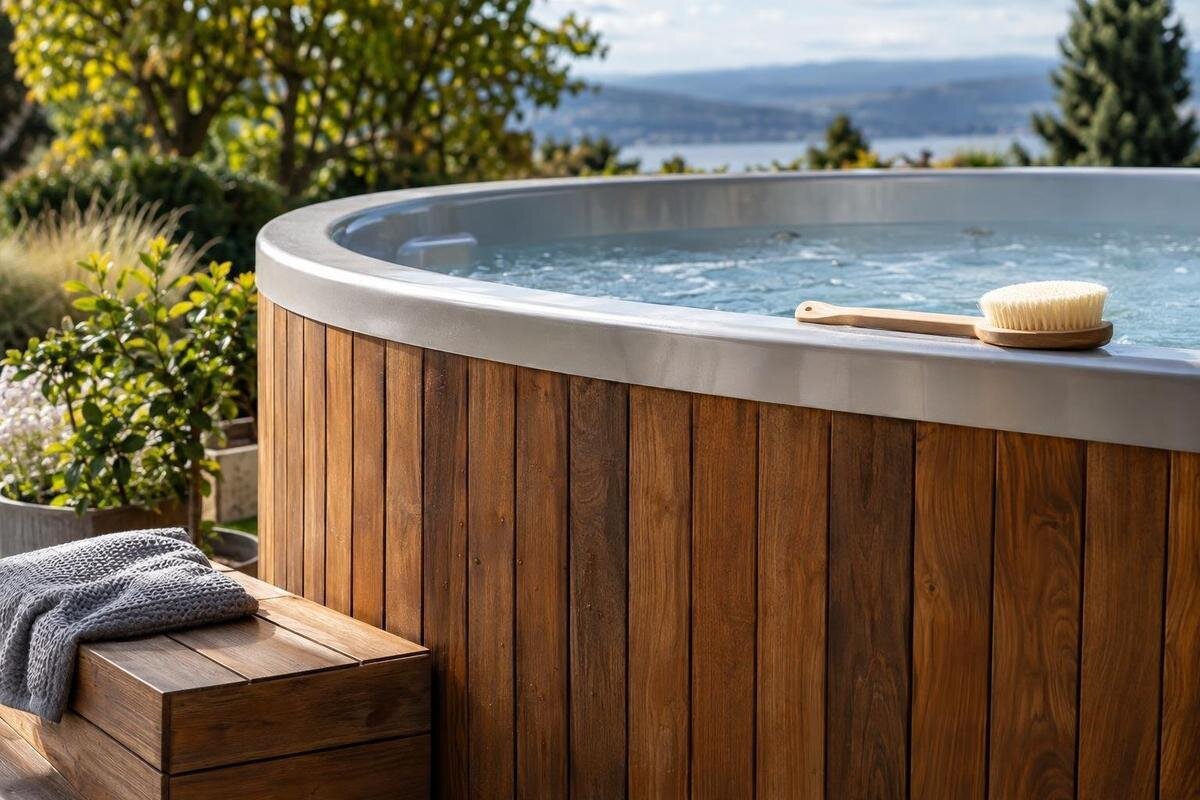
HOT TUB CARE
If your hot tub has a timber exterior, the right care depends on what the panels are made from and how they have been finished. A wood-like colour or grain is not enough to identify either. This guide covers the cladding only, not the shell, water or heater. Before cleaning or applying a treatment, establish the exact material and coating, then follow advice for that combination. If the finish is unknown, pause rather than using a general decking product by guesswork.
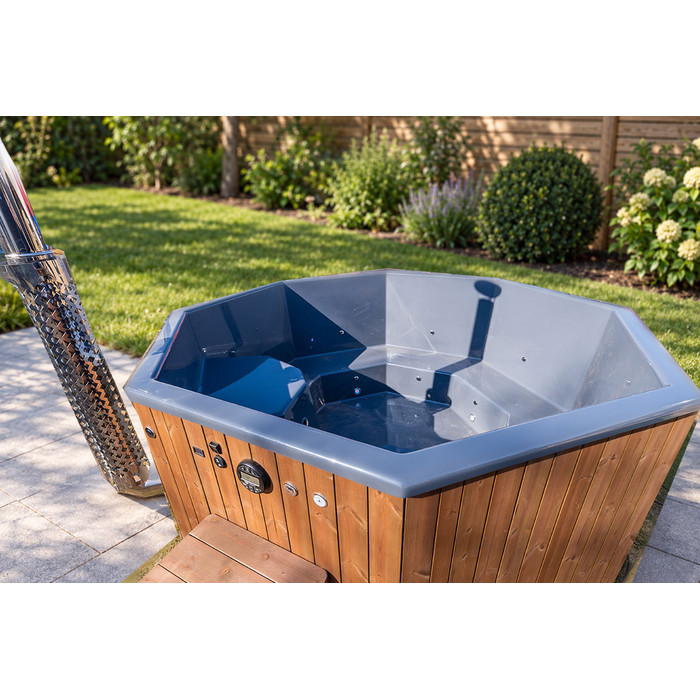
Identify the exterior material
First establish whether the visible panels are solid timber, a veneer or wood-based panel, or timber-effect cladding. Similar-looking surfaces can require different care, and the trim, base, steps or cover may use different materials from the main casing. A photograph, colour or apparent grain cannot confirm the construction. Check the model paperwork, care booklet, purchase record or supplier description for information that specifically names the exterior panels; a description of the frame or decorative trim may not cover every visible surface. When considering Bloomcabin Hot Tub Cove 2, ask which materials are used on the exterior rather than inferring them from its name or photograph. If the description simply says “wooden exterior”, clarify exactly which visible parts it covers.
Keep a record of the material and finish for each part of the exterior. Note whether the panels are unfinished, factory-coated or previously treated, and retain any information identifying the coating. If the tub is second-hand, request the previous owner’s maintenance history and the full names of any products used; an earlier layer can affect what can go over it. Where the supplier lists multiple versions, include the exact model or serial details so that the answer refers to your tub. Keep the written reply, manual and product labels together, with separate notes for trim or the base where necessary. Gaps in the record are worth resolving before buying a treatment: a visual guess cannot replace identification of the surface.
Find out which finish is already on the timber
Even when the exterior is timber, its finish may govern the care routine. Oil, stain, paint and clear coatings are not interchangeable; a transparent layer can resemble bare wood, while an older surface may carry several products. A dull surface or one that no longer beads water does not prove it is untreated or due for oil. Do not scratch, sand or wipe the panels with solvent to identify the finish: that can change the surface before you know how it should be maintained. Search for an original care sheet, order record or product name from whoever supplied or last treated the tub, including dates if known.
If records are missing, ask the manufacturer or retailer to identify the factory finish for the exact model and version, then advise what may be used over it. Share any previous treatment details rather than calling it simply “wood oil”; the product type and existing layer can matter. Before buying Bloomcabin Hot Tub Haven 6, ask how its exterior is finished and what care that finish requires. A listing photograph is not a reliable basis for choosing a treatment. Establish whether routine care means cleaning, periodic treatment or another method, and keep the answer with your purchase records. Until the finish is identified, avoid stripping, recoating or trying cleaners.
Inspect the exterior consistently
Make a visual baseline with the exterior dry and in even light, so a recent splash or changing shadow is not mistaken for a lasting mark. Look across each accessible face, board ends, joints, lower edges and corners; check trim separately because it may be a different material. Follow the inspection frequency in the maker’s care instructions and recheck after cleaning or treatment if advised. Do not move the tub, force a panel or open service areas just to inspect the exterior. Use the supplied access guidance if a check requires more than looking, and do not assume hidden parts are timber because they sit behind a wood-looking panel.
Take a dated wide photograph to locate any change and a closer one for detail, keeping the angle and lighting as consistent as possible. Note what you observed, where it is and whether it later altered; this is more useful to a supplier than “the wood looks off”. When considering Bloomcabin Hot Tub Fjord 8, ask for guidance on inspecting the exterior and accessing any areas that require maintenance. Product photographs alone cannot establish the panel layout or the normal appearance of the finish on your tub. Use the model-specific description and care information as your reference. Store photographs with your notes, rather than marking the surface or attaching a label to it.
Record changes without diagnosing them
Timber grain and shade can vary from one board to another, but that does not establish what variation the applied finish is meant to show. A colour shift, water mark, raised grain, dark patch, fine split or flaking area may have several explanations. Moisture, lighting, a previous product or surface changes can affect what you see; without the maker’s reference, do not label a mark normal weathering or a defect. Nor does one change prove that oil or sealer is needed. Compare the area only under similar conditions and avoid sanding or adding a tinted product just to make one board match its neighbour.
Record whether the change is new or longstanding, growing, recurring after cleaning, or accompanied by a loose edge, soft-feeling area, opening joint, peeling layer or persistent dampness. These details are reasons to ask for guidance, not a diagnosis. If a change is spreading, affects the panel’s fit, or is more than a surface mark you can identify confidently, pause product use and seek an assessment. Do not press, pry or refasten a panel to investigate. Send a dated photograph and say whether the mark remains visible when dry. If you are considering Bloomcabin hot tub Aurora 10, ask what appearance changes to expect from its specified exterior and which should prompt an enquiry.
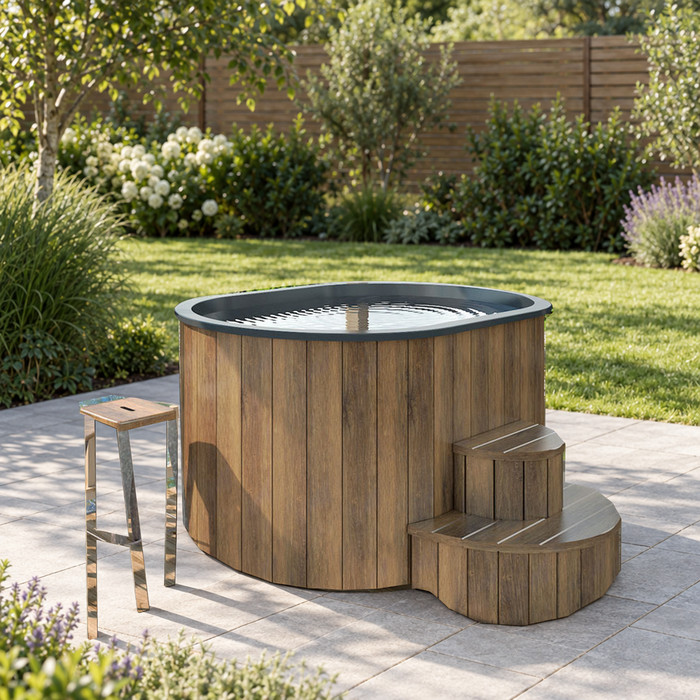
Remove loose dirt before cleaning
Before wet cleaning, remove loose debris only by a method the manufacturer permits. Grit caught under a cloth can abrade a coating, so clear leaves and particles before wiping; if the instructions allow a soft brush or non-abrasive cloth, make sure it is clean and use light contact. Follow the approved sequence rather than pouring cleaner directly on a panel or soaking the cladding. Start on a small accessible area only if the care directions allow that approach. Avoid rubbing one mark harder than the surrounding panels. Stop if colour transfers, the finish changes or the surface begins to feel rougher, and note which method you used.
A pressure washer, stiff wire brush, scouring pad, abrasive powder, bleach, solvent and strong degreaser are not safe defaults for timber cladding. A tool or chemical may mark or strip a coating, while forceful water can reach joints or openings not intended to be soaked. Longer contact or a stronger mix is not automatically more effective and may create a different problem. Use these methods only if the exact care instructions expressly permit them. If you are reviewing the Cove 2 product details, include approved cleaning tools and methods among your questions for the supplier. Do not substitute steam cleaning or an abrasive sponge without confirming that it is suitable for the identified finish.
Choose a cleaner for the confirmed surface
Choose a cleaner only after the substrate and finish are known. A bottle labelled “wood cleaner” may be designed for a different coating or surface; words such as “natural”, “gentle” or “exterior” on the front do not prove that it suits hot-tub cladding. Read the full label and technical sheet for a stated match to the material and existing finish, and check any limits for nearby plastic, metal, seals or tub water. A cleaner intended for bare timber may not suit a coated surface. If the maker specifies a cleaner type, do not assume that a product with similar marketing language is equivalent.
Confirm the precise dilution, applicator, contact time, need for rinsing and drying method from the cleaner label and the tub’s care instructions. Do not guess a stronger mix, combine cleaning products or let runoff reach parts excluded by the directions. Before choosing a cleaner for a model such as Haven 6, send the supplier the cleaner’s full name and technical information, and ask whether it is suitable for the identified finish. A household product is not approved simply because it is familiar or readily available. If an alternative is approved, record who confirmed it and for which surface. That note prevents a later clean from relying on memory or a broad claim on the product label.
Cleaning versus protective treatment
Cleaning and protection solve different problems. A cleaner is intended to remove a stated kind of surface soil; an oil, stain, paint or sealer changes the finish and may add colour, sheen or a layer. A coating is not a substitute for cleaning, and applying it over dirt can leave an uneven result. Removing an old coating or sanding back to bare timber is a separate preparation job, not a routine wash. If the finish is peeling or a mark’s cause is uncertain, do not cover it with a new layer as a way of testing whether the appearance improves. A product described as a restorer also needs a clear explanation of what it is meant to do.
Not every wooden exterior needs regular oiling or sealing. Whether any treatment is required depends on the specified timber, factory finish, previous maintenance and manufacturer’s instructions. The care plan may call for cleaning alone or a particular treatment to renew the finish; do not transfer a schedule from a garden deck, fence or another tub. When comparing Fjord 8 with other models, ask about cleaning and protective treatment separately so that you understand the intended upkeep. If the documentation gives no treatment interval, do not invent an annual one: establish whether the routine consists of inspection and cleaning, or includes a named treatment at specified intervals or under stated conditions.
Check compatibility before buying timber-care products
Compare timber-care products by documented compatibility, not by a broad label. Check that the product maker names the exact material and existing finish, that it is intended for the exterior surface, and whether it is a cleaner or a protective coating. For a treatment, establish the resulting colour or sheen and whether it can be applied over the existing layer. Read the full instructions for preparation and future renewal: a product that fits today may create a different upkeep routine later. Do not rely on “decking”, “furniture” or “all-purpose” wording as proof of a match. If details are missing, treat compatibility as unconfirmed.
Before buying, ask the hot-tub supplier and product maker the same specific question: “Is [full product name] suitable for [identified exterior material] with [identified finish]?” Share the finish record and clear photographs, and ask for the approved method and exclusions. A general recommendation for outdoor timber is not enough if it does not identify the coating on the panels. If Aurora 10 is on your shortlist, ask what timber-care guidance is available before adding a cleaner, oil or stain to your order. When comparing tubs, give weight to clear care documentation and accessible after-sales guidance rather than assuming similar-looking exteriors share the same needs. Once compatibility is established, compare application requirements and renewal guidance as well as the product name.
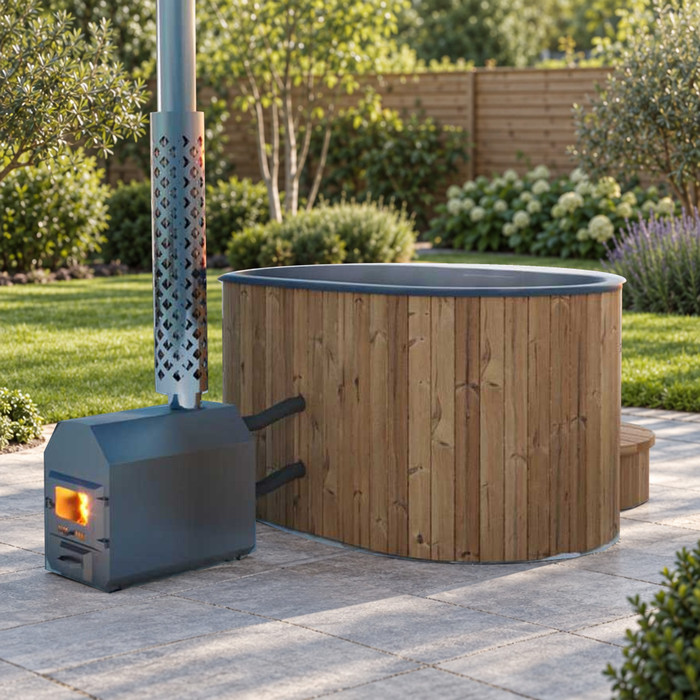
Confirm application conditions before treating
Even a compatible product can be misused under the wrong conditions, so read its instructions before opening it. Confirm preparation, whether the surface must be dry, any weather or temperature limits, the applicator, coat count, drying or curing time, and when the tub may be used again. Check whether a stated limit concerns the air, the surface or both, rather than substituting a guess. Follow the specified sequence instead of borrowing a recoat interval from another product or surface. If the tub’s care sheet and product label conflict, pause and ask which instruction applies to this finish.
Apply only to the surfaces named in the instructions. Exterior cladding may meet fittings, labels, access panels, seals, trim or gaps with other functions; do not coat or obstruct adjacent parts unless the directions explain how to protect them. Avoid dismantling panels to reach hidden edges or letting product enter openings. Follow the treatment’s handling and clean-up guidance, and keep its container or label for later maintenance. If application requires moving a panel, masking a service area or protecting another material, ask the supplier to explain the model-specific process rather than improvising.
When to ask the supplier for advice
Ask the supplier or manufacturer before treating if you cannot verify the material, finish or previous product; if care instructions are missing; or if a change is persistent, spreading or accompanied by a loose or soft-feeling area. These are sensible reasons to get product-specific advice, not proof that the timber is damaged. While waiting, avoid a “try it and see” coat, aggressive cleaning or sanding: these may remove useful evidence, change the finish or complicate an assessment. If you are unsure whether a mark is surface-level, describe exactly what you observe instead of naming a cause.
Make the enquiry specific: provide the model and any serial or version details, a wide and close photograph, the location, when the change was first noticed, whether it has altered, and every cleaner or treatment used. Ask what the outer panels are made from, what finish was applied, which cleaning methods and product types are allowed, whether a protective treatment is needed, and the confirmed intervals and application conditions. A concise request might read: “Please confirm the cladding material and finish on my model, and whether [product] is suitable.” Keep the answer with your care records. If advice from the product maker and hot-tub supplier conflicts, ask them to clarify compatibility before proceeding.
Frequently asked questions
Does every wooden hot tub exterior need oil or sealer?
No. The material, factory finish and previous care determine whether any treatment is suitable or needed. Some surfaces may have a specified treatment routine; others may need a different kind of care. Do not add oil or sealer just because the panels look like wood. Check the instructions for the exact exterior and finish first.
Can I use a pressure washer on the exterior?
Do not treat a pressure washer as a safe default. Forceful water may mark a finish or reach joints and openings that are not meant to be soaked. Use it only if the hot tub’s care instructions expressly allow it for the identified surface. If they do not say, ask the supplier before trying it.
Can I use decking oil or a patio cleaner?
Only if the hot tub manufacturer or supplier confirms that the exact product is compatible with the exterior material and its existing finish. A label saying “for exterior timber” does not establish a match for coated cladding. Give the supplier the product’s full name and instructions, and ask whether it is approved for that surface.
How often should I clean or treat the timber?
Follow the interval in the care instructions for the exact material and finish. There is no reliable universal schedule when those details are unknown, and a maintenance routine for a deck or fence may not apply. Keep cleaning and protective treatment separate: do not recoat simply because time has passed unless the maker’s guidance calls for it.
What should I do if the timber changes colour or develops a dark mark?
Take a dated photograph and note where the change appears, whether it is spreading and what products have been used. Colour or a mark alone does not identify the cause or show that treatment will help. Avoid sanding, bleaching or covering it with a new finish; ask the supplier for guidance if the change is persistent or unclear.
A reliable care routine starts with the surface itself: identify the exterior material, find out what finish is already there and keep the relevant instructions with your records. Clean only by an approved method, and treat the timber only when the manufacturer confirms that a product is needed and compatible. If a mark or finish change leaves you uncertain, record it and seek advice before trying to hide it with another coat.
