
How to Clean a Hot Tub Without Damaging Its Surfaces
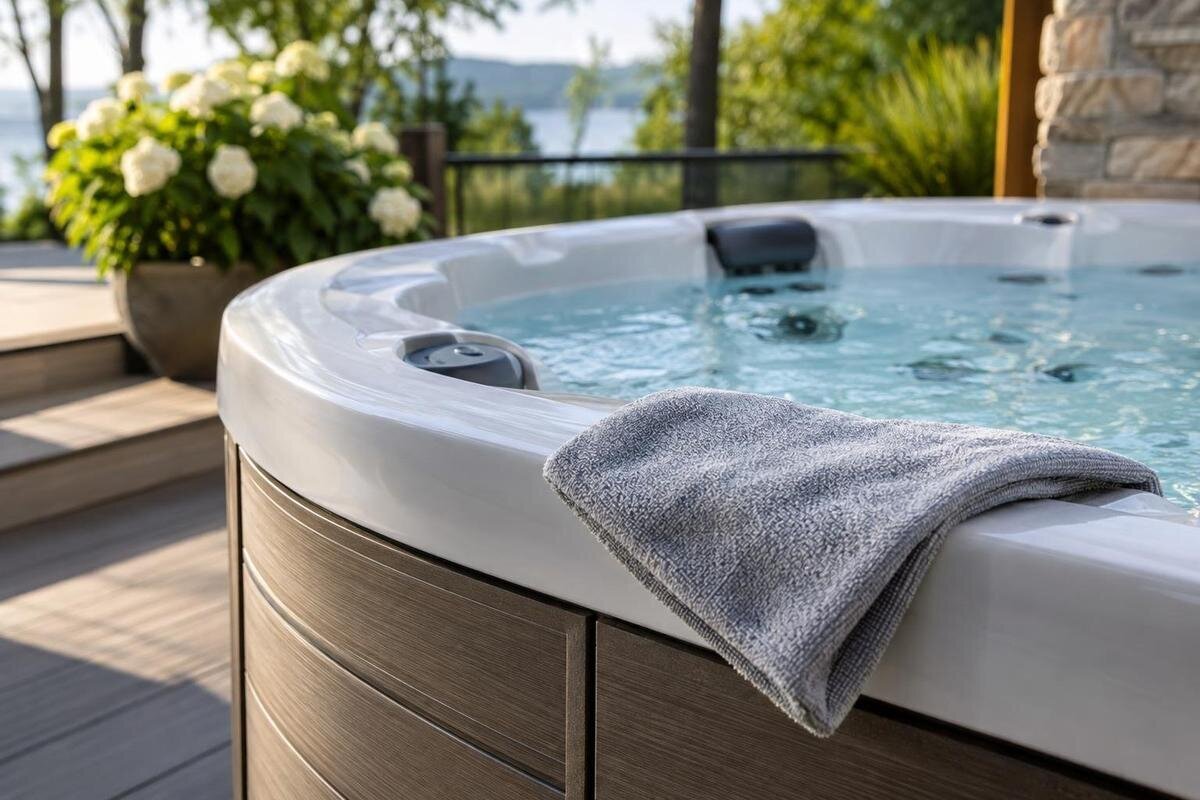
Hot tub care
Hot tub surfaces are not interchangeable: the shell, cover and outer panels may use different materials or finishes, even on one product. A cleaner that removes a mark from one part could dull or stain another. Identify what you are cleaning, check the manufacturer’s guidance for your model and choose only a compatible product and tool.

01
Identify each surface before cleaning
Before reaching for a sponge, separate the parts you intend to clean: the shell on the inside of the tub, the cover and the exterior panels or trim. They are different surfaces, not one continuous finish, and a single product may combine several materials. Colour and gloss do not reliably identify a material or its coating. A product photograph can help you recognise the model, but it cannot confirm the finish or its cleaning tolerance. Check the manual, care sheet or component label before choosing a method. Pay particular attention to joins, edges, undersides, handles and decorative strips: a finish can change from one part to the next, so do not treat the whole tub as one material.
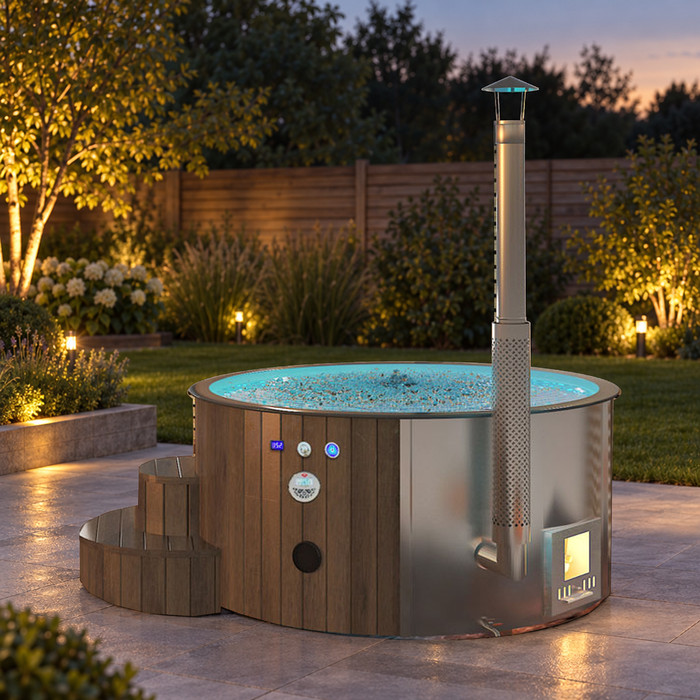
Write down what the documents call each part and keep the note with the manual. If the paperwork is missing, photograph the area and ask the retailer or manufacturer using the exact product name; do not identify a material by sight or test it with a cleaner. For example, Bloomcabin Hot Tub Cove 2 identifies a catalogue product, but its name alone does not establish what its shell, any cover or exterior components are made from. If a document names a broad material but not its coating or finish, ask whether the cleaning advice applies to the surface you have. A clear record also helps prevent a method for the shell being reused on another component.
Find the care instructions for the exact model
Use instructions for the exact model and component in front of you, not a general hot-tub article, a neighbour’s routine or a manual for a similar-looking product. Match the document’s model identifier to the product name, and ask the retailer or manufacturer whether an older manual is still current. A main product manual may give only general care information, while a cover or exterior component can have separate instructions. Check all relevant documents where they exist; silence in one document does not mean every cleaner is allowed. Keep a copy of the care material so you can check the same directions next time.
Before cleaning, locate the instructions on permitted cleaners, tool types, preparation, application, removal or rinsing, drying, and contact with water or adjacent materials. If advice conflicts—for example, a cleaner label suggests a use that the product instructions do not allow—do not choose the more convenient interpretation. Contact the supplier with the exact product and surface, and wait for an answer before proceeding. When checking Bloomcabin Hot Tub Haven 6, use the exact catalogue identity to request relevant care information; instructions for another hot tub, even from the same retailer, are not a substitute. Note the source and date of any answer so you can tell whether later advice supersedes it.
02
Match the cleaner to the material
Match the cleaner to the named surface and the task. The phrase ‘hot tub cleaner’ can be imprecise: a product intended for water care may not be a surface cleaner, while a shell cleaner may not suit the cover or exterior. Read both the cleaner’s label and the hot tub instructions. Check the stated surface type, application method, any use limits and how residue must be removed. Look for directions about contact with water and nearby materials. Words such as ‘natural’, ‘multi-purpose’ or ‘gentle’ do not prove compatibility with a specific finish; a label for one material or coating does not automatically cover another. If the instructions name a particular product, ask before substituting an alternative.
Do not use kitchen spray, glass cleaner, washing-up liquid, vinegar, bleach, solvents, polish or stain remover unless the manufacturer explicitly approves that product or type for the part. This is not a claim that every one of those substances damages every hot tub; it is a reason not to gamble on an unknown finish or risk unwanted residue. For Bloomcabin Hot Tub Fjord 8, ask which named cleaners, if any, are suitable for each documented surface. If guidance lists no cleaner, request a recommendation rather than treating a household alternative as equivalent. A spot test is appropriate only if the manufacturer says how and where to do one; it does not override a warning or restriction.
Choose a compatible cleaning tool
Cleaner compatibility is only half of the choice. A pad or brush can mark a glossy surface, roughen a coating or catch on fabric, seams or straps; grit trapped in a cloth can also scratch as it is dragged across a panel. Use a clean, soft cloth or another tool only if the care instructions say it is suitable for that exact component. Avoid scouring pads, wire brushes, abrasive powders, blades and hard scrapers unless the manufacturer specifically approves them for the surface. Do not apply more pressure just because a mark remains; first check that it is dirt and that the method is allowed.
Keep tools clean between parts so residue and loose particles are not carried from the shell to the cover or exterior. If instructions permit cloths, set aside separate ones for different components and clean or replace them as directed; do not reuse a cloth carrying cleaner on another finish. Marketing terms such as ‘non-scratch’ still need to match the manufacturer’s guidance. When considering Bloomcabin hot tub Aurora 10, ask for tool advice tied to the identified components; the catalogue name alone cannot confirm which brush or cloth is suitable.
03
Prepare the tub as the instructions require
Preparation begins with the product instructions because the required water level, cover position or need to remove a part can depend on the task. Do not assume that a routine wipe requires an empty tub, or that any cleaner is harmless when used beside water. Check which surfaces or components must stay dry, whether runoff must be kept out of the water and whether the cover should be in a particular position. If instructions do not answer these questions, ask before applying anything. Do not dismantle an exterior panel or remove a fitting to reach dirt unless the manufacturer provides a procedure for it.
Set out only the approved cleaner and tools, with their labels and instructions within reach so you can confirm application and removal directions. Where the manufacturer allows it, clear loose grit without wiping it across the finish, and move items that could transfer colour. Avoid placing containers or tools on an exposed surface where they could leave residue or a mark. If preparation would involve handling equipment, opening a panel or following steps you do not understand, stop and consult the manufacturer or a qualified service professional. For the Cove 2, confirm how the tub should be prepared for the particular surface-cleaning task before applying a cleaner.
Follow the approved cleaning sequence
Once the material, cleaner, tool and preparation are confirmed, follow the manufacturer’s sequence in order rather than building a routine from separate tips. Do only the steps given for that surface: any instruction to remove loose debris, apply a product, wait, wipe or rinse should be followed as written. Do not invent a quantity, waiting time or scrubbing motion where none is stated. Apply the cleaner only by its specified method and keep it on the named part. A process that sounds sensible for another finish may not suit this one, so pause if a step is unclear.
Use only approved products and do not mix cleaners. If a step is missing or two instructions seem to conflict, pause and ask rather than testing an improvised method on a visible area. Keep a short record of the product used, surface, tool and method, including the preparation and residue-removal steps you followed. This makes future cleaning repeatable and helps anyone else caring for the tub avoid substituting a different routine. When checking the cleaning sequence for the Haven 6, make sure it covers the particular component you plan to clean, rather than relying on directions that refer only to the hot tub generally.
04
Clean the shell, cover and exterior separately
Treat the shell, cover and exterior as separate care questions. The shell is the tub’s inner surface; a cover can have its own top and underside, seams and, where present, straps or fittings; the cabinet or cladding may have another finish. A method approved for the inner shell cannot be assumed safe for the cover or outer panels. Do not clean an underside or fitting merely because the visible face tolerates the same product. Check exactly which faces, edges and details the manufacturer’s instructions cover, and treat trim or a border as a separate surface if its material changes at a join.
Work on one identified part at a time so cleaner and dirty runoff are not carried across different materials. Keep liquid away from areas the instructions say to keep dry, and do not scrub across a seam where a tool could catch. Follow separate cover guidance if supplied; do not assume the cover should be cleaned while attached, detached, folded or left open. Exterior panels also need their own surface instructions: cleaning does not automatically call for a polish or protective coating. If a component or finish is not identified, seek advice rather than dismantling it or applying a product intended for a different part.
Remove residue and inspect the finish
Removing cleaner matters as much as applying it, but the right method depends on the product label and the surface. If rinsing is required, use the specified method and follow any direction about keeping runoff out of the tub or away from other components. If the instructions instead call for wiping, or specify a drying step, use that method; do not add a rinse simply because it seems thorough. Do not leave residue in place while waiting to see what happens. If removal instructions are missing, ask before cleaning rather than guessing at the final stage.
After removal and drying as instructed, inspect each part in good light without rubbing harder. Look for leftover film, streaking, colour transfer, dullness, tackiness or a new mark; a before-and-after photograph can help you describe a change, but cannot diagnose its cause. If anything looks different, stop and note the product, tool, area and method. Do not try a second chemical or abrasive correction. When seeking help with a Fjord 8 hot tub, include these details and identify the affected component so the response can address the surface involved rather than the tub as a whole.
05
Keep surface cleaning separate from water care
Surface cleaning removes residue from a material; it does not replace water testing or treatment. Keep surface-cleaning directions separate from the product’s water-care guidance. A product marketed for hot tubs may be intended for the water rather than the shell, and a cleaner intended for the shell may need to be removed before the tub is used. Follow the label and model instructions for the product’s stated purpose. Never pour a surface cleaner into the water unless its own label and the manufacturer explicitly direct that use.
If the task could allow cleaner or runoff to reach the water, establish the required precautions in advance, including whether the tub must be empty. Do not invent a test, dose or recovery step to compensate for residue, and do not use water-treatment chemicals to remove a mark from a surface. If a cleaner enters the water accidentally, follow its label and contact the manufacturer for advice before using the tub; appearance alone cannot show whether the product is suitable. Water testing and water-change schedules are separate questions governed by the relevant care instructions.
Compare care requirements before buying
For a prospective buyer, compare written care requirements, not a model name, product photograph or broad phrase such as ‘easy care’. Ask for documented materials and finishes for the shell, cover and exterior; approved cleaners and tools for each; and the preparation, application, removal, rinsing and drying steps. Find out whether the guidance covers every component, what to do when a part is not listed and how to obtain current advice. That lets you judge the practical surface-care task from actual instructions rather than assuming that a surface will be simple to clean.
Keep a brief comparison sheet: named surfaces, compatible products, permitted tools, water-contact limits and any drying or follow-up directions. Do not rank models by presumed material or workload when those details have not been confirmed. When assessing Bloomcabin hot tub Aurora 10, ask the same component-by-component questions you would for any product; its catalogue identity does not reveal how often it needs cleaning or which cleaner it takes. Clear, usable care guidance is a better basis for comparison than an unverified promise of maintenance-free ownership.
Frequently asked questions
Can I use one cleaner on the shell, cover and exterior?
Only if the manufacturer confirms that it is suitable for each material and finish. Check the components separately, including hidden faces and trims, and follow the cleaner’s application and removal directions. A general ‘hot tub’ label does not establish compatibility with every surface.
Are household cleaners safe for a hot tub shell?
Do not assume they are. Use a household product only if the manufacturer explicitly approves it for that surface and explains how to remove it. Familiarity, a ‘gentle’ label or success on another surface is not proof that it is suitable for your tub.
Is a soft cloth always safe to use?
Not automatically. Follow the care instructions for the specific surface, and make sure the cloth is clean and free of grit or old cleaner. Use another tool only if the manufacturer approves it; do not scrub harder when a mark does not come away.
Should I empty the tub before cleaning?
That depends on the task and the product instructions. Check whether the tub should be empty, whether runoff must be kept out of the water and whether any part needs to stay dry. If the directions do not say, ask the manufacturer before applying a cleaner.
What should I do if a surface looks different after cleaning?
Stop using the cleaner and tool, and do not try to correct the change with another product or abrasive. Note the area, product and method used, then contact the manufacturer or retailer with those details. A mark or change in appearance alone does not identify its cause.
Good surface care is mainly a compatibility decision: identify the part, use the exact care instructions and do not substitute a familiar cleaner or harsher tool when guidance is missing. Follow the approved preparation, cleaning and residue-removal steps, keeping the shell, cover and exterior separate. If the documentation leaves a question unanswered, pause and get product-specific advice before proceeding.
