
How to Compare Greenhouse Warranties
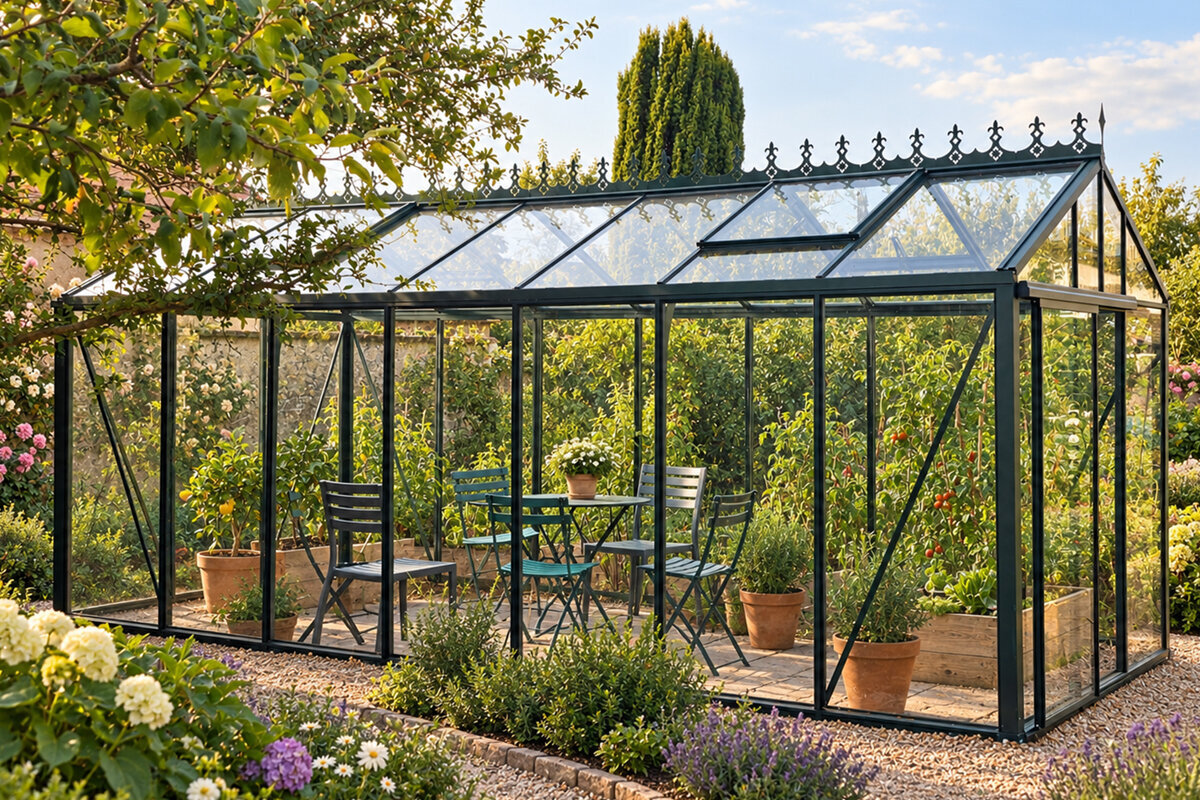

Greenhouse warranties are frequently reduced to one prominent figure. A better buying decision comes from examining the promise in sections: structural framing, glass, surface treatments, working components and replacement-part provision may each be governed differently. Looking at those sections individually shows the cover that could apply to the particular issue.
Separate faults in materials or manufacture from everyday deterioration, assembly mistakes and harm caused by outside forces. Goodwill assistance, rights provided by consumer law and the maker’s written guarantee describe different routes. Instead of relying on an advertising heading, examine the current conditions and documents issued for that product.
For an Irish purchase, this guide sets out a workable review: identify the right pre-order questions, judge limitations in context and retain the records that may matter later. The result is a promise you can weigh alongside the location, proposed use and expected working life of the greenhouse.
Step one
Separate warranty types clearly
Treat a manufacturer’s written warranty as an extra promise whose substance comes from its stated conditions, rather than assuming it forms automatically from the sale. Consumer-law remedies remain a separate matter and carry their own qualifying rules and time limits. In your notes, identify the promise being reviewed and link it to the relevant component or alleged defect.
A description such as “frame warranty” is not self-explanatory. Determine whether it addresses defects in materials and manufacture, particular harm to structural profiles, or something narrower. Then establish whether the stated outcome is repair, provision of a component or complete replacement. Record the exact commitment, its prerequisites and the proposed response so unlike forms of protection are not grouped together.
Classify every statement as a consumer-law remedy, commercial warranty, goodwill response or distinct arrangement for supplying spares.
Confirm that each condition applies to the chosen model, purchase timing and proposed form of use.
A standard Classic greenhouse with clearly assigned product documents is a useful comparison basis.
Step two
Assess the greenhouse construction
Do not limit the structural review to the aluminium profiles you can see. Identify every construction element expressly covered, including any references to joints, fasteners and doors. Foundation and assembly instructions are equally relevant. If compliant erection is required for warranty cover, account for those directions while choosing and preparing the location.
Pay attention to the terminology used for structural problems. Bending, corrosion, fracture and loss of function describe separate conditions. A defect in material may cause one problem, while loads, alterations or unsuitable erection may cause another. Photograph the delivered components, the completed assembly and later modifications, creating an orderly record against which a future query can be considered.
Determine whether the conditions prescribe anything specific about foundations, secure anchoring or the method of assembly.
Set the stated meanings of structural members, connectors and movable elements beside one another.
Where the greenhouse will adjoin a wall, examine a full classic Lean-To greenhouse and its installation conditions separately.
Step three
Check glazing by material and fault type
Glass requires careful scrutiny because the material, its installation and subsequent use all affect performance. Establish whether the promise addresses defects originating in manufacture, accuracy of fit or another stated quality. Then identify any express limitations for shattered panes, surface marks or harm arising from outside forces. For practical ownership, those distinctions may prove more informative than broad language about cover.
Review the complete glazed assembly rather than concentrating solely on each pane, since seals and the holding system may also contribute to a leak. Note the supplier’s procedure for investigating the source and assigning it to a component. Establish whether an approved response could cover the pane, transport, fitting work or one replacement item only. Warranty protection is always bounded by its conditions. Record any prescribed inspection procedure as well, because it can shape how staining, separation or similar observations are evaluated. Finally, make sure that cleaning and maintenance directions are clear, practical for your site and compatible with the routine you expect to follow.
Find distinct wording for glass, seals, glazing beads and damage arising during ordinary use.
Take prompt photographs of unusual areas and await guidance before making any alteration yourself.
For a glass-panel standard Classic greenhouse file its glazing conditions separately for future reference.
Step four
Put finishes and surfaces in perspective
Coating contributes greatly to an aluminium greenhouse’s appearance, although the accompanying protection may have limited boundaries. Check how the conditions deal separately with shade differences, reduced sheen, powdery residue, flaking and corrosion. Required maintenance is also significant: accumulated dirt, unsuitable cleaners and moisture held against the finish may affect how a later problem is evaluated.
Give the surroundings equal attention. Water splash, horticultural products, fallen leaves, salt carried in the air and nearby contamination can place different demands on a finish. Their presence does not make coating cover worthless, but it does call for an informed view of its limits. Obtain the recommended cleaning schedule and list of suitable products, then store those directions beside the purchase record. Soon after erection, supplement the component schedule with photographs to support identification over time. Include seals, fasteners and moving pieces rather than recording only the most obvious parts. A later enquiry can then identify the precise item involved without guessing either the cause of the problem or whether the conditions provide a remedy.
Keep cosmetic change separate from loss of function, using the definitions given for each category.
Ask in advance how extra attachments, drilled holes or a subsequently applied finish might influence eligibility.
For a full aluminium classic Lean-To greenhouse maintain the profiles and their junction with the wall as one coordinated area.
Step five
Treat spare parts as long-term planning
Commercial cover and continued access to replacement components should be reviewed separately, despite their connection. The warranty defines the circumstances in which a covered defect may receive a remedy. Parts provision instead concerns whether an item remains identifiable, obtainable and suitable for replacement during ownership. Check the ordering information required, retaining the model designation, dated purchase record, images and component schedule for later correspondence.
An orderly system for identifying spares is particularly helpful for pieces that move or receive repeated use, including gaskets, hardware, door wheels and fixings. Ordinary deterioration may apply to these items, so needing one does not by itself establish warranty cover. They still deserve proper planning: include periodic care, checks and eventual renewal in the expected ownership routine. Interpret every limitation together with the assembly and maintenance duties stated elsewhere. Broad clauses become useful only after you determine the action expected for this particular greenhouse. Make a written list of unresolved questions, and obtain an explanation of ambiguous conditions while you can still consider it before placing the order.
Retain the installation manual, component schedule and purchase confirmation in a form that permits future identification.
Confirm the information required when requesting a spare and whether images alone can establish its identity.
A standard Classic greenhouse with documented components makes later enquiries easier to allocate.
Step six
Read exclusions without misinterpretation
A limitation is not automatically a concealed weakness; it defines the boundary of the supplier’s voluntary commitment. Common examples concern faulty assembly, missed maintenance, modifications, routine deterioration and harm from severe outside events. Consider each limitation beside the defects that are expressly accepted. This shows whether the risk belongs within commercial cover, might involve another protection, or should be managed through regular upkeep.
Take particular care with clauses concerning unauthorised components or repairs undertaken by the owner. Changing the item before investigation may obscure what produced the problem. Unless immediate action is necessary to prevent further harm, preserve evidence, consult the governing conditions and contact the party identified there. Ask your insurer directly about any possible building or policy implications. Maintain a dedicated correspondence record containing emails, images and the identification of the component alongside the documents supplied at purchase. This chronology will be useful if further questions are raised or if several possible explanations have to be considered and distinguished later.
Highlight exclusions connected with site, installation, maintenance, alteration or external effects.
Judge exclusions by their clarity and relevance to the planned project, rather than by list length alone.
For a full classic Lean-To greenhouse against a building clarify responsibilities for connection work in advance.
Step seven
Compare the warranty-claim process
Well-drafted conditions explain how an initial report progresses towards an outcome. Identify the allowed notification period, supporting material to be supplied and the possible form of inspection, whether physical, image-based or otherwise. Determine who has authority to select repair, replacement or another response, and whether any preliminary step is required. Enter every part of that procedure in the same table used to compare coverage.
Describe a suspected defect completely but without guessing its origin. Images taken from different positions, order information and a concise timeline give the reviewer useful evidence. Avoid work that would obstruct inspection unless action is urgently required to protect the greenhouse or its surroundings. Preserve all correspondence with the rest of the product file. That file should also record whether installers, maintenance work and later inspection can reach the necessary areas. Continued use in accordance with the supplied instructions depends on suitable access. Review future services, growing arrangements and added equipment at the same time as the relevant requirements for the greenhouse.
Check whether proof of purchase, model details, photographs and assembly information are expressly required.
Note whether terms distinguish between supplied material, repair work and other potential costs.
Keep the documentation for a standard Classic greenhouse from Bloomcabin organised for the long term.
Step eight
Relate the warranty to site and use
The most useful approach tests the conditions against the greenhouse you actually intend to own. A protected corner of a garden presents different concerns from a windy, open position, while occasional seasonal use calls for another maintenance pattern than frequent propagation. Read erection guidance, upkeep duties and stated operating boundaries before treating warranty duration as decisive. Cover is one planning consideration, not a substitute for good siting and preparation.
Planning and insurance questions should be dealt with separately. Ask the relevant Irish planning authority how the proposed location, foundation, dimensions and construction are classified, because exempt-development provisions carry conditions and cannot be assumed to cover every greenhouse. Where the position remains uncertain, seek a determination or guidance for the actual property. Your insurer can likewise explain whether an existing policy responds. Base both decisions on the facts of the site and contract rather than a general summary.
Prepare a pre-purchase location record containing site images, a drawing, the foundation concept and principal product papers.
Recheck the written conditions after any major change to use, site fittings or structural connections.
Plan a full garden-oriented classic Lean-To greenhouse alongside local conditions at all times.



Comparison
Warranty decision matrix
Treat the matrix as an organising tool rather than a replacement for the conditions themselves. Against every model, record the exact promise, unresolved queries and documents that accompany it. The completed entries will expose meaningful variations in both coverage and the way a request is processed.
| Area to check | What to consider | Document or question |
|---|---|---|
| Construction | Define named profiles, connections and fault types clearly. | Request assembly requirements and a parts overview. |
| Glazing | Separate material faults from breakage, scratches and fitting issues. | Check terms for panes, seals and retainers. |
| Surface | Read visual changes separately from actual finish damage. | Record care advice and permitted cleaning agents. |
| Spare parts | Do not confuse a warranty claim with ordinary parts supply. | Keep the parts list, model identifier and enquiry route. |
| Exclusions | Assess site, installation, alteration and external effects. | Resolve ambiguous terms through written correspondence before committing to the order. |
A reliable comparison in five steps
Begin while the choices of greenhouse, position and accessories are still open. Following the five stages below will organise your examination of the conditions and create records that remain useful throughout ownership.
01
Collect all documents
Obtain the applicable warranty conditions, erection manual, maintenance directions and component schedule. Verify that every document belongs to the precise greenhouse configuration under consideration.
02
List the components
Give the frame, glass, coating, doors, gaskets and accessories individual entries. For each, note accepted defects, limitations and supporting records requested.
03
Match site requirements
Test the proposed foundation, fixings, working access and maintenance demands against the selected position. Send unresolved matters to the supplier or an appropriate adviser before purchase.
04
Check the claim process
Study the required notification channel and the responses the conditions permit. Establish which documents must remain available and whether prior modification could obstruct investigation of the problem.
05
Document your decision
Store the quotation, governing conditions, purchase confirmation and erection records in one file. Add the reasons for choosing the configuration to give later enquiries useful context.
Greenhouse pre-purchase checklist
Work through the checklist separately for every offer. Where the documents leave a point unanswered or ambiguous, obtain clarification in writing before deciding to purchase.
01. Does it clearly state which components a voluntary warranty covers?
02. Have you distinguished warranty, statutory consumer remedies and goodwill?
03. Can you obtain and realistically follow every instruction for erection, foundations and maintenance?
04. Which forms of glazing damage do the written conditions include or leave out?
05. Have you read the terms for finish, surface care and visual changes?
06. Can you tell which components are treated as wear parts and how to recognise them?
07. Have you recorded the notification deadline, supporting documents and correct person to contact?
08. Did you obtain an individual view on relevant planning matters and any applicable insurance protection?
Common questions on greenhouse warranty terms
Is a long warranty automatically the better choice?
No. Duration is only one comparison point. More important are the included parts and fault types, applicable conditions and the remedy available for an accepted defect. Compare the complete terms and installation and care requirements, not only a prominent number.
How do warranties differ from statutory remedies?
Irish consumer law may provide remedies for faulty goods independently of a seller’s or manufacturer’s commercial warranty. The commercial promise has the coverage and conditions stated in its own terms, while statutory remedies depend on the applicable law and circumstances. They can therefore operate alongside one another without being equivalent. Obtain independent advice where a particular contract or disputed right requires interpretation.
Do warranties usually cover scratches or broken glass?
No single answer applies. Some conditions cover a manufacturing or material defect while excluding harm resulting from a blow, poor fitting, ordinary activity or outside events. Examine the wording for the pane together with any clauses addressing gaskets and retaining pieces. If the documents do not resolve a likely scenario, obtain the supplier’s written explanation before ordering.
Why do installation and foundations matter for the warranty?
Correct erection and secure fixing allow the frame to perform according to its design. Commercial warranty documents may therefore make the prescribed assembly method, base preparation or absence of unauthorised modification a condition of cover. Retain the instructions, photographs showing the work and details of the foundation. Together, they help establish what was done if a later issue needs investigation.
Are spare parts automatically a warranty benefit?
No. Supplying a component may be the chosen response to an accepted defect, but parts affected by wear or accidental harm might not qualify. Review two matters independently: the method for ordering and identifying replacements, and the causes recognised under the warranty. Keeping the entire component schedule makes both enquiries easier.
Should I ask questions in writing before buying?
Yes, particularly where a point could determine suitability for the chosen setting or purpose. Frame the question around the named component, the relevant prerequisite and the procedure that would follow. File every response with the conditions current at purchase. A conversation can assist your understanding, but it is less dependable than retained written information.
Compare greenhouses
Compare terms, not slogans
Meaningful comparison requires separate examination of the frame, glass, coating, replacement components and limitations. Do this while the buying decision is still open, so you can gather missing papers, resolve ambiguities and test each requirement against the proposed location and the way you expect to use the greenhouse.
Organise the records from quotation and ordering through to completed erection. A well-designed comparison table supports a reasoned selection and later serves as a reference for maintenance, identifying replacement components and presenting clear evidence if a suspected defect must eventually be investigated.
Browse Bloomcabin greenhouse configurations, then consult the specific product papers and warranty conditions relevant to your planned installation.
