
How to Inspect a Garden Shed After Strong Winds or Heavy Snow
Garden shed care
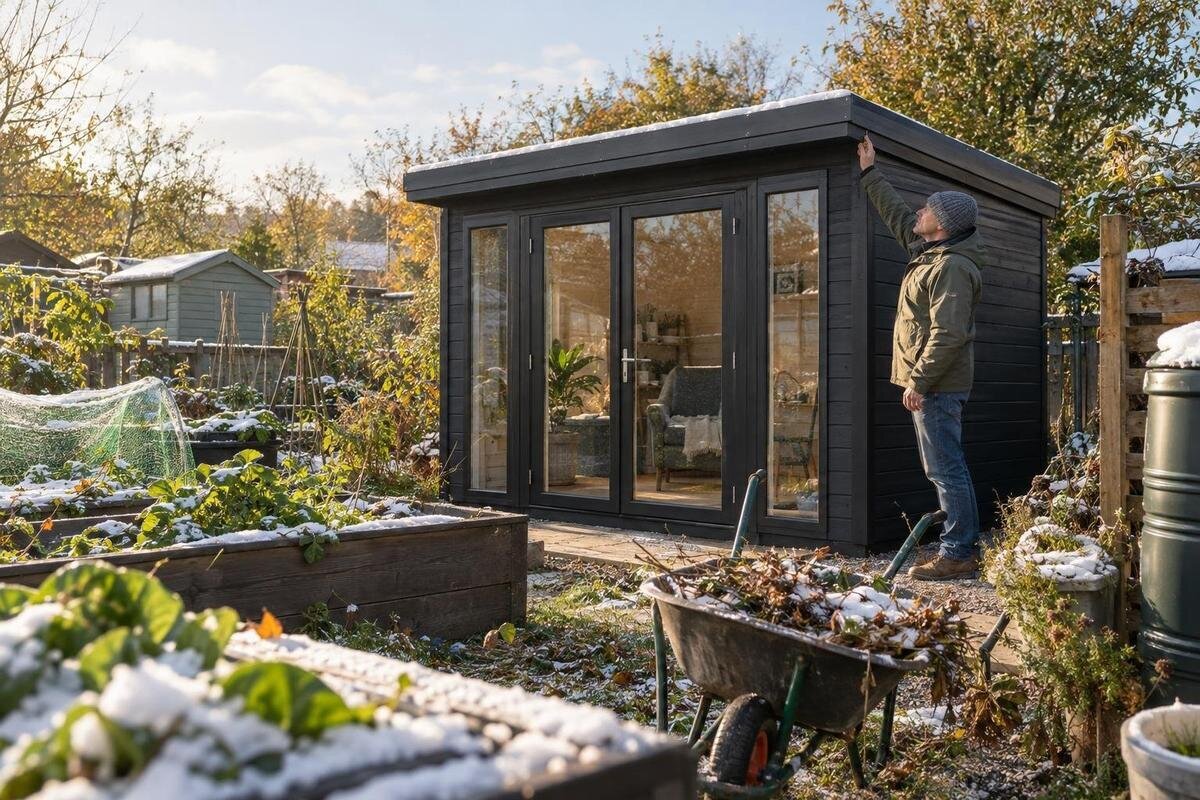
Strong winds and heavy snow can leave a garden shed looking sound while a roof edge, wall joint or fixing has shifted. A careful garden shed inspection after strong winds or heavy snow starts outside, from a safe distance, and moves indoors only if there is no sign of instability. Check the roof, walls, base, doors and visible connections; record changes rather than forcing parts back into place. If anything suggests movement or damage you cannot assess safely, keep out and get professional advice before using the shed as normal.
01
View the shed safely before approaching
Wait until the high winds and snowfall have passed, and until you can reach the shed without crossing debris or unstable ground. From a safe distance, look for branches resting on the roof, loose materials nearby, damaged fencing or anything else that might shift. Keep well clear of fallen cables; do not approach or move them, and report them through the appropriate local service. If a tree, wall or neighbouring structure looks unstable, choose another viewing point rather than walking underneath it. Poor light, wet ground and ice can make a visual check unsafe, so wait until you can see clearly and keep your footing.
Before opening a door, look for a roof that has dipped, a wall that leans or bows, corners that have separated, or any part that appears to be moving. Treat these as reasons to stay out, not as a prompt to test the shed: do not push a wall, rock the frame, climb a ladder or stand beneath a loose roof edge. Keep children and pets away from the area. If the building is visibly out of alignment or you cannot tell whether it is stable, leave it alone and ask a suitably qualified building professional to assess it before anyone enters. Do not force a door that will not open normally.
Check the roof without climbing onto it
From ground level, view each visible roof slope or flat plane from more than one side. Compare the ridge, eaves and outer edges with their usual lines, noting a new dip, twist, lifted edge, missing piece, exposed joint, dent or debris. Strong winds can dislodge a covering or trim at the edge while the rest still appears intact, so check corners and junctions as well as the middle. After heavy snow, an uneven outline or sag needs attention; a patch of snow left behind on its own does not show whether the roof is sound. Do not climb onto the roof or lean a ladder against it for a closer look.
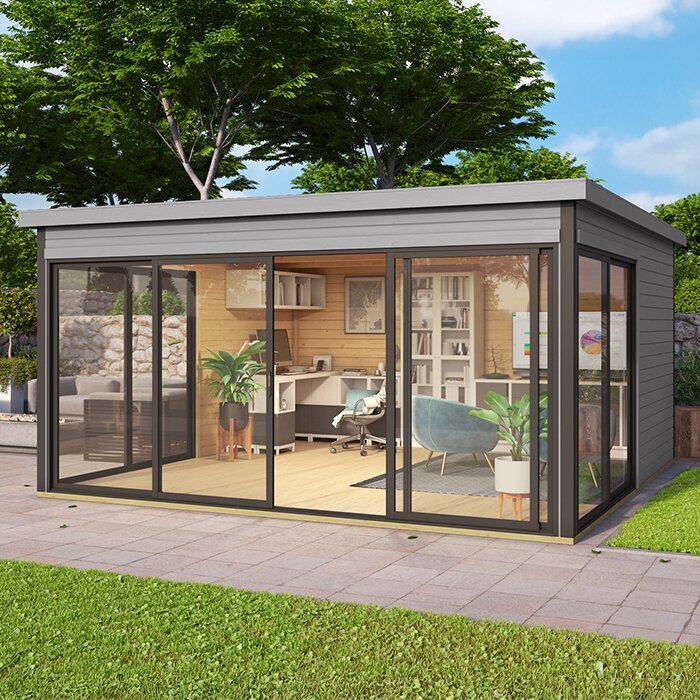
If the exterior gives no reason to think the roof is unstable, look from the doorway for fresh daylight through a gap, fallen roof material or new drip marks; do not go under a sagging or loose section. Do not knock snow down from below. If you are considering a replacement, compare explicit manufacturer information about roof construction, covering and assembly rather than judging from appearance. A listing such as the Verdana 1 garden house is only a place to check the details: its name or photo is not evidence of wind or snow performance. Ask the seller for model-specific information if it is not stated.
02
Look for movement in the walls and at the base
Walk around the outside only where footing and clearance are safe, and look at each wall from square on and from an angle. Notice whether the wall still appears straight, whether boards or panels sit in line, and whether corners and joints meet as before. A newly bowed section, a wall that leans, a fresh gap at a corner or a panel shifted out of position can point to movement; an old mark with no change is different. Use earlier photographs if you have them, but do not diagnose the cause from one view. Take a picture of any change and keep your distance if the wall seems unstable.
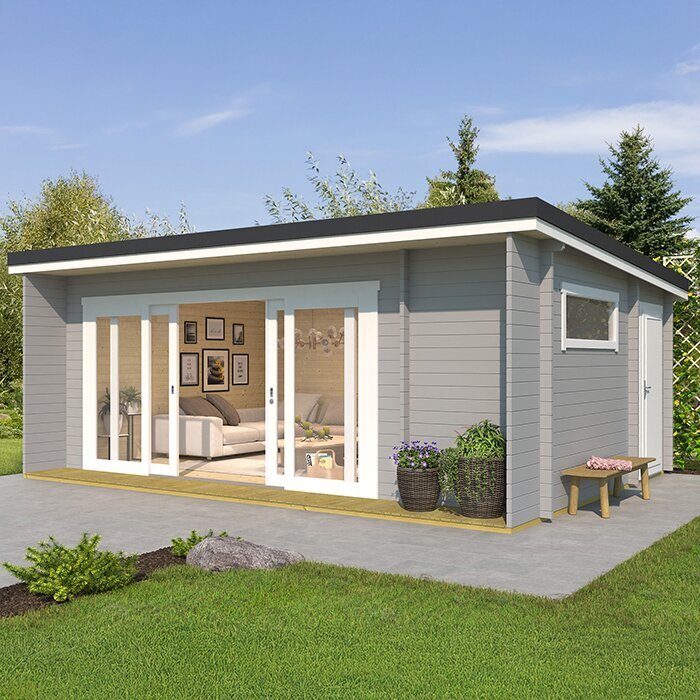
At ground level, inspect the visible line where the shed meets its support. Look for a new gap, a shifted base, washed-away soil, pooling water or a support that no longer appears even. Do not dig around the base, jack the building up or wedge material underneath it; those actions can alter a structure whose condition is uncertain. If replacement is being considered, measure the available footprint and note the base condition before browsing. For a listing such as the Verdana 2 garden house, check the stated external dimensions and any base-preparation guidance, and ask if something is unclear. The model name alone cannot confirm a fit.
Check doors, windows and frames for changed alignment
After the outside check, look at doors and windows for a change in alignment: a new gap at the frame, a latch that no longer meets, hinges pulled away, a panel sitting unevenly or glass that is broken. If the shed has more than one opening, compare them rather than treating one stiff door as proof of structural damage. Wind can leave debris in a track or shift a fitting; a door can also stick for unrelated reasons. If an opening is visibly distorted or a pane is loose, do not force it or stand where it could fall. Record what has changed and where.
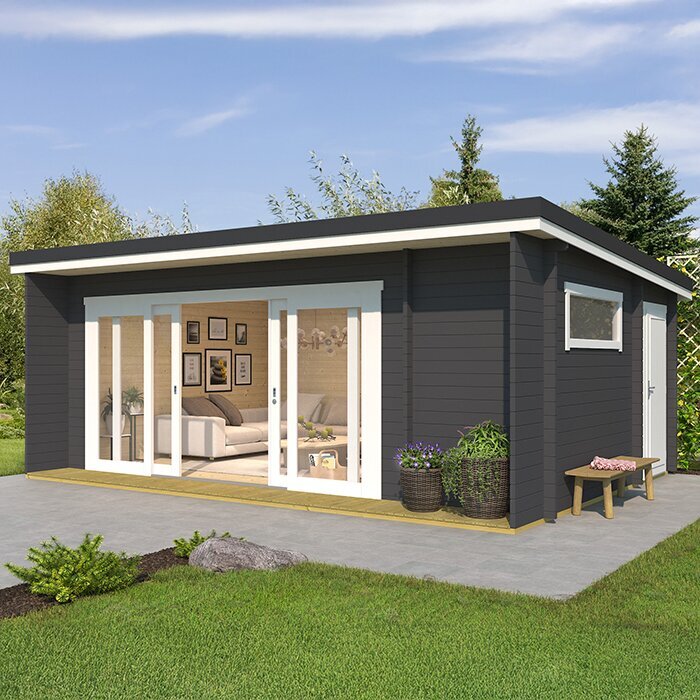
Only try a normal opening if there is no sign of instability and the door moves without force; stop at resistance instead of using your weight to test the frame. When choosing a replacement, decide where the entrance needs to be and how much clear space is needed to open it and move stored items through. Check the exact plan or product details for a model such as the Durano garden house, rather than assuming its opening arrangement from a photograph or name. Confirm which version and any options are included before ordering. This matters when a path, wall, fence or another fixed feature limits access around the shed.
03
Inspect visible fixings and attachments
Inspect visible fasteners and fittings without touching or pulling them: screw heads, brackets, corner connectors, roof-edge trims and any guttering or attached item that is actually present. Look for a missing or raised fitting, a bracket that has changed angle, a new gap, torn material or a piece that is hanging loose. Strong gusts can loosen exposed parts, but some connections are hidden, so a tidy exterior does not prove every fixing is sound. If anything is loose overhead, keep people clear of the area below it. Do not climb up, tug on a trim or use a loose fitting to judge how secure the shed is.
Photograph the location and note which side it is on; avoid tightening, hammering or gluing a part back in place when you do not know what it connects or whether the frame has moved. Use the maker’s instructions or ask a suitable professional for repair advice. If ordering another shed, confirm what the product package actually includes: the building, any base-related components, roof covering and fixings may be described separately. Check the information for Veltor 1 and ask the supplier if something is unclear. A model name alone does not tell you which fixings are supplied or how that particular shed must be secured.
Look for fresh water entry inside only if safe
Only look inside if the outside inspection gives no warning of instability and you can enter without forcing the door. Start from the threshold and check the underside of the roof where visible, upper wall joints, the floor and the corners. Fresh water marks, damp patches, drips, wet stored items, debris or daylight through a new gap can show that wind-driven rain or snow melt has got in. Note the exact place and direction of a stain if possible; it may help identify a route, but it does not prove where water entered. Do not go underneath a sagging section or handle hanging pieces.
Record whether contents have shifted or become wet, but do not move heavy items beneath a roof or wall that may be damaged. If the event has made you reconsider the shed, list what it must store and the clear space needed to reach it, then check published dimensions and layout rather than relying on a staged photo. A product page such as Orello 1 can be one comparison point, but the name and image do not establish usable capacity or clearance. Check the exact model information and ask about any point that affects your stored equipment before ordering. Keep this decision separate from the safety assessment; choosing a different shed will not repair a damaged base.
04
Document the damage and know when to get advice
Make a simple record while the observations are fresh. Take an overall photo of each accessible side and closer photos of each damaged area from safe ground; include the date and, if useful, a familiar reference point to show where it is. Note whether the sign appeared after wind, snow or the thaw, whether the door changed, whether water was present and which areas you could not inspect. Mark clearly what you knew before the event and what is new, rather than presenting a guess about cause as fact. Do not approach debris or a loose roof merely to get a better image.
Keep out and get professional advice if you see a sagging roof, a leaning or bowed wall, a shifted base, separated connections, loose overhead parts, or several new problems together. A new door misalignment alongside visible movement also deserves attention; do not try to solve it by forcing or adjusting the door before the frame has been assessed. If you ask for a repair or replacement assessment, share the record and any measurements taken safely. A listing such as Modano 1 can be compared later, but a product page is not a diagnosis. Confirm its exact stated details with the supplier or installer, and have a competent person assess damage to the existing shed.
Decide whether repair or replacement is appropriate
One damaged-looking part does not automatically mean the whole shed needs to be replaced, and an apparently small defect does not automatically make it safe. Ask whether the affected component can be repaired, whether the underlying connection or frame has moved and what work is needed to address it. Where the roof line, walls, base or several fixings have changed, a qualified person should assess the shed before repair or use. Avoid cosmetic work that simply covers a gap, stain or sign of movement; it can make later comparison harder without dealing with the cause. If you have a repair estimate, ask what is included and whether related areas have been examined.
Replacement is more reasonable when an assessment finds that safe repair is impractical, damage is widespread, or problems recur, but weigh this against the actual condition and your needs rather than the weather event alone. For a new purchase, identify the intended use, available space and exposure the shed must accommodate; then check manufacturer-stated information for the exact model. A listing such as the wooden garden tool shed M can go on a shortlist only after its published specifications and any written answers meet your requirements. Do not infer wind or snow performance from a model name, photograph or material description.
05
Check the site and order details before replacing the shed
Before ordering a replacement, revisit the site rather than assuming the old position or base is still suitable. Note how much room is available, where the entrance needs to face, the clear area for doors and stored items, the route for delivery and assembly, and any branches, walls or other obstacles nearby. Look for signs of pooling or washed soil and check what the supplier says about the required base and preparation. If the ground or base has moved, ask a competent installer or building professional what needs attention; do not assume a new shed will correct it. Measure safely and compare the site with the stated product dimensions.
Read the listing and order details for the exact model and version: dimensions, stated roof details, supplied parts, fixing guidance, base requirements, assembly arrangements and what is excluded. Ask the seller to clarify anything important to the site or intended weather exposure before confirming an order, and keep the answer with your records. For example, the wooden garden shed S is a model name, not a statement of its contents or performance; check the published details and obtain model-specific confirmation where needed. Do not transfer assumptions from a different shed that looks similar. Clear ordering records help you see whether a proposed replacement meets the practical requirements identified during inspection.
Return to use only when the concerns are resolved
Keep the inspection record together with photographs, any professional report, repair details and information for a replacement model. That makes it easier to compare the same roof edge, wall joint or base later and see whether an issue has changed. After a repair, follow the repairer’s advice about when and how to use the shed again, and keep a note of the work. If you did not inspect an area because access was unsafe, record that rather than treating it as checked. A clear record is more useful than a general note saying the shed was fine or damaged.
Return to normal use only when there are no warning signs and no unresolved concern; a visual inspection cannot rule out hidden damage or certify structural safety. If you notice new movement, a roof still out of line, loose parts, water entering or an opening that remains distorted, keep out and seek an assessment. Do not load a suspect area or carry on because one side looks undamaged. Where nothing has changed and the shed looks as it did before, normal access may be reasonable, but stop if anything feels different or you remain unsure.
Frequently asked questions
Can I go inside a shed after heavy snow?
Stay out if the roof is sagging, a wall is leaning, parts are loose or anything looks out of alignment. If there are no visible warning signs and the door opens without force, you may be able to check from the doorway, but do not enter if you have any doubt. A visual check cannot rule out hidden damage.
Does a door that sticks after high winds mean the shed has moved?
Not necessarily. Debris, a shifted fitting or another unrelated issue can make a door difficult to open. Note what has changed and look for other signs, such as a new gap at the frame or movement in a wall. Do not force the door; get advice if there are signs of structural movement.
Should I climb onto the roof to check it or remove snow?
No. A roof may be weakened or slippery, and a ladder can be unsafe against a damaged shed. Check what you can see from the ground. If the roof appears sagged, has loose parts or causes concern, keep clear and ask a suitably qualified professional to assess it.
What should I photograph after high winds?
Take an overall view of each side you can reach safely, then closer photographs of visible damage, such as a shifted panel or new gap. Include the date and note where each image was taken. Do not approach fallen debris or a loose roof to get a better picture.
When should I stop using the garden shed?
Keep out if you see a sagging roof, leaning wall, shifted base, separated connections or loose overhead parts. A new door problem alongside visible movement also needs attention. If you are unsure whether the shed is safe, do not use it until a competent building professional has assessed the concern.
A useful post-storm inspection is careful and comparative: look for what changed, record it and stop before a visual check turns into risky access or a guess at structural safety. Those observations help distinguish an issue that may be repairable from one that needs professional assessment. If replacement follows, they also give you concrete site constraints and questions for comparing garden shed details, rather than encouraging a choice based on appearance alone.
