
Multipoint locks for front doors: what to check
Planning a front door and its lock
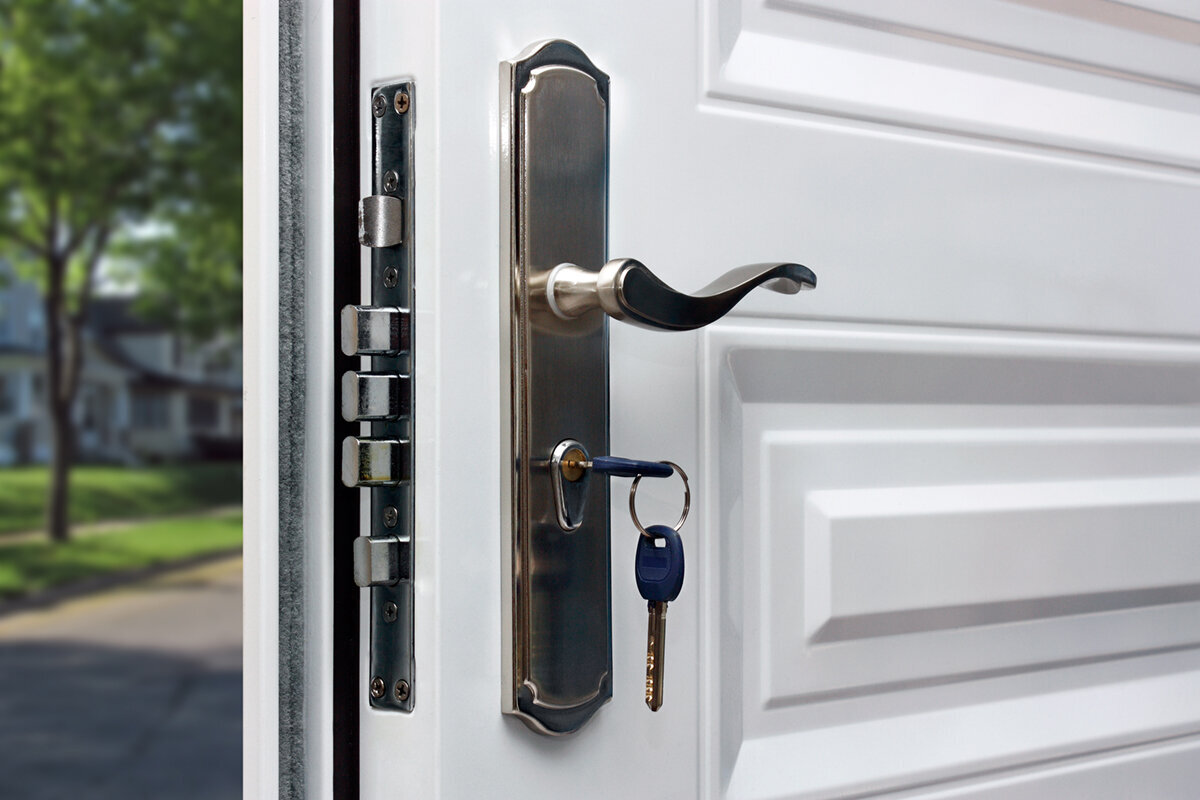
An imposing front door can still be awkward if its locking behaviour conflicts with household routines. Trouble may appear when the leaf is merely pulled to, when a child lacks strength to turn the key, or when nobody knows how electronic access behaves after a fault. Settle the locking arrangement while deciding the style, handing and sidelights—not afterwards. Door leaf, lock case, securing elements, frame keeps, euro cylinder and furniture must function together. Point count is therefore a poor starting point. Examine the action required, the result of latching versus key-locking, release from indoors and ease of use for everyone concerned. The sections below explain how to compare quotes, survey an existing opening and specify the whole door set instead of buying the lock in isolation.
Start with the real daily routine
Multipoint hardware secures a leaf at several places down its closing edge, but the label does not explain the sequence. Pulling the leaf to might engage only the latch, trigger other elements, or still require movement of the key or handle. Map ordinary use instead: identify the last person out each morning, anyone likely to arrive carrying bags, whether children need independent entry, and how busy the doorway becomes through the day. Consider holidays as well as a secondary door used infrequently. These examples translate household habits into operating needs. A point tally, by contrast, tells you almost nothing about the actions people must remember.
Next, write a short description of every state you expect. Explain the result of pulling the leaf to, the further change made by locking, and the method of release from the house. Decide whether outside access uses a lever, static knob or pull handle. Note if callers must be let in without receiving a key. Let each regular user imagine carrying out the steps. A feature that seems effortless in a showroom may frustrate a household whose members follow different habits. Include this account with requests for prices; otherwise, a supplier may price a sequence you did not intend. A compact routine chart can uncover competing requirements. For weekdays, weekends and time away, note the person using the entrance and the security state expected on departure. Add scenarios involving shopping, a buggy, carers or unexpected callers only if they reflect real life in your home. Highlight every point where a key, raised handle or electronic credential would be required. Such a chart is not a substitute for professional assessment. It does, however, give the adviser something specific to discuss, unlike a general request for locking that feels comfortable or exceptionally secure.
Specify door leaf, frame and lock together
Treat the lock as part of the complete door set. Overall size, leaf construction, frame, handing, swing, handle location and pre-cut recesses all restrict the suitable hardware. For a new panelled entrance door that swings outwards include locking hardware, cylinder and furniture for both faces in the agreed schedule from the beginning. The product label establishes only the type and swing; it says nothing definite about the lock supplied. Ask which systems can be ordered with that particular element, and confirm that the quoted package covers every keep and all factory work needed.
Do not overlook the receiving hardware in the frame while concentrating on the lock case. Every moving element needs a keep at the correct height and position. A new lock alone may leave an existing leaf stiff, because sag, poor adjustment or incompatible strike parts can produce the same symptom. On a new set, use the drawing and quote to verify handing and the preparations completed at the factory. For replacement work, have a competent door professional inspect clearances, leaf alignment, faceplate, keep strip and routed pockets. That survey reduces the risk of choosing a visually similar component with dimensions that cannot mate with the frame.
Compare manual and automatic locking
Manual systems require a deliberate action to deploy their extra points, commonly turning the key or moving the handle as instructed. This arrangement may appeal where occupants want the latched and fully secured conditions to feel clearly different. Some automatic locks throw additional elements as soon as the leaf closes. Although that can eliminate one task, everyone must learn the revised sequence. Establish exactly which elements the automatic action engages, whether the key has another necessary or optional turn, and how release works on either side. The description “self-locking” is too broad to support a decision on its own.
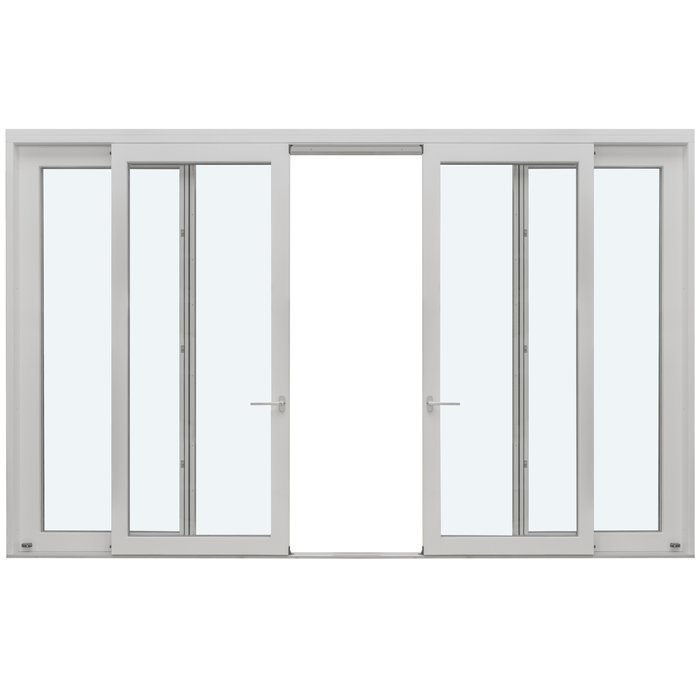
Have both options demonstrated from start to finish: begin with the leaf open, close it, observe the intended secure condition, release it indoors and regain entry outside. Also test an incompletely closed leaf and ask what indication confirms its status. A substantial Patio-Life lift-and-slide unit elsewhere in the building may use entirely different controls; its behaviour should not be treated as a guide to the entrance door. Where access points vary, documented routines and a careful handover help prevent confusion. Favour the arrangement whose stages future occupants can perform and recognise dependably, not whichever one has the longest feature list.
Assess hooks, bolts and deadbolts sensibly
Hooks, straight bolts, deadbolts and other system-specific elements can all provide multiple securing positions. Their names identify shapes or motion and the matching frame hardware; they are not a quality ranking. Performance depends on compatible lockwork, profile, keeps and fitting. Request a demonstration on the open door or an annotated diagram of the quoted arrangement. Locate every element, trace its movement, identify the receiving piece and note the user action that deploys it. This approach compares operation and compatibility, rather than relying on impressive-sounding terminology.
Judge point count only in the context of position and construction. Extra points cannot compensate for incorrect geometry, weak adjustment or an unreliable closing action. Build a row-by-row comparison showing the exact lock assembly, operating method, stated securing elements, keep strip or separate keeps, cylinder, and furniture on each face. A line that says only “multipoint locking” leaves crucial items undefined. Ask what will be adjusted during fitting and which later symptoms warrant attention. Detailed scope makes quotations easier to assess and provides a practical checklist for delivery and commissioning. Use separate columns when comparing prices: confirmed inclusions and decisions still open. Enter the lock, receiving pieces, euro cylinder, key quantity, furniture inside and outside, any electronic equipment, fitting and final adjustment. Where the quote is silent, write “not confirmed” rather than assuming supply. You can then understand differences in totals without deciding that price alone demonstrates quality. Keep every amendment on one controlled schedule. Avoid keeping contradictory quotation versions in the project file.
Size the euro cylinder after the furniture
A euro-profile cylinder transfers the key’s movement into the locking gear. Select its length against the completed leaf, including the furniture fitted on each face. On replacement jobs, a single end-to-end dimension is not enough: take separate readings from the fixing-screw centreline towards indoors and outdoors. Note the present backplates or roses and whether they will stay. A thicker or thinner plate can make the old cylinder project too far or sit too deeply. For a newly configured set, obtain both cylinder dimensions from the approved door schedule instead of assuming that a cylinder already on site can be carried over.
Decide how keys will be controlled as part of the specification. List permanent keyholders, choose where the spare is kept and agree a response to loss. Coordinated access can be particularly important for rented premises or workplaces, compared with one privately used doorway. A single-piece glazed door sidelight can improve the appearance of the entrance without dictating either lock type or cylinder. The element drawing should distinguish the opening section from every fixed section. It will then show exactly where daily entry, lockwork and furniture belong, keeping visual choices separate from closing and security functions.
Check internal and external furniture in practice
Furniture has practical consequences as well as visual ones. Roses or backplates, levers, knobs and pull handles change fixing positions, cylinder exposure, hand space and the motion needed for entry. Specify the opening action separately for the exterior and interior. Depending on the chosen set-up, indoor release might involve a key, thumbturn or different control; confirm its compatibility with the selected locking gear. Think about children, people with limited grip strength and anyone unfamiliar with the door. A long menu of features cannot make an awkward sequence easier.
Also examine the actual clearance around the furniture. A long pull bar can clash with a nearby wall, letterbox, light fitting or the open leaf. With an outward-opening exterior door , its arc extends across the area immediately outside. Plot the doorstep or landing, steps, canopy supports, railings and regularly parked objects at scale. The stated swing does not establish that the entrance will be convenient in its actual setting. Make sure a person has stable footing while unlocking and can guide the leaf without changing grip awkwardly. A plan view marking hinges, locking edge, travel arc and handle will expose clashes before the order is placed.
Plan electronic access as a whole
Possible keyless features include coded keypads, fobs, fingerprint readers, phone apps and motor-driven locks. Define the need before choosing equipment. Are you trying to revise permissions easily, return without keys, issue temporary entry, or administer several users in one place? Once the objective is clear, request a walkthrough of how the credential, controller, door and lock communicate. Establish the exact trigger for release, the duration of that release, whether securing resumes by itself and which functions remain available through an ordinary mechanical key.
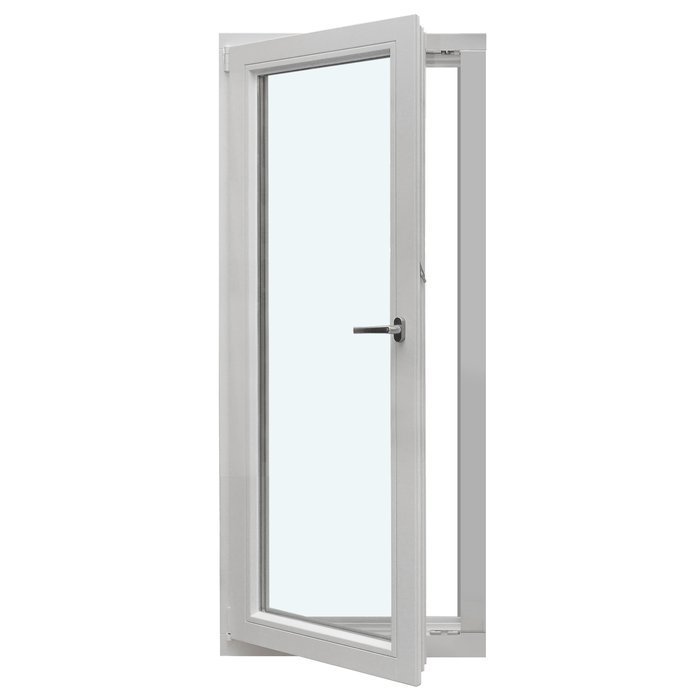
Prepare a failure procedure for any powered arrangement. Document mains or battery supply, low-power warnings, emergency release, administration rights and the person authorised to alter them. Include the steps for a missing fob, replacement phone or change of occupant. At a single-leaf outward-opening patio door , exterior entry, usage patterns and handle design may differ from those at the main entrance. Never assume one powered feature transfers unchanged to every door. Specify each opening separately, then organise permissions and user instructions consistently for the property.
Include sidelights and other entrances
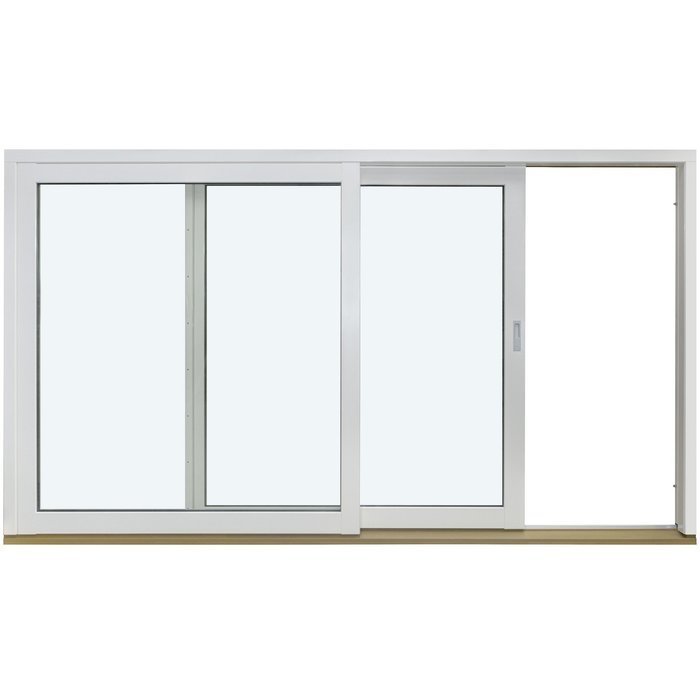
The entrance assembly may combine an opening leaf with stationary glass, one or more sidelights and glazing above. Although the locking strip belongs to the moving leaf, the drawing must identify the complete arrangement without doubt. Verify handing, locking edge, swing, usable clearance and every fixed panel. A fixed-glazed window can sit alongside the doorway as a design feature, yet it remains a window rather than part of the door and contributes nothing to its locking action. Do not use one product description for superficially similar glazed sections in an enquiry or purchase. A component-by-component schedule prevents measurements and fixing requirements being attached to the wrong item.
Also list every regularly used entrance. A side door, garage, cellar access or a glazed garden sliding door can be included. Their locks may differ, but each entrance needs a deliberate place in the household routine. Use a schedule to record the doorway, its users, frequency, means of entry and expected condition when people leave. This may reveal careful locking at the front while another route is habitually only latched. Uniform hardware is not the objective; conscious allocation of roles is. The schedule also shows which locations justify spare keys or digital credentials, and which are better served by uncomplicated controls.
Record an existing installation accurately first
For replacement work, give suppliers a proper survey of what is already fitted. Find maker and model references stamped on the faceplate or case. Measure the faceplate in both directions, locate the follower and cylinder, record the centres between them, and map every additional securing element. With the leaf open, photograph the full lock edge, then add close views of the case, furniture and receiving hardware in the frame. State the handing and swing from an explicitly identified viewing position. Avoid exploratory dismantling where it could disturb alignment or leave the entrance unsafe to operate.
Replace a vague report such as “closes badly” with observable symptoms. Note whether the leaf has dropped, rubs in one area, needs pressure towards the frame, or permits the key to turn only while it is raised. Those details separate likely alignment or geometry faults from problems within the lock. A single-leaf patio door opening inwards does not establish the correct entrance-door arrangement merely because some furniture looks alike. If matching new lockwork would demand extensive changes to pockets and keeps, price that repair against a coordinated replacement door. Compare present condition, required work and planned use; age by itself is not a sound basis for choosing.
Check quotation, fitting and handover
Before authorising manufacture, assemble a schedule covering overall dimensions, handing, swing, lock type and designation, receiving hardware, cylinder, furniture on both faces and any electronic additions. Reconcile it with the drawing and the household-use notes. Expand vague package descriptions in writing before acceptance. Allocate responsibility for measuring the opening, completing any building preparation and making final door-and-lock adjustments after fitting. This matters if the leaf, hardware and lock arrive as separate items: named responsibilities help ensure they are commissioned as a working set.
During handover, test the leaf several times in both its open and closed positions. Work through latching, key rotation, indoor release, all specified secure states and every agreed electronic access method. Record the key quantity, final configuration and user instructions. Bloomcabin provides a five-year window and door guarantee, with delivery scheduled for four to six weeks following confirmation of the order. Still verify these terms against your own order paperwork. Report stiffness immediately at acceptance rather than overcoming it by force. Handover is finished only after the people who normally use the entrance can carry out the specified routine unaided.
Frequently asked questions
Is a manual multipoint lock enough?
Yes, provided deliberate locking fits the abilities and habits of those using the entrance. Automation is not inherently preferable. Establish the state created by merely closing the leaf, any further turn of the key and the release method on each side. Every resident needs to recognise each state and complete the relevant action confidently.
Can every existing front door be upgraded?
Only a survey can answer that. The case, faceplate, follower, cylinder location, securing elements, recesses and frame hardware all need compatible geometry. Where the leaf already binds or sags, include alignment in the investigation. Visual similarity alone does not confirm that a new lock will replace the old one.
How is the correct cylinder size established?
Take two separate readings from the cylinder’s fixing centre: one towards the room and one towards the exterior. Size must reflect the completed door with its chosen furniture, so one overall measurement cannot settle the choice. On new work, ask the supplier to calculate both sides from the approved schedule and label the corresponding inside and outside furniture.
Is electronic access part of every multipoint lock?
No. Keypads, fobs, biometric readers, apps and motor drives are separately specified additions. Confirm that the option works with the door, then document its electricity source, operating sequence, mechanical emergency entry and access administration. Assign responsibility for settings and define the response to a missing credential or system failure.
What should a comparable quotation request include?
Give the door category and size, handing, swing, everyday usage, preferred securing sequence, furniture and key-control needs. For an existing set, attach measured details, identification marks, images and an exact account of the fault. Ask for an itemised schedule naming the lock assembly, receiving hardware, cylinder, furniture and any electronic extras.
Next step
Choosing well is not a contest to maximise securing points. The door leaf, frame, locking gear, keeps, euro cylinder and furniture must support a routine that occupants understand. For a newly ordered entrance, insist that the quote defines this complete arrangement. For existing joinery, compatibility rests on an accurate site record. Evaluate manual, automatic and powered alternatives by walking through realistic daily actions. Do not authorise the order until handing, entry method, included parts, fitting responsibility and final adjustment have all been recorded without ambiguity.
