
Overwintering Potted Plants in a Bloomcabin Aluminium Greenhouse | Ireland
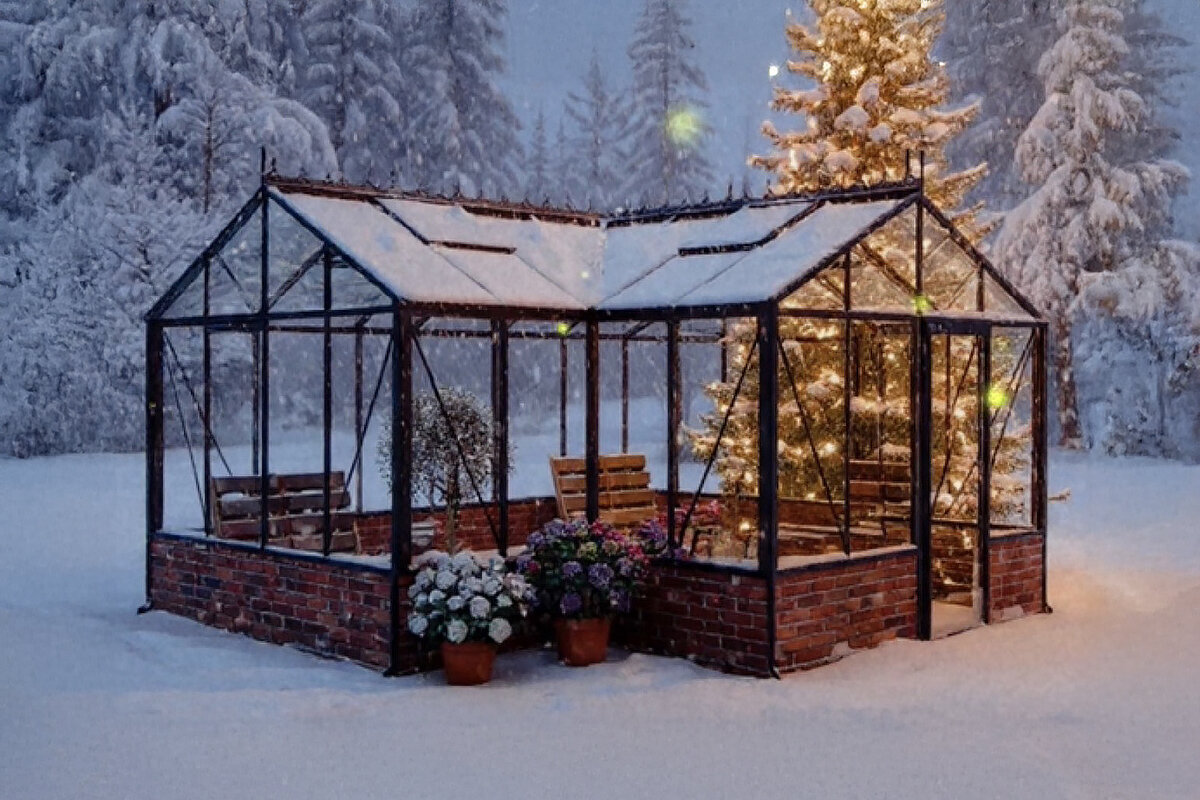
Overwintering potted plants in a Bloomcabin aluminium greenhouse
Overwintering container plants is one of the most important parts of careful gardening, especially in Ireland, where cool, windy winters, damp conditions, frost and fluctuating temperatures can all occur. Unlike plants rooted in the garden, potted plants depend entirely on their container and growing medium to protect the root system. Their roots do not benefit from the insulating effect of surrounding ground and lose heat through every side of the pot.
As a result, compost in a container cools more quickly, freezes sooner in frosty weather and can warm up rapidly again on bright winter days. Repeated freezing and thawing puts considerable strain on roots, causes drought stress and is a common reason for cracked pots. A quality Bloomcabin aluminium greenhouse can greatly reduce these risks by sheltering plants from wind, moderating temperature swings and providing a manageable microclimate. Even so, successful winter care still needs thoughtful preparation in an aluminium greenhouse .
This practical, technical guide is for Irish gardeners and Bloomcabin customers who want to use their greenhouse all year rather than only in summer. It explains how to bring container plants through winter safely; why ceramic and terracotta pots can be vulnerable in frost; why plastic pots, wooden planters and concrete containers are often better choices; and how mulch protects roots. It also covers drainage, heat retention, pot size, greenhouse positioning, winter watering, ventilation and humidity control. Whether you intend to buy a greenhouse or already own a Bloomcabin aluminium greenhouse, these suggestions can help protect plants and containers through an Irish winter.
Why potted plants need different winter care from plants in the ground
Outdoor plants benefit from the thermal mass of the soil. Ground warms and cools gradually, shielding roots from abrupt temperature changes. Even in a prolonged cold spell, soil temperatures deeper down remain comparatively steady. A container, by contrast, loses heat through its sides, base and exposed compost surface, so its root zone becomes cold much faster.
Ireland’s weather can bring alternating frosty nights and brighter, milder daytime conditions, particularly away from the coast. In a pot, that makes the compost repeatedly expand and contract. This mechanical stress can harm fine roots and substantially increase the chance of root loss. A greenhouse softens these extremes, but cannot eliminate them without further precautions.
Experienced gardeners often allow for a potted plant behaving as though it were growing one hardiness zone colder than the same plant in the ground. A Bloomcabin aluminium greenhouse helps offset that disadvantage by cutting wind exposure, retaining warmth and making use of solar gain. A winter-care plan tailored to the plant remains essential.
Why a Bloomcabin aluminium greenhouse suits winter use in Ireland
Irish winters can make demanding conditions for a greenhouse. Frost, high humidity, wind and changing temperatures all matter, while weather varies between coastal and inland gardens. A Bloomcabin aluminium greenhouse is well suited to damp conditions because aluminium does not rust, resists warping and remains dimensionally stable in high moisture.
Aluminium greenhouses admit plenty of light, which is particularly valuable during winter. Low winter sun can still warm the interior during the day, and this passive heat gain helps slow the loss of warmth overnight. Aluminium greenhouses can also be combined easily with insulating film, thermal stores and ventilation systems.
For gardeners considering a greenhouse purchase , the ability to protect plants over winter is a major benefit. Used well, a Bloomcabin aluminium greenhouse can reduce plant losses, limit frost damage to pots and encourage stronger, earlier growth in spring.
The core winter problem: water freezes and expands
Most winter damage to container plants is caused not by cold alone, but by water freezing in the growing medium. When water freezes, it expands and exerts considerable pressure on the compost and pot walls. In open ground this pressure can disperse, whereas inside a pot it acts directly on the container.
Autumn and winter in Ireland are often wet. Saturated compost holds plenty of water that turns to ice in frost. The more water it contains, the greater the mechanical strain. Poor drainage, or saucers that allow water to stand beneath pots, makes the issue much worse.
Why ceramic and terracotta pots can be troublesome in winter
Ceramic and terracotta pots are attractive, but can be less suitable for winter protection. These porous materials absorb water from both compost and humid air. When that water freezes, it expands within the pot wall and can create hairline cracks.
With recurring freeze-thaw conditions, such cracks can steadily widen until a pot suddenly breaks. Thin-walled terracotta is especially susceptible, although glazed ceramic pots can also suffer hidden micro-damage.
A reliable approach is to use ceramic and terracotta only as decorative outer pots in summer. Keep the plant itself in a frost-resistant inner pot, then move that container into the aluminium greenhouse for winter.
Why plastic, wood and concrete planters can be better choices
Plastic pots
Plastic pots are particularly useful for overwintering because they do not absorb water and have some flexibility. If the compost freezes and expands, plastic can flex slightly rather than split. They are also light, making it easy to move or group containers inside the greenhouse.
Choose good-quality UV-stabilised plastic, as cheap or aged plastics can become brittle. Professional nurseries have used plastic containers for reliable winter storage for decades.
Wooden boxes and planters
Wood provides natural insulation and tolerates the expansion of frozen compost well. It slows heat loss and gives the root zone a more even temperature profile. In an aluminium greenhouse, wood is especially effective because it is protected from direct rain.
Wooden planters also accommodate a larger volume of compost, improving heat storage further. Good drainage remains vital so that waterlogging cannot develop.
Concrete planters
Concrete planters are exceptionally robust and have high thermal mass. They absorb warmth and release it slowly, reducing temperature variation around roots. Concrete also withstands pressure from freezing compost very well.
Because they are heavy, concrete planters are best for permanent greenhouse positions, where they provide a highly durable option.
Why larger pots have an advantage in winter
Large pots contain more growing medium and therefore have greater heat capacity. Temperatures around the roots change more slowly. Small containers may freeze solid in a sharp frost, whereas larger planters often freeze only around their outer edges.
Larger containers also retain moisture more evenly, helping to prevent winter drought. For tub plants such as olives, figs, citrus and camellias, a generous planter can be crucial to winter survival.
Mulch: important protection for the root system
Covering the compost surface with mulch is among the most effective ways to overwinter container plants. Mulch holds air and forms an insulating layer that noticeably reduces temperature fluctuations.
Suitable materials include bark mulch, wood fibre, coir fibre and dry straw. A mulch layer of around 5 to 10 cm offers dependable cold protection. Keep mulch away from the stem itself to avoid encouraging rot.
Pot placement and greenhouse layout in winter
Every greenhouse develops microclimates. The coldest spots are usually close to the walls, while the centre tends to hold steadier temperatures. Place sensitive plants as centrally and as low down as possible.
Grouping pots reduces their exposed surface area and increases shared heat retention. The most tender plants benefit particularly when positioned within the middle of a group.
Drainage, winter watering and ventilation
Effective drainage is indispensable in winter because standing water increases both frost damage and root-rot risk. Remove saucers or empty them regularly. Reduce watering, but do not stop it entirely. Water preferably on frost-free days so surplus moisture can drain away. Short, regular ventilation is equally important to limit excessive humidity and mould.
