
Planning a Garden Shed Floor for Heavy Furniture or Equipment
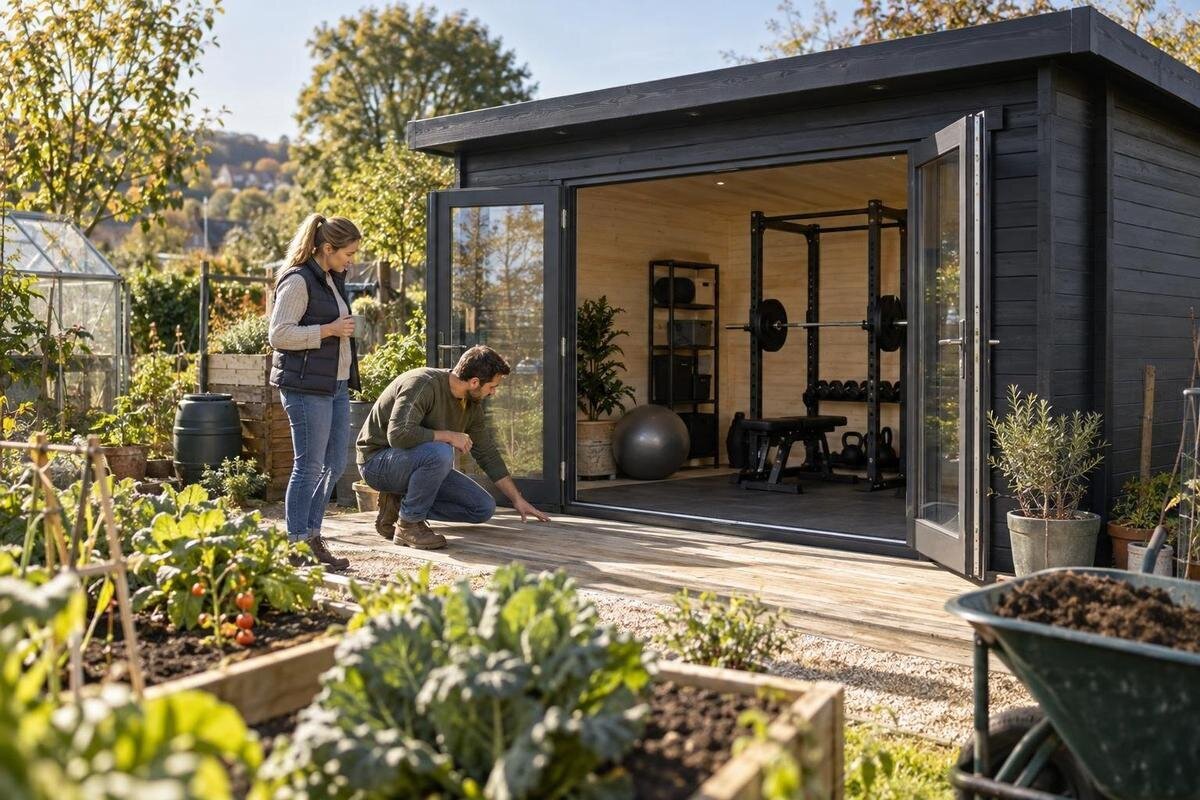
Garden shed planning
Before ordering a garden shed, decide what its floor will need to support, not only how much storage space you want. A filled cabinet, workbench, mower or other equipment can create different demands: consider its loaded weight, the area touching the floor, and whether it stays in one place or is rolled in and out. Include items you may add later as well as furniture you already own. Then match that use to written information about the shed, floor and base. This guide explains what to measure, what to verify on a product page, and when to get a clear answer before placing an order.
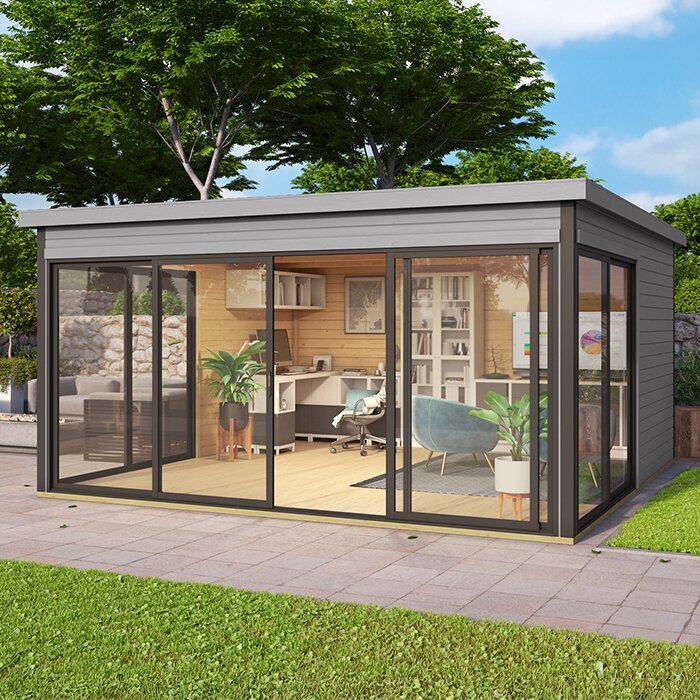
List the items and their loaded weights
Before comparing garden shed floors, list everything that will be stored or used in the building. Include the heaviest furniture and equipment, but also items that will sit on shelves, inside cabinets or on a workbench: an empty cabinet's weight is not the whole load once filled. Note whether each item stays there throughout the year, is brought in occasionally or is used while you work. If the shed will be a workspace, include that intended use and the people who will be inside, not just the furniture. The aim is not to produce an engineering calculation; it is to give the supplier an accurate picture of how the shed will be used. Separate definite items from possible future additions so the brief remains realistic.
Find each item's loaded weight in its manual or on the manufacturer's label, where available. If the figure is unclear, do not guess based on size or appearance; ask its manufacturer or the shed supplier what information is needed. Record the footprint and whether it rests on a continuous base, separate feet or wheels, plus any contents that may change its weight. Set this inventory beside the stated measurements and documents for a shortlisted building. A page such as the Verdana 1 garden house listing is a place to check published details, where available, but neither a model name nor a photograph proves floor capacity. Keep confirmed facts separate from open questions.
Check how each item rests on the floor
An item's total weight does not tell you how it meets the floor. A cabinet on a wide, flat base contacts more of the surface than one resting on narrow legs; equipment on small wheels bears at a few points. This contact pattern can matter when a supplier assesses suitability, even though you do not need to calculate it yourself. Note whether the item has feet, runners, wheels or a stand, and describe the surface each one touches. If the feet can be adjusted or a machine is supported separately, include that arrangement in your notes. Describe the actual configuration you plan to store, not simply one cabinet or one machine.
Do not assume that a floor which seems solid, or can be walked on, is suitable for every heavy object. Nor should you treat a loose sheet placed under an item as a guaranteed fix: changing the contact area does not demonstrate that the floor and support system can take the load. When you review the Verdana 2 garden house page, look for explicit information about the intended load and the way it is applied. If a stated limit does not explain whether it concerns a spread-out or concentrated load, ask the supplier to clarify it in writing instead of interpreting it yourself.
Account for equipment that moves
Storage and active use call for different questions. A heavy workbench that stays in one position is not the same planning case as equipment that is rolled out, turned or brought in repeatedly. Wheels can place weight on a small contact area, and movement across a threshold or floor joint may be relevant to the supplier's advice. Note whether equipment is simply parked, moved while loaded or operated in the shed; mention vibration or repeated movement if it applies. Do not assume that a floor rating for a stationary item also covers wheeled use. The routine you expect matters as much as the item's label.
Sketch the route from the entrance to the storage position and check the measurements that govern it: clear opening, turning room, internal floor space and any narrow passage beside furniture. Measure the item at its widest point, including handles or attachments that stay on during movement. Look for these details in a listing such as the Durano garden shed page, if provided, and check which measurements refer to the inside or to a clear opening. A product image cannot confirm usable clearance. A route that works on paper helps you avoid choosing a layout that cannot be used as intended.
Match the floor with its supporting base
Think of the floor as part of a support chain, not an isolated surface. A heavy item bears on the floor; the floor transfers that load through its construction and supports to the base below. The building and base therefore need to match the manufacturer's instructions. A thick-looking board or a visually solid platform does not, by itself, confirm that the whole arrangement is suitable. Likewise, an apparently firm base does not prove that an unverified floor can take the item. Keep the distinction clear when discussing an order: the floor, the shed's supporting members and the site base are separate parts of one support question.
Ask whether a floor is included with the chosen shed, whether it is an optional part and what type of base the instructions require. Confirm the named floor and shed combination rather than assuming that a floor sold separately fits every model or will support a particular load. Check the assembly information and ask who can confirm compatibility if the documents are unclear. When reviewing the Veltor 1 garden house page, use its published details and instructions, where available, to identify what is included and what still needs confirmation. The model name alone cannot answer those questions.
Read floor-capacity information carefully
Read any floor-capacity statement closely. Check which component it describes, whether it applies to the whole floor or a particular arrangement, and whether the stated load is spread across an area or concentrated at a point. If documentation gives a limit, make sure it is intended for the floor assembled and supported as instructed. Do not assume it applies to an optional floor, a different base or a modified build. A floor material or board thickness by itself does not establish the maximum load it can safely carry. Look for an assembly guide or technical document, not just a short product description.
When reviewing the Orello 1 garden house listing or another option, record exactly what is stated and what remains unanswered. A description such as sturdy floor is not a usable capacity figure, and a weight limit without conditions may not answer whether your item is suitable. Ask the seller or manufacturer to confirm the permitted load for your planned item and arrangement. If a written rating is absent, ask whether there is an installation document or further guidance. Do not turn one measurement into a load estimate yourself.
Measure the space items need in use
Floor area is not the same as usable space around a heavy item. Measure its footprint, including feet or a base that projects beyond the body, then allow room to position it, open lids or drawers and use controls. For a workbench or large cabinet, plan an aisle to reach what is stored behind it and to remove the item later. Check internal dimensions separately from the external footprint; walls, framing and the entrance can reduce the space available. If a product page shows only overall dimensions, ask for the internal floor size and clear doorway measurement before deciding.
Make a rough layout with outlines for the shed, door swing, fixed furniture and heavy equipment. This can reveal clashes that a headline floor-area figure hides, such as a machine that fits only if a cabinet blocks access. Compare your plan with dimensions published for the Modano 1 listing, where available, rather than estimating scale from a photograph. Leave enough working and removal space for the intended use, but do not treat spare floor area as proof of a higher load rating. Capacity and room to move are separate checks.
Confirm what is included in the order
Before ordering, establish exactly what comes with the garden shed. Check whether the package includes a floor, whether it is an optional extra, and whether the described base or supports are supplied separately. Verify which assembly instructions apply to the exact model and chosen options. Do not assume that a floor shown in a photograph, or mentioned elsewhere on a site, is part of your order or compatible with every version. Ask for an itemised answer covering the building, floor and any required supporting components, so the order reflects the arrangement on which your load assessment depends.
Use the documentation for the wooden garden tool shed M listing as a prompt for questions, not as a substitute for the order details. Confirm the names of any floor or base options, the quantities and what the supplier expects you to provide separately. If the building and floor have separate manuals, check that both refer to the components you intend to order. Keep the product information and written answers with the order confirmation. This makes it easier to resolve a mismatch before assembly, rather than discovering that a planned heavy item depends on an unconfirmed part.
Plan where the heaviest items will sit
Decide where each heavy item will sit before the shed is assembled and loaded. Mark the positions on your layout and avoid clustering several heavy pieces in a small area unless the floor information confirms that arrangement. Do not assume a corner, wall edge or position above a visible support is stronger; permitted placements need to come from the product documentation or a qualified adviser. If items will change position, note their different resting places as well as the route between them. That gives the supplier a specific question to answer, rather than a general query about whether a shed is strong enough.
Think about the order in which you will bring equipment inside and where it can be set down while you arrange the room. Avoid a layout that requires dragging a heavy object across the floor or shifting it repeatedly without checking whether that use is covered. For the wooden garden shed S listing and other shortlisted options, compare any stated internal layout information with your measured item positions; do not infer capacity or usable area from a model letter or images. If your plan needs extra boards, braces or a different support arrangement, get approval from the manufacturer or a qualified professional instead of improvising.
Get advice when the load is unclear
Some loads need an answer beyond a general buying guide. Seek advice before ordering if an item is unusually heavy or rests on a small number of feet, if equipment is moved or operated in the shed, if several heavy items will be grouped together, or if the product documents do not state a relevant capacity. Start with the shed supplier or manufacturer and describe the exact use. If the question involves a changed floor, new supports or a non-standard base, consult a qualified installer or structural professional. Do not rely on guesswork or on another shed's specifications.
Give the adviser the item's loaded weight, dimensions and contact points, and say whether it stays put or moves. Include any machine operation that affects how it will be used, along with the exact shed model, floor option and base arrangement you intend to order. Ask whether this combination is documented for the load and placement, and what configuration is required if it is not. Request the relevant manual or a written response that identifies the conditions; broad reassurance may not settle the question. You do not need to calculate the floor yourself, but you do need a clear answer before committing to a setup that depends on it.
Compare shortlisted sheds against your brief
Bring the information together in a short comparison for each candidate: usable internal dimensions, item weights and contact patterns, whether equipment moves, documented floor and base requirements, and what the order includes. Mark each point as confirmed, unknown or not applicable rather than relying on memory. A suitable choice needs room for the intended layout and a support arrangement the manufacturer says is appropriate. Neither a larger footprint nor a more substantial-sounding product name settles the load question. If a key fact is missing, compare another option with clear documentation or get an answer before ordering.
Keep your final layout and the supplier's response with the assembly instructions, and revisit them if you later add a cabinet, appliance or piece of machinery. A change in use can alter both the load on the floor and the way equipment moves across it. Do not modify the floor or add supports simply because a new item feels heavy; check the manufacturer's guidance or seek qualified advice first. Planning before purchase helps you choose a garden shed that suits the furniture and equipment you intend to use, rather than buying floor space without resolving the support question.
Frequently asked questions
Does an item's weight alone tell me whether a shed floor is suitable?
No. The footprint, feet or wheels, whether the item stays in one place, and the way the floor is supported all matter. Include the item's loaded weight and how it will rest or move when you ask the supplier about suitability.
Can I put a heavy item in a corner to give it more support?
Do not assume a corner or wall edge is stronger. The support arrangement depends on the shed and floor, so use the manufacturer's instructions or ask about the exact position and item before deciding where it will sit.
Does a floor-capacity figure cover equipment on wheels?
Only if the information says it applies to that kind of use. Check whether the figure covers concentrated contact from wheels and movement across the floor, rather than assuming it applies to every item or situation.
What if the product page gives no floor-capacity information?
Ask the supplier or manufacturer for the relevant instructions or written guidance. Describe the item's loaded weight, contact points, position and whether it will move. Do not infer capacity from the floor's appearance, material or a product photograph.
Will choosing a larger shed solve a heavy-load concern?
Not by itself. More floor area may give you room to arrange items, but it does not establish how much weight the floor and its supports can take. Check the capacity and base information separately.
A sound floor plan begins with the real contents of the shed and ends with information that covers the floor, its support and the way each item will be used. Record the loads and contact points, allow space to move equipment, and resolve missing capacity details before ordering. That gives you a practical basis for choosing a garden shed around heavy furniture or equipment without relying on appearances or assumptions.
