
Planning Gutters and Rainwater Collection for a Garden Shed
Garden shed planning
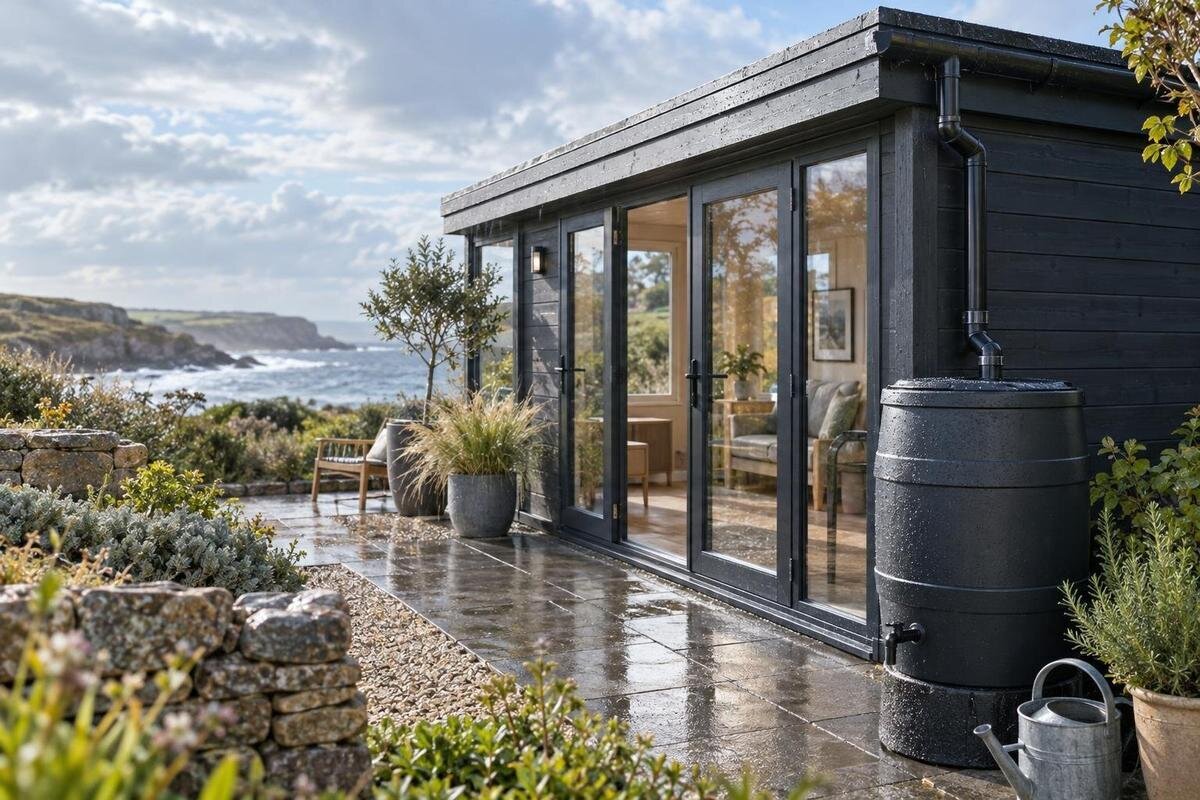
Planning gutters and rainwater collection for a garden shed starts with a clear destination for roof runoff. Without one, water may fall beside the base, splash a doorway or cross a path; adding gutters alone does not settle what happens after water leaves the roof. Plan the roof edge, gutter run, downpipe, ground and any storage tank as one system. Decide whether the main aim is to direct runoff away or collect water for later garden use, then check what the chosen building and site can support.
Before you order 1
Decide what the gutters need to do
Planning gutters and rainwater collection for a garden shed starts with one question: where will roof runoff go? Gutters catch water running off the roof and channel it to an outlet; the outlet then needs a destination. This can reduce uncontrolled dripping and concentrated splashing near the shed, but it will not correct water already flowing downhill towards the building or a generally saturated patch. Walk around the site during or after rain and note where water lands, whether it forms puddles, washes soil away or makes a path slippery, and whether the issue affects one edge or the wider area.
Set a practical objective before choosing fittings. If you mainly want to keep water away from an entrance or the base, a downpipe directed to a suitable area may be enough. If you want to store rainwater, the plan also needs room for a water butt or tank, a connection from the downpipe and a route for overflow when the container is full. Those choices affect where the shed and tank can stand. Mark slopes, low points and hard surfaces on the sketch too, because they can show where water is likely to travel after it leaves the downpipe. A gutter is not a substitute for resolving drainage problems across the whole site; persistent pooling or water coming from higher ground may call for a broader assessment.
Check the roof details before choosing a kit
Start with the roof, not the shed's floor plan. The building footprint does not tell you the length or profile of the edge where a gutter would sit. Check the supplied roof drawing or ask for confirmed roof-edge dimensions, roof shape and details of any eaves or trim. Make a simple site sketch showing the roof edges, doors, paths and possible tank area. An outlet that looks convenient on paper may be awkward if it ends where people walk or where there is no suitable route for water. Also note where rain currently falls from each edge during windy weather, as water may not drop straight down. Measure from fixed features rather than estimating by eye, and record gates, fences, planting beds or taps that could limit the downpipe route. This gives suppliers a clearer basis for answering questions about outlet positions.
Use a product page to identify the building in your enquiry: the Verdana 1 garden house listing should be considered alongside its technical information, not as proof that guttering is supplied or compatible. Ask whether a gutter system is included, optional or sourced separately, and which components suit that roof edge. If the listing does not answer this, request the fitting information before ordering. Do not infer measurements, roof form or included accessories from a product name or photograph.
Before you order 2
Confirm that the guttering fits the building
Even when a shed has a suitable roof edge, gutter profiles, outlets and brackets are not automatically interchangeable. Confirm the type recommended for the roof, how the gutter is supported, where fixings may go and whether a particular fascia, trim or adapter is needed. Ask about joints, end caps and outlet pieces too: missing or mismatched parts can leave gaps or put the outlet in the wrong place. The building maker or gutter supplier should be able to specify a compatible combination. Avoid drilling or altering roof components on the strength of generic advice.
When discussing a candidate such as the Verdana 2 garden house, request building-specific fitting guidance and a full parts list before selecting a kit. Clarify whether the proposed setup is designed for the building as supplied and whether any changes affect the roof covering or other components. If access is awkward, fixing points are uncertain or alterations are proposed, ask a competent installer to assess the job rather than guessing. This is especially useful when the building and guttering come from different suppliers: agree who confirms compatibility and who supplies each connection.
Place downpipes around the shed and garden
Choose downpipe positions while planning the building layout, not after the shed is in place. Mark each intended outlet on a measured plan, then check that the pipe will not obstruct a door, path, stored items or access around the structure. Allow room at the bottom for the required connector, diverter or discharge arrangement, and for future cleaning. If a tank is planned, its inlet needs to meet the outlet using a suitable connection; confirm the arrangement with the gutter and tank suppliers. If different roof edges drain towards different sides, ask how the system should be laid out rather than choosing the outlet positions by eye.
For a candidate such as the Durano garden shed listing, use a confirmed plan and dimensions to test the route; photographs alone may not show every roof edge or entrance clearly. Think about where someone will stand to open the shed and carry tools or watering cans, as well as the shortest pipe route. A downpipe that ends beside a narrow threshold may keep rain off one patch while leaving the entrance wet or awkward. Adjust the layout on paper first, and ask the supplier whether the proposed outlet position is suitable for that building.
Before you order 3
Plan for discharge and tank overflow
Plan for the tank being full, disconnected or temporarily unavailable. Its overflow needs a destination that will not send water back towards the shed, across a doorway or onto a path. Mark the overflow as well as the normal downpipe connection on your site sketch. If the tank is near a boundary, consider where excess water will travel and whether it could affect a neighbouring area. The aim is to keep both routine runoff and overflow within a suitable part of the site, rather than leaving the route to chance. Include the route between the tank and its overflow point, rather than marking only its final destination. A short route may still be unsuitable if it crosses an access route, runs beside a loose bed or discharges where water can return towards the building. Leave enough clear space to inspect the connection and to see quickly if it becomes blocked.
Ground that accepts water in ordinary conditions may not cope with a concentrated outlet during heavy rain. Avoid directing discharge at the shed base, onto soil that could be washed away or into a place that already pools. If you plan a soakaway or a connection to an existing drain, have a competent drainage professional assess the site's suitability and the proposed route; do not assume that any nearby drain is appropriate. When considering the Veltor 1 garden house listing, include the confirmed building position, tank space and overflow destination in one plan before settling on a location.
Decide whether rainwater storage is worthwhile
Storage makes sense when you have a regular use for the water and a suitable place for a container. A small water butt may suit occasional watering, while a larger tank may hold more but takes up more room and needs support appropriate to that tank. Do not choose capacity solely by the roof or by the largest container that fits. Think about how often you use water, how much space you can spare and whether a full container can be accessed and maintained without blocking the shed. If there is no practical use or suitable position, simply managing runoff may be the better plan.
Before adding a tank to a shortlist that includes Orello 1, confirm the garden house's roof details and map the container beside it; the model name is not evidence of a gutter kit or a usable connection. Follow the tank maker's requirements for support and positioning, and ask an installer if the ground or base is uncertain. Plan an accessible tap or outlet and a route for carrying a watering can or hose. Treat stored rainwater as non-drinking water unless a suitable treatment and testing arrangement has been designed for that purpose.
Before you order 4
Match storage to likely supply and use
Match capacity to both supply and demand rather than treating roof runoff as a guaranteed source. The amount available varies with the roof area, rainfall and the way water is routed; demand changes with the season and how you use the garden. Use confirmed roof measurements and local rainfall information with a reputable rainwater-estimating tool, or ask a supplier to help. Note whether one or several roof runs will feed the container, as this affects the assumptions behind any estimate. An estimate is a planning aid, not a promise that a container will stay full or that every shower will be captured. Seasonal use matters too: a tank may fill when garden watering is limited and be low when you need it most.
A tank that is too small may overflow before you can use the water, while a very large one may take up valuable space and remain underused. Check how the container handles incoming water and overflow, whether its outlet suits your intended use, and whether you need more than one storage point. For a building such as Modano 1, use confirmed roof information from the product documentation when estimating collection; do not use the listing name, model number or image as a measurement. Keep any supplier estimate with your plan so later changes can be considered against the same assumptions.
Consider water quality and access for cleaning
Rainwater quality depends on what it contacts and how it is stored. Leaves, grit, bird droppings and residues from the roof or gutter can enter the tank, so ask the equipment supplier whether a screen, leaf guard or filter is appropriate for the system. These parts also need to be inspected and cleaned; a filter that cannot be reached safely is unlikely to be maintained. Ask what upkeep the chosen equipment requires and make sure the lid, filter and connections remain accessible once the shed and tank are in place.
Decide what the stored water is for before fitting the outlet. Garden watering is a common non-drinking use, but roof-collected water should not be assumed suitable for drinking or food preparation. If your intended use goes beyond ordinary garden use, get specific advice on treatment and testing rather than improvising. If comparing a wooden garden tool shed M, use its confirmed layout to make sure the tank, filter access and hose route will not crowd the entrance or prevent tools from being moved in and out.
Before you order 5
Check the order and installation details
Treat guttering and collection parts as a separate line in the order unless the documentation clearly says otherwise. Check what is included: gutters, brackets, outlets, downpipes, joints, tank connectors, diverters, filters, tanks and overflow components may not come as one package. Ask for product-specific confirmation of compatibility and keep the answer with your order documents. Also confirm the recommended fitting sequence; the building maker's instructions may specify when accessories can be fitted. This helps avoid discovering after assembly that a part is missing or that separately sourced components do not connect.
Compare the building plan with your intended water route and check that site access leaves room for placement and fitting. Do not rely on an image or model label for dimensions. If the wooden garden shed S listing is on your shortlist, use verified drawings and fitting notes when asking about gutter components. Confirm who is responsible for fitting any separate collection equipment, and arrange professional input where the proposed route affects drainage. Keeping the building, guttering and tank details together makes it easier to spot gaps before the work is under way.
Make maintenance part of the layout
Choose a position where gutters and screens can be inspected and cleared safely, and where the tank lid, tap, filter and overflow remain reachable. Trees or nearby plants may add leaves and other debris, so factor them into the likely cleaning burden rather than relying on a filter alone. Follow the equipment maker's maintenance advice and plan a safe way to reach any elevated parts. Do not climb or lean on a shed or gutter unless the access method and equipment are designed for that work; get help if safe access is uncertain.
After installation and periods of heavy rain, observe whether the gutter overflows, joints leak or water pools at an outlet. A change to the soil, garden layout or tank position can alter the route. Keep a brief note of what happens in ordinary rain and heavier showers, particularly if water reaches an entrance, path or neighbouring area. This can help distinguish a blocked screen or loose connection from a more general site-drainage problem. If a connection loosens, an outlet causes erosion or drainage remains poor, ask the supplier or a competent installer to assess it rather than making an unverified alteration. Regular observation helps you see whether the arrangement still works as the garden changes and whether a part needs attention.
Frequently asked questions
Do all garden sheds need gutters?
No. It depends on where roof runoff currently lands and whether it causes splashing, pooling or problems around an entrance or path. Gutters can help direct roof water, but they will not solve wider drainage issues across a site. Consider the ground and the intended discharge point before deciding.
How can I tell whether a gutter kit will fit?
Check the building's roof drawings and fitting instructions, and ask the supplier which gutter profile, brackets and fixing points are suitable. Confirm whether the kit is included or separate. A product name or photograph is not enough to establish compatibility.
How can I estimate how much rainwater I can collect?
Use confirmed roof measurements and local rainfall information with a reputable rainwater-estimating tool, or ask a supplier for help. The result is an estimate, not a guarantee: rainfall varies, and the water you collect also depends on how the roof and guttering are arranged.
Where should a water butt overflow go?
Choose a route that carries excess water away from the shed, entrances and paths without causing pooling or washing soil away. Plan it before positioning the tank. If you intend to connect it to a drain or soakaway, have a competent professional check that the route suits the site.
Can I drink rainwater collected from a garden shed?
Do not assume it is suitable for drinking. Water can pick up debris or residues from the roof, gutters and storage equipment. Drinking use would require a system designed for that purpose, along with appropriate treatment and testing advice from a qualified source.
Treat the roof, gutter, downpipe, destination and upkeep as one plan. The arrangement should suit the building's documented roof details, keep runoff away from unsuitable parts of the site and remain accessible for cleaning. If you want to store water, give a full tank's overflow an equally clear route. That makes rainwater management part of choosing and positioning a garden shed, rather than an afterthought once it is in place.
