
How to protect the base of a wooden garden shed from ground moisture
Garden sheds
Ground moisture can affect the lowest timber of a garden shed even when the roof is sound. Wet soil, direct contact with the ground, blocked airflow or landscaping against the wall can all make the base slow to dry. The most useful protection begins before assembly: match the shed to a suitable base, preserve the clearance and airflow its design requires, and keep the lower edge accessible for inspection. This guide explains what to check when choosing and ordering a wooden shed, and how to spot a moisture problem once it is in use.

01
How ground moisture reaches a shed’s lower timber
The bottom edge of a wooden garden shed is exposed to more than rain falling on its roof. Soil beneath and beside the footprint can stay damp after wet weather; a dip, leaking hose or splash from watering may also keep one part of the lower wall wet. If a base rail, floor bearer or wall edge touches wet soil, moisture can move into the timber by direct contact. Lower components may also dry more slowly if they are shaded or enclosed. The source matters: painting the outside cannot correct ongoing contact with wet ground.
Not every dark mark at floor level comes from ground moisture; a leak, spill, condensation or splashback can leave similar signs. Inspect the point where the shed meets its support, including corners, joints and the inside edge of the floor where accessible. Note whether dampness is confined to one area, whether the timber dries as conditions change, and whether it feels soft or has changed shape. A stain alone does not prove decay, but persistent damp or softening needs attention. Knowing the intended base arrangement helps you distinguish a surface mark from a continuing problem.
Choose a base that suits the shed
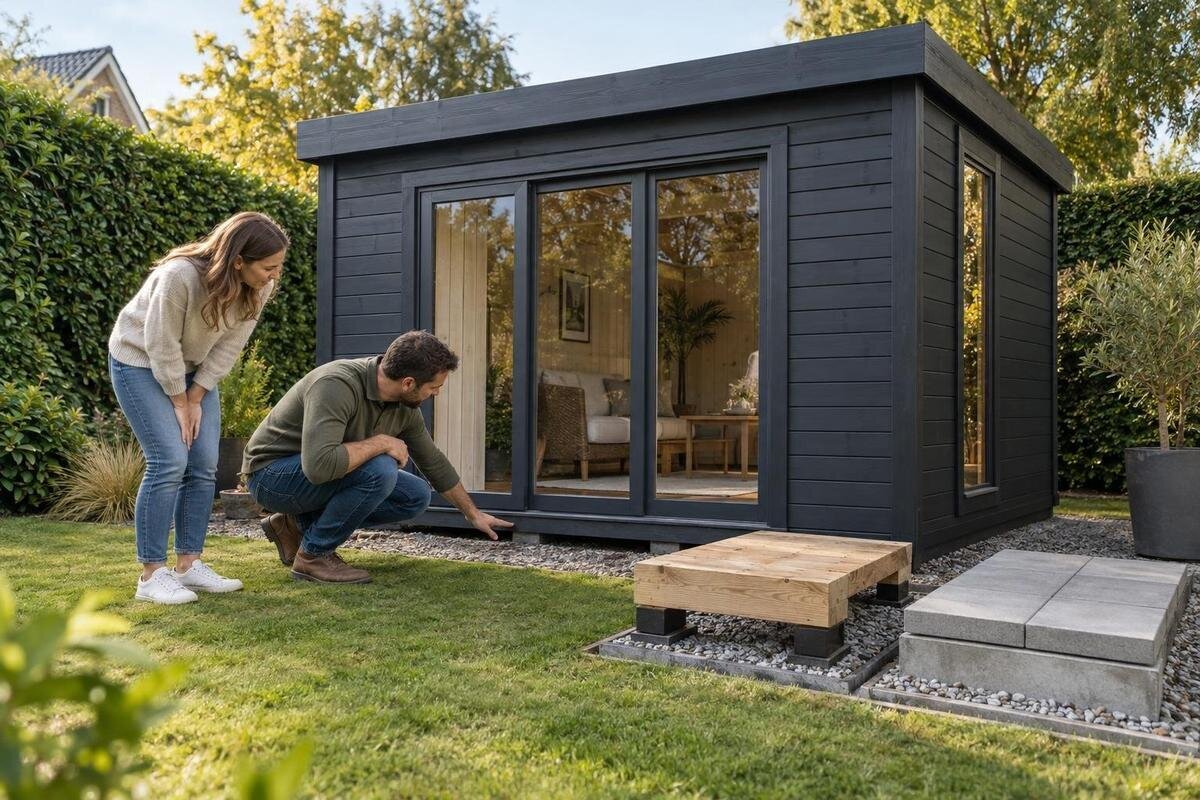
Treat the base as part of the shed specification, not as an afterthought. It needs to meet the manufacturer’s requirements for the footprint, floor arrangement and fixing points, and provide consistent support on a level surface. Improvised blocks or isolated paving slabs may leave unsupported spans or uneven contact, depending on the design. A surface that looks hard is not automatically suitable just because it is solid. Check the installation guide before choosing a base type, and confirm whether a floor or bearers are supplied or need to be arranged separately. Establish these details before ordering so the support and the building can work together.
When reviewing the Verdana 1 garden house, identify the model from the listing, then look for its installation drawing or ask the seller for it. Confirm the required base dimensions, where the support needs to sit, and any specified clearance beneath the timber; do not infer these details from a product photograph. If the ground is soft, uneven or often wet, ask an experienced base installer or suitable building professional to assess it rather than compensating with a few extra supports. Also establish which parts of the base arrangement are included with the shed and which must be prepared separately.
02
Check the site before settling on a shed
Look at the exact footprint before choosing a shed or arranging its base. Visit it during or soon after wet weather and note whether the ground stays soft, water sits there, or the spot dries more slowly than the surrounding area. Check for nearby sources such as a hose connection, a regularly watered bed or an overflow that could repeatedly wet the same edge. These observations do not replace a site assessment, but they give you and an installer useful information when choosing a position. A patch that looks dry in summer may behave differently after prolonged rain, so do not rely on one inspection.
Do not assume a layer of gravel, a sheet of plastic or a coating will solve the problem on its own. Moisture control depends on the complete base design and where water can drain or air can circulate; an unsuitable barrier may leave damp trapped rather than remove its source. Ask what ground preparation the chosen shed requires and whether a membrane is part of the specified arrangement. Assess a model such as the Verdana 2 garden house using its own instructions, not another model’s base details. If water regularly remains on the footprint or the soil is unusually soft, get the ground and base plan assessed before ordering.
Keep designed ventilation routes open
Separating timber from soil is not the only consideration. Where the shed design provides space beneath its floor or openings around the lower edge, air needs to reach those areas so they can dry. Keep the manufacturer’s intended gaps clear of edging, dense planting, bark, stored timber, bins and other items that hold damp against the structure. Avoid covering vents or closing off an underfloor space simply to hide the base. At the same time, do not create a gap or change the support arrangement in a way the instructions do not specify; the aim is to preserve the design, not improvise a new one.
Before choosing the Durano spacious garden shed, or another model, ask where air is meant to move and how the base detail leaves that route open. Check whether proposed decking, paving, skirting or a storage box would obstruct an opening once everything is in place. Product photographs may not show the underside or the required finished clearance, so request the installation information if it is unclear. Airflow can help the timber dry, but it will not resolve standing water or a leak; the source of persistent moisture needs attention too.

03
Find out how the timber should be maintained
Ask what treatment the timber receives and what maintenance the manufacturer recommends for the base rails, floor bearers and lower wall boards. Do not infer long-term protection from a general description or the colour of the wood, and do not assume every cut end or concealed face has the same treatment as an outer panel. Look for guidance on whether a protective finish is needed, which type is compatible, and whether particular areas need attention. If that information is not available, request it before purchase so you can plan for the right upkeep without guessing.
When comparing the Veltor 1 garden house, ask for care guidance specific to the model rather than applying a familiar fence stain by default. A coating may help protect exposed timber when used as directed, but it cannot compensate for boards left in contact with wet ground or a base that holds water. Follow the product label and the manufacturer’s advice on preparation and reapplication, and do not seal a damp area before its moisture source is understood. If the lower timber is already soft or distorted, seek repair advice rather than treating it as a routine finishing job.
Keep landscaping and storage clear of the base
Keep soil and garden materials from creeping up the shed wall over time. Raised beds, fresh topsoil, bark mulch and compost can bridge a clearance that was present at installation, hold moisture beside timber and make inspection difficult. Plan paths and planting so the lower edge remains visible and can dry as intended; do not bank soil against the cladding unless the design explicitly allows it. Water plants carefully near the shed, and avoid leaving pots, bags, firewood or equipment pressed against the wall, where trapped damp may persist.
While considering the Orello 1 garden house, plan the finished garden around the base as well as the footprint: allow access to inspect lower edges and leave room for any specified air gap. Use the product dimensions and installation information to plan that space rather than estimating from a display image. Think about changes you may make later, such as a raised planter or new paving, because they can alter ground level or block airflow. It is useful to settle this before ordering, while you can still adjust the intended position and surrounding layout.
04
Inspect the lower timber over time
Include the base in ordinary garden checks, particularly after a spell of wet weather or after work changes the ground around the shed. Look along every accessible side for soil build-up, pooled water, leaves, blocked openings and new marks; check inside at the perimeter and under the floor only where it is safely accessible. Move stored items rather than assuming the wall behind them is clear. A simple note of where marks appear and whether they dry can help show whether moisture is occasional or persistent. Follow the maker’s stated inspection and maintenance intervals if they are provided.
At purchase, ask whether the assembly and care guidance explains which base members should remain visible and how to inspect them. For the Modano 1 garden house, use its own instructions rather than assuming that all timber sheds have the same floor detail. Do not try to gain access by lifting a shed or removing structural parts yourself. If inspection shows recurring damp, consider possible sources such as soil contact, a blocked air path or water entering from above; arrange an appropriate repair if the cause is unclear. Investigating early is more useful than applying another coat over the same area.
Respond to damp or damaged timber
If lower timber looks damp, examine the affected spot when it is safe to do so and compare it with nearby areas. A local patch may point to splash, a leak or contact with soil, while widespread damp beneath the floor calls for a broader investigation; neither pattern alone proves the cause. Clear loose leaves and move items away, then see whether the area remains wet once an obvious source has been removed. Do not cover a damp mark with paint or sealant before investigating, as a finish can hide changes without correcting the route by which moisture is reaching the timber.
Timber that feels soft, crumbles, has lost its shape, or is accompanied by a loose or shifted base needs more than routine maintenance. Avoid relying on a preservative to restore damaged wood; ask a suitable carpenter, shed installer or other professional to assess the affected parts and the support. If a new shed is under consideration, do not infer its base requirements from an example listing such as the wooden garden tool shed M; check that model’s instructions independently. Addressing the ground or base issue as well as the timber can reduce the chance of the same problem returning.

05
Confirm base details before ordering
Before placing an order, compare more than the shed’s external dimensions. Check the stated footprint, base drawing, location of bearers or other support points, floor arrangement and any required clearance; confirm whether a floor, base frame or fixings are included or need to be supplied separately. The installation information should explain what surface the building is intended to sit on and whether the base needs to meet particular requirements. A listing title, photograph or general timber description cannot answer these questions. If a crucial detail is missing, ask the seller or manufacturer before arranging the base.
For a product such as the wooden garden shed S, verify the actual dimensions and installation details on its listing, and request anything you need that is not provided rather than relying on the model name or image. Establish who will prepare the support and, if an installer is involved, when it must be ready and what finished surface is required. These practical points can affect the position you choose and whether the shed fits a base already in place. Keep the answer with your order information so anyone assembling or caring for the shed can refer to the same requirements.
Keep the base accessible after assembly
Plan to keep the base accessible once the shed is assembled. Leave enough room around it for the manufacturer’s stated clearance and for you to inspect the lower edges; avoid adding permanent edging or storage that conceals them. If you lay a path, deck or gravel later, keep it from covering the intended separation or trapping leaves against the timber. A clear view makes it easier to notice a damp patch, damaged finish or change in soil level before it is hidden behind new work.
Make a simple record once installation is complete: note the base arrangement, take clear photos of accessible lower corners and keep the care instructions with the purchase documents. Later, compare like with like after landscaping or repair, and follow the manufacturer’s guidance for any treatment. If you cannot see the underside, or a proposed alteration would change the support, clearance or ventilation, get advice before proceeding. The aim is not to keep every part completely dry in all weather, but to avoid prolonged contact with wet ground, preserve the drying conditions the design expects and notice changes early.
Frequently asked questions
Can I place a wooden garden shed straight on soil?
Not unless the instructions for that particular shed expressly allow it. Soil can stay wet and may not provide the even support the building requires. Check the specified base and clearance before ordering or assembly.
Will a concrete base prevent damp?
Not by itself. A concrete base may provide firm support, but it does not automatically resolve water held against the edges, unsuitable base details or a site that stays wet. Follow the shed and base instructions, and get advice if water regularly remains there.
Is a plastic membrane always needed under a shed?
No. There is no universal membrane detail for every shed and base. Use one only if it is specified for the base system or approved by the installer; a barrier in the wrong place may affect drying. Confirm the full construction rather than adding a sheet as a quick fix.
How much space should I leave beneath the shed?
There is no single clearance that suits every model. Follow the manufacturer’s stated requirements and keep any designed ventilation route open. Do not alter the support just to create a gap if that conflicts with the instructions.
What should I do if the bottom rail feels soft?
Treat soft, crumbling or distorted timber as a reason to investigate, not simply repaint. Check for soil contact, persistent damp or another source of water, and ask a suitable carpenter or shed professional to assess damage that may affect the support.
Protecting the base of a wooden shed means preventing the lowest timber from sitting in wet soil, giving it the drying conditions its design allows, and keeping the support easy to inspect. Choose a base that suits both the building and the site rather than relying on a coating as a cure. After assembly, watch how the base behaves through wet weather and keep the manufacturer’s care guidance to hand. If damp persists or timber softens, investigate the cause before treating or covering it.
