
Raising Green Beans Under Glass
Bloomcabin Field Manual 14 · vegetable crops under cover
Raising Green Beans Under Glass
Under glass, green beans are straightforward only when their surroundings are kept in balance. Start them in warm earth with room for roots, guide the shoots, keep air moving around flowers, water evenly without saturation, and harvest before seeds begin swelling.
Select the right plant form
Use bush beans when a low, fast crop and a concentrated yield suit your plan, with later sowings available for continuity. Use pole beans when height can produce pods over a longer spell from fewer plants, supported securely beside a bed or greenhouse wall.
01 / What the structure changes
Gain extra growing time without creating a hot, airless house.
Cover is valuable when spring beds remain chilly for weeks, frequent rain leaves outdoor leaves damp or cooler late-summer nights check a later sowing. The enclosure helps soil warm sooner, shelters young growth, places irrigation at root level and may keep pods coming into the opening weeks of autumn.
Protection also intensifies whatever is going wrong. Sunshine builds heat quickly, water leaves the bed faster, dampness lingers after watering, and crowded leaves stay wet. A plant that merely slows outdoors may shed flowers in a shut greenhouse at noon. Aim for settled moisture around the roots, steady ventilation and a clear escape route for humid warmth—not enclosed, tropical conditions.
In Ireland, a greenhouse is most useful for stretching the productive period around outdoor growing. Met Éireann describes a strong Atlantic influence, with generally cool, windy winters and comparatively mild summers, yet coastal exposure, altitude and inland frost make gardens differ. Shelter can make establishment more reliable and support later harvests in cooler districts. Bright spells shift attention to venting early, using temporary shade and watering consistently. Base timing on the bed and current local weather.
Roof vents, temporary shade and enough room to work are functional growing equipment. One structure worth considering is the Classic Aluminium Greenhouse when planning crop height, access and movement of air.
02 / Matching habit to space
Choose the crop shape first; settle on the named variety afterwards.
Compact plan
Bush beans
- Growing space Low, spreading, accessible.
- Framework Usually unnecessary.
- Crop rhythm The first pods arrive sooner.
- Yield pattern A brief, concentrated flush.
- Best place An open, bright bed edge.
One vegetable · two ways to use space
Height-led plan
Pole beans
- Growing space Small footprint, tall canopy.
- Framework Firm canes or taut strings.
- Crop rhythm Pods arrive later.
- Yield pattern Picking continues longer.
- Best place Back edge or northern side.
Bush beans are useful where early, compact production is wanted, whether you intend to process a sizeable harvest at once or schedule several sowings. They usually reach roughly 40 to 50 cm, forming a low, spreading stand whose strong yield comes over a limited period. Sowing two or three batches at intervals maintains supplies more reliably than committing everything to one large batch.
Do not pack bush beans into a solid mat. They seldom need supports, but air must pass around the leaves so they can dry. Set them in a generous block near the front, in a raised bed or in large pots. Each arrangement should allow inspection and harvesting from both sides, watering at soil level and movement without crushing plants or trapping moisture within the stand.
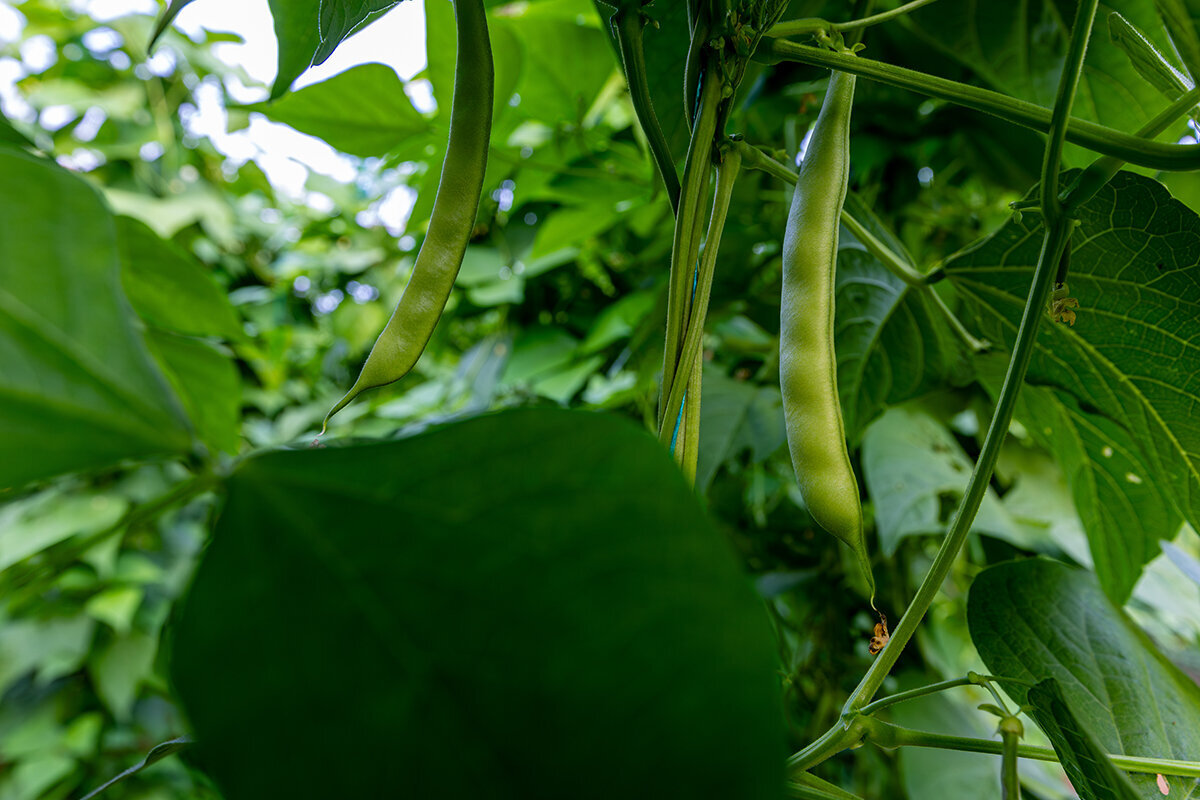
Pole beans suit a plan that uses available height to obtain a longer crop from less ground. Their first pods appear later, although frequent removal can sustain production. Success depends on firm training, beans that remain reachable and enough summer ventilation to prevent accumulated heat from disrupting blossom development.
Install the climbing system before sowing: sturdy canes, well-tensioned sisal strings or an equivalent vertical support. New shoots can be guided gently without later work around their roots. In most hobby greenhouses, approximately 1.8 to 2.2 m is sufficient. Use the back of a bed or the northern side only if shorter plants still receive light, and prevent growth obstructing vents, doorways or paths.
03 / Establishing the crop
Let the permanent root zone warm and open up first.
1Check soil warmth.
2Put seed in its final place.
3Use the packet depth.
4Keep generous gaps.
5Damp, never saturated.
Direct sowing is generally easiest because bean roots respond poorly to disturbance. Do not judge readiness from pleasant midday air; check the bed in the morning at a depth of several centimetres. A reliable soil reading of about 16 °C offers a practical cue. When an unheated Irish house reaches this point varies with location and spring conditions. Cold, waterlogged seedbeds often result in erratic germination, decay and weak growth.
Sow according to the instructions for the chosen cultivar, using loose soil that drains readily. Place seed a little nearer the surface in heavy ground than in a light medium prone to drying. There is no need to force a single centimetre rule onto every soil; warmth, drainage and an unsealed surface are more important. Leave enough room for illumination and airflow. A handful of clearly trained pole-bean groups may yield better than a crowded row, provided every plant can be approached from a picking edge.
Work a light, even dressing of well-rotted compost through the ground before planting. Fresh manure and large quantities of fast-acting nitrogen should not surround the roots. After establishment, beans form nodules with bacteria that assist nitrogen nutrition. That relationship does not remove every fertility need, but over-supply commonly produces lush, dark leaves rather than balanced flowers and pods. For beds cropped repeatedly under cover, a soil test gives better direction than precautionary feeding.
Water newly sown ground evenly, then keep it moderately damp through emergence without saturating it. Where a warm, bright place is available, single seeds can be started from April in small, deep pots of peat-free seed compost. Transplant promptly, while the compost remains cohesive and roots have not filled the container. Tall, drawn seedlings usually forfeit any early lead. In a home greenhouse, patience until the permanent bed has warmed is often more dependable than beginning too soon in pots.
04 / Arranging access and height
Keep every shoot, opening and harvest side within easy reach.
Beans must not become a screen that cuts off half the greenhouse. How they are trained affects plant health: reachable stems get picked, visible leaves can be checked early for pests, and clear passage from the door towards roof vents assists cooling. Paths are not wasted capacity; they provide the access and air route that make the planted area manageable.
Where a compact structure permits, place pole beans along the north or rear long side so tall leaves cast less shadow across shorter plants in the brighter section. If the building makes that arrangement unsuitable, observe the sunlight and locate the highest crop where its shade causes least disruption. Protect incoming light and the route needed for watering, inspection and picking.
Plan view of the growing spaceTall planting · low planting · open aisle
Climbing-bean bed
Upright framework
Airflow route
Low bean block
Entrance and aisle
Keep the central passage continuously clear.
Give pole beans the tallest section, where their strings can be watched, both sides approached and neighbouring crops kept clear of the picking route. In a modest greenhouse, one row along the rear margin of a broad bed is often enough. Fix supports before shoots emerge, making them strong enough for wet foliage and a heavy pod crop without loading the frame, panes, roof vents or door fittings.
The greenhouse layout should support these daily tasks. A Classic Aluminium Greenhouse offers a straightforward rectangular footprint for beds, a central route, roof vents and a planned climbing line. Consider access, glazing, proportions and air exchange together. The Classic Aluminium Greenhouse presents further sizes and configurations for shaping a layout around your own crops.
05 / Balancing water, fertility and ventilation
Manage all three as a connected routine.
Keep moisture around bean roots reasonably constant; alternating drought and soaking causes stress. Because rain never reaches a covered bed, missed watering is not corrected naturally, and a dense canopy can hide dry soil. Before adding water, examine the root zone with your finger, a trowel or a simple probe. Conditions below the mulch or compost are more useful than surface colour.
Moisture
Apply enough water to moisten the full rooting zone, rather than spraying the surface little and often. Do not let the bed dry while buds, flowers and young beans are developing. Delivering water through drip irrigation or a carefully placed hose reduces wetting of leaves and flowers compared with sprinkling. Consistent moisture still requires drainage: saturated ground excludes oxygen, damages roots and favours unhealthy growth.
Fertility
Start with well-rotted compost; for beds used season after season, let soil analysis guide later inputs. Beans ordinarily need less supplementary feeding than hungry fruiting crops. If foliage looks unusually pale despite suitable temperature and water, consider nutrient status, pH and structure as one problem. Adding nitrogen repeatedly without evidence can delay flowers and create a mass of leaves instead of productive plants.
Ventilation
Vent while the house is still comfortable, not after heat has built up. A single roof vent may be adequate in gentle weather, whereas sunny or close conditions call for openings above and at the door to draw air through. Recirculation fans help where pockets remain still but do not exchange indoor air. Leaves should move softly; a hard draught can dry seedlings and their rooting area too quickly.
Leaf cover
Train flexible pole-bean shoots onto the support little and often. Retain healthy foliage because it fuels growth; routine heavy defoliation is harmful. Remove leaves that are damaged, stems lying continuously on damp soil, and occasional sections that genuinely prevent access or drying. Correct spacing is the better answer for bush beans, as cutting later cannot fully repair a stand planted too densely.
06 / Protecting blossom from heat
Temperature stress shows first in flower retention.
Beans enjoy warm summer conditions, but sustained extremes can dislodge flowers and halt young pods. Treat temperature readings as prompts to vent, shade or irrigate, rather than as information to note after damage.
Below 16 °CGrowth slows
About 18–29 °CGood activity
About 30–34 °CIntervene promptly
From 35 °CPod initiation threatened
01 · Release heat
Move warm air out.
Move warm air out.
02 · Temper sunlight
Use short-term shade.
Use short-term shade.
03 · Restore moisture
Keep roots even.
Keep roots even.
04 · Observe
Inspect blossom condition.
Inspect blossom condition.
Do not wait for 35 °C to appear. If a bright day is expected, open upper vents and the door in the morning, before the structure, paths and soil have absorbed substantial warmth. Prevention is quicker than cooling the entire interior afterwards. Long heat events affect pollen and blossoms, and pod formation suffers most when moisture around the roots is low and dense leaves have no airflow.
When solar gain is intense, shade the sunny face temporarily with a suitable removable material; permanent dimness is unnecessary. Water early enough to carry even soil moisture through the hottest period, while avoiding damp foliage late in the day. Keep doors and vents open on mild nights unless genuine cold protection is needed. For ideas on coordinating these features, see the Classic Aluminium Greenhouse for adaptable entrances and vent arrangements that support deliberate summer climate control.
07 / Troubleshooting by plant part
Begin at the affected tissue, then inspect the whole crop.
Do not diagnose disease from one crooked pod or assume that every yellow leaf needs feed. Step back to examine the complete plant. Check water at root depth first, followed by air movement, temperature and pests. Remove material that is plainly diseased; neither leave it under cover nor put it into the greenhouse compost.
LeafLeaf curl, sticky deposits and pale pinpricks
What it may mean: On soft new shoots, aphid colonies may produce sticky honeydew, twisted leaves and visible cast skins. Spider mites usually become troublesome in warmer, drier air. Their presence can show as minute pale specks, bronze discolouration and, occasionally, delicate threads across the undersides.
First steps: Examine shoot tips and the backs of leaves no fewer than two times each week. Small aphid colonies can be rinsed away gently where drying will be quick. Discard badly infested leaves but protect beneficial insects. For spider mites, first improve moisture stability and circulation. Home gardeners in Ireland must choose plant-protection products authorised there for amateur use, follow every label direction and prevent contamination of water.
FlowerDropped blossom or limited pod formation
What it may mean: Suspect overheating first if blossom time coincides with fierce sunshine and shut vents. Pods may also be scarce where roots have dried, leaves crowd out light, or strong nitrogen feeding drives abundant stem and foliage growth instead of flowering.
First steps: For a few days, record both the minimum and maximum, then vent earlier and shade the sunward side temporarily if required. At the same time, test moisture down in the rooting zone. Do not answer flower drop with nitrogen-rich feed. Once warmth, drought and stillness are brought back into balance, later blossom can set pods normally.
PodCoarse, swollen, bent or scarce
What it may mean: Pods that are thick, bulged or stringy have usually passed the ideal picking stage, with seed development already advanced. Beans that fill unevenly or bend may also reflect heat or water stress while they were expanding quickly. Chewed nearby leaves warrant a separate pest check, not immediate extra feeding.
First steps: In the busiest harvest period, pick beans while younger, ideally at intervals of two or three days. Keep the bed evenly moist, work in a cool part of the morning where possible and inspect any damaged leaves. If illness repeatedly affects the bed, plan the following season with resistant cultivars, sound seed, strict hygiene and a change of growing position.
Roots and stemsWilt, soft tissue, weak growth
What it may mean: Poor growth in wet ground, yellowing or abrupt wilting often points to roots held in heavy, chilled or saturated soil. Fungal problems are also encouraged by packed foliage, uncleared debris and moist, unmoving air. Check for lesions with a water-soaked appearance, softened areas, unfamiliar coatings, and wilting that begins above damage to the stem.
First steps: Check whether water can escape and whether the soil has become compacted; adding more irrigation may worsen matters. Remove obviously diseased plants, along with all fallen leaves, flowers and pods. Increase spacing, admit more air and water onto the soil in future. After severe or recurring disease, do not grow beans in the same place for several years. Where symptoms remain puzzling, obtain an informed diagnosis instead of trying products at random.
08 / Harvesting to sustain the crop
Take pods tender Before the seeds show.
Clear overgrown pods Encourage fresh blossom.
Work in cool mornings.
Return often.
Return often.
Look behind foliage Locate concealed beans.
Chill without delay Hold their texture.
Pick green beans while the pods are smooth and crisp, before swollen seeds become obvious through the skin. Tender pods snap cleanly. Removing mature ones interrupts the plant’s move towards completed seed and encourages it to keep flowering. On each visit, look along both faces of the planting and lift leaves carefully; pole beans are particularly good at hiding oversized pods in their canopy.
Bush beans commonly deliver most of their crop in a short, vigorous burst. Staggering two or three sowings turns that burst into a longer run of harvests. Pole plants behave differently: regular removal of pods can keep flowers coming until cold, damaging heat or poorer plant health stops them. During the main season, search the greenhouse at intervals of two or three days, and more frequently when growth accelerates. Place pods loosely in a flat basket, take them straight to shade, then store cool and unwashed. Cook green beans before consumption.
09 / Clearing the crop and renewing the bed
Close the cycle tidily, then prepare for a different planting.
When pod numbers and fresh flowers have both fallen markedly, remove all stems and leaves above soil level. Roots from healthy plants may be left below or loosened shallowly to avoid needless disruption of soil structure. Clear away pods, yellow foliage, fallen blossom and tying materials. If rust, leaf spot, root disease or another serious problem occurred, preferably lift the whole plant and keep infected waste out of the domestic compost heap.
Although beans are legumes, the spent crop does not fully feed whatever follows. Nutrients have already been exported in harvested pods and removed growth. Disturb the bed surface gently, use mature compost only where needed and assess soil that has supported many crops. A break from beans matters after disease. Autumn lettuce, miner’s lettuce, Asian leaves or spinach can follow; each uses protected space differently and belongs outside the legume family.
Season-finish checklist
- +Take down supports; clean reusable strings, clips and tools before storage.
- +Remove fallen pods and blossom from paths, bed edges and beneath shelving.
- +Before the next crop, test drainage and correct compacted or persistently wet patches instead of covering them with compost.
- +Note which choice of variety, watering pattern or ventilation timing most influenced the season.
- +Choose the next occupant for its light and height requirements, not simply because the bed is empty.
Explore suitable formats, entrances and configuration details in the Classic Aluminium Greenhouse.
10 / Questions about beans under glass
Useful decisions to make before sowing again.
Can unheated greenhouse beans produce in every season?
Not normally in Ireland. Beans need frost-free warmth as well as sufficient daylight. A greenhouse can lengthen their growing window, yet an unheated one supplies neither winter warmth nor the missing hours of light. In most home gardens, plan for sowing in late spring and harvesting through to early autumn, adjusting those limits for exposure and current weather. March is generally better spent preparing the ground or growing hardier early crops.
Which habit suits a compact greenhouse: bush or pole?
Pole beans make good use of a narrow rooting strip when secure vertical supports and a long picking period are wanted. Bush beans suit low beds, quick returns and several staggered batches. In a very compact house, one well-trained climbing row may use the height neatly, as long as its leaves do not shade every neighbouring crop or obstruct the flow of air.
Is hand pollination required for covered beans?
No. Most beans grown in gardens set seed through self-pollination, so hand work is generally unnecessary. Poor pod numbers are more often linked to overheating, dry roots, motionless air, shade from crowding or excessive nitrogen. Review those conditions and improve crop management before treating pollination as the problem.
What should determine the watering interval?
Set watering by what is happening around the roots, not by a fixed day of the week. Demand changes with weather, crop size, soil volume and the dimensions of a pot. Examine the bed a few centimetres down, keeping it moist but aerated through flowering and pod growth. Containers may warrant checks each day in sunny midsummer, while cool cloud greatly reduces use. Water the soil directly, preferably in the morning.
Why is there abundant foliage but little crop?
Too much nitrogen, shade within an overcrowded stand, dry roots and flower-time heat are frequent explanations. Check whether noon temperatures become excessive, whether blossom is dropping and whether nitrogen-heavy fertiliser was used generously. Vent sooner, make watering steadier and resist adding more feed without evidence that it is needed.
Can beans grow in greenhouse pots?
Yes; bush beans are particularly suitable. Choose a large container with free drainage, then avoid sharp swings in moisture. A pole variety also needs a heavy pot and securely fixed climbing support with anchorage beyond the container itself. Pots under glass dry much sooner than beds in the ground, so inspect them frequently. Delivering water at soil level through drip irrigation can simplify consistent care.
Sources and further guidance
Sources used for the horticultural guidance in this field manual.
Continue with Bloomcabin: sliding-door choices for aluminium greenhouses · using automatic openers on greenhouse vents · planning curtains and seasonal greenhouse shade
- Bavarian LWG guide to small greenhouses
German practical guidance on ventilation, climate control, crop areas, layouts and seasonal use beneath small structures. - Hortipendium — Pole Bean Production in Commercial Fields and Greenhouses
German technical reference on pole-bean habit, supports, training, harvesting and production under cover. - Hortipendium — Protecting Bean Crops
German reference material describing bean symptoms, diseases, pests, prevention and permitted protection methods. - RHS advice for growing French beans
UK cultivation advice covering sowing, plant habits, watering, routine care and harvest. - Oregon extension notes on crisp, flavourful beans
Advice from Oregon on soil preparation, sowing, ongoing care and timely harvesting for tender pods. - Georgia extension guide to home-grown green beans
Georgia guidance on choosing types, planning a garden crop, maintaining plants, diagnosing setbacks and harvesting.
The structural choice
Fit the greenhouse to the way this bean crop will grow.
Bush beans occupy a low block; pole beans demand secure height. Plan the greenhouse around both habits by providing early air release, clear routes for work, strong daylight and enough vertical room. With those elements settled before planting, shelter is combined with an orderly system for watering, checking plants and gathering pods throughout the season.
Classic Aluminium Greenhouse