
Repair or replace windows?
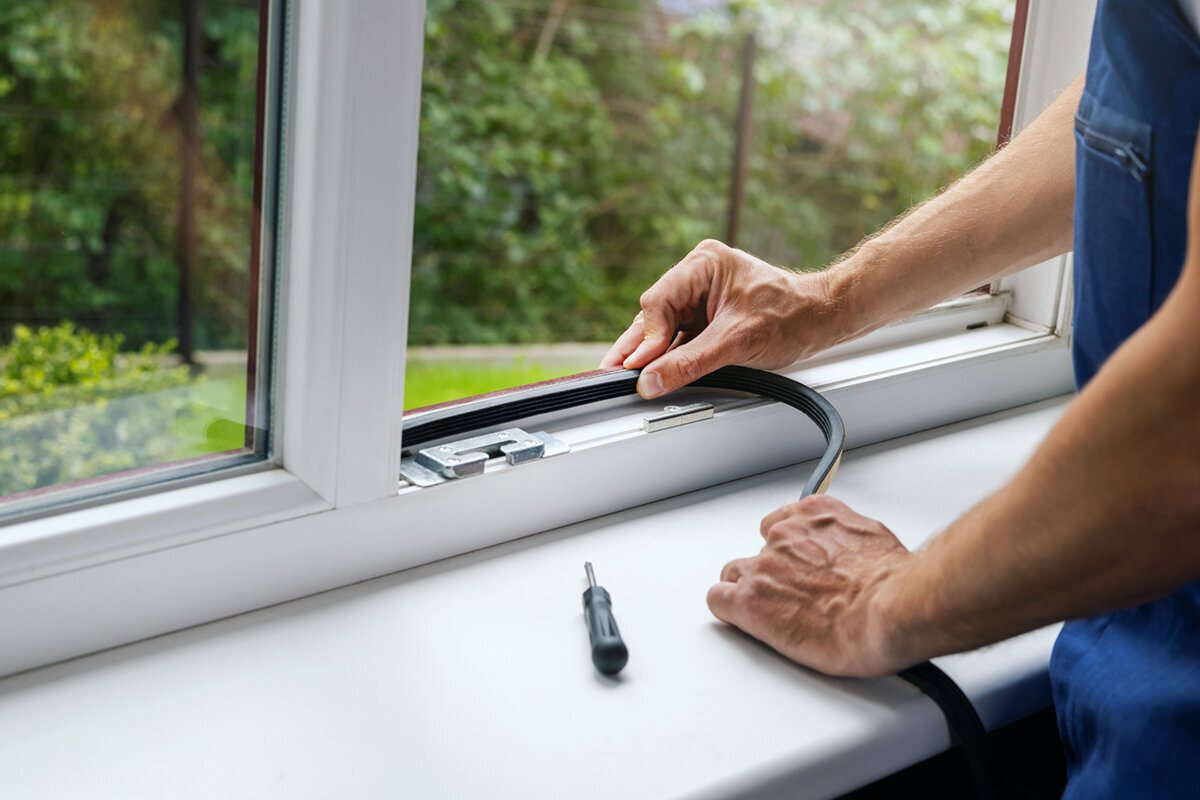
Assessing window condition
Draughts, fogging or a stubborn closing action do not, by themselves, condemn a window. Judge the unit as an interconnected installation, taking account of the glass, frame, gaskets, operating fittings, connection to the wall and the way the room is used. A reluctant handle might need modest attention to its mechanism; damp that repeatedly appears where frame meets wall calls for investigation beyond the visible mark. Comparing the two routes methodically helps prevent both needless removal of serviceable joinery and superficial treatment of deeper deterioration. The sections below set out useful checks, the photographs and dimensions to gather before requesting prices, and a practical way to manage findings across several openings.
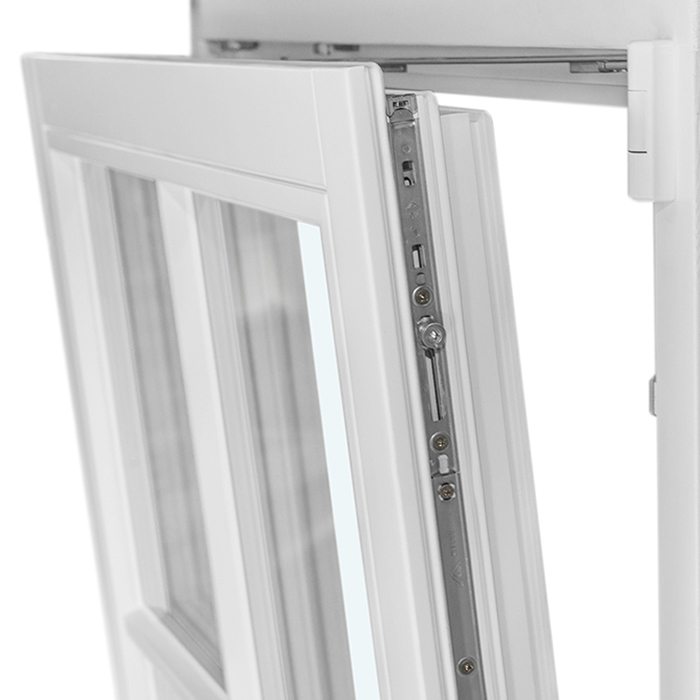
Break the fault down by component first
Start with evidence rather than a verdict about age. In good daylight, examine each unit from the room and outdoors. Pinpoint the mark or malfunction, note when it appears, and observe whether rain, temperature or movement changes it. Record air leakage, noise, resistance, cracks, flaking finishes, staining, dampness and water droplets as separate observations. Take images with the sash in both positions and close-ups of the bottom corners. Then map the pattern across the elevation. Trouble confined to one opening suggests a local explanation; the same symptom across several units may instead point towards the material, fitting method or household use.
Separate the possible sources before selecting work. Glass can fail while the supporting frame and mechanisms remain serviceable; similarly, a torn gasket can admit air without making a new sash necessary. By contrast, changing a handle cannot remedy warped joinery or failure around the perimeter. At the survey, request the evidence behind the diagnosis, a list of parts to be retained and a method for checking the result. The surveyor should also state which suspected causes were considered and ruled out. For a group of windows, build a schedule with one entry for each unit and headings such as observed sign, exact position, circumstances, ease of operation and likely source. Add proposed treatment only after examination. The schedule will then reveal whether each recommendation responds to its own evidence or whether one standard remedy has been assigned across the façade.
Glazing: isolate the defect or investigate further?
Treat a crack, edge chip or pane that remains visibly abnormal as a separate item. Its position and form help guide the enquiry. If only the glass has failed, renewal of that pane might be feasible, provided the rebate, frame and retaining method can accept the work. Water droplets facing the room can reflect indoor humidity and airing patterns; mist trapped between layers suggests failure inside the sealed glazing. Neither observation is enough for diagnosis from a distance. Note the timing and conditions: early morning, after a shower, during cold spells or in every kind of weather. A precise log gives the glazing specialist something testable, unlike a general statement that the pane looks misty.
If more than one pane is affected, consider the group before making separate choices. Decide which sashes must still open, whether fixed areas would meet the intended use, and how retained frames would sit beside neighbouring units in both appearance and operation. If the room does not depend on that opening for ventilation, a fixed glazed window could be included among the design options. It is not proof of compatibility with the present aperture. Confirm aperture dimensions, ventilation needs, safe access for cleaning and consequences for daylight. Replacing glass keeps the surrounding assembly; replacing the entire unit permits a different layout or action while increasing the perimeter work.
Assess the frame and building junction separately
Minor scratches, small areas of lost paint and local weathering are not equivalent to timber or frame sections that feel soft, have swollen, split or remain damp. Examine the bottom corners, the sash-to-frame meeting points and concealed areas near sills and linings. Do not test questionable material with a tool or cover it before the survey. Establish how far the deterioration extends: it may affect only the coating, or it may have reached the shape and fixings of the frame. New glazing, fittings or seals cannot rely on a frame that remains unstable. In that case, ask a competent window specialist for a specific repairability assessment.
Moisture seen beside a window may have travelled from somewhere else. Possible routes include failed exterior sealing, the perimeter construction, a sill, the façade or humid room air. Treating the stain alone could conceal continuing water entry. Ask the surveyor to distinguish work on the frame from correction of the wall connection. For renewal, the site measurement and perimeter design should be prepared together: survey the aperture, inspect the surrounding masonry and coordinate the finishes on both faces. If the aperture will be altered or the property may have heritage constraints, bring suitable specialists into the project at an early stage.
Seals and fittings: repair is possible within limits
Air entering at one corner, a reluctant handle or a sash that bears unevenly may originate in the gasket, adjustment or operating gear. Inspect the details: look for hardened, compressed, detached or discontinuous seals, changing gaps around the perimeter, rubbing marks, and resistance confined to one handle position. None of those signs alone condemns the full unit. If the main construction is sound, a skilled adjustment, component repair or renewal of compatible wearing parts may resolve the fault. That judgement depends on the mechanism's condition, the availability of correct spares and why movement occurred. Ask the repairer to identify that reason rather than simply promising to tune the window.
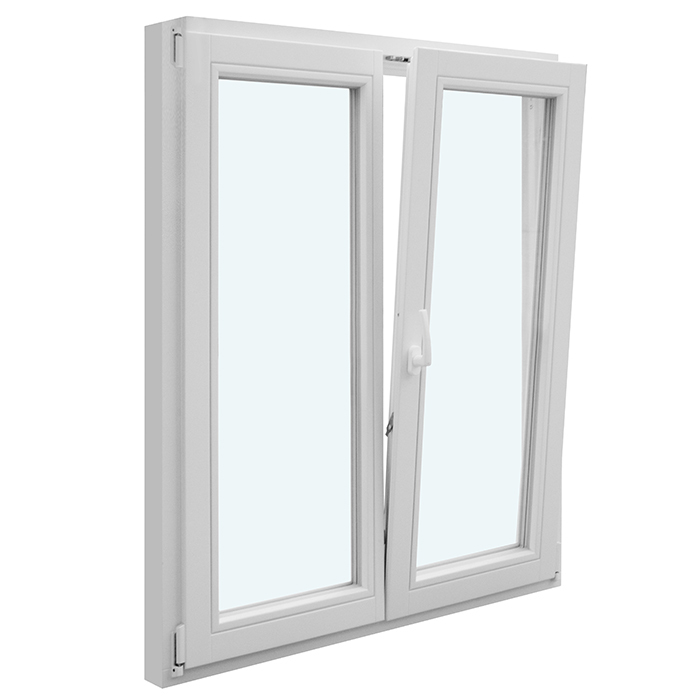
A mechanism that has been restored still needs to be viewed in the context of the whole unit. Confirm that the sash stays aligned, operation remains secure in every mode and the supporting frame is sound enough for continued use. Where another action would suit the occupants better, renewal also becomes a question of layout. An single-casement window opening inwards uses the room differently from a comparable outward-opening model because its swing occupies internal space. Before revising the arrangement, plot the aperture together with radiators, curtains, furniture, the sill and anything immediately outside. This check stops the original fault from dictating a purchase and helps prevent the chosen product from creating an unexpected obstacle.
Make a repair decision with clear boundaries
Repair has the strongest case when the affected area is small, the explanation is credible, and the supporting construction and perimeter show no related concern. It may retain the right visual character while leaving the wall aperture undisturbed. Require an itemised description: cleaning, realignment, resealing, pane renewal, refinishing and mechanism work should be named rather than bundled under one label. Define exclusions too. Record what will remain untouched, which associated damage is outside the price and what later sign would warrant another inspection. With those boundaries in writing, competing quotations can be assessed on equivalent work instead of treating every intervention as a generic repair.
Keeping the existing unit regardless of condition is not a sensible objective. Persistent saturation, connected areas of decay, poor structural integrity or leaves that have become impractical can lead to one temporary intervention after another. In that situation, obtain a complete renewal price covering extraction, disposal, alteration of the aperture where needed and making good the surrounding finish. Retain the original survey, dimensions and images even when the first choice is repair, as they provide a baseline for any later change. If a window contributes strongly to the building's character, compare limited conservation, faithful reproduction and a newly arranged unit before deciding which route best preserves the intended appearance.
Planning renewal: measure the opening afresh
Use renewal to reconsider how the opening serves the room, rather than copying a frame label. Ordering requires surveyed aperture dimensions plus details of the wall build-up, fitting conditions, handing, swing direction, number of leaves, handle position, pane arrangement and any bars. Identify the visual qualities to retain, whether matching frame widths, an existing subdivision, period character or a broad uninterrupted pane. Openings in older property may be irregular, so never square them up on paper by assumption. A fitter should verify actual conditions before the order becomes firm. Prepare a room brief alongside the survey: note sill level, unobstructed swing area, airing needs, cleaning access and the division visible from inside and out. Comparing the use brief with the measured constraints exposes conflicts while changes are still possible, ahead of sign-off and manufacture.
Where a room needs two opening sashes, the double-casement inward-opening window can suit a layout that has enough internal swing room. Its catalogue wording alone cannot confirm the fit, perimeter detailing or performance required for the building. Clarify the measurement basis, full frame dimensions, usable aperture, pane arrangement and handing as separate items. Allocate responsibility in advance for taking out the old unit, shielding finishes, forming the junction and completing repairs around it. Renewing the whole window may be preferable to repeated local interventions, but only if the survey, ordering and site works are coordinated so that appearance and daily operation are right as well as physical fit.
Use determines the opening type and division
Although condition may start the discussion, the room's intended routine should shape the answer. A kitchen worktop, restricted corridor or busy circulation area creates different demands for handle reach, washing the glass and avoiding collisions than an open living room. Consider the regular user, the arc of each leaf and nearby paths, planting or outdoor obstructions. A large opening sash provides generous access but claims more clearance while moving. Fixed glass may be unsuitable where purge ventilation or passage outside must remain available. Mark the swing on the floor plan, place the furniture at its real dimensions and test whether the arrangement remains workable.
Pane and sash arrangement affects everyday use as well. One slim opening section beside a broad fixed pane behaves differently from a pair of equal leaves. For an unusual façade aperture, begin with its actual geometry instead of squeezing it into a conventional rectangle. A fixed-glazed triangular or sloping window is intended for angled geometry, but a detailed survey must establish whether it matches the proposed opening. During design discussions, cover sightlines, the path of natural light and how every surface will be reached for cleaning, not merely the outline. The choice between repair and renewal should therefore reflect the future task of the window as well as today's damage.
Read warmth, airflow and damp together
Air leakage, cool inner surfaces and water droplets may appear together without sharing one origin. Moving air might pass a failed gasket, faulty perimeter detail or poorly aligned sash. The temperature of the inside surface reflects the combined wall, frame, pane and local environment, while room humidity also responds to cooking, washing, occupancy, heating and airing. One cold morning is too little evidence. Log the room, outdoor conditions, length of the event, precise position and state of the sash each time it happens. If the pattern returns, an on-site building assessment can trace the interactions and identify which actions must be planned jointly.
When window renewal sits within a larger upgrade, align the specification with external-wall work, insulation, the ventilation strategy and the heating setup. An outward-opening Super Low Uw passive-house window identifies a particular product arrangement; it cannot determine the correct installation detail for a given property. Compare alternatives using whole-window data that relate to the project, and discuss how greater airtightness could change ventilation in occupied rooms. For replacement windows in an existing Irish dwelling, Technical Guidance Document L gives an average replacement-unit U-value no higher than 1.4 W/(m²K) within its stated scope. The relevant compliance route still depends on the work and building. Ventilation, secondary escape and heritage considerations should therefore be reviewed with suitable professionals and the responsible authorities before ordering.
Give roof, curved and heritage openings extra scrutiny
Non-standard forms deserve extra care because any intervention can alter both appearance and perimeter detailing. With a roof window, inspect the covering, inner reveal and access arrangements as well as the pane, gaskets and controls. A pivot roof window is one possible operating form for a future scheme, not evidence that an existing roof unit can be exchanged without associated alterations. Survey its position in the roof, height of controls, shading and inner lining, and map any damp marks around the reveal. A confined defect may justify limited work; multiple symptoms call for assessment of the window-to-roof junction by a suitably qualified person.
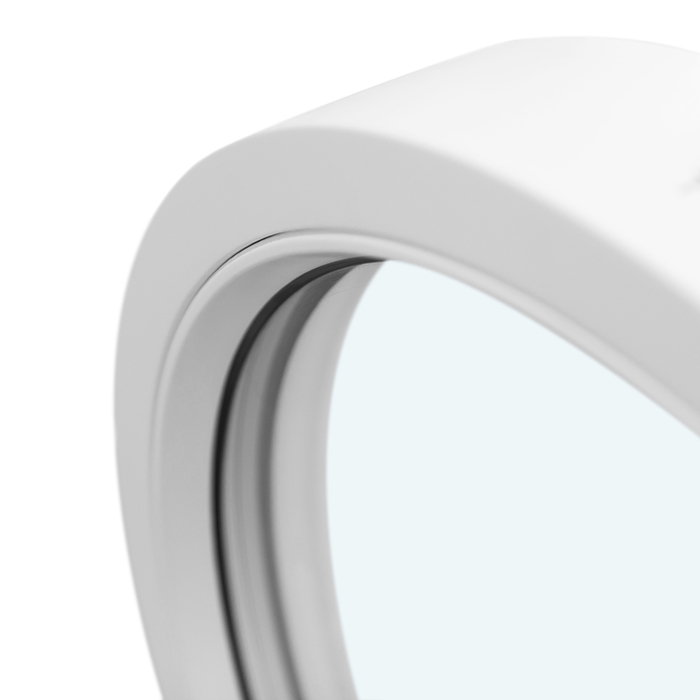
Curved units and other fixed forms must be treated as working building elements, not merely as visual features. A fixed-glazed round window might be appropriate for a circular aperture, subject to a project survey of size, perimeter connection, glass shape and internal lining. On a historic elevation, first capture the existing mouldings, proportions, divisions and bars in detail. In the specification, distinguish decorative glazing bars from true dividing bars that separate panes, so prices are based on the same construction. The building and its surroundings may also carry particular constraints. Ask the relevant authority and qualified advisers about them before work begins; appearance alone is not a sufficient basis for deciding either to keep or replace the window.
Compare quotations, process and guarantee properly
Read each quotation as a list of included operations rather than focusing on the bottom line. A repair proposal should identify the diagnosed cause, exact components, materials, access arrangements and likely consequential tasks. For renewal, establish unit count and size, handing, pane divisions, removal, installation, perimeter formation, weather sealing, trims and restoration of nearby surfaces. Confirm who takes the final site dimensions, at what point the selected arrangement becomes fixed, and how an aperture that differs from the survey will be dealt with. Pricing from photographs can be useful for early budgeting, but final dimensions require a dependable survey. Recheck every unit before release, particularly in a batch of openings that look alike yet vary slightly.
Sequence the installation with external finishes, internal plaster, decorating and floors, avoiding repeated disturbance of completed junctions. Clear safe routes to all openings and cover furnishings. Bloomcabin provides a 5-year guarantee for its windows and doors. The stated delivery period is 4–6 weeks, subject to confirmation of the order. For a broad garden-facing aperture, the Patio Life door with lift-and-slide action is a door option worth evaluating during a new layout, but it does not directly substitute for a faulty window. At handover, operate the leaves, inspect their alignment and visible finish, and compare the completed details with the agreed specification. Put any discrepancy on the written record.
Frequently asked questions
Can I always have a misted window repaired?
Not in every case. First identify the precise location and pattern of the water. Droplets facing the room, fogging enclosed between panes and damp around the perimeter each suggest a different line of enquiry. A glazing or building specialist should determine whether attention to the pane alone is adequate or whether the frame, junction and indoor humidity also need investigation.
What points to a seal being the only fault?
Hardened, detached or discontinuous gasket material is useful evidence, but air may also enter because the sash is out of alignment, the fittings are worn or the wall connection leaks. Locate the draught while the sash is shut, then ask for separate written notes on diagnosis and treatment. That reduces the risk of renewing a gasket while overlooking the real source.
Must I replace every window at the same time?
No. Treating one unit can be sensible if its condition, visual relationship, dimensions and perimeter works have been assessed in context. When the same concern affects several openings, a combined survey may make design choices, measurement and sequencing easier. Base the programme on evidence from each window and the surrounding work, rather than assuming age requires wholesale renewal.
What should I bring to a first replacement consultation?
Bring interior and exterior images, rough aperture dimensions, a sketch showing each sash and its position, the preferred direction of opening, and notes about the fault and room routine. Include sills, blinds or shutters, reveals and any planned adjacent work. A site survey must still verify the final dimensions and confirm that the selected arrangement is suitable.
Is a new window automatically the best answer to damp?
No. The source may be humid room air, failed perimeter sealing, the external wall, a roof connection or the window construction. Installing another unit before tracing the path of moisture can simply move the visible symptom elsewhere. If damp repeatedly returns, investigate the opening and nearby fabric as a connected detail before authorising either form of work.
Next step
Choose from evidence about the fault, not simply from the date of installation or one visible sign. Keeping the window is credible when deterioration is local and the pane, frame, mechanisms and perimeter can remain dependable after defined work. Renewal is better where condition, intended operation or the broader scheme points that way. Save the survey and dimensions, compare precisely described scopes, and settle handing, divisions and perimeter details before approving manufacture. Where several openings are involved, manage them under one plan while allowing the remedy to differ by unit. This turns an immediate maintenance concern into a documented choice designed to serve the property for years.
